Hamada Shipwreck Marsa Alam Egypt tours, booking, prices
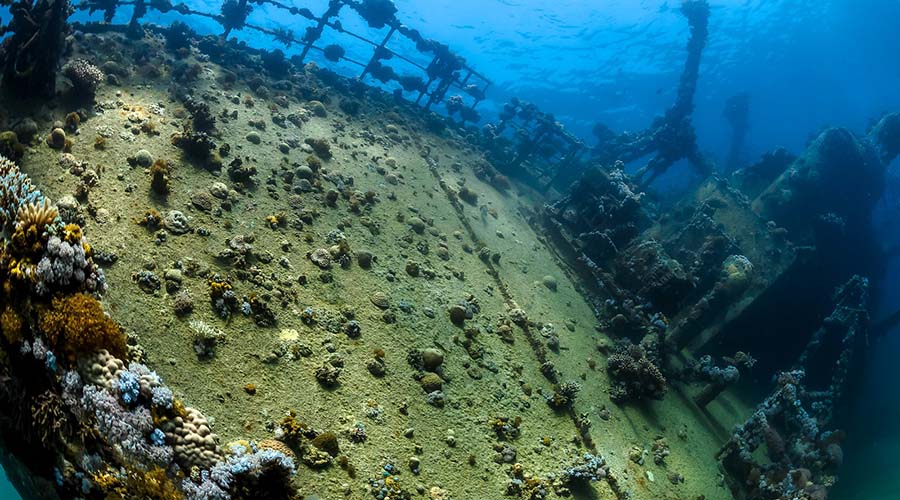
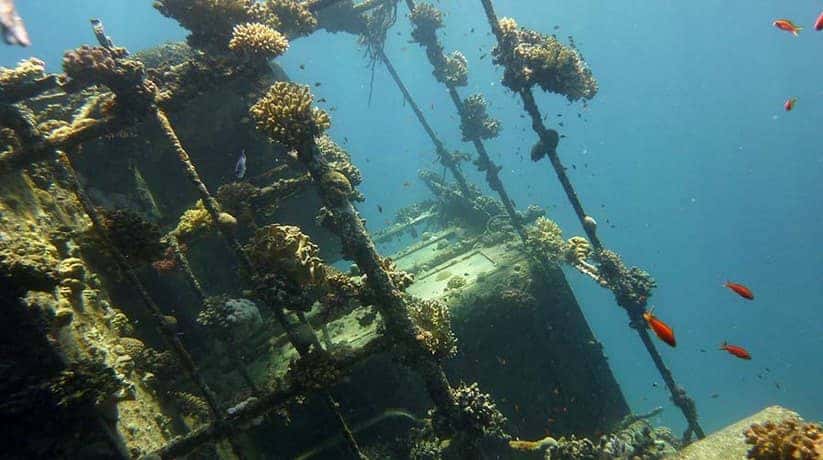
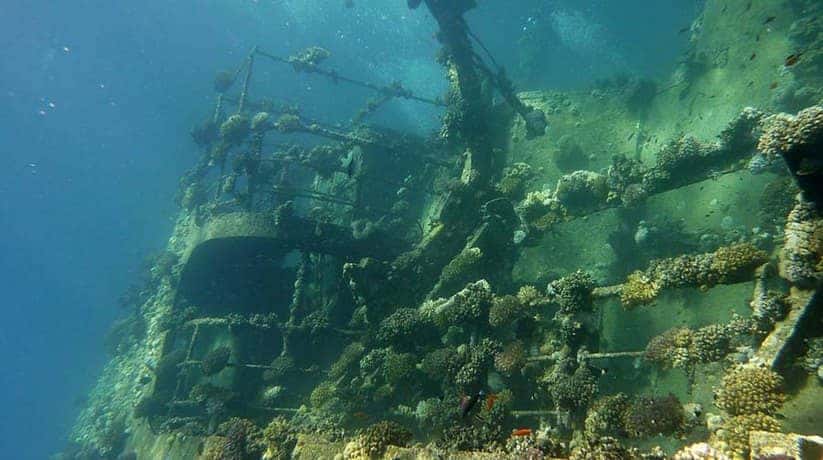
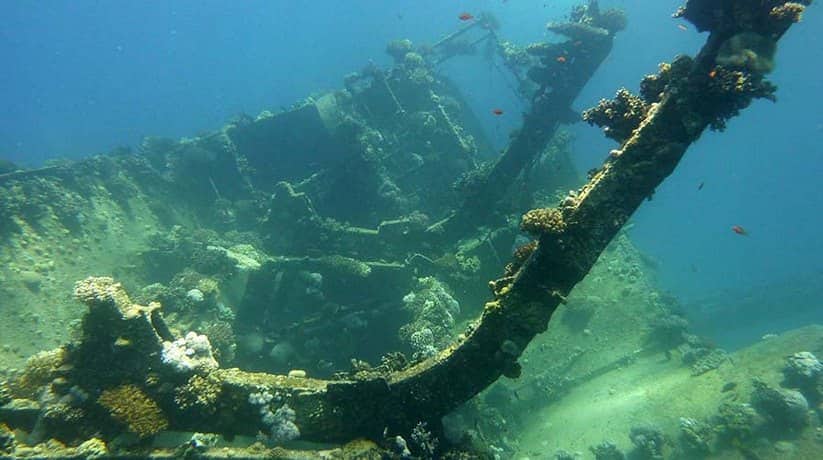
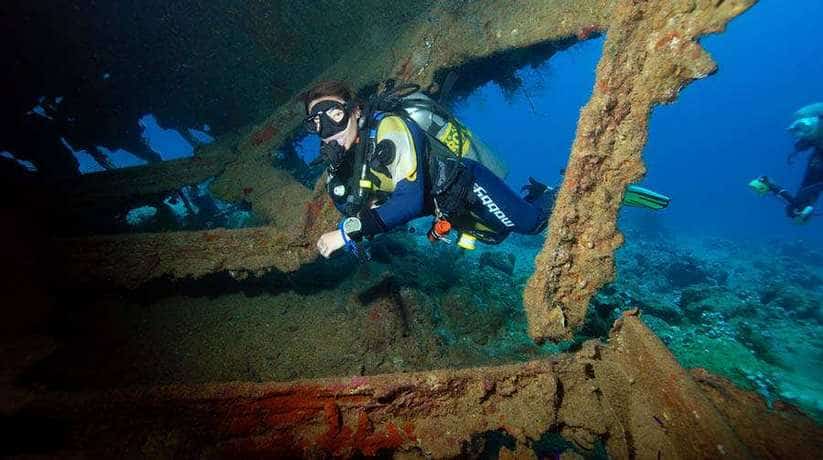
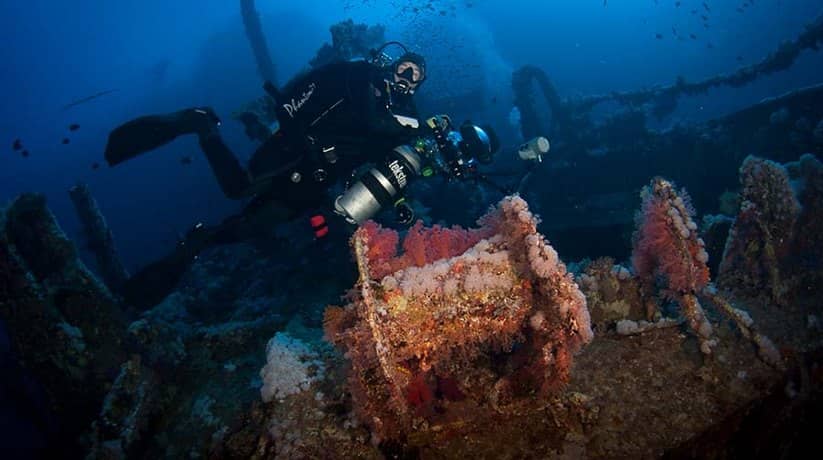
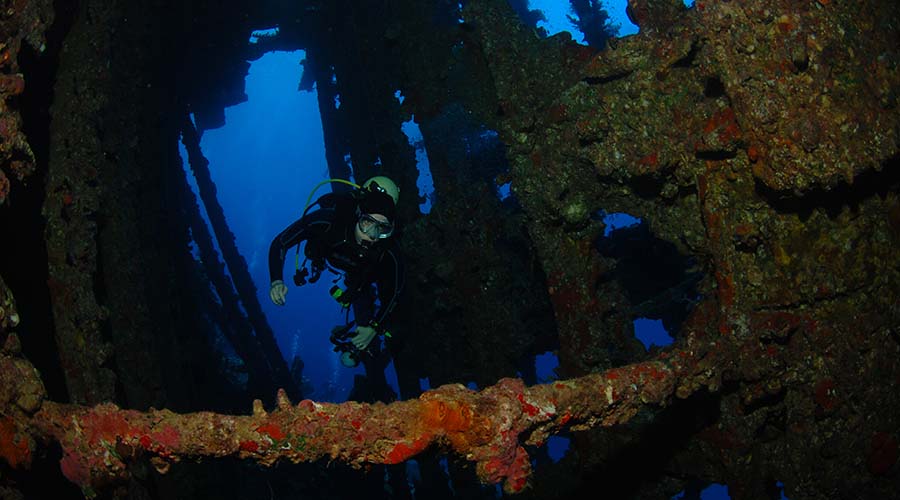
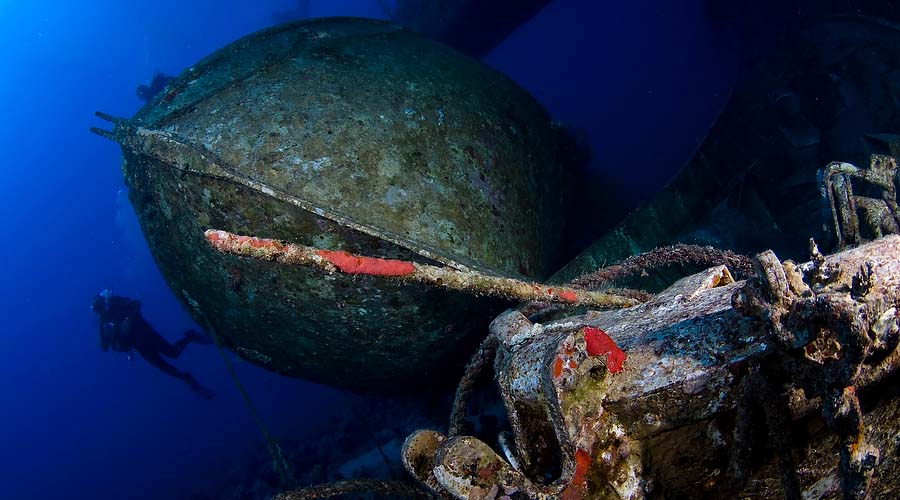
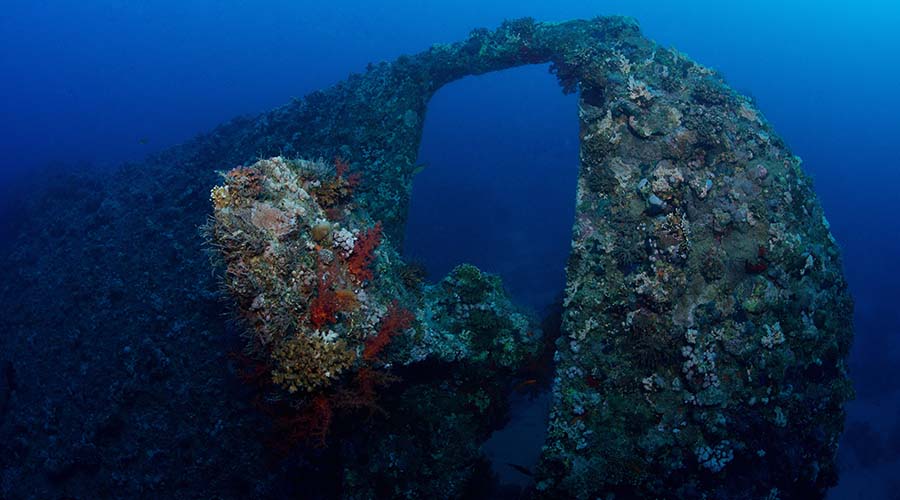
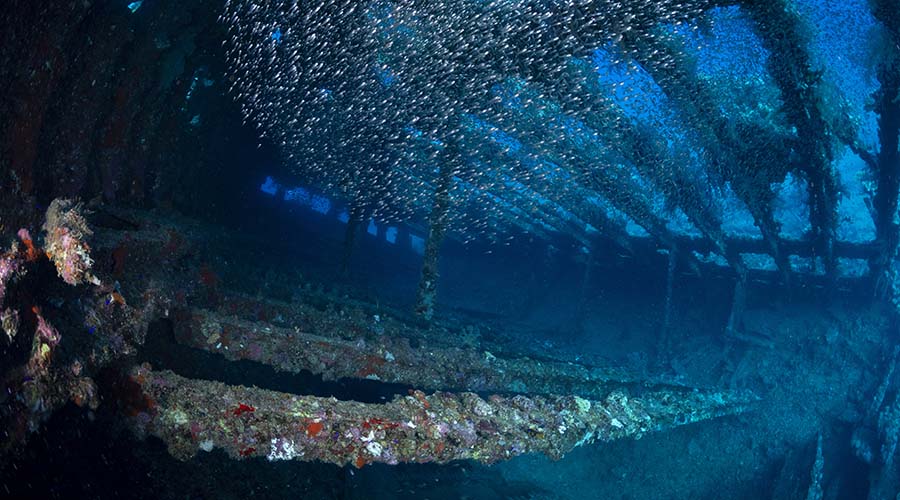
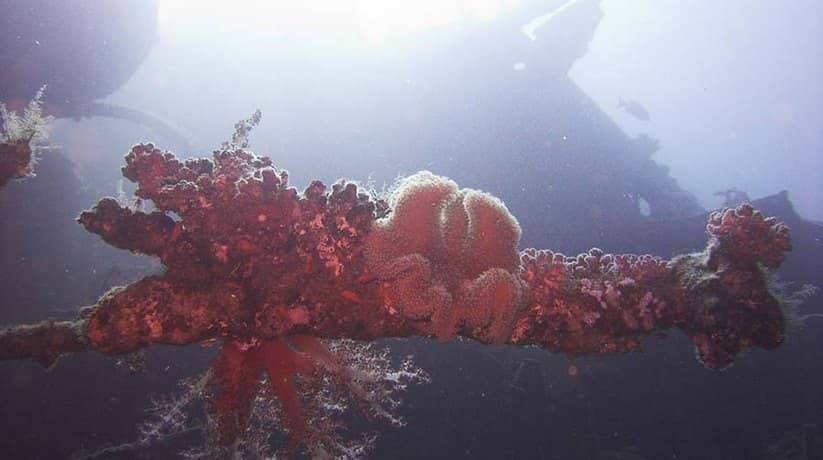
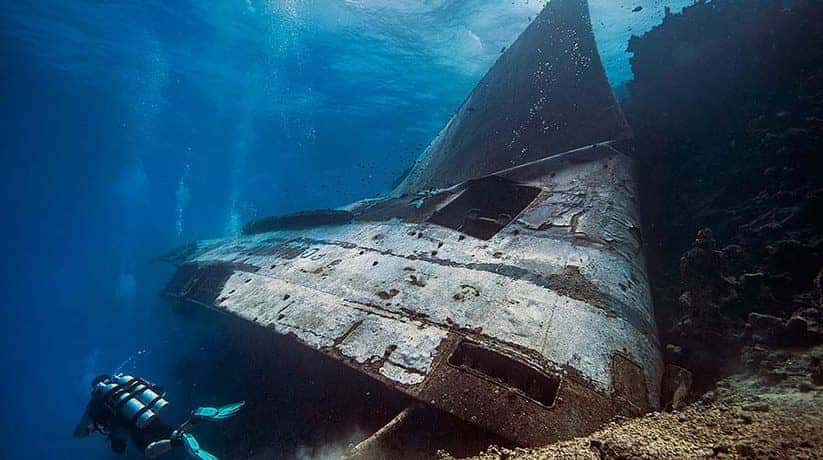
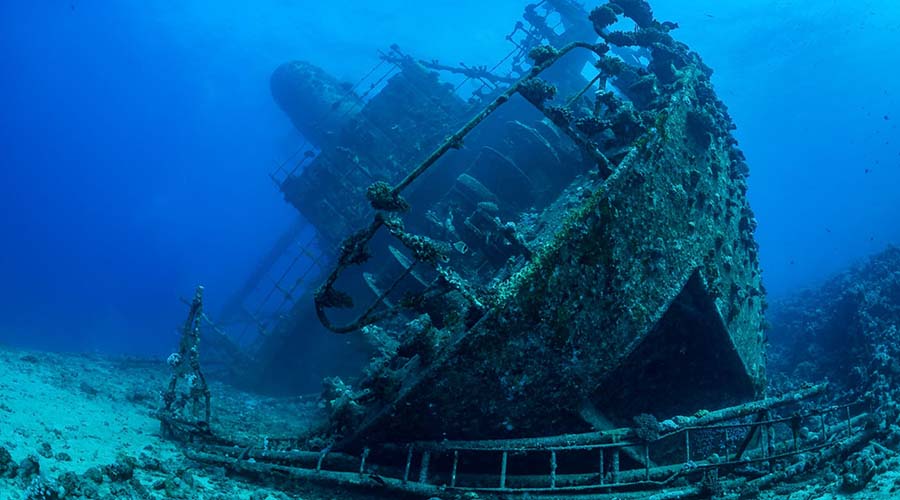
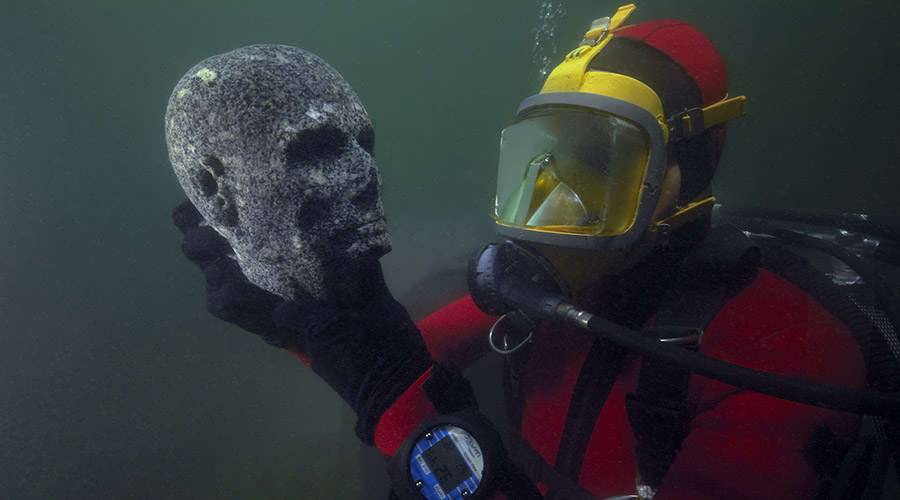
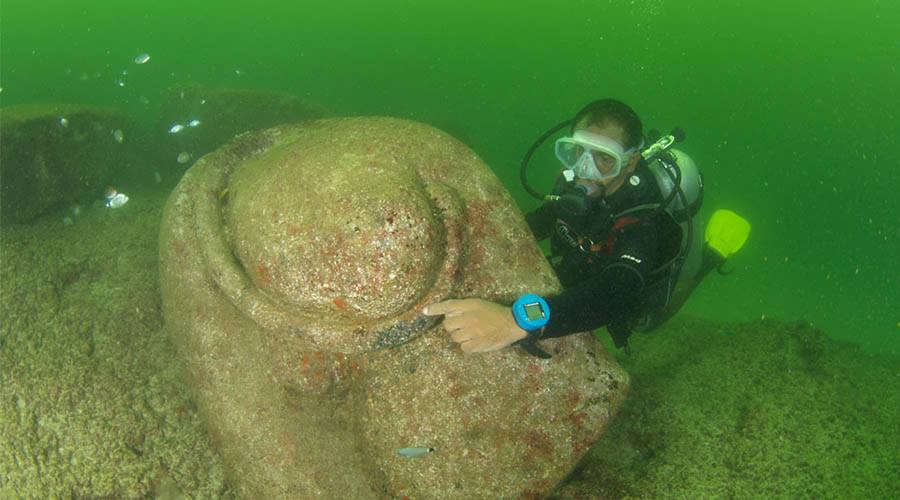
Hamada Shipwreck Marsa Alam located south of Marsa Alam, Egypt. In fact, the site of accessed by boat from Marsa Alam. Moreover, the diving site included on many live aboard trails. In fact, it is especially for those who explore the southernmost diving sites of the Red Sea in Egypt. Hamada was a 65 meter-long cargo ship which sank in 1993 in the Red Sea Egypt. In fact, it was after a fire broke out on board. Divers explored the shipwreck for the first time in 1995. They discovered that the damage caused by the proclaimed fire was not as tragic as expected.
Further details about Hamada Shipwreck Marsa Alam:
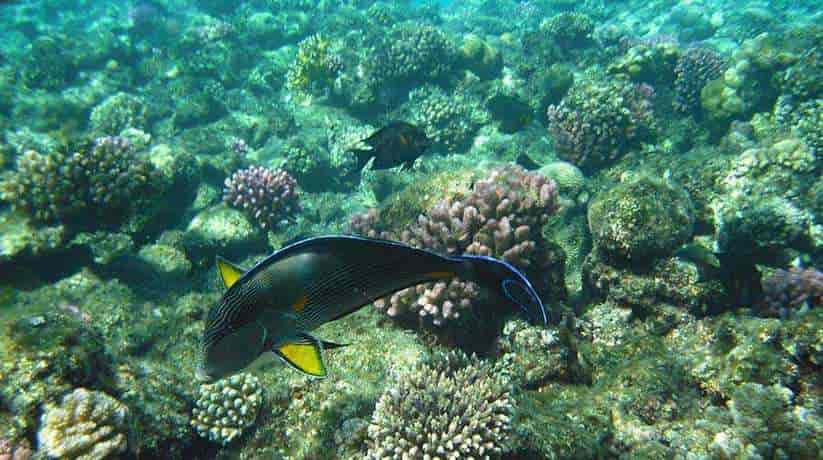
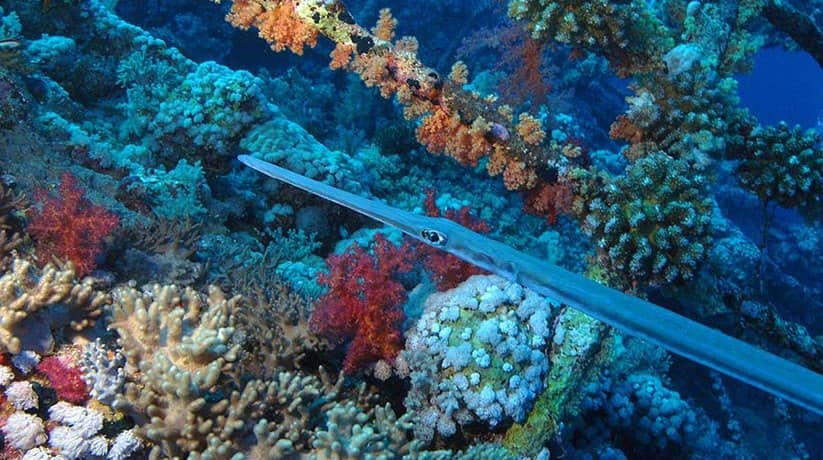
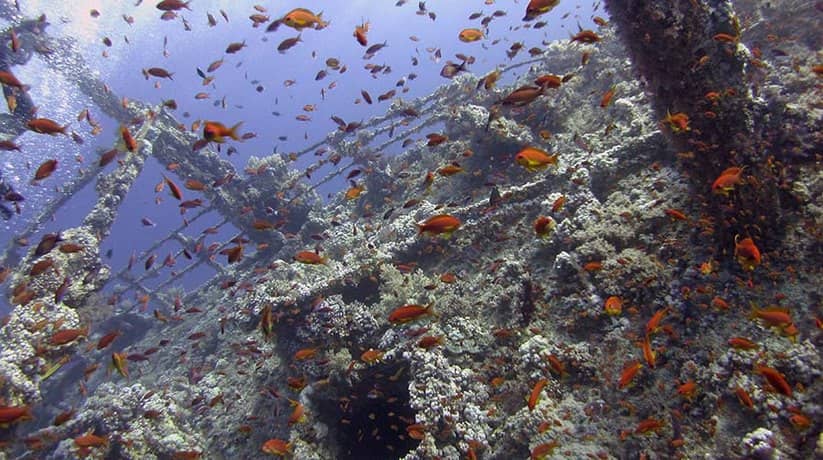
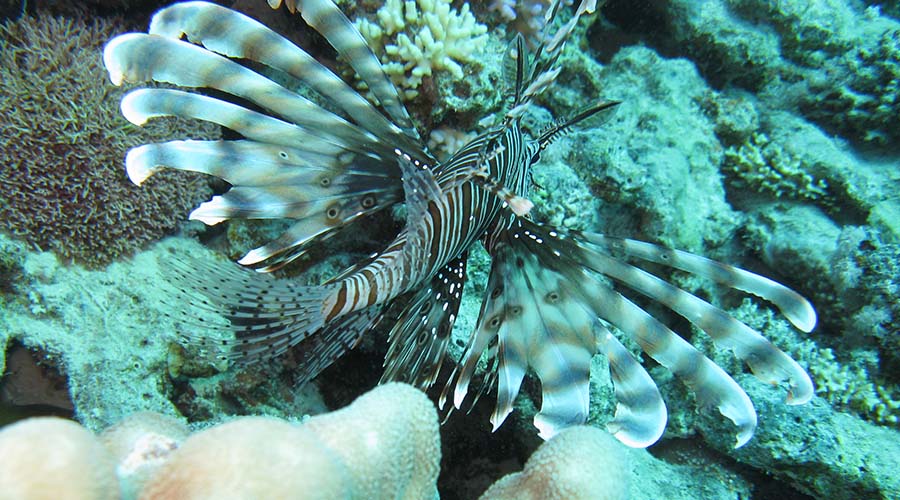
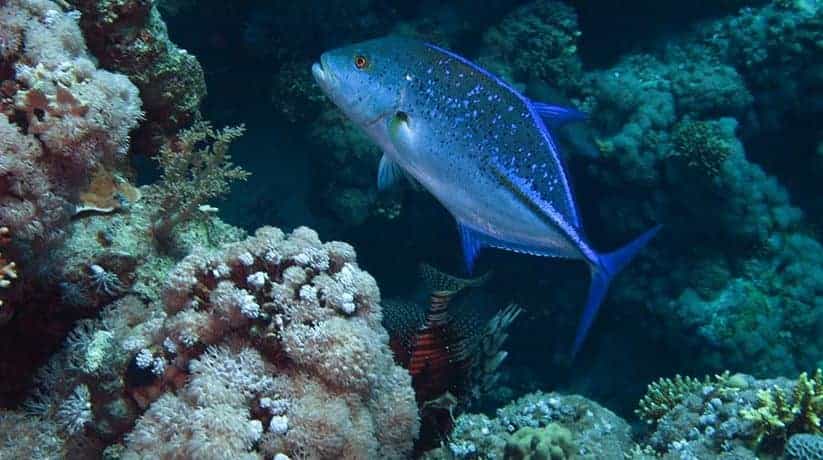
Most of the shipwreck lies today at 14 meters of depth at the “Abu-Gosoon reef“. The stern section is a little further away from the reef. Having sunk in shallow waters, the port side of the ship seen above water at low tide. Divers of all levels can explore this interesting wreck. In fact, Hamaada Shipwreck Marsa Alam includes the pilothouse, the engineer room and cargo shipment. Moreover, the site houses schools of glass-fish, lion-fish and surgeon fish.
The site facts:
Depth: 0-15 meters.
Visibility: 10-25 meters.
Nearby attractions Information, tours and Online Booking
Elphinstone Reef Marsa Alam Egypt tours, booking, prices
Elphinstone Reef Marsa Alam is a finger -like which runs from the north to south in the open Red Sea, Egypt. In fact, Elphinstone Reef located 12 kilometer south of Marsa Abu Dabbab in Marsa Alam, Egypt. Moreover, the diving site features steep walls which drop to the depths on the reefs east and west sides. In fact, it reaches about 70 meter (230 feet) or maybe more. Moreover, the north and the south ends of the the diving site reef marked by submerged plateau. Furthermore, the northern plateau of the reef is shallow and offers some superb snorkeling possibilities. In fact, the southern plateau is much deeper with a drop-off at 30 meter (100 feet). It leads down to the depths.
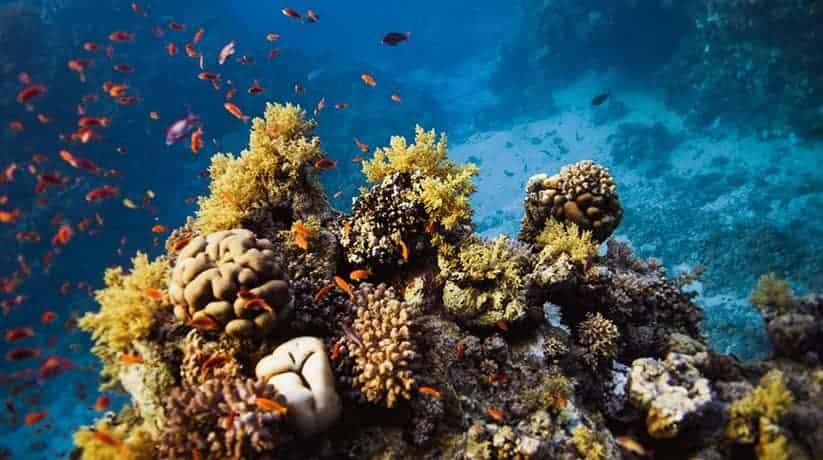
A large underwater arch found in Elphinstone Reef, between 50 and 70 meter (164-230 feet). In fact, the arch lies beyond the range of most sports divers and has a fascinating story attached to it. A legend says that the sarcophagus of an unknown pharaoh lies beneath the arch. In fact, you can see the outlines of a rectangular and coral encrusted mass. It is in the depths of 60 meter (197 feet). In fact, the reef covered with soft corals. Moreover, the underwater fauna species you’ll spot there extremely diversified. The diving site also comprises barracudas, angel fish and groupers. Moreover, it also houses morays, only to name a few. The occasional visitors to the diving site include white tip and gray reef sharks.
Further details about Elphinstone Reef Marsa Alam:
A massive number of reef species lends still more color to the already dazzling walls. In fact, it is with a ready supply of big solitary and schooling pelagic to observe. One great hammerhead is a permanent resident there. Elphinstone Reef indeed is a fascinating site and and worthy diving in it so many times. In fact, the site is convenient for both of snorkelers and more advanced divers as well. In fact, the reef accessed from Marsa Alam by boat. The diving site already included in the route of many live aboard dive safaris in the Red Sea of Egypt.
Elphinstone Reef diving site facts:
Location: 12 kilometer off Marsa Abu Dabbab on the south Egyptian coast of the Red Sea.
Access: By live aboard from any Red Sea port.
Average Depth: 20 meter (65 feet).
Maximum Depth: 70 meter + (230 feet+).
Average Visibility: 20 meter (65 feet).
Nearby attractions Information, tours and Online Booking
Gabr El Bint Dahab Egypt tours, prices, booking, reviews
Gabr El Bint Dahab dive site located just 25 kilometer south of Dahab. In fact, Gabr El Bint means in English “Grave of the Girl”. There is an old Bedouin story about the area which is like Romeo and Juliet. The reef is the most southern of the Dahab dive sites. Moreover, it falls well within the borders of the Nabq Protected Area. In fact, the site is only reachable by boat. The far fewer divers visit this site on a daily basis. Moreover, they ensure this reef stays in excellent condition. After 1.5 hours sailing, the boat can moor up in the sheltered bay of the dive site. And then it ensures a stable resting place even when the sea is rough. In fact, from this base many possible dives are available.
The south side of the reef known as the dark side. In fact, it features a steep wall which drops down to about 60 meter. In fact, it cut out of the reef by an earthquake over a decade ago. Moreover, the reef punctuated by many chasms, sandy plateaus and overhangs. The reef decorated with large, healthy table corals and an plenty of fish life. Gabr El Bint also houses reef to the north. Go and skirt the huge 50 m deep coral head which shelters the bay. You will see the three main features of the dive site laying before you. They are the near vertical drop-off, the coral saddle and the sandy lagoon.
Further details about Gabr El Bint Dahab:
As you descend and make your way along the drop-off keep one eye out in the blue where. You can see Giant trevallies hanging motionless which surrounded by shoals of fusiliers. The dive site has currents which run along this wall. In fact, they attract some whale sharks, manta rays and eagle rays. After 10-20 minutes swimming, you will hit four dense rows of Gorgonian sea fans. In fact, they run down the reef wall. They are some of the healthiest and largest you will find in the whole of the Red Sea. The dive site also houses some of the photogenic Longnose hawkfish.
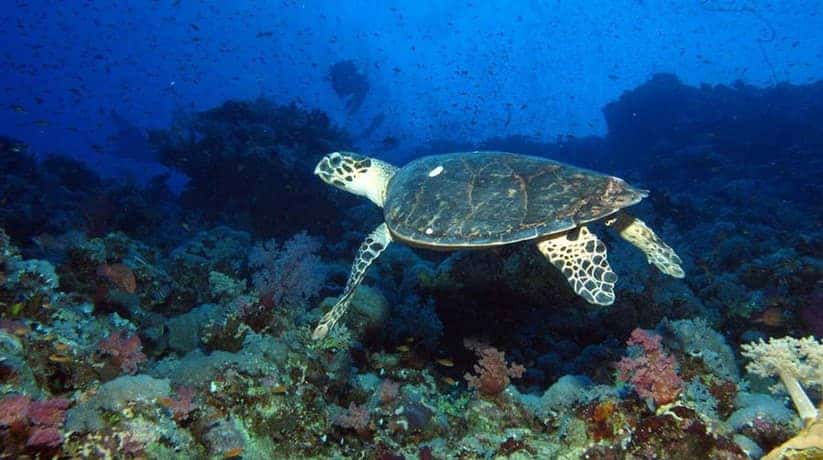
As you make your way up onto the rich coral saddle, you may well see a Hawksbill turtle or two. They can often found grazing on soft corals. So keep your eye out for the tell-tale signs of long strands of mucus drifting by in the water. The rest of the saddle covered in swarms of Anthias and parrot fish. Moreover, it also covered with surgeon-fish and trigger-fish. Current will let you swim or drift all the way back along the saddle. Moreover, you maybe also drop into the sandy lagoon which runs parallel. This stunning coral garden has plenty to offer.
More details about Gabr El Bint Dahab:
In fact, the coral gardens of the site houses crocodile fish, stingrays and puffers. They rest under the expansive table corals. Whichever way you choose, keep checking around you. A large school of exclusive Milk-fish can seen hanging around in the lagoon. In fact, the site indeed is one of the most breathtaking of the Dahab dive sites.
Gabr El Bint Dahab facts:
Location: South Dahab, 28°21.211 N 34°25.999 E. Description: Boat dive; Reef; Coral garden; Drop-off; Drift dive. Depth: 30 meter. Visibility: 30 meter. Currents: Medium-Strong.
Nearby attractions Information, tours and Online Booking
Egypt Reef Diving information, tours, prices and online booking
Egypt Reef Diving feature many diving spots on the Egyptian Red Sea coast. “The Canyon”, Dahab’s most talked about site, and one of Sinai’s most interesting dives. In fact, it is close to the “Blue Hole”, an equally famous but more dangerous site. A few flipper strokes away from Assalah bay, you’ll reach a large rock head cloven. It is by a fissure descending to a wide entrance underwater. Passing through this entrance, you’ll find yourself surrounded by the crowded life and incredible beauty of the Canyon’s setting. After a 100 meter swim over a shallow reef from Dahab’s shore, you’ll reach a narrow canyon. You can swim out to a larger sandy area sloping down gradually. Past a somewhat vertical protuberance of the reef, you’ll discover the actual Dahab’s Eel Garden.
You’ll soon see the long eels popping their heads out of the sand. It is before vanishing back in as soon as you approach them. Hold your breath if you’re thinking of taking pictures of these amazing creatures. Don’t freak out at the sight of such a big number of eels. Due to its none easy to access location, Gabr El Bent is one of Dahab’s best preserved dive sites. You will need to hire a 4X4, a camel, or go on a diving boat trip to get there. Traditionally, divers have two ways of exploring this amazing reef. You would either choose to explore the right side of the reef. It also called the “dark side” which is a 60 meter drop-off with beautiful corals on the way. The left side is a lot more colorful, with amazing gorgonians.
More information about Egypt Reef Diving:
Regular visitors of the site include reef species of all sorts, including anthias and scorpion fish. The visitors also include parrot fish, stingrays, snappers and even sometimes turtles. Located a few meters off shore from the beach area in Dahab, the Lighthouse Reef. It is the easiest to access and most popular dive site on the agenda of Dahab’s dive schools and centers. It is also a great spot for Snorkeling. In fact, all kinds of dives are possible, including shallow dives over sandy areas for beginners. Pinnacle slaloms at more important depths for more experienced divers. Whichever the dive plan is, you’re bound to love it. It is for the variety of available coral formations to explore and the beautiful fish species to gaze at. These include turtles, dolphins, and big pelagic additionally to charming seahorses, crocodile fish, pipefish, and octopuses.
You’ll soon discover that the “Dolphin House” in El-Gouna proudly stands for its name. This diving site is in fact home to an incredible number of dolphins. You’ll probably get the chance to dive in the company of the whole resident pod of Bottlenose Dolphins. You might as well catch a glimpse of the other unique inhabitants of the reef. It includes turtles and hard coral gardens. Serib Kebir not only used as a site for check dives by most of the dive centers in El Quseir. It also withholds almost everything that a diver would look for in the Red Sea. As you start your descent from the shallow entry by the beach, you’ll dive down to 5 meters. It is into a bay where you’re most likely to find a school of Yellow Tailed Barracudas and an army of Squid on a hunting expedition.
Further information about the sites:
Most diving instructors will direct you from there to the north, in the direction of a hard coral garden where Blue Spotted Rays abound. The rays have become used to the divers. If you’re an underwater photography fan; this is the right occasion for you to make great shots. Join the never-ending ballet of Hatchet Sweeper fish that inhabit The Cathedral and a labyrinth of jaw. They drop canyons, tunnels and caverns, where amazing corals and beautiful nocturnal fish species such as the Big Eye Squirrel fish. In the close surroundings of the Cathedral, many divers already had the chance to meet with the resident small pod of Bottlenose Dolphins. An encounter that is usually consider as the “cherry on top” of this already amazing dive in El Quseir.
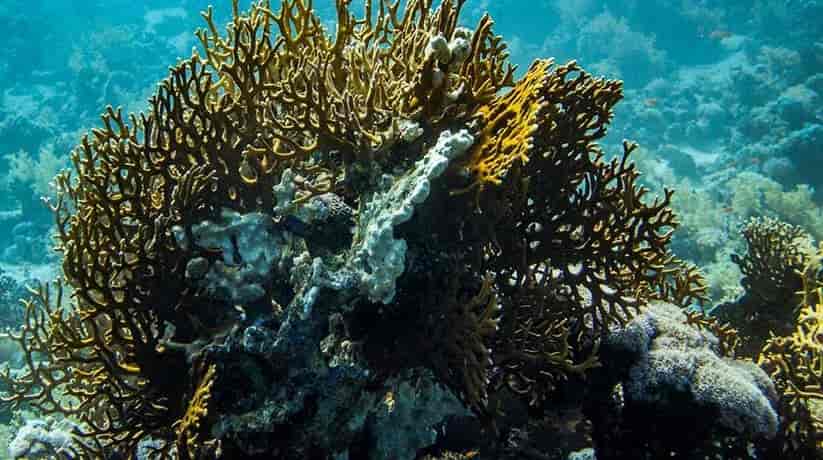
At only a few kilometers from Hurghada, lies the Big Giftun Island (Giftun Kebir). As you approach it by boat, you might think to yourself that it looks quite uninteresting in itself. In fact, it only consists of sand and rocks. But the waters surrounding the island hide some of Red Sea’s most beautiful diving sites. The southern and eastern parts of the submerged island covered with rare and well-preserved corals. On the eastern side of the narrowest part of the island, lies Erg Sabina. The main attraction of the site is a gigantic coral pinnacle, boasting amazing fire corals. Marine life abounds around the pinnacle. You should definitely bring down your camera. In fact, nudibranches, lobsters and angelfish are regular residents of the site.
More details about Egypt Reef Diving:
Located about 60 to 90 minutes from Hurghada, the reef of Abu-Nugar. In fact, it mainly dived for the incredible richness of its marine life. You’ll find a T-shaped reef at its north-western side and a shallow plateau dotted with numerous ergs (pinnacles) in its eastern part. These ergs are full of different types of fish and coral, including yellow and purple gorgonians, sea fans, table corals, and brain corals. The Western side of Sha-ab Abu Nugar has two smaller sub-reefs in it, they are Gota Abu Nugar and Sha’ab Iris. Also called “Shaker Island”, Shadwan Island is the largest atoll of the strait of Gubal. At the northeastern side of the island, you’ll find an amazing almost vertical coral wall dropping to more than 40 meters. The current is usually mild and runs from south to north. Divers go along with the current to explore the wall on a drift dive.
The reef is teeming with snappers and anthias, but bigger and far more interesting species are also regular visitors of the site. Divers have often encountered the presence white-tip reef sharks and grey reef sharks, hawksbill turtles, but most of all great pods of dolphins. Located a few km off Makadi Bay’s shore, and meaning “Father of Grass” in Arabic, this very shallow diving site – ideal for beginners – has been so named because of the abundance of sea grass in that particular area of the Red Sea. The reef is a combination of a slowly sloping sandy plateau and a fast dropping wall along which drift dives are usually performed from north to south, if the currents are strong enough. Boats are usually moored at the northwest lagoon, from where divers have to swim through a small canyon before reaching the sandy plateau.
Further information about the sites:
Beautiful corals are hidden under the sand; uncover their secrets delicately. Usually very small and interesting creatures nestled inside the bouquets. Puffer fish, morays, octopus, nudibranches, crabs and sea horses are regular visitors of Abu Hashish. While on holiday in Marsa Alam, think of taking a short boat trip to the shallow and sandy reef of Marsa Abu Dabbab, for an easy and relaxing dive, even if you’re still a beginner. This diving site is used as an overnight stop by most of the live boards cruising the Red Sea in that region. While diving in the Marsa Abu Dabbab site, you might get the chance of meeting dolphins, as well as the famous dugong “sea cows”, turtles and spotted rays. Straight off the beach at the Hilton Hotel in Nuweiba, you’ll find the famous Abu Lou Lou Reef, also referred to as the Hilton House Reef.
It known for the incredible richness of marine life including stonefish, turtles, and lionfish. A fact that led some divers to nickname it the “lionfish city.” The amazement you’ll experience at Abu Lou Lou is indescribable, since the amount of underwater species you’ll spot down there exceeds by far what you might have already seen while diving in more popular Red Sea reefs, which tend to be a lot busier. Some divers had had the chance to encounter a friendly dolphin who pays a visit from time to time. Abu Lou Lou is also a great night dive, and a particularly enjoyable Snorkeling location. You don’t have to be a Hilton guest to be able to dive this reef, contact your hotel’s dive operator or any Nuweiba, operator to organize a dive at Abu Lou Lou.
More information about Egypt Reef Diving:
The shallow reef is easy to access from shore, and easy to dive. It is incredibly rich with marine life. Before reaching the reef you’ll swim over an area of sea grass and pinnacles, only to find yourself facing a reef at the end of the road. The two reef walls are punctuated by crevices and chimneys where you’re most likely to find interesting inhabitants, such as octopus, cuttlefish and other reef fish species. Pelagic fish, such as barracudas, can also be spotted around the walls, where they come to feed on smaller species. Abu Kafan, also known as Abu Qifan, the 300-meter long reef is a favorite among divers in Safaga, so expect it to be a little crowded. The site can be reached by boat from Safaga, and many live-aboard departing from Hurghada stop there as well.
The reef is a blessing for wall divers, as it offers a descent of 300 meters. While down there, you are most likely to spot anthias, jacks, tunas, barracudas, reef sharks and hammerheads. The Panorama Reef is one of Safaga’s most famed dive sites for the amazing drift dive opportunities it offers and the gorgeous panoramic views from its vertical walls that give it its name. After being dropped off by their boat or live-aboard at the northern tip of the oval shaped reef, divers head southwards along the east or west side of the reef. Before heading for the drift, spend some time at the northern tip of the reef to catch a view of great pelagic species, which come to feed on the current. These include white tips, barracudas, jacks, and occasionally, hammerheads and manta rays.
Further details about the sites:
The Far Garden is definitely the most exciting of the three gardens, a cluster of diving sites located to the north of Naama Bay in Sharm El Sheikh. After reaching a depth of 18 meters going down a gentle slope, the reef turns into a wall. At 42 meters, you’ll discover a small cave, and beautiful fan corals and gorgonian fans. Currents tend to be strong in this area, bringing many large pelagic species along, including manta rays. When ascending up the wall again, turn to the opposite direction to explore smaller caves filled with glassfish. Before finishing your dive, gaze at the colorful reef life on the top of the gentle slope. The Far Garden is also good for Snorkeling. Located in the Ras Mohammed National Park, the Ras Ghozlani diving site was off-limits for a long time. Even today, it seldom visited by divers.
The result of which is an amazing richness of marine life and greatly preserved and prolific corals. The reef wall at Ras Ghozlani drops steeply to a 15 meters depth, after which it gently slopes deeper. Due to the strong currents, divers usually drift dive along the wall. The site is home to almost all possible species of coral and reef fish, additionally to groupers, Napoleon fish, pufferfish, and eagle rays. The Ras Ghozlani diving site, as are almost all Ras Mohammed diving sites. In fact, it is also suitable for Snorkeling. Egypt’s first protected area is a world-famous area with several top diving locations. The area of Ras Mohammed is a cape which formed by ancient corals. You can see those emerging on the surface of the sea. It is indisputably one of the most beautiful places in South Sinai.
More information about Egypt Reef Diving:
Due to currents carrying out of the Gulf of Aqaba, the underwater inhabitants of the area simply exceptional. A lot of fish come here from the open seas in search of food and shelter. You’ll observe an unperceived abundance of hard and soft corals, as well as big schools of tunas, barracudas, jackfish and even sharks. Also known as the “Christian Cape”, the shore diving site of Ras Nasrani is one of the richest in Sharm El Sheikh from a marine life perspective. Due to the ever-changing underwater scenery, divers love this location where it is very probable to spot mantas and whale sharks. Southwards from the usual boat mooring, you’ll find a wall. To the north, there are a gradually descending plateau and strong currents. They make this spot a perfect one for some drifting, and for meeting with big pelagic coming to feed on the currents.
The reef, plateau and wall covered with spectacular and healthy species of corals. It is where reef fish, giant moray eels and turtles come to hide and feed on the coral heads. Divers from all levels can dive this site. There are some tricky hazards for the more experienced ones such as caves and narrow passages, and amazing sights for the novices and the snorkelers. The steep rocky promontory of Ras Za’atar drops almost vertically into the Red Sea. Divers usually dropped off by a boat at the south-western side of the cape. The drift dive moving northeast with the reef on their left. At a depth of 28-30 meters, they observe the amazing gorgonians and colonies of black coral. And then, go up again to explore the reef wall which is full of life and covered by lovely red and pink Alcyonarians.
Further details about the sites:
Further north, you’ll explore the spectacular wide crack that narrows towards the surface, becoming a true “chimney.” In these crevices you will encounter the typical inhabitants of underwater niches, such as Lionfish, Glassfish and even larger groupers. After drifting to the other side of the cape, you’ll find a coral garden inhabited by a great number of reef fish and even some sea turtles. Located at the entrance of the straits of Tiran, the Tiran Island is a must-see destination during any Sharm El Sheikh holiday. While the clear blue waters surrounding the island are a diver’s paradise, the island alone is worth the 1-hour boat excursion from Sharm’s shore because its stunning beaches are just as gorgeous as the underwater wonders below.
The water is 1800 m deep in this part of the Aqaba Gulf. In fact, it is very probable to spot sharks, manta rays and barracudas in the deeper waters. Turtle Bay is the site to dive in Sharm El Sheikh. If you feel like observing turtles in their natural habitat. Since they can even be seen in the shallow areas, the site is equally good for Snorkeling. A little north from Ras Um Sid, the Turtle Bay located between the neighboring dive sites of Paradise and Amphoras. It is specifically where a slope departs from the reef at a 9 meters depth going down to 25 meters. Apart from the turtles, there are amazing coral formations to gaze at. It includes soft coral gardens and salad corals, and a very wide range of marine species.
More details about Egypt Reef Diving:
Located in the Straits of Tiran, the Woodhouse Reef is the narrowest and longest of the Tiran reefs. Divers usually use the strong current in the area to drift along the eastern side of the reef. While doing that, you’ll encounter various species of fish including reef sharks and eagle rays. It advised for divers to stay close to each other and help each other out at this site. In fact, the current can sweep them off into the very dangerous shipping lane. The sandy passages you’ll cross along the way are often home to sleeping sharks as well. Big pelagic such as tuna and jacks also frequently spotted on site. It is in addition to great numbers of reef fish. The site can only accessed by boat. Snorkelers also allowed to enjoy the shallowest parts of the reef.
Soma Bay’s House Reef extends to the southern limit of Ras Abu Soma, also called the “Bay Point”. Accessible by boat only, a usual dive at this site starts at the northern tip of the reef. The reef is amazing, teeming with a wide assortment of marine species. It also includes leopard sharks, hammerhead sharks, barracudas, snappers and manta rays. The two spring months of March and April are the best time to spot these big pelagic. Dive at Abu-Soma to be able to see many reef fish species and great corals. Some divers have even had the chance to see turtles and dolphins at this particular spot. The Abu Soma dive usually performed as a drift dive, from north heading southwards. It is along a steep and impressive wall that goes down to 80 meters of depth.
Further details about Egypt Reef Diving:
For that reason, it only advised for experienced divers. Snorkelers usually also allowed to explore Ras Abu-Soma. After a short ferry ride from Taba’s coast, you’ll reach the Pharaoh’s Island. It also known as the Coral Island, a small granite atoll surrounded by coral reefs and amazing dive sites. The island also known for its citadel, originally built by crusaders and later conquered and reconstructed by Saladin. The citadel listed today as a UNESCO World Heritage Site. The diving sites surrounding the island include the Picasso Reef; an underwater mountain that leads down 24 meters to huge table corals. At a depth of 12 meters, you’ll find yourself surrounded by a wide variety of colorful fish. It also includes the famous “Picasso Trigger Fish.”
Egypt Snorkeling information, tours, prices and online booking
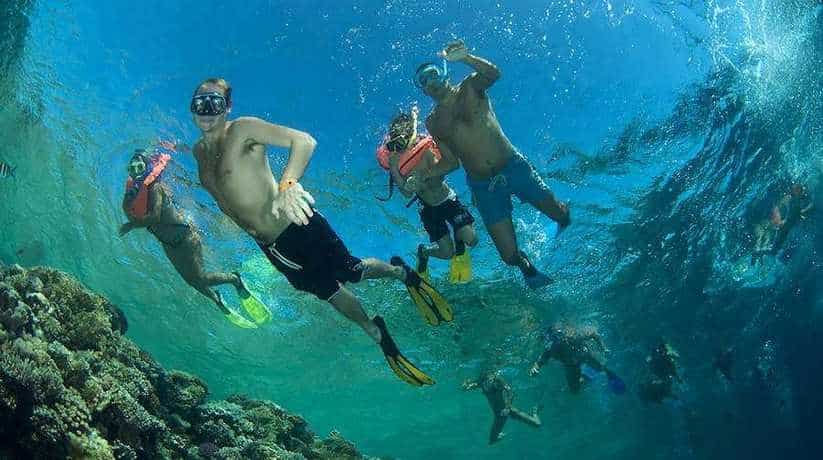
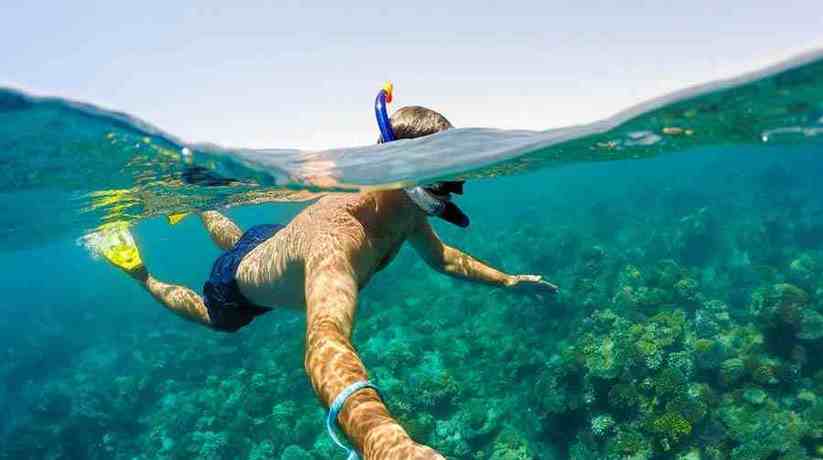
Egypt snorkeling is by far one of the most popular among vacationers coming to the Red Sea coast. The reefs are amazing and the coast peppered with easy to snorkel sites. In fact, itis where fishes and underwater fauna flourish like nowhere else. Whether you head to Hurghada, Sharm El Sheikh, or Dahab, you’ll find astonishing snorkeling spots. Alternatively, you can hop on a diving excursion or live aboard boat in any of the Red Sea major towns. It is in case you want to explore further sites. The temperatures of the Red Sea waters are warm enough to snorkel all year round. Keep in mind that the coldest month of the year is January and the warmest months are July and August.
Because of the low rainfall in this region of the world, and the absence of rivers flowing into the Red Sea, the water clarity is exceptional. A blessing for divers and snorkelers can easily marvel at the underwater natural treasures. Moreover, the Red Sea offers all kinds of snorkeling sites. In fact, it ranges from shallow to very deep sites where free-divers come to challenge their abilities. Currents can also be strong in some places in the Red Sea, but these are usually very predictable. That is why you should always think of asking a diving professional for advice before exploring a new site.
More information about Egypt Snorkeling:
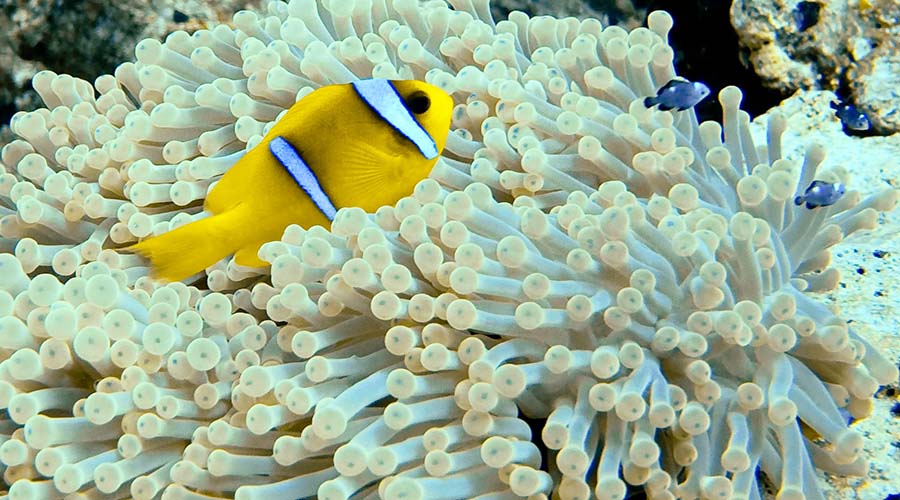
Before signing off, don’t forget to browse through the Diving Section as well. Many of Egypt’s Red Sea diving sites are equally good for snorkeling. Ain Sukhna might still not be considered as one of the best diving locations in Egypt. But in fact it surely has the potential of becoming a big hit on the Red Sea top diving destinations list. After renting your snorkeling gear, you’ll take a little dingy from the shore to come closer to a larger boat waiting for you offshore. After a short cruise, you’ll throw yourself into a whole new world. It is very similar to what you might have already seen if you’ve ever watched “Finding Nemo.” But the greatest thing is that, this time, it’s for real and in 3-D!
Only 45 km south of Hurghada, you’ll find the fantastic protected area of Sharm el Naga. In fact, it is a paradisiacal beach ideal for snorkeling or just relaxing in the sun. Get your gear from the mall in Hurghada, if you don’t want to rent it on site. Hop on a bus and spend a day exploring the underwater lively fauna and flora of the Red Sea. Fishes galore and exceptionally intact corals await you at this un-spoilt spot of the Red Sea Riviera. The wide sandy beach slopes smoothly into the waters. In fact, it is an ideal feature for beginners who may be scared off by depths. While on holiday in Makadi Bay, try to book a full-day snorkeling trip to the amazing Giftun Island protectorate. You’d never want the day to end, and it’s understandable.
Further information about Egypt Snorkeling:
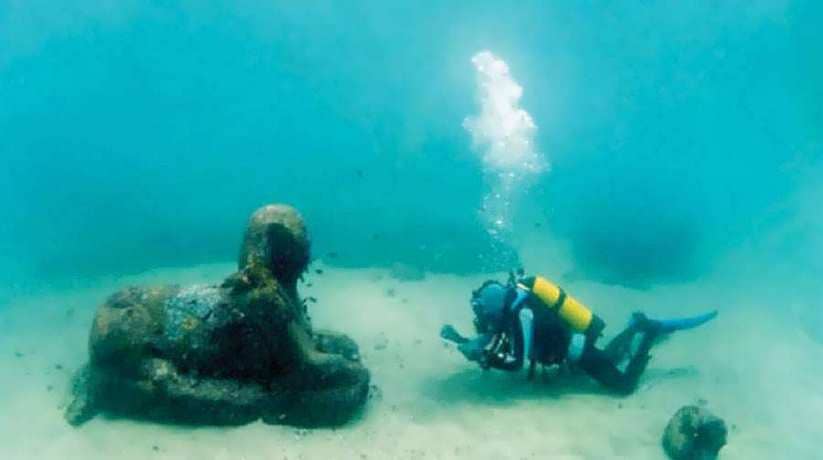
What could be more tempting and fulfilling than lying on magnificent sandy beaches. Go swimming in the crystal clear water of the Red Sea. It is while peeking at incredible coral heads dotting the shallow lagoons surrounding the island? The area is full of colorful fish species and some tourists were even lucky enough to swim with dolphins around Giftun. When on holiday with your friends or family in Sahl Hasheesh, you simply can’t fight the temptation of sneaking a peek at the legendary Sunken City. It is a few meters away from the shore. This maze of underwater temple-like structures and columns attracts a large number of colorful underwater species. In fact, they are great to watch as they make their way through the sunken alleys and rocks. Your kids will be delighted to observe the region’s new fish playground.
Trust the reviews on that one Shark’s Bay. It is undisputedly the best snorkeling site on the Sharm El Sheikh coast. Located 20 km north of the bustling Naama Bay, Shark’s Bay is a quiet beach. It leads to an underwater paradise of coral heads and colorful fishes. It is including blue-spotted stingrays, but no sharks! You’re requested to pay an entrance fee at Shark’s Bay. In fact, you’ll have no trouble finding snorkeling equipment for rental on-site. The Soma Bay luxury resort boasts an incredible house reef stretching over a total distance of one kilometer. The site packed full of underwater life and beautiful corals. Moreover, it is easily accessible through the beautiful wooden jetty that extends from the beach – where the dive center is located – to the edge of the reef.
More information about the activity:
Furthermore, you’ll easily find the Soma Bay diving center. It is where you can rent your snorkeling equipment and book an introductory course. The course in fact to snorkeling for your kids, or yourself, if you’re an underwater explorer rookie. On your holiday in Taba Heights, you may choose to snorkel at any spot. Just a couple of palm strokes away from your hotel’s sandy white beach. In fact, a far greater idea would be to go on the De Monfreid Snorkeling full day trip to the Pharaoh Island. It is where snorkeling is just something else. The trip organized daily by the local water sports center in Taba Heights.
Egypt Wreck Diving information tours, prices and online booking
Egypt Wreck diving features many sites in Hurghada, Sharm, Safaga, and Marsa Alam. In fact, Egypt Wreck diving include the Ship Graveyard of Abu Nuhas. The diving site is only an hour away by boat from El Gouna, Egypt. The diving in the site indeed is a fascinating experience. In fact, it is since this submerged reef caused the sinking of no less than 5 ships. This is why the reef called this name. In fact, the site name means “father of bad luck reef” since it considered as a sailor’s nightmare. The diving site features four of the sunken ships which can explored by divers. In fact, the sunken ships are the Giannis D which built as cargo ship and sunk in 1983.
Moreover, the site also houses the Carnatic which was British cargo and mail ship. Furthermore, the diving site also houses The Chrisoula K which sunk in 1981. The last one is Kimon M which was a German cargo and sunk in 1978. Egypt Wreck Diving sites also include the “Excalibur” which lies in fact a few meters from shore, inside Hurghada’s harbor. The wreckage of the Excalibur, also referred to as the Suzanna. In fact, the site is an easy dive for all levels of divers. It can even accessed from shore but boat trips are also organized to reach the site. The Excalibur ship is a 22-meter long twin mast motor. It sank in 1995 for undetermined reasons. In fact, a fire broke out in its main section a short time before it sank. Today, you’ll find it resting on the sea bed in an upright position.
More information about Egypt Wreck Diving:
Some of the shipwrecks which rest at the bottom of the Red Sea, intentionally sank to their current positions. In fact, it is to reduce the diving frenzy’s impact on the most frequently explored diving sites. This is the case, among others, of the Egyptian 44-meter long cargo ship Hebatallah. The ship bought from its owner after being abandoned for many years on a reef it drifted on after its moorings broke down. In fact, it was In 2004 thanks to the joint efforts of the Red Sea Diving Association. One of the most interesting ship wrecks to explore in the Red Sea is undeniably the 108 m long Rosalie Moller coal ship. In fact, the ship bombed by the German air force in October 1941 as it was transporting coal to Alexandria.
The wreck is surprisingly intact today, with some areas covered with hard and soft corals. The shipwreck in fact lies at a depth of 39 to 50 meters. The ship’s mast can be spotted from as low as 17 meters. Located south of Marsa Alam, the Hamada Shipwreck site can accessed by boat from Marsa Alam. In fact, it also included on many live aboard trails, especially those exploring the southernmost diving sites of the Red Sea in Egypt. The Hamada is a 65 meter-long cargo ship that sank in 1993, after a fire broke out on board. Divers explored it for the first time in 1995, and only then they discover that the damage caused by the proclaimed fire was not as tragic as expected. Most of the wreck lies today at 14 meters of depth at the “Abu-Gosoon reef.”
Further information about the attractions:
Built in 1966 as a Roll On/Roll Off PAX-ferry named the Ulster Queen, this ship could carry 1,008 passengers and 140 automobiles. It served as a P & O Ferry and then sold and renamed 3 times before it dubbed the Poseidonia. It traveled the Northern Mediterranean until 2005, when it transferred to the Red Sea and renamed for the last time. The newly dubbed Al Kahfain took its last voyage in November of the same year. On its way from Hurghada, an explosion took place in the engine room leading to a fast spreading fire. The crew (there were no passengers on board) abandoned ship and rescued. Sadly, one life lost. While Al Kahfain towed back to port it capsized and drifted into a reef.
Moreover, it sank at around 25 meters and resting almost upside down on its starboard side. The hull split and the wreck is still slowly collapsing, sometimes making audible creaking and grinding sounds. On a sunny day in late November 2001, the Egyptian-built live aboard “MV Hatour” was on its way to meet another diving boat at the Abu Kafan diving site. Sadly, it hit the southern side of the reef and began to take on water. Luckily enough it towed to shallower waters atop Sha’ab Sheer – also known as Hyndman Reef. At this point, all passengers salvaged and the boat sank to the depth it rests at today. In fact, it is 16 meters on the south-eastern side of the reef.
More details about Egypt Wreck Diving:
Egypt Wreck diving also include the wreck of the Agia Varvara. in fact, the shipwreck located a little to the North of Sharm El Sheikh. The word Agia pronounced with a silent “g”, which led to some confusion surrounding the ship’s name. Built in France, the ship had many names before finally re-named Agia Varvara in 1974. The vessel has three cargo holds in spite of its compact size. It owned by a Cypriot company when it went below. Its final voyage began on the 27th of June in 1976. It travelled from the Jordanian port of Aqaba towards the Suez Canal in the early morning. Moreover, it collided with a reef not far from Nabq. Luckily the crew rescued but the ship went down.
Known simply as the Barge at Bluff point, this is what remains of a ship with an identity that is lost. There are several theories about its origin, but none confirmed. The wreck sustained quite a bit of damage but it makes an awesome night dive. It located on the East of the Big Gubal Island, which is a wonderful dive sight in its own right, just 10 minutes away. The Barge covered in hard and soft corals and it is home to breathtaking marine life. This includes several giant morays, nudibranchs and large numbers of lionfish. Bluff Point itself is interesting as a wall dive. You will see hoards of glassfish as well as octopi, squid, crocodile fish, scorpion fish, and butterfly fish. Furthermore, turtles known to make an appearance.
Further details about the attractions:
The Dunraven is one of the best-known wreck dives in the Red Sea, second only to the famous Thistlegorm. Lying upside-down, broken in two, at a depth of 20 meters today, the wreck was once an English steam ship transporting spices, timber and gold from India. It hit the reef and sank in April 1876. The freighter’s content was removed by a team of archaeologists in the 80s. The site can be reached by boat; a permanent buoy marks the location of the ship. Although you have to be an experienced diver to be allowed to go for the Dunraven dive, the whole gig is similar to an easy cave exploration. Inside, divers usually encounter yellow goat fish and giant morays while outside, the ship’s hull encrusted with corals.
Shag Rock refers to two reefs located on the south-western side of the Sinai Peninsula tip. It can accessed by boat from Sharm El Sheikh. It also listed on most of the live-aboard and diving safari tours in the Red Sea. The site holds its name after the numerous shags, or cormorants which were frequent visitors of the reefs. Divers usually prefer to dive the southern reef along its east side. The site in fact houses amazing hard and soft coral formations. Moreover, the site is also full of pelagic. There are also sea cucumbers, sweetlips and butterfly fish. In the northern part of Shag Rock lies the 18th century steamship boat Carina in only 10 meters of water.
More details about Egypt Wreck Diving:
Egypt Wreck diving sites also include the SS Thistlegorm shipwreck. In fact, it was in the early fifties by the French diver Jacques Cousteau. It is about 10 years after the British ship sunk, in 1941, by a German air force bombing. Following the instructions of the local fishermen, Cousteau succeeded in locating the wreck. He also raised several items from it including a motorcycle, the Captain’s safe, and the ship’s bell. Diving around the wreckship today is like traveling through time. It is for many an emotional experience. In fact, the site is after all a bombing site and a war grave.
Marsa Abu Dabbab Marsa Alam, Egypt tours, booking, prices
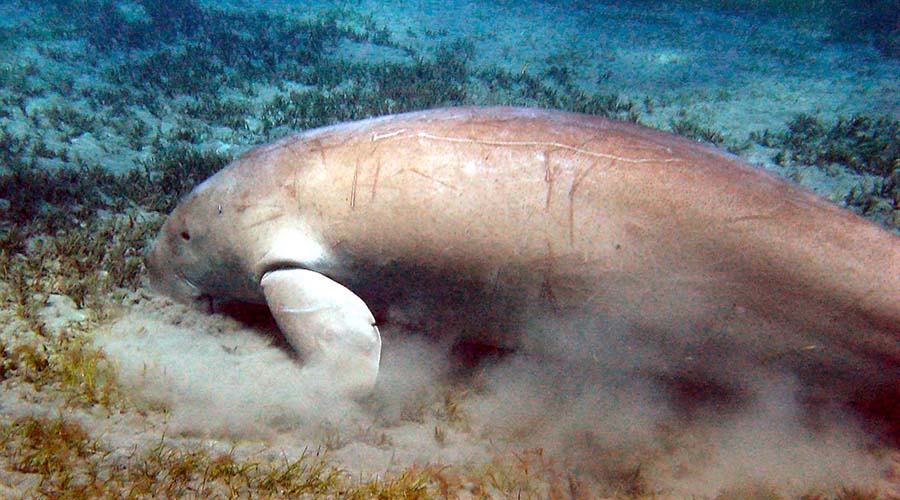
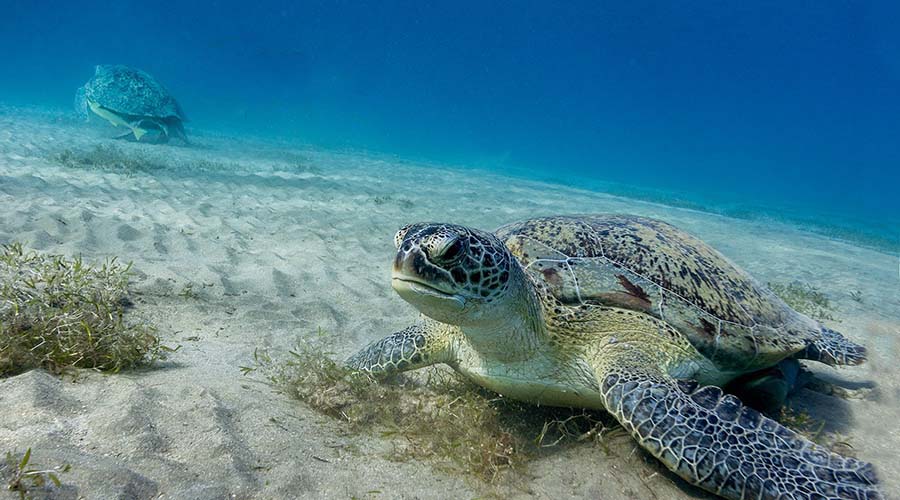
Marsa Abu Dabbab Egypt is a semi circular bay. In fact, the bay is part of the main coastline north of Marsa Alam. The diving site used as an overnight stop by most of the live aboard. Moreover, the site is a sandy slope with sea grass patches. Furthermore, Marsa Abu Dabba has no coral reef and visibility is as little as 5 meter in the shallows. Yet, the site houses resident Dugong and large green sea turtles that munch on the sea grass. Furthermore, the site has a good chance of guitar sharks. In fact, the guitar sharks prefer the shallow sea grass area. This dive often done as the final dive on a south safari.
Moreover, Marsa Abu Dabbab Egypt features a little point venturing deeper than 15 meter. In fact, it allows divers to spend plenty of time in the shallow water. A good dive plan is to start at the south entrance to the bay. And then, get all the divers in the group to form a line. Placing the deepest diver in around 15 meter and spacing divers 3 or 4 meters apart will mean something. So, a group of 6 to 8 divers those in the shallows will be in just 3 meters of water. Once in position the line simple moves around the perimeter of the bay area in a sweeping formation.
Further details about Marsa Abu Dabbab Egypt:
Those who are in the deeper water, should remember to swim slowly. In fact, it is because the line moves like the hand on a clock. So, those who are in the shallows have further to swim. Once divers spot something, the others can signal down the line. The visibility is usually poor at Marsa Abu Dabbab. In fact, it is due to the sand picked up by any swell. Keep an eye out for silver jacks (either lone or in pairs) close to the sea grass. These scavengers have a tendency to follow and pester guitar sharks. In fact, they scavenge the food from them. So, if you spot the silver jacks, it’s usually a good sign that there is a guitar shark below them.
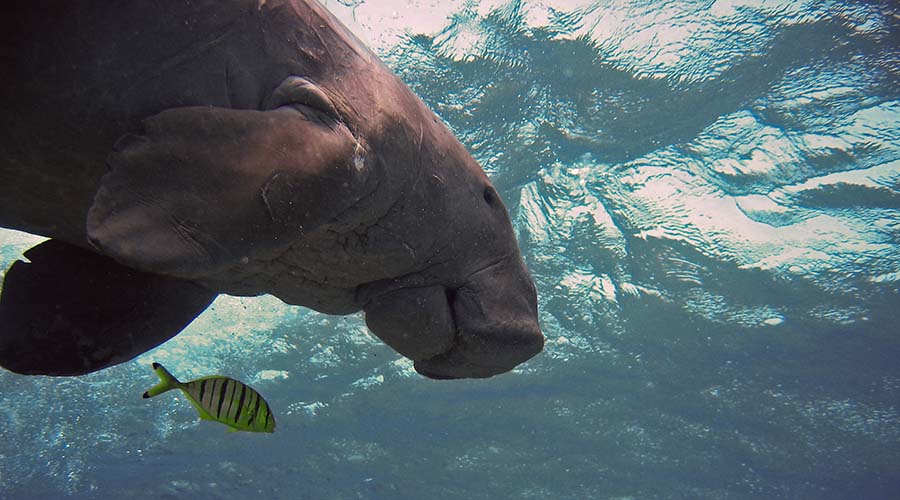
If you find the large green turtles feed on the grass, then they will accompanied by large Remora fish. These fish cling to the shells of the turtles and are a pelagic marine fish in their own right. The relationship is symbiotic, the remora acts as a cleaner. In fact, it removes parasites from the turtles and in return obtains a meal. Dugong “sea cows” is a unique feature of Marsa Abu Dabbab. Indeed, you will never see such them anywhere else in the Red Sea. If you look for an easy and relaxing dive, then the site will be the ideal destination. In fact, it is specially if you are a beginner.
Marsa Abu Dabbab Egypt facts:
Location: North of Marsa Alam.
Description: Reef System.
Depth: 3 – 30 meters + (10 – 100 feet).
Visibility: 20 meters (65 feet).
Nearby attractions Information, tours and Online Booking
Montaza Maamoura Archaeological sites are in a small bay in the eastern part of Alexandria, Egypt. They overlooked by Montaza Complex. In fact the archaeological sites are a testimony to the evident marine activity. The evident marine activity took place in the region in the period between the 1st and 6th centuries. Taposiris Parva, or the “Small Temple of Osiris” stood once on the small island. The island overlooks the bay from the east. The temple demolished in the 5th century. It was when Christians decided to destroy pagan temples throughout Alexandria. Moreover, the temple also known for its pagan High Priestess, Hypatia of Alexandria and daughter of Theon.
The Geometer who was the last head of the Great Alexandria Library before its destruction. This extraordinary historical figure known to be a talented mathematician, astronomer and philosopher. She shared her knowledge with her followers at the temple. She incurred the wrath of the church, which considered her acts as going against Christian beliefs. In March 416, Hypatia of Alexandria apprehended and beaten, before dragged into a church. Her abductors scraped her skin off with oyster shells or tiles. She believed that buried in an area known then as Cinaron.
Further details about Montaza Maamoura Archaeological sites:
There are no remnants of Taposiris Parva on the island, nor in the waters. The main attraction of the site is a long (approx. 200 m) stone pier dating back to the 1st century. It lies in 3 to 6 meters of water, surrounded by pieces of amphorae and small anchors. Maamoura Archaeological site located more to the east of Montaza. There lie the remnants of another stone pier, dating to approximately the same period. The area, some 6 meters deep also littered with pieces of amphorae and anchors.
A few years ago, one could also see bronze naval artifacts. Montaza Maamoura Archaeological sites can accessed from shore. You will need to make a somewhat long swim to reach them. Boats are also available for rent. The staff at the water sports center located in Montaza. The staff will be happy to help you out and guide you through your dive.
Nearby attractions Information, tours and Online Booking
Jackson Reef Sharm information, tours, prices and online booking
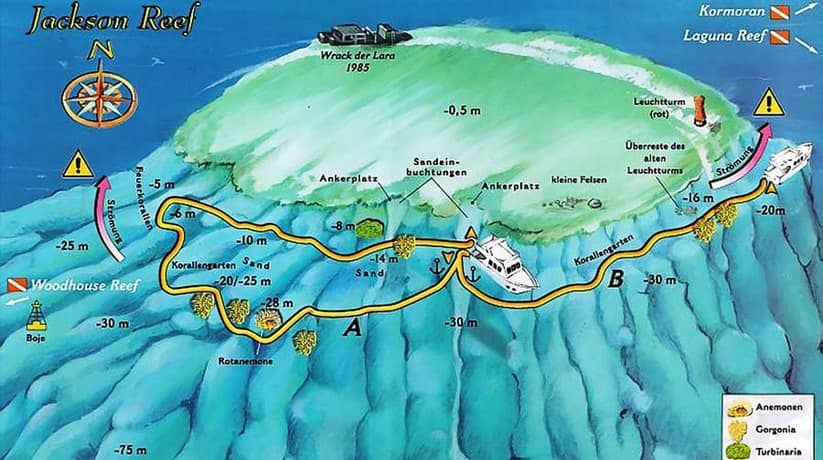
Jackson Reef Sharm is the most northern reef in the Strait of Tiran. On the northern edge of the reef, the wreck of a grounded freighter stands there. It is as a warning to shipping in the straits. Most of its hull salvaged for scrap, leaving only a skeletal hulk. In fact, there are fixed mooring exits at the southern end of the reef. Dives begin from this point and proceed generally northward along the east side of the reef. In fact, the current in Jackson Reef Sharm tends to run from the north. Generally picks up strength as you approach the point on the east side. Most divers will want to make this the northern limit of their dive, and turn back to the south here.
Strong swimmers with good air consumption and experience in currents can round the point. It is after which the current slackens, and continue their dive along the reef’s north edge. This should only done by prior arrangement with your dive guide. Great care should be taken, since divers swept off the reef here. The steep-sided walls of Jackson Reef Sharm are among the finest in the Sinai region. The current-swept reef densely grown with a real profusion of hard and soft corals. In fact, it is with special accents which provided by luxuriant gorgonian fans. You will also see sea whips, black corals and vivid growths of soft coral.
More information about Jackson Reef Sharm Egypt:
After sloping down, there is a plateau at about 30 to 60 feet. And then, the drop-off continues down to 225 feet. In fact, there are strong currents that carry divers around the northeast end of the reef. Moreover, there is a sandy bay that is shallow on the north side. Furthermore, there are many schooling reef fish as well as open ocean fish. You may see if you look around into the blue waters around the reef.
In fact, Jackson Reef Sharm feature fish life which, not surprisingly indeed is excellent. The strong current brings plenty of nutrients for reef and schooling fish. Moreover, current and profile combine to tempt pelagic fish in from the open water. Furthermore, large schools of barracuda and jacks are common here. In fact, as larger predators including several species of shark. The smaller reef species on which these pelagic visitors feed are profuse.
Jackson Reef Sharm Site facts:
Location: The northernmost of four reefs extending down the center of the Straits of Tiran.
Access: By local or live-aboard boat from Sharm El Sheikh or other ports.
Average Depth: 20m (65ft).
Maximum Depth: 40m+ (130ft+).
Average Visibility:20m (65ft).
Nearby attractions Information, tours and Online Booking
Jackfish Alley Sharm information tours, prices and online booking
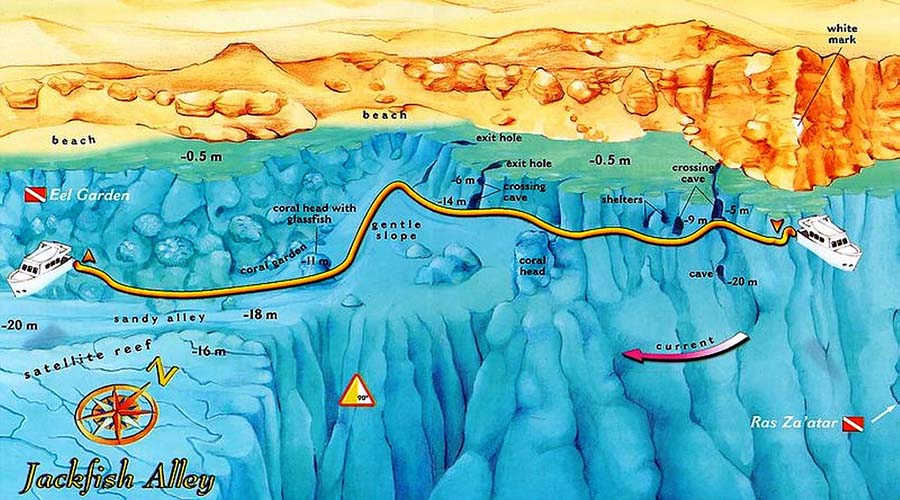
Jackfish Alley Sharm in fact known as Fisherman’s Bank and Stingray Alley as well. In fact, Jackfish Alley located on the north side of the Ras Muhammed in Sharm El Sheikh. It is within the boundaries of the Ras Mohammed National Park. In fact, it is a popular shore dive site and is located a short distance from the beach. Moreover, the reef top is sand and has a sloping drop off. Furthermore, there are many colorful reef fish like the emperor angelfish and regal angelfish. Moreover, there are also yellow band angelfish and pairs of blue cheek butterfly fish. Beginning with a sheer wall, the early section of the wall is very porous. In fact, it is with lots of small holes and crevices. It also boasts a couple of penetrable caves, each featuring separate exit and entrance holes.
More information about Jackfish Alley Sharm:
Proceeding southward, the wall gives way to a sandy plateau at around 20m (65ft). In fact, it well covered with coral heads and outcrops. After widening out considerably, the plateau narrows at its southern end to form a small channel or alley. Further out from the Jackfish Alley Sharm wall, a second, seeper plateau can found.
Coral growth is good overall and the fish population is excellent. In fact, it is with plenty of the jacks and stingrays. They give the site at least two of its names and all the usual reef fish. The typical depth range of Fisherman’s Bank is 10 to 80 feet and is best accessed by a shore dive, boat dive, or local guide. The required experience for this site starts from the novice snorkeler till the advanced one.