Activities in Nile Valley

Things to Do

Bab El Nasr Cairo Egypt

Bab El Nasr Cairo Egypt

  • Bab El Nasr Cairo Egypt
  • Bab El Nasr Cairo Egypt
  • Bab El Nasr Cairo Egypt
  • Bab El Nasr Cairo Egypt
  • Bab El Nasr Cairo Egypt
  • Bab El Nasr Cairo Egypt

Bab El Nasr Cairo Egypt, tours, booking, prices, reviews

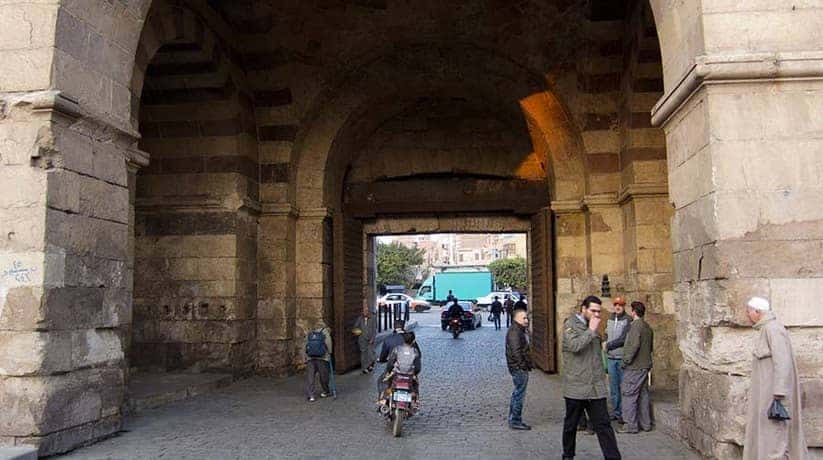
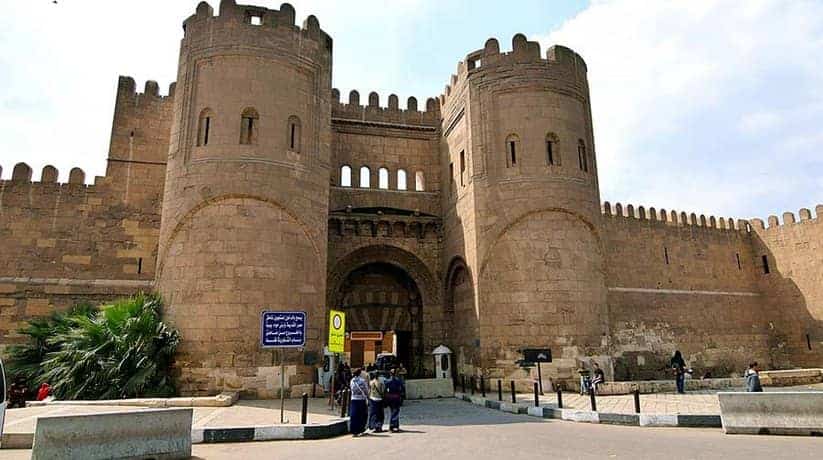
Bab El Nasr Cairo is a massive gate in Cairo, Egypt. In fact, it is one of famous three massive gates. Al Gamali was governor of Acre in 1074. The Fatimid caliph, Al Mustansir called him to put down a revolt. The revolt was of the Turkish military commanders and their troops. After executing the rebels, Al Gamali’s first task was to reinforce the defenses of Cairo. It was besides to rebuild Gawhar’s brick wall, which collapsed. He did so with stone, which marked the beginning of a newly cultivated taste for stone in Cairo. But, it should realized that a considerable amount of stone that he used originated in the Giza necropolis. So this also marks the destruction of many of those Pharaonic monuments around Cairo.

In 1087, Cairo was not much of a fortified city with its sun dried brick walls which built by Gawhar. Though this weakness demonstrated itself on occasions. Badr ad-Din el-Gamali, employed three Christian Syrian monks. One named John the Monk from Edessa. This is to build the three main gateways of the Fatimid wall. These massive gates called Bab Al Futuh (Gate of Conquest), Bab El Nasr Cairo (Gate of Victory) and Bab Zuweila. In fact, the gates mark the southern and northern boundaries of the ancient city. The present site replaced the original one, built by Gawhar a little to the south. Badr named it Bab Al Izz (Gate of Glory). The tradition of the people prevailed and its name never actually changed.

Further details about Bab El Nasr Cairo:

In fact, Bab El Nasr Cairo is the only one of the three major gates of ancient Cairo. In fact, the gates composed of two rectangular towers. Moreover, those of both Bab Al Futuh and Bab Zuweila have rounded towers. Bab El Nasr Cairo towers are solid stone up to the second level. This tower is perhaps the least decorated of the three. Moreover, the inscription over the entrance gives the name of Badr Al Gamali. Above the entrance arch an inscription slab in Kufic carries the shahada with the Shi’a reference to Ali. Furthermore, the towers let the defenders to deliver flanking fire. They also let them trying to scale the wall between the towers. The defenders could move from tower to tower under complete cover. Thus, they can guard rooms, living quarters and supply points.

Moreover, they also make each section of the wall a fortress in itself. Bab El Nasr has a significant feature of decoration. It is the the shields and swords that Creswell identifies as Byzantine in shape. In fact, some point downward while others are circular. They no doubt are symbolic of the protection that the walls afford against invaders. In fact, the name, “Gate of Victory,” like Bab Al Futuh, “Gate of Conquest,” should also understood as talismanic. These fine walls, really initially built to protect Cairo from the Seljuk Turks, never challenged by invaders. They were so encroached upon by other buildings which travelers often reported that Cairo had no fortification at all.

More details Bab Al Nasr Cairo:

Al Ma’mum Al Bata’ihi was the vizier during the reign of the Caliph Al Amir. He built the Al Aqmar Mosque. Moreover, he transferred the observatory from the Muqattam hill and established it at Bab El Nasr. The transportation of the heavy metal observatory was an difficult task. It needed scaffolds, wheels and a large team of workers and. It also needed an architectural structure to support it. Al Ma’mun fell into disgrace before the observatory could used. The angry Caliph ordered it to dismounted because it named Al Rasad Al Ma’muni. It attributed it to the vizier rather than to the Caliph.

Bonaparte’s troops used Bab Al Nasr Cairo to protect themselves from the rebellious Cairo population. The Husayniyya quarter was famous for its untamed and violent character. It was not easy to subdue. French officer of Polish origin, Schulkowky, killed by a Husayniyya resident. That is why the French troops bombarded the Husayniyya from these walls. They demolished the district. French officers’ names still carved near the upper level of the gates. The French blocked up the crenelations at the top and enlarged the arrow slits for canon holes.

Further details about Bab Al Nasr Cairo:

The other towers of the northern wall, Napoleon’s troops renamed the eastern tower Tour Corbin. The western one Tour Julien, after two of his aides-de-camp. Of course, these names left with the French. Creswell also attributes the Machicoulis at Bab Al Nasr Cairo, to the French. Machicoulis is a protruding structure used to spill burning liquids on attackers. It was not until the 20th century that the walls cleared of various obstructions. It is including more modern buildings and made visible again. Apart from being great representatives of Islamic military architecture, all three of these gates particularly important. They are among the few examples of military work predating the Crusades.
Nearby attractions Information, tours and Online Booking

More of Islamic Egypt

More of Egypt attractions

MORE
Bab Al Futuh Cairo Egypt

Bab Al Futuh Cairo Egypt

  • Bab Al Futuh Cairo Egypt
  • Bab Al Futuh Cairo Egypt
  • Bab Al Futuh Cairo Egypt
  • Bab Al Futuh Cairo Egypt
  • Bab Al Futuh Cairo Egypt
  • Bab Al Futuh Cairo Egypt

Bab Al Futuh Cairo Egypt tours, booking, prices, reviews

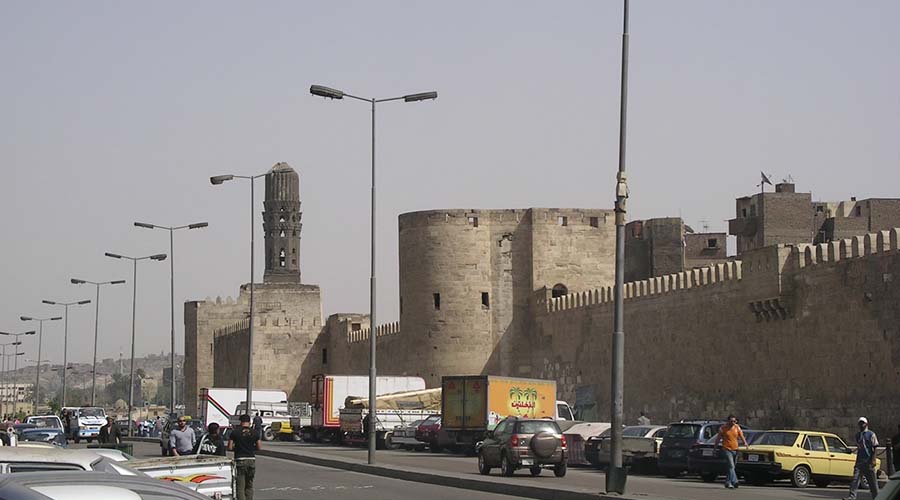
Bab Al Futuh Cairo built in 1087 by Badr al-Gamali. In fact, it replaced an earlier gate placed somewhat to the South. Moreover, it included in the original enclosure wall of Gawhar. The given name to Bab Al Futuh Cairo was Bab al-Iqba. The populace transferred the name of the old gate to the new. During Napoleonic times this called the Tour Lescale. In 1087, Cairo was not much of a fortified city with its sun dried brick walls. This weakness demonstrated itself on occasions. Badr Al Din El Gamali, the visor of El Mustansir, employed three Syrian brothers from Edessa. It was to build the three main gateways of the Fatimid wall. They made of stone which was to provide fortification. These massive gates called the Bab (gate) Al Futuh, El Nasr Gate and Zuweila Gate.

In fact, Bab Al Futuh in Cairo, or Gate of Conquest consists of a huge vaulted opening. Moreover, it carved from a massive block of stone and flanked by two rounded towers. The masonry considered to be finer than that of the southern gate (Bab Zuweila). Furthermore, it marks the northern boundary of the old Fatimid City. In past times, the great caravan of pilgrims returned each year from Mecca. It enters this gate and making their way to the Citadel. Today, the entrance appears squat. In fact, this is due to the base of the gate being sixteen feet below street level. The interior of the gate is accessible. One may traverse the wall either on top or from within to the more eastern Bab Al Nasr.

Further details about Bab Al Futuh Cairo:

In fact, the construction of Bab Al Futuh is lik Bab al-Nasr. Moreover, the structure solid for two-thirds of its height. In fact, the form is different. The flanking towers of the gate are 23 m high from original ground level. They have rounded fronts and the bases rest on chamfered rectangular plinths. Furthermore, each tower decorated with an arched panel on the front and on the sides. Only the latter decorated with an inner ring of cushion voussoirs. The three arrows slits in a rectangular panel surrounded by a continuous molding. Moreover, it runs around the tower across the gateway and onto the other tower. The great arch of the gateway decorated with a carved lattice pattern. It is inside the lozenges of which are flowers and geometrical motifs. Above, eight decorated brackets which support a stone shelf running between the towers.
In fact, this supports a shallow arch above. Moreover, it is a large rectangular panel which pierced by five round-arched openings. Across the top a small corbel supported on brackets. The whole structure crowned with round-headed crenellations. Inside the latticed arch the gate spanned by a flat massive joggled lintel. Under the great arch an elaborate voussoir with carved keystone. Behind the doorway a tunnel-vaulted passage leads into the porch. This covered (unlike the Bab al-Nasr) with a shallow dome on pendentives. On each side is a vaulted recess. At the inner end of the porch is a great arch with 27 voussoirs. At the summit of the rear face, there is a molding carried around the flanks of the gate. Inside each tower is a long vaulted room.
Nearby attractions Information, tours and Online Booking

More of Islamic Egypt

More of Egypt attractions

MORE
Aqua Park Cairo Egypt

Aqua Park Cairo Egypt

  • Aqua Park Cairo Egypt
  • Aqua Park Cairo Egypt
  • Aqua Park Cairo Egypt
  • Aqua Park Cairo Egypt
  • Aqua Park Cairo Egypt
  • Aqua Park Cairo Egypt

Aqua Park Cairo Egypt tours, booking, prices, reviews

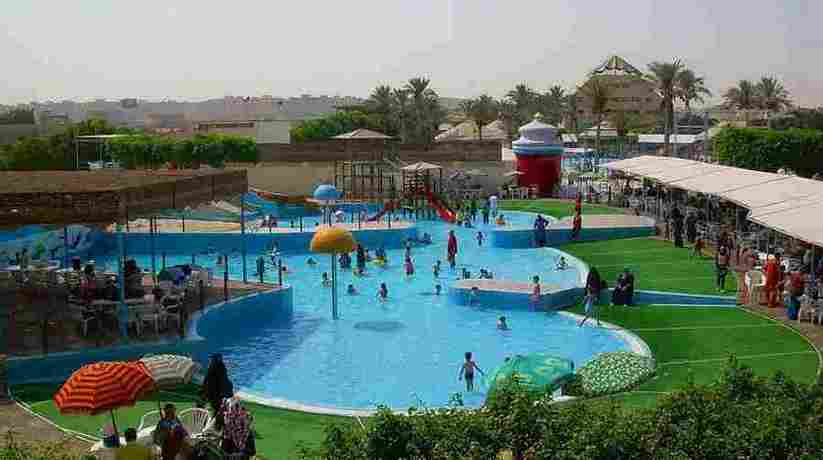
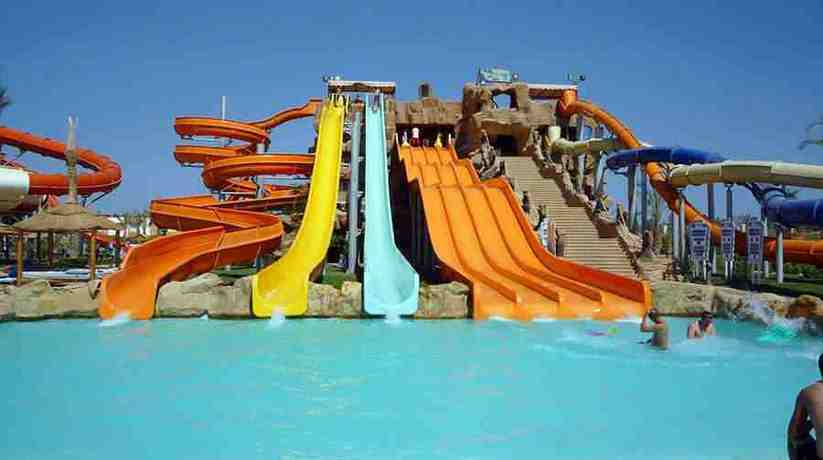
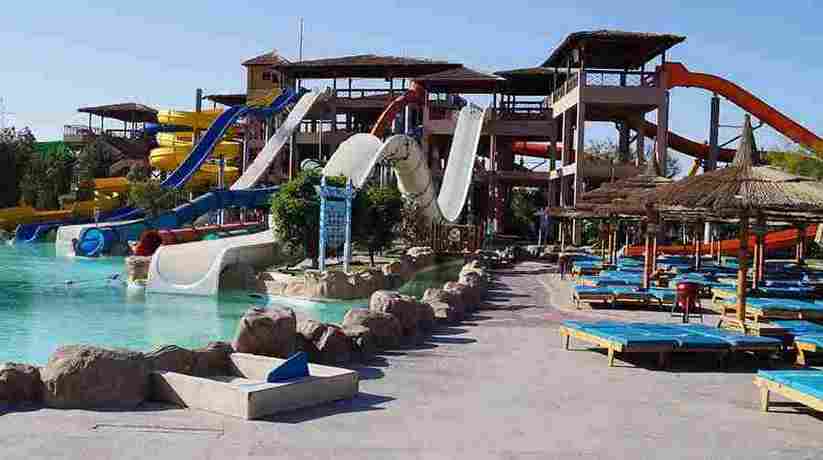
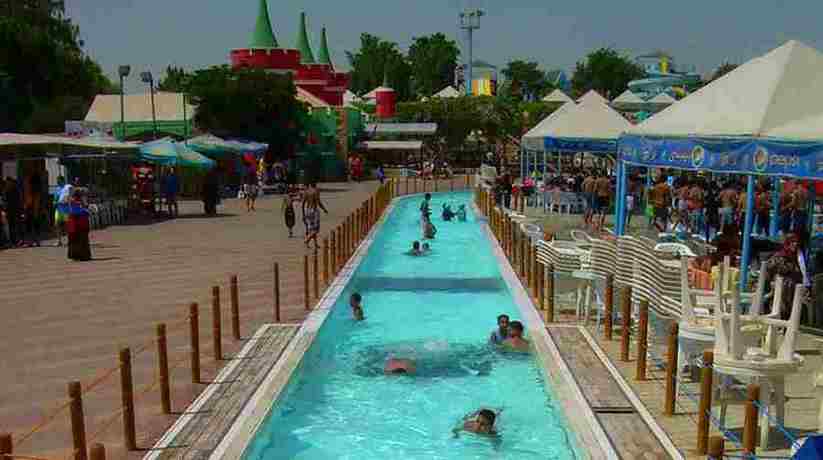
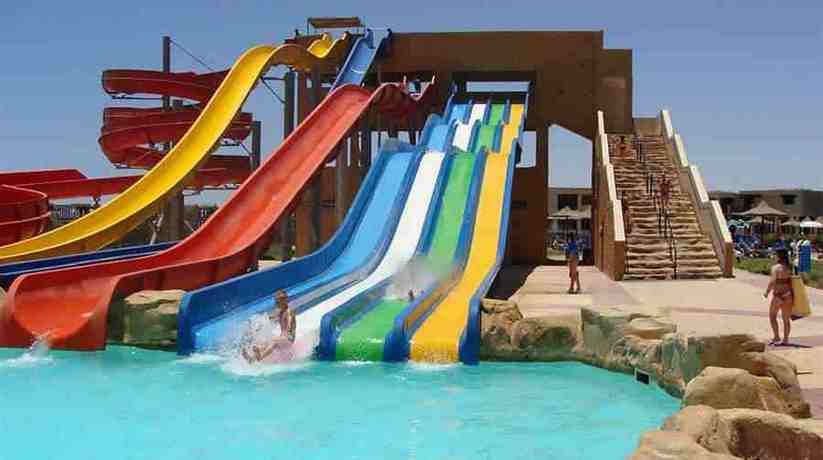
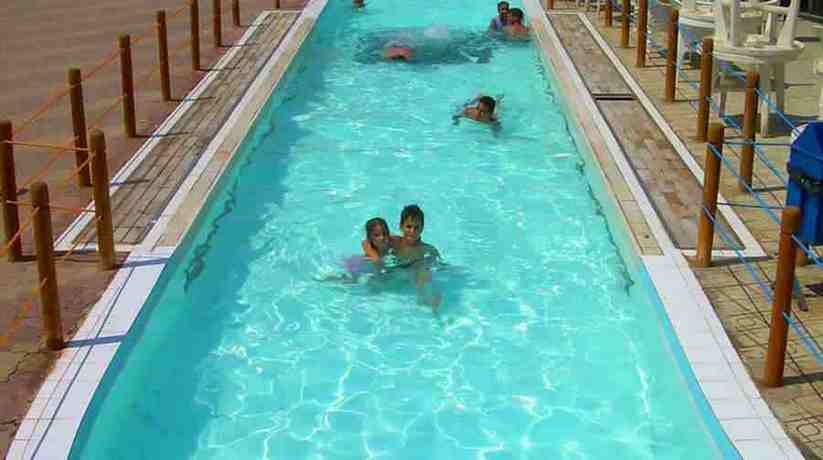
Aqua Park Cairo Egypt (Crazy Water) is a water park in the desert. What could be more refreshing?. Why not spend your day surfing or bouncing about in the Big Surf wave pool?. How about riding several stories down a water fall, or slipping down the Kamikaze water slide? Sound like fun !. In fact, there is a lot more which offered in Aqua Park Cairo for your amusement. Moreover, the entrance is also quite affordable. Make sure you ask about the special family offers. You can alternate between tanning on the beach chairs and going wild in the video arcade. It is in case you don’t want to get wet.

Aqua Park Cairo indeed is the largest Aqua Park in Egypt and the Middle East. In fact, it is 10 minutes away from Heliopolis. Moreover, it features day use chalets, artificial sea waves pools and 5 stars swimming pools. Furthermore, it also features giant slides, hot meals restaurant and kids garden. In 2009, the park opened a private Swimming pool for ladies. It widely used by women. Aqua Park Cairo located at Kilo 31 Cairo Ismaeileya road. Moreover, it is in front of Oruba residential compound. The total area is 66150 square meters. Furthermore, it features 9 water games and 2 parking areas. It also features Cafes, Restaurants and stores.

The ticket for adults is 140 Egyptian pound. Moreover, the ticket for children from 3-10 years old is 120 Egyptian pound. The ticket cost include a meal.

Further details about Aqua Park Cairo Egypt:

Aqua Park Cairo is near to the Citadel of Saladdin. It is indeed one of Cairo’s most popular tourist attractions. It located on a spur of limestone that detached from its parent Moqattam Hills by quarrying. Moreover, Cairo Citadel is one of the world’s greatest monuments to medieval warfare. In fact, it is a visible landmark on Cairo’s eastern skyline. When viewed from the back side, Cairo Citadel reveals a medieval character. The area where Cairo Citadel located now began it’s life as the “Dome of the Wind”. It is a pavilion which created in 810 by Hatim Ibn Hartama, who was then governor. Indeed this area well known for its cool breeze. In fact, the early governors didn’t realize its strategic importance. However, they used the pavilion for its view of Cairo.

Nearby attractions Information, tours and Online Booking

More of Egypt Fun & Leisure

More of Egypt attractions

MORE
Aswan Old Dam Egypt

Aswan Old Dam

  • Aswan Old Dam Egypt
  • Aswan Old Dam Egypt
  • Aswan Old Dam Egypt
  • Aswan Old Dam Egypt
  • Aswan Old Dam Egypt
  • Aswan Old Dam Egypt

Aswan Old Dam Egypt tours, booking, prices, reviews

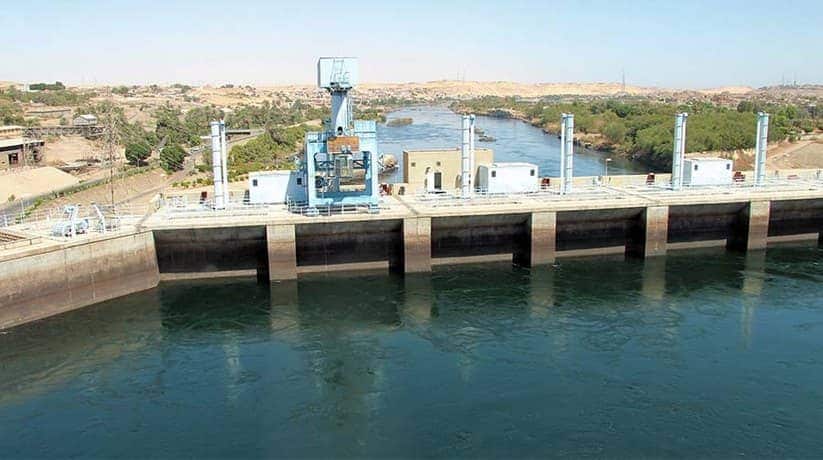
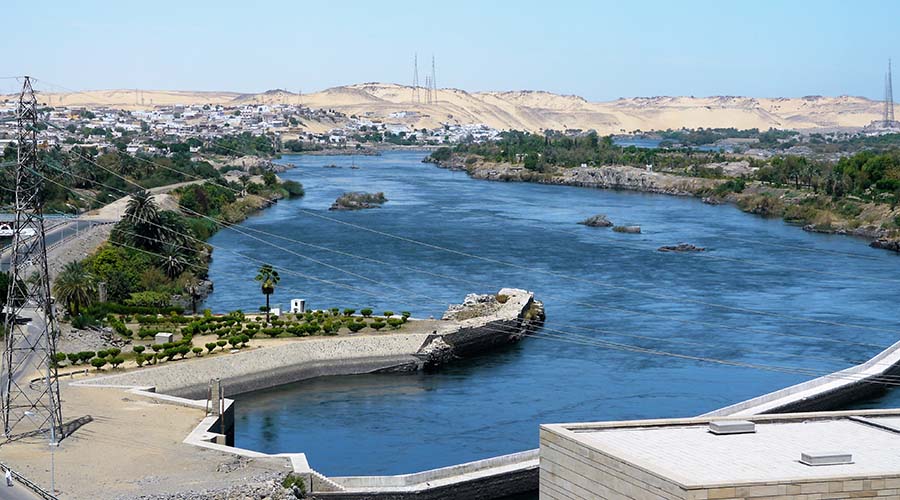
Aswan Old Dam is a gravity masonry buttress dam on the Nile River in Aswan, Egypt. In fact, Aswan Old Dam built at the former first cataract of the Nile. The Dam located about 1000 km up-river and 690 km south-southeast of Cairo. It constructed between 1899 and 1902. In fact, it intended to reduce flooding and to support population growth in the lower Nile. The dam provided inadequate flood protection and raised twice, between 1907–1912 and 1929–1933. The alterations did not suffice and it nearly over-topped in 1946. As a result, it led to the construction of the Aswan High Dam 6 kilometers (4 mi) upstream.

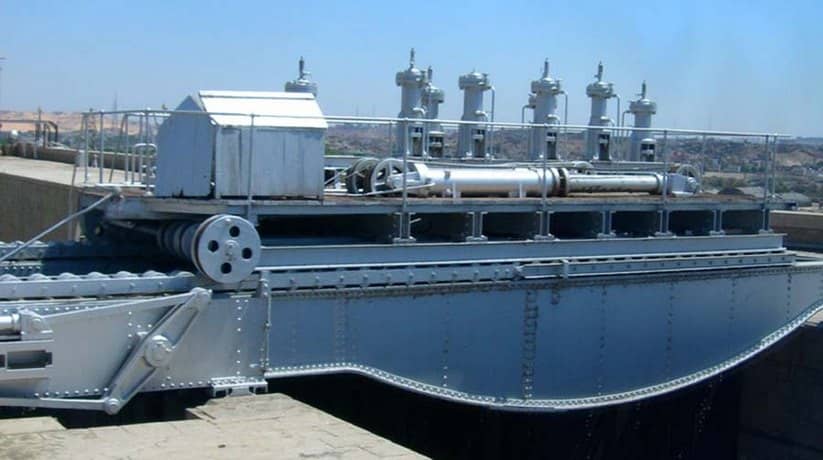
In fact, the British invasion and occupation of Egypt was in 1882. They began the construction of Aswan Old Dam across the Nile in 1898. The construction lasted until 1902 and opened on 10 December 1902. It was by HRH the Duke of Connaught and Strathearn. In fact, designed by Sir William Willcocks. Moreover, it involved several eminent engineers of the time. The dam designed as a gravity-buttress dam. The buttress sections accommodate many gates. The gates open yearly to pass the flood and its nutrient-rich sediments. In fact, it is without retaining any yearly storage. The dam constructed of rubble masonry and faced with red ashlar granite. When constructed, the dam was the largest masonry dam in the world.

Further details about Aswan Old Dam:

The design also included a navigation lock of similar construction on the western bank. In fact, it allows shipping to pass upstream as far as the second cataract. It is before a portage overland required. At the time of its construction, nothing of such scale attempted. The initial limitations imposed on its height due to concern for the Philae temple. Furthermore, the initial construction soon was inadequate for development needs. The height of the dam raised in two phases, 5 meters between 1907–1912 and 9 meters between 1929–1933. The generation of electricity added. With its final raising, the dam is 1,950 m in length. It is also with a crest level 36 m above the original riverbed.

The dam provides the main route for traffic between the city and the airport. As a result of the High Dam upstream, the Old Dam’s ability to pass the flood’s sediments lost. In fact, the serviceability provided by the locks. Aswan Old Dam reservoir level also lowered. In fact, it now provides control of tail water for the High Dam. The Old Dam in Aswan supports two hydroelectric power plants, Aswan I and Aswan II. Aswan I which built in 1960 contains 7 X 40 MW generators. It is with Kaplan turbines which for a combined capacity of 280 MW. It located west of the dam. Aswan II which built 1985 contains 4 x 67.5 MW generators for an installed capacity of 270 MW. It located at the toe of the dam.

Nearby attractions Information, tours and Online Booking

More of Modern Egypt

More of Egypt attractions

MORE
Ankh Hor tomb Luxor

Ankh hor tomb Luxor

  • Ankh Hor tomb Luxor
  • Ankh Hor tomb Luxor
  • Ankh Hor tomb Luxor
  • Ankh Hor tomb Luxor

Ankh hor tomb Luxor Egypt tours, booking, prices, reviews

Ankh hor tomb Luxor is one of a series of large tombs in the Asasif area. The area located in the West Bank of Luxor. In fact, the tomb built at the end of the Third Intermediate Period. It built for high officials in the estates of the Gods Wives of Amun. The great importance of the Gods Wives during this time reflected in the size of the tombs. Moreover, these tombs of their chief administrators, that of Ankh-hor being no exception.

Ankh-hor was ‘Steward of the Divine Votress Nitocris’ and also “Great Mayor of Memphis“. Moreover, he also was ‘Overseer of Upper Egypt in Thebes’ and ‘Overseer of the Priests of Amun’. It was during the reigns of Psamtek II and Apries (Wahibre) of Dynasty XXVI. Furthermore, his tomb as Chief Steward of Nitocris, he was one of the most important and wealthiest men in Egypt.

Further details about Ankh hor tomb Luxor:

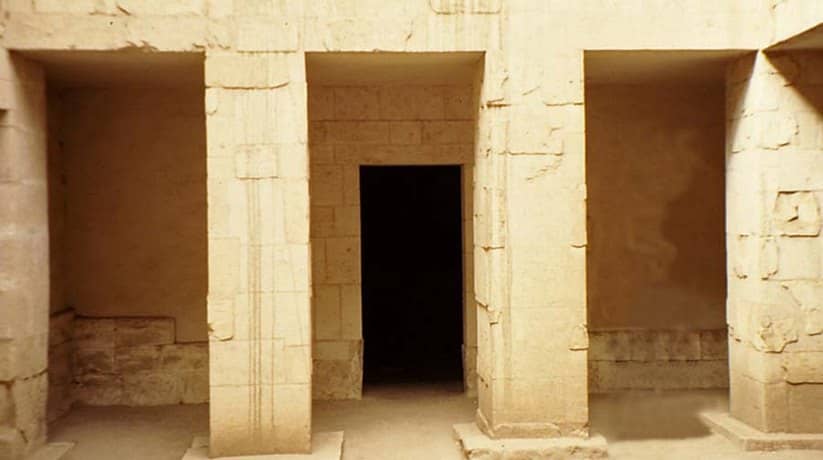
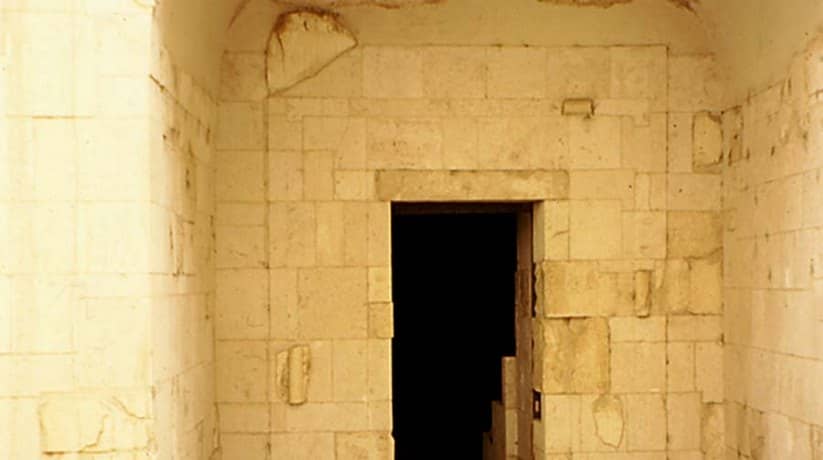
Above the ground of Ankh hor tomb a large mud-brick pylon constructed. Behind this a courtyard leading to a staircase and the subterranean levels of the tomb. Little remains now of the structures above-ground. The stairs lead into a small (not decorated) cult room with remains of a false door. To the right (west) a passage leads into a hall. The hall had four square pillars, but only three remain.

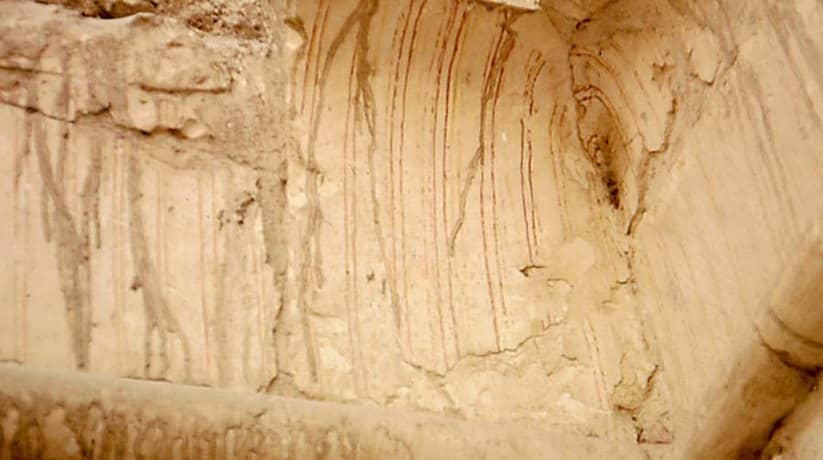
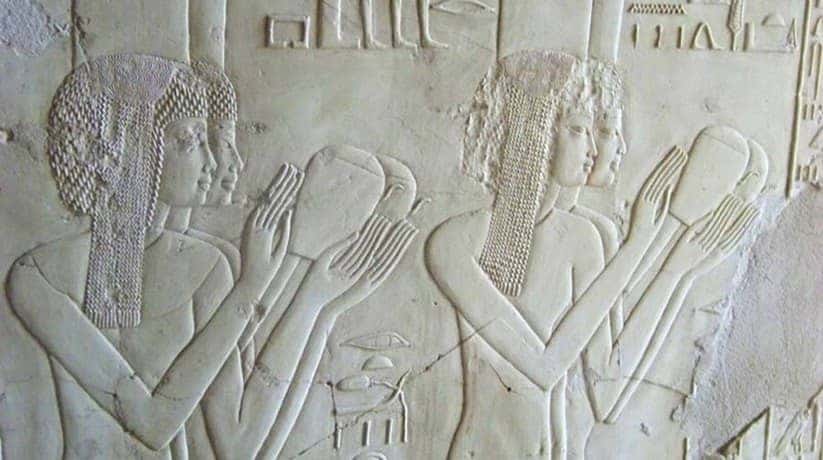
In fact, the most interesting part of Ankh hor tomb Luxor to seen today is indeed the next chamber. It is a sun court which constructed around an open space with pillars on the northern and eastern side. Moreover, in front of the pillars on the eastern side an offering table remains in situ. Furthermore, in this court there are some of the finest reliefs of the period. They also with much of the decoration damaged or unfinished. Moreover, a striped carvetto cornice around the court still shows some color. It is also besides to areas which drawn in red but left uncompleted. A cartouche of Psamtek II can seen on the entrance wall.

More details about Ankh hor tomb Luxor:

In fact, the tomb followed the decoration in Pabasa tomb (TT 279). Moreover, the tomb has some rare scenes of beekeeping. Although the complete hives not shown as they are in Pabasa tomb, but only the honeycombs. All the inner chambers of Ankh hor tomb Luxor, which quite extensive, left unfinished. On the western side of the sun court is a short passage. Moreover, it features a cor-belled roof. The roof leads to a large pillared hall.

In fact, eight pillars can seen roughly carved out of the rock. This chamber in turn leads to a vestibule with a small cult chamber and statue niche at the western end. Other chambers off the northern side lead to small rooms on an upper level. The tomb re-used in later periods and contained intrusive burials. Remains of a mummy can still seen in one of the side-chambers. Ankh-hor’s burial chamber is on the southern side of the vestibule. The burial chamber neither plastered nor decorated. It is where visitors can look down into the deep burial shaft.

Entrance to Ankh hor tomb Luxor:

Ank hor tomb Luxor and Kheruef tomb art at el-Asasif area. They are open from 8 am to 4 pm in winter. Tickets can bought at the ticket office for 25 Egyptian pound.

Nearby attractions Information, tours and Online Booking

More of Ancient Egypt

More of Egypt attractions

MORE
Allegria Golf course Cairo

Allegria Golf course Cairo

  • Allegria Golf course Cairo
  • Allegria Golf course Cairo
  • Allegria Golf course Cairo
  • Allegria Golf course Cairo
  • Allegria Golf course Cairo
  • Allegria Golf course Cairo

Allegria Golf Course Cairo Egypt booking, prices, reviews

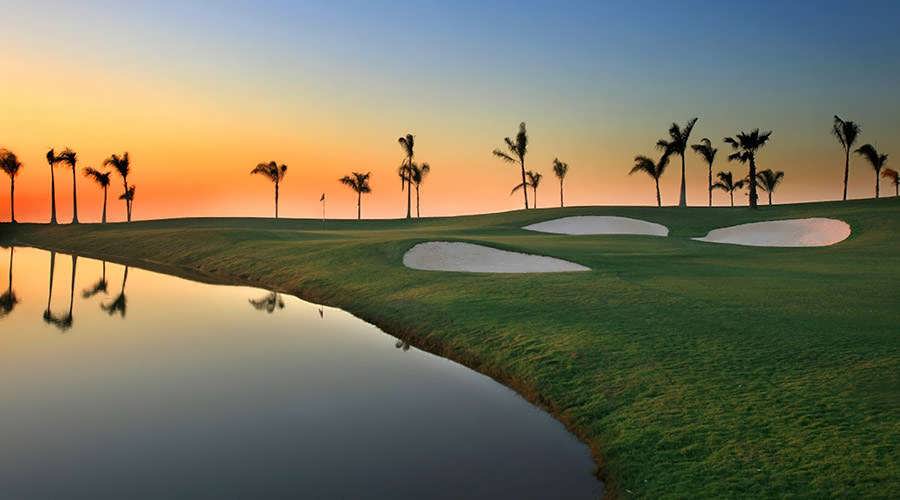
Allegria Golf course Cairo is the first Norman-designed Golf course. It is Troon Golf’s first project in Egypt. In fact, it situated west of Cairo within SODIC’s award winning residential development. Allegria Golf course designed with young families and children in mind. Moreover, it comprises modern residential facilities set within acres of pristine parkland. The course provides a stunning backdrop for the development’s luxurious villas, townhouses and features state-of-the-art facilities. The facilities include clubhouse, Golf academy and driving range.

Allegria Golf course also features a five star boutique hotel. It also features luxurious spa. The spa located in the extensive list of the community’s amenities. In fcat, the 18-hole course managed by Troon Golf. Troon Golf is the world’s leading Golf management. It is also a development and marketing company. The golf course has designed to blend in the convivial and warm atmosphere of the Allegria community. The course thus peppered with natural elements. It serves as hazards, such as lakes, a stream, high rocks and lavish greenery. The golf course is 18 hole. The facilities include Clubhouse, Club Rental and Caddies.

Further details about Allegria Golf course Cairo:

In fact, Allegria Golf course is near to El Hassana Dome National Park. The National Park is a unique geological formation in Giza, Egypt. It created 100 million years ago. Moreover, it designated a natural protectorate in 1989. It was by Prime Ministerial Decree 946/1989. It currently threatened by encroaching urbanization and construction works. Furthermore, the National Park located in the area of Abu Rawash which is 8 Kilometer from Giza Pyramids. It features geological importance and richness in fossils. It first discovered in the mid nineteenth century.

Moreover, the course is also near to Dreamland Golf course. Dreamland golf course located only few minutes from the Great Pyramids of Giza. It has designed by the famous Golf architect Karl Litten. Dreamland golf course is one of the longest in Egypt.It has a special pharaonic touch to it. The actual Giza pyramids are visible from some holes. The holes themselves have called names like Ramses the First! Challenges include mounding, lakes, trees and sand areas.

More details about Allegria Golf course in Cairo:

Furthermore, Allegria Golf course is also near to Orange Lakes Golf club. The golf club situated on the Cairo to Alexandria desert road. It is just a short drive north of the capital. Moreover, it holds its name from the 5 enormous lakes covering a total area of 215.000 square meter. Orange Lakes Golf club threw its doors wide open for business. It is also for christening the course with a celebratory team shotgun competition. It is for a select group of invitees.

Allegria Golf course is also near to Hilton Pyramids Spa. In fact, the spa located at Hilton Pyramids Golf Resort. It is at 6 of October city. Moreover, it is minutes away from the hustle and bustle of Cairo city. Hilton Pyramids spa is 1800 square meters center. In fact, it is the ideal sanctuary for relaxation and well-being. It is an oasis of exceptional personal service and amenities!. Indulge in a hydro-thermal pool bath to release your neck and back tensions. It is before trying one of the various massages on offer. These performed by trained professionals. Hilton Pyramids spa facilities include all-year-around Heated Indoors Swimming Pool. It also features Heated Hydro-massage Pool, Sauna and Steam.

Nearby attractions Information, tours and Online Booking

More of Egypt Fun & Leisure

More of Egypt attractions

MORE
Babylon Fortress Cairo

Babylon Fortress Cairo

  • Babylon Fortress Cairo
  • Babylon Fortress Cairo
  • Babylon Fortress Cairo
  • Babylon Fortress Cairo
  • Babylon Fortress Cairo

Babylon Fortress Cairo Egypt tours, booking, prices, reviews

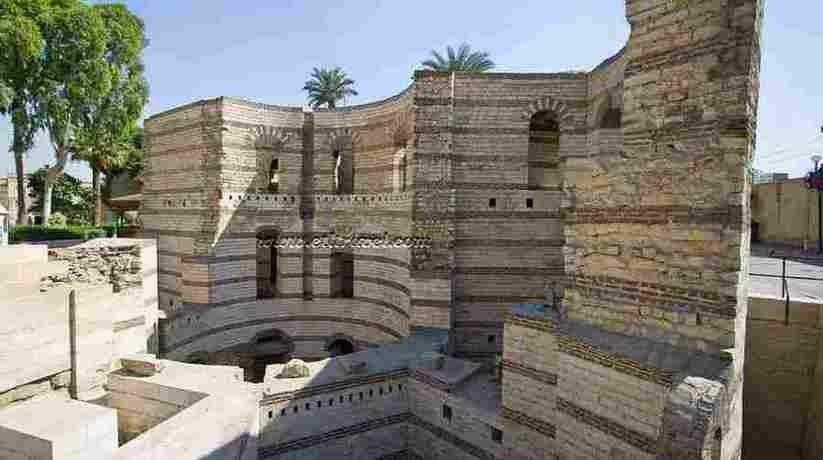
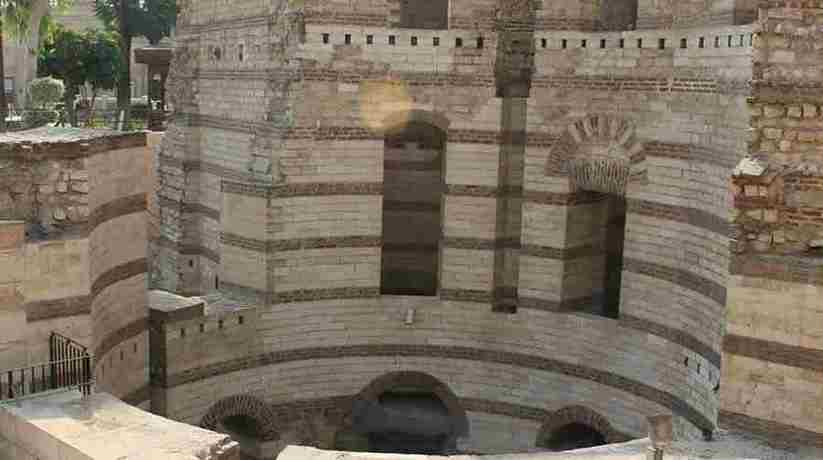
Babylon Fortress Cairo was an ancient fortress city or castle in the Delta of Egypt. It located at Babylon in the area which today known as Old Cairo. In fact, Babylon Fortress Cairo situated in the Heliopolite Nome. It was upon the right bank of the Nile at latitude 30°N. Moreover, it was near the commencement of the Pharaonic Canal. Pharaonic Canal also called Ptolemy’s Canal and Trajan’s Canal. It was from the Nile to the Red Sea. The fortress was at the boundary between Lower and Middle Egypt. Furthermore, it was where the river craft paid tolls when ascending or descending the Nile. Diodorus ascribes the erection of the first fort to rebel Assyrian captives. In fact, it was in the reign of Sesostris.

The Romans built a new fortress with Roman red and white banded masonry nearer to the river. Within Babylon Fortress Cairo’ enclosure are the Coptic Museum, a convent and several Churches. This includes St. George Church, St. Barbara Church and Hanging Church. In fact, the fortress was the dominant city of Mesopotamia. Another possibility links the name to the ancient Pr-Hapi-n-Iwnw (Nile house of Heliopolis). It was the deity Hapy’s dwelling in Heliopolis city. Hapy was the divinity of the Nile. Heliopolis lay northeast of Memphis, on the east bank of the Nile. It is at latitude 30° N and near to the commencement of the Pharaonic Canal. Moreover, it was connecting the Nile to the Red Sea. Furthermore, it also was the boundary town between Lower and Middle Egypt. It was where the river craft paid tolls when ascending or descending the Nile.

Further details about Babylon Fortress Cairo:

According to tradition, the first fort built by the Persians in about the 6th century BC. At that time, it was on the cliffs near the river. When the Romans took possession of Egypt, they used the old fort for a while. They recognize its strategic importance on the Nile. The Roman Emperor Trajan relocated the fort to its present location. That was because of problems of water delivery. And which at that time was nearer to the River. Since then, the Nile’s course has moved some 400 meters (430 yards) to the north.

In the age of Augustus the, Deltaic Babylon became a town of some importance. It was the headquarters of the three legions which ensured the obedience of Egypt. In the Notitia Imperii, Babylon mentioned as the quarters of Legio XIII Gemina. Ruins of the town and fortress are still visible a little to the north of Fostat or Old Cairo. During the Arab invasion of Egypt, Babylon Fortress Cairo surrounded for about seven months. It was finally falling in April 641 to the Arab General Amr Ibn Al Aas.

Nearby attractions Information, tours and Online Booking

More of Ancient Egypt

More of Egypt attractions

MORE
Badr Museum Farafra Oasis

Badr Museum Farafra Oasis

  • Badr Museum Farafra Oasis
  • Badr Museum Farafra Oasis
  • Badr Museum Farafra Oasis
  • Badr Museum Farafra Oasis
  • Badr Museum Farafra Oasis
  • Badr Museum Farafra Oasis

Badr Museum Farafra Oasis Egypt tours, booking, prices, reviews

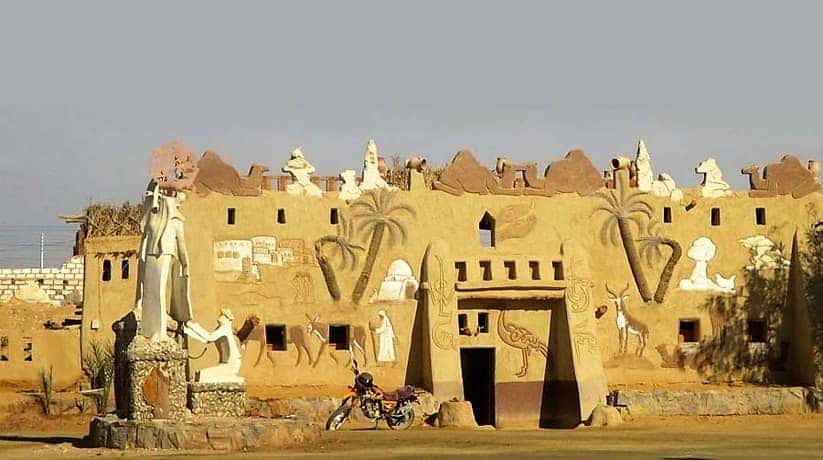
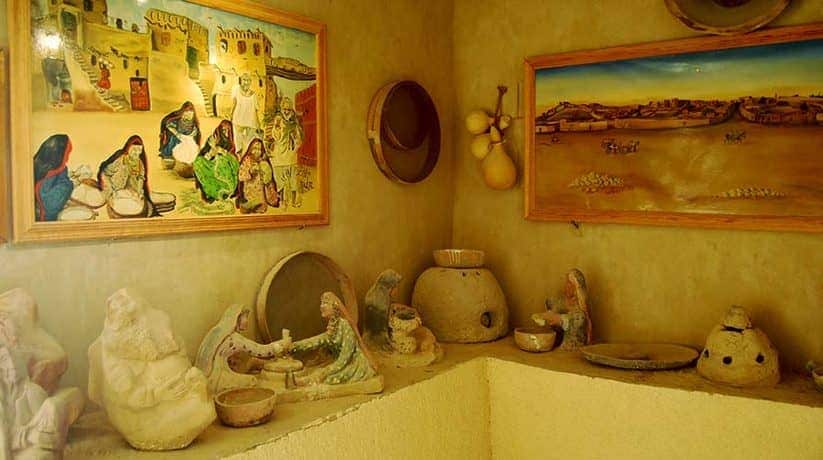
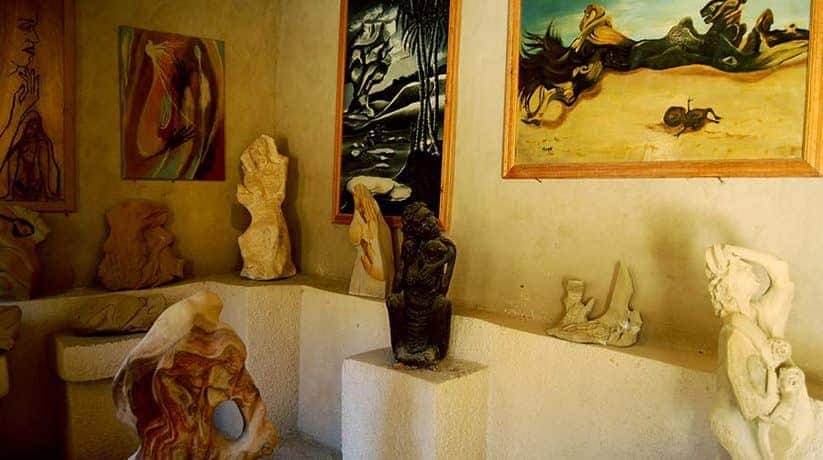
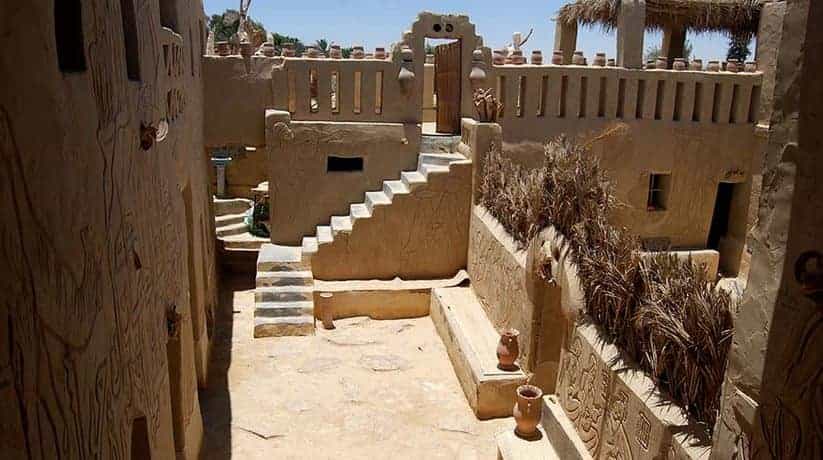
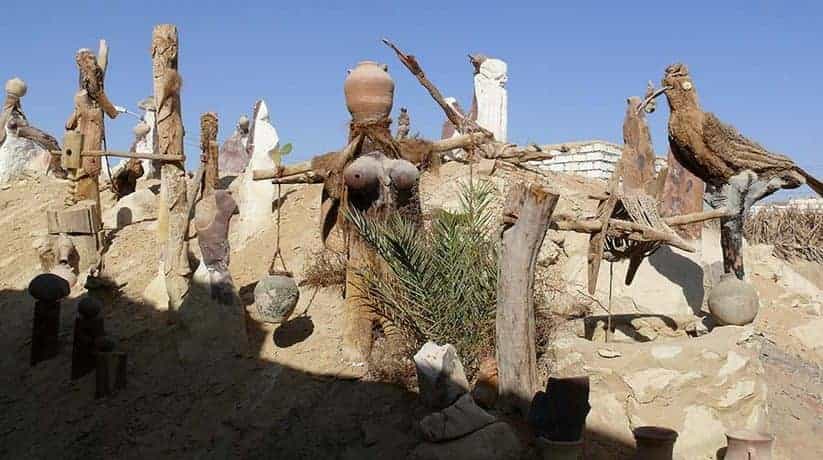
Badr Museum Farafra Oasis located near to Al Qasr, Egypt. In fact, the museum housed in a mud building. The mud buildings are the common houses in this medieval area of Egypt. All the artwork in Bard Museum created by unique artist. In fact, his name is Mr. Badr Abdel Moghny. His work always depicts the life in the oasis. Moreover, he provides the work through both painting and sculpting. Furthermore, he accomplished did all his sculpting from sand, stone and mud. This makes the artwork indeed unique compared to the media generally used by artists.

Badr Abdel Moghny is a self-taught artist whose gift to his town become its only real sight. Badr Museum surrounded by a desert garden which is worth to see. In fact, it features an enthusiasm which Badr puts into his interesting work. Moreover, it records much of the traditional oasis life. The museum in fact features a distinctive style of painting and sculpture. All are in mud, stone and sand and that is why he gets some foreign admirers. In fact, he exhibited successfully in Europe in the early 1990 and later in Cairo.

Further details about Badr Museum Farafra Oasis:

When you visit the museum, you can expect to see sculptures of camels, farmers, locals and wildlife. You can also see some products which done with unique fossils. In fact, he found these fossils in the area and his paintings are surrealistic in style. There is no admission charge for the museum, but a small donation requested. The posted hours for the museum are 8:30 AM until the time when the sun sets. But in fact, these hours may change. Before you make this journey, it would be a good idea to make a phone call. Just to make sure that the museum will be open.

In fact, Badr Museum Farafra Oasis can reached from the medieval town. A bus from Cairo will take you to the area. In fact, the trip by bus is about eight hours. In fact, there will be extra time which spent to make a few stops. The stops will be at restaurants and rest stops along the way. Private tour services make stops in the area, giving you the chance to see the museum as well. Finally, you can choose to rent a private vehicle to reach the museum and the town. In fact, you should expect this service to cost quite a bit more than catching the daily bus from Cairo.

Museum contacts:

Opening Hours: 9 am – 2 pm (or until sunset during busy seasons).
Tel: +20 92 751 0091 – + 20 0122 170 4710

Nearby attractions Information, tours and Online Booking

More of Modern Egypt

More of Egypt attractions

MORE
Amada temple Aswan

Amada temple Aswan

  • Amada temple Aswan
  • Amada temple Aswan
  • Amada temple Aswan
  • Amada temple Aswan
  • Amada temple Aswan
  • Amada temple Aswan

Amada temple Aswan Egypt tours, booking, prices, reviews

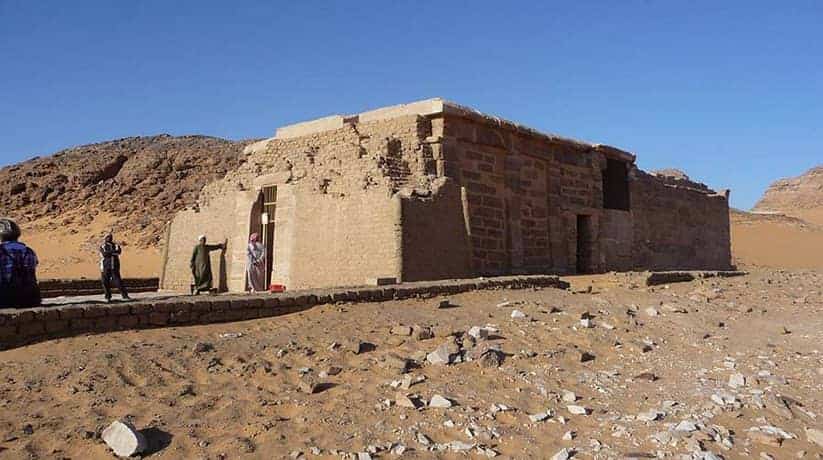
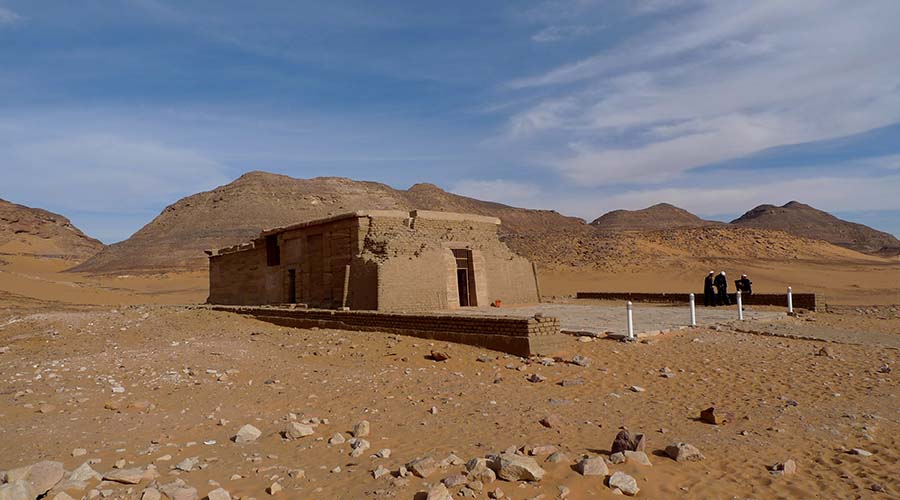
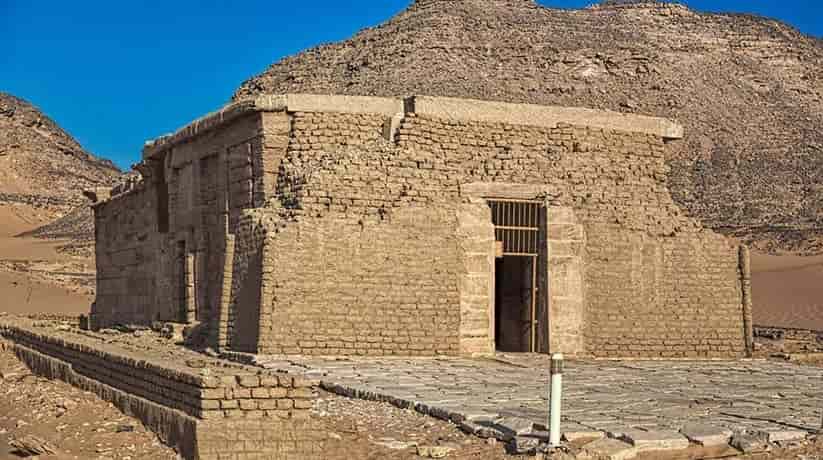
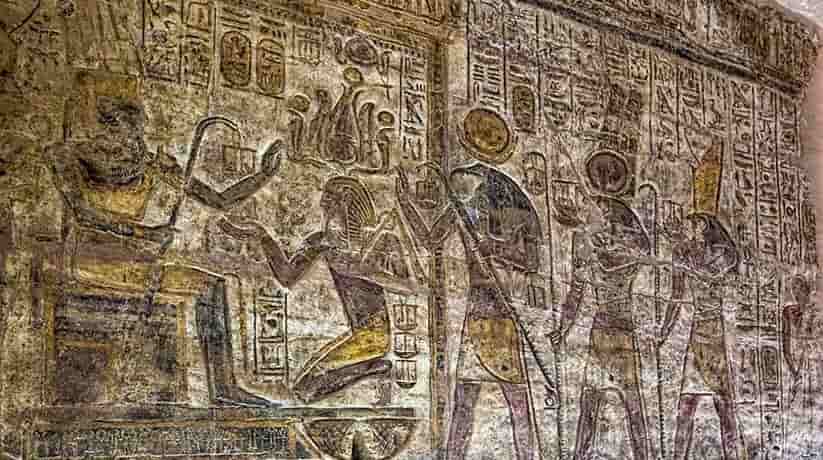
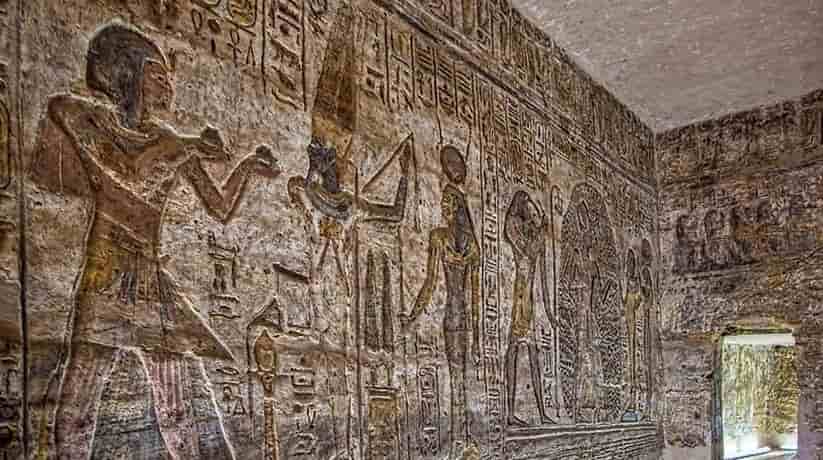
Amada temple Aswan located about 180 kilometers south of Aswan High Dam. In fact, Amada temple Egypt dedicated to the New Kingdom gods, Amun-Re and Re-Horakhty. The temple built on the orders of Thutmose III and his son, Amenhotep II. It was during Egypt’s New Kingdom 18th Dynasty. The hypo-style hall was a later addition by Thutmose IV. In fact, Seti I had a hand in some small additions such as a large pylon. The pylon is with a sandstone gateway abutting against the hypo-style hall. It is along with other 19th Dynasty rulers including his son, Ramses II. Ramses II involved himself in some way with almost every Nubian temple built before his reign. However, Ramses II’s restoration of the temple noted as rather a poor effort.

In fact, he employed the use of local artists of inferior skill. Of course, Ramses II also added many his own temples to the Nubian landscape during his reign. In fact, Amada temple in Aswan is small but contains some important historical inscriptions. It also is significant as it is the oldest of the Lake Nasser temples. The temple has a stela on the rear wall of the sanctuary in the third year of Amenhotep II. Carved on the steal an inscription which describes an Egyptian military campaign into Asia. It also shows Amenhotep II brings back the bodies of rebel chieftains. It was to hang on the walls of Thebes. One on the prow of his ship sails through Nubia as a warning. Another, carved on a stela on the northern side of the entrance doorway.

Further details about Amada temple Aswan:

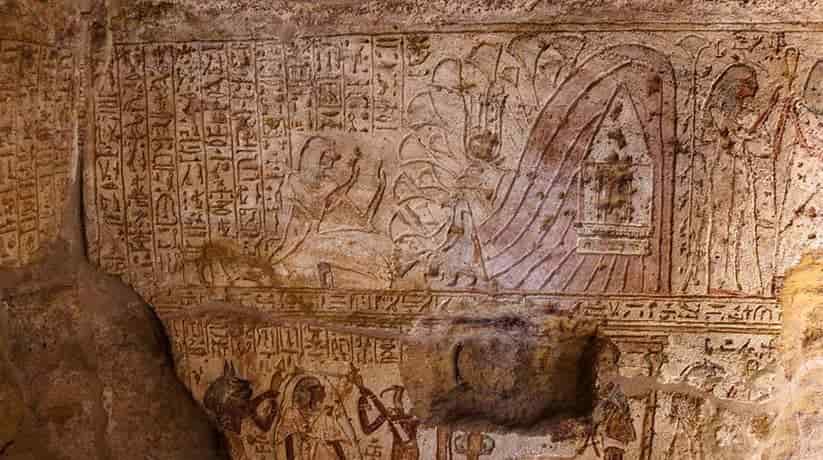
It describes a Libyan invasion of Egypt in the fourth year of Merneptah, the son of Ramses II. The temple moved together with the nearby temple of El Derr, to a new higher location. It was Due to the rising waters of Lake Nasser after the construction of the Aswan High Dam. The new location is some 2.5 kilometers from its original site between 1964 and 1975. Amada temple Aswan keeps much of its painted relief work including poly-chrome decorations. Moreover, the temple consists of a court with a brick wall with proto-Doric columns. In fact, the columns form a rear portico. Thutmose IV enlarged it by transforming the court into a pillared hall. It was through the erection of twelve pillars in four transverse rows in front of the four columns.

Furthermore, it was with inter-columnar walls between the outer pillars. Amada temple Aswan built in sandstone has a shallow transverse hall. The hall decorated with coronation scenes. Moreover, a deep offering hall connected on either side to a small cult statue shrine. The statue shrine is for Re-Horakhty (south) and Amun-Re (north). Beyond the original reliefs, there are some interesting graffiti. In fact, it inscribed during the 19th Dynasty and include scenes of the viceroy of Nubia. It also includes Messuy which appear to show the royal uraeus added to the viceroy’s brow. There are more recent graffiti visible on the top of the temple facade. They are crude representations of camels. Though, they are either for the work of Bedouins or travelers during the Middle Ages.

Nearby attractions Information, tours and Online Booking

More of Ancient Egypt

More of Egypt attractions

MORE
Amenhotep III temple Luxor

Amenhotep III temple Luxor

  • Amenhotep III temple Luxor
  • Amenhotep III temple Luxor
  • Amenhotep III temple Luxor
  • Amenhotep III temple Luxor
  • Amenhotep III temple Luxor
  • Amenhotep III temple Luxor

Amenhotep III temple Luxor Egypt tours, booking, prices

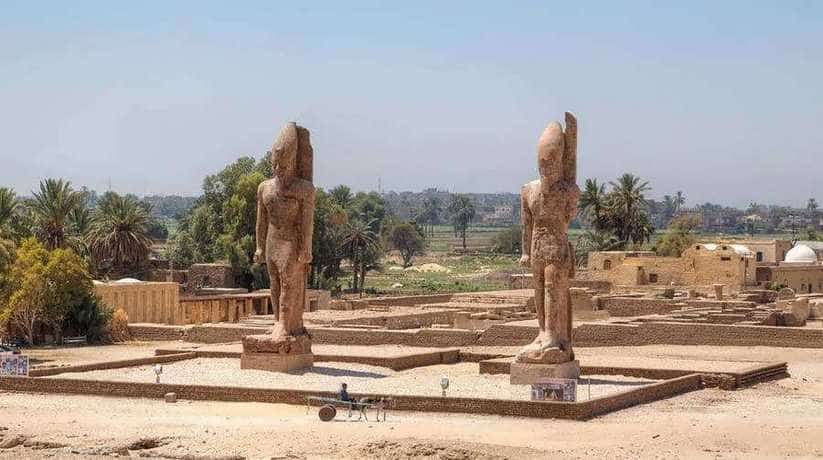
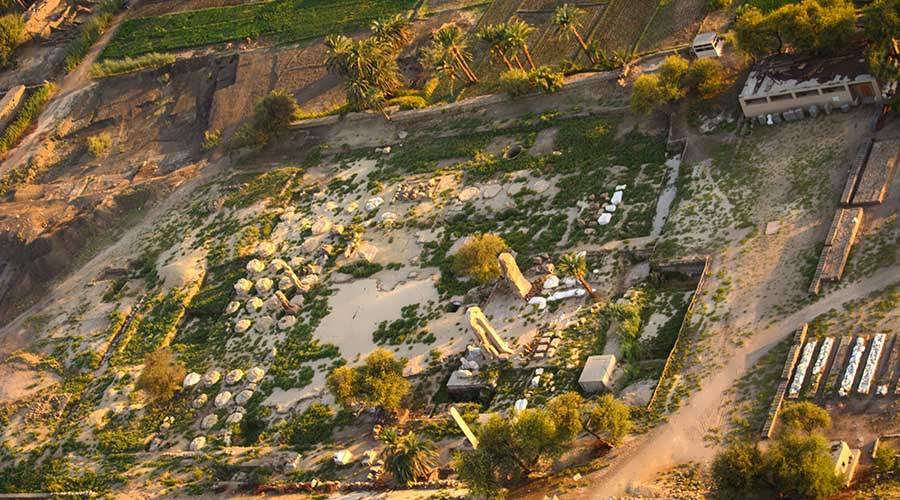
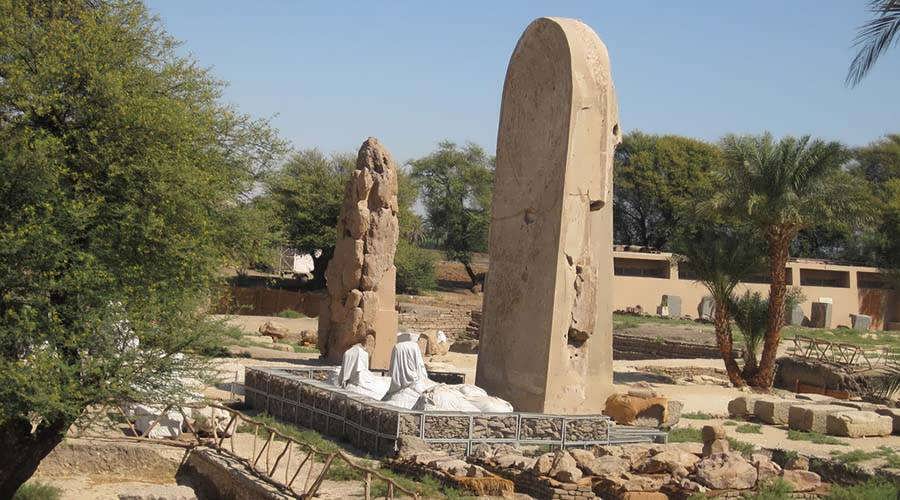
Amenhotep III temple Luxor was the largest temple which built on the West Bank. It covered an area of 35 hectares and one of the largest religious structures in Egypt. At the time of construction in Dynasty XVIII, it would have superseded the Temple of Amun at Karnak in size. Kom El Hetan is the modern name for Amenhotep’s temple. It located about half a kilometer to the south east of Medinet Habu. In fact, it stretches from the Colossi of Memnon back to the bend by the Antiquities Inspectorate. Amenhotep III temple decayed rapidly. It is possibly due to the water content of the land it built on.

Until recently all that remained of the site were two massive colossal statues of the pharaoh. They stood at its entrance gateway, known since antiquity as the “Colossi of Memnon”. By early Dynasty XIX, Merneptah was able to re-use many blocks from the site of Amenhotep III temple Luxor. He reused them in the construction of his own funerary monument nearby. We know the general outline of the temple from traces of its pylons. It is also from columns which have lain buried at the site for centuries. It mentioned as one of Petrie’s “Six Temples at Thebes” but never properly excavated. Fragments of architecture are now re-emerging. It is including a columned hall at the rear of the temple. It was during excavations by teams of German and Egyptian archaeologists in recent years.

Further details about Amenhotep III temple Luxor:

The entrance to Amenhotep III temple Luxor was to the east and faced the Nile. It is opposite Luxor temple and guarded by the two gigantic colossi of Amenhotep III. They are with smaller statues of Queens Tiye and Mutemwiya at their feet. There were two large courts between three pylons. In fact, they were with other seated statues of the king. A headless sphinx statue of Queen Tiye found near the second mud brick pylon. There were also jackal statues on high pedestals as well as Osirid statues of the king. Another headless sphinx with the body of a crocodile found in 1957 in Situ. It is on the southern side of the temple site. It can still seen today along with many more recent finds.

An avenue of sphinxes continued in a procession from the third pylon towards a solar court. It surrounded by colonnades of sandstone papyrus columns and Osirid statues of Amenhotep III. On the bases of these statues were lists and name rings of captives from foreign lands. They gave us important information about the distant countries Egypt involved with. At the south side of the entrance to the solar court a huge quartz stela. It re-erected. It shows the king with Queen Tiye and the god Ptah-Sokar-Osiris. Moreover, it is with texts below describing the king’s building accomplishments. The twin of the stela have similar texts. They were on the north side of the entrance but is no longer there.

More details about Amenhotep III temple Luxor:

The inner rooms of the temple also destroyed. But the excavators now uncovered many of the bases of limestone papyrus columns. They are from these chambers. A great part of Amenhotep III temple Luxor re-used in the Temple of Merneptah. The recent restorations there have given archaeologists a great deal of new information. It is about Kom El Hetan from the decoration of the original blocks. The temple dedicated to the god Amun-Re, the principal deity of the land. It was during the New Kingdom. There was a smaller temple to the north of the complex. It dedicated to the Memphite mortuary god Ptah-Sokar-Osiris. Fragment’s of Amenhotep’s blocks and statuary have also found in many other temples. They are both on the West and East Banks.

Amenhotep’s chief architect was Amenhotep, son of Habu. He gained such importance in the royal court that he granted his own mortuary temple near Medinet Habu. He was even deified in later Ptolemaic times. The design of Amenhotep III temple Luxor seems to have been unique. It is in that parts of the structure lay in the Nile flood plain. So that the waters of the inundation would have flooded areas of the eastern courts. The rear chambers including the sanctuaries built on higher ground. That is why they remained above the water level. This innovative concept perhaps had its roots in the creation myth.

Further details about Amenhotep III temple Luxor:

A second unique aspect of Amenhotep III temple Luxor is in its massive quantity of statuary. All Egyptian temples and shrines had many statues of the king and deities. They scattered around their courts. But this pharaoh must have surpassed the usual amount of sculpture. It suggested that Amenhotep depicted the ‘Litany of Sekhmet’. In fact, it is by including a standing and a seated statue of the goddess. It was for each day of the year. It is a fact which mentioned in ancient texts. Many of these Sekhmet statues can still seen around Thebes today. It is especially in the temple of Mut and other Karnak temples. It is along with a vast quantity of images of the king himself and other deities. Many of these sculptures later reused by other pharaohs in their own monuments.

In 1998 Kom El Hetan listed by the World Monuments Watch as one of the world’s 100 most endangered monuments. Since the 1970 the German-Egyptian teams working there. They have unearthed a great many objects and architectural elements. These have cleaned, restored and placed on concrete pedestals. It is in what is rapidly developing into an open-air museum. In April 2002 archaeologists unearthed three large statue fragments. It was at the site of the second pylon. They are the right half of a red granite colossal seated statue of Amenhotep III. And the head of a queen wearing a Pharaonic head-dress with uraeus. And and an unidentified pair of legs on a rectangular pedestal.

More details about Amenhotep III temple Luxor:

In 2009 the colossal fallen statue of Amenhotep III has reconstructed from parts. It raised again at Kom El Hettan. The head of the statue had taken to the UK in the 19th century. It was by antiquities collector Henry Salt, ending up in the British Museum, where it is now. An exact replica of the original head made by Michael Neilsen of the British Museum. It taken to Egypt complete the statue. Other large parts of the limbs and torso found during excavations. Theses excavations directed by Dr Hourig Sourouzian of the Armenian Academy of Sciences. It was at Amenhotep III temple Luxor.

The granite statue was originally one of a pair in the peristyle court of the temple. It shows the King wearing the red crown of lower Egypt. Furthermore, its companion wore the white crown of Upper Egypt. in March 2009 Dr. Sourouzian’s Mission reported two more statue finds from Amenhotep III temple Luxor. The first was a black granite seated statue of the King which well preserved. It is on a throne with youthful features and wearing a nemes headdress. The face slightly damaged. But this is the first polished black granite statue to found in recent times on this site. The name of Amenhotep III inscribed on the base of the statue.

Further details about Amenhotep III temple Luxor:

The second statue, this time in quartzite. It depicts Amenhotep III as a sphinx with a lion’s body and human head. Again it largely well preserved except for damage to the front paws and parts of the face. A broken architrave from the temple also recently uncovered. It includes a hieroglyphic inscription of the temple dedication.

In March 2010 the Egyptian Minister of Culture announced the discovery of a massive head of Amenhotep III. It is wearing the white crown of Upper Egypt and found at Kom El Hettan. Dr Sourouzian said that the granite head belonged to a large colossal mumiform statue of the king. The royal beard is missing. But the head is one of the best preserved likenesses of Amenhotep III to find. Moreover, it is with carved features and in almost perfect condition. It smoothly polished and with traces of red paint still on the uraeus.

Nearby attractions Information, tours and Online Booking

More of Ancient Egypt

More of Egypt attractions

MORE
error: Copyright © www.etltravel.com !