Activities in Nile Valley

Things to Do

Sulayman Al Silahdar mosque

Sulayman Al Silahdar mosque

  • Sulayman Al Silahdar mosque
  • Sulayman Al Silahdar mosque
  • Sulayman Al Silahdar mosque
  • Sulayman Al Silahdar mosque
  • Sulayman Al Silahdar mosque
  • Sulayman Al Silahdar mosque
  • Sulayman Al Silahdar mosque

Sulayman Al Silahdar mosque Cairo Egypt tours, prices, booking

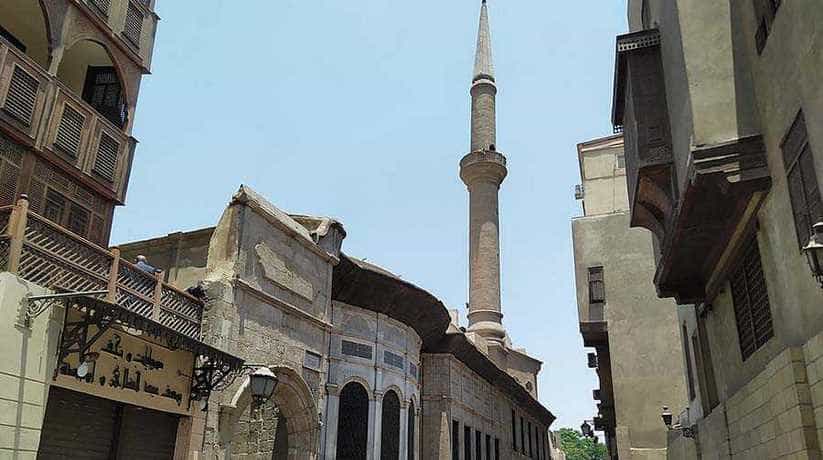
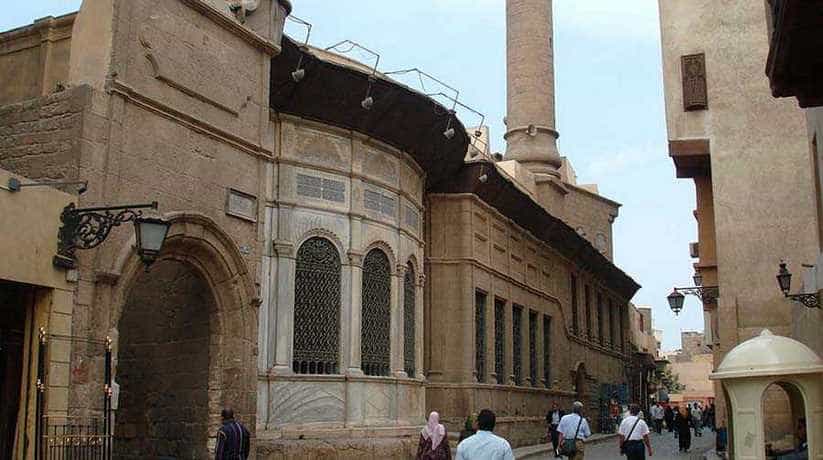
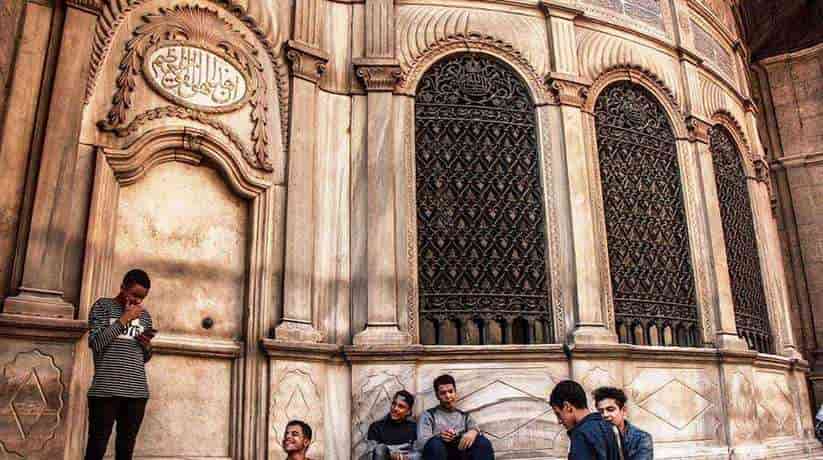
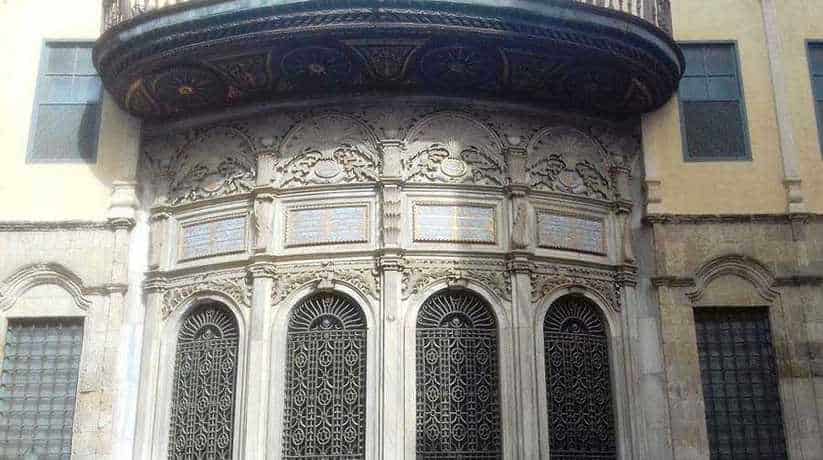
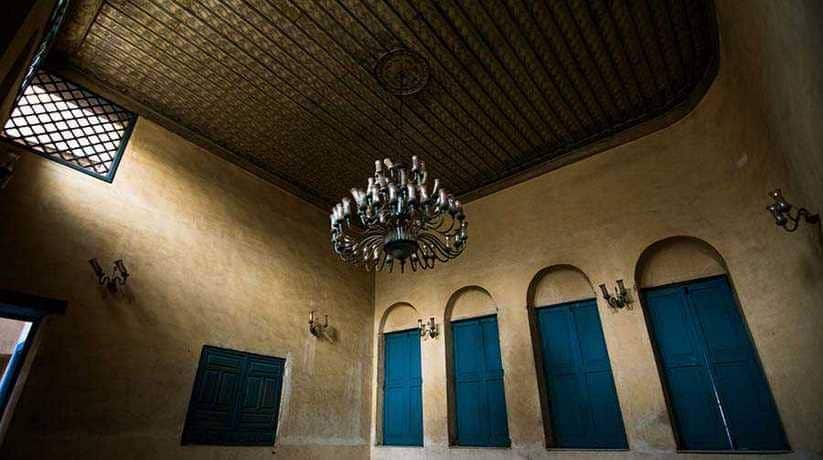
Sulayman Al Silahdar mosque Cairo situated in Qasaba district. It is northward Darb El Asfar in Cairo. The mosque established by Prince Sulayman. He occupied many prominent posts in the days of Mohammed Ali. Moreover, these posts include the Armor or the supervisor of the arsenal. He credited to building other buildings in Cairo at that time. In fact, the mosque distinguished by the variety of decorations. Moreover, it combines between the Cairene style of decoration and other styles from Istanbul. This appears in the facade’s decoration and the windows over it.

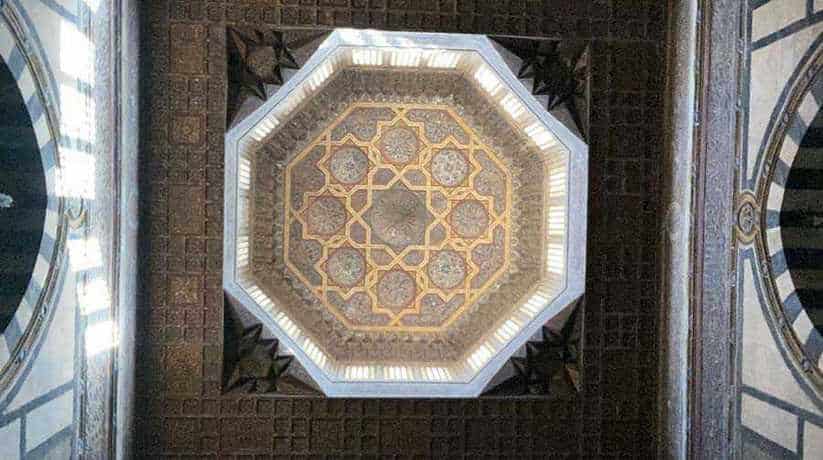
Besides to the plant forms and the wooden eaves that appear in the mosque and the Sabil alike. Moreover, the interior plan of Sulayman Al Silahdar mosque consists of a central courtyard. It also divided into three main aisles and forecourt. Both of them directed to Mecca. Furthermore, next to the entrance, there is a balustrade for reciting Holy Quran. The mosque has shallow keel-shaped arcades. They support the interior plan. The large marble inlaid Mihrab. In the upper floor of the mosque one can find the Malqaf. Malqaf is window scope. It designed for allowing the fresh air to enter the mosque.

Further details about Sulayman Al Silahdar mosque Cairo:

The mosque dates back to 1839. It renowned for its “pencil-like” minaret. It is a tall and thin structure and which built in the Ottoman style. The mosque appears so elegant. This is because of the mixture of Ottoman, Cairene and other unexpected architectural styles. You might even spot some Baroque features on the mosque’s pillars. The refined window grills featuring arabesque patterns. They are also something you should pay attention to. The mosque also includes a beautiful round Sabil. The fountain not located under the Kuttab, but next to it.

Nearby attractions Information, tours and Online Booking

More of Islamic Egypt

More of Egypt attractions

MORE
Senusret I Obelisk Fayoum

Senusret I Obelisk Fayoum

  • Senusret I Obelisk Fayoum
  • Senusret I Obelisk Fayoum
  • Senusret I Obelisk Fayoum
  • Senusret I Obelisk Fayoum
  • Senusret I Obelisk Fayoum
  • Senusret I Obelisk Fayoum

Senusret I Obelisk Fayoum Egypt tours, prices, booking

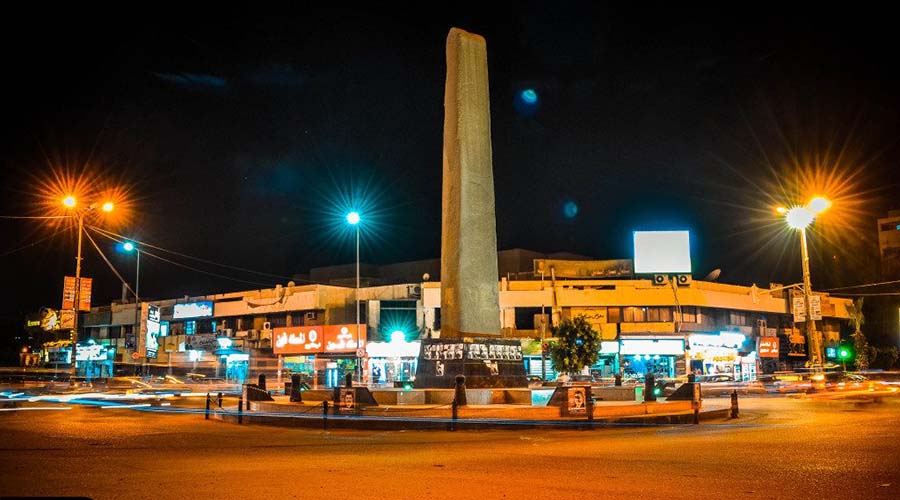
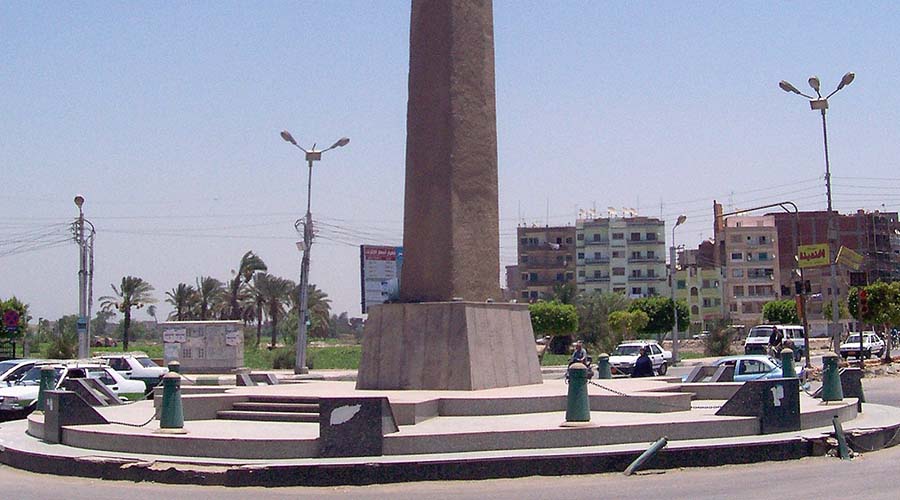
Senusret I Obelisk located in Fayoum city, Egypt. In fact, Senusret I Obelisk made of the red red granite. Nowadays, the obelisk stands in Gamal Abdul Nasser square in Fayoum city. Gamal Abdul Nasser road. Moreover. The obelisk features has inscriptions on it, but they are hardly visible. The inscriptions mention Senusert, Horus, Amun, Isis and more. Furthermore, the obelisk is 13 meter high and has a round top. The Obelisk built for Senusret I (1971 – 1926 BC). Later, it placed here to honor a project of fertilization of the region. Senusret I (also Sesostris I and Senwosret I) was the second pharaoh of the Twelfth Dynasty of Egypt.

He ruled from 1971 to 1926 BC. In fact, he was one of the most powerful kings of this Dynasty. Moreover, he was the son of Amenemhat I and his wife Nefertitanen. His wife and sister was Neferu. She was also the mother of the successor Amenemhat II. Sesostris I known by his prénom, Kheperkare, which means “the Ka of Re created”. He continued his father’s aggressive expansionist policies against Nubia. In fact, it was by initiating two expeditions into this region in his 10th and 18th years. Moreover, established Egypt‘s formal southern border near the second cataract. It is where he placed a garrison and a victory stele. He also organized an expedition to a Western Desert oasis in the Libyan desert. Senwosret I established diplomatic relations with some rulers of towns in Syria and Canaan.

Further details about Senusret I Obelisk:

He also tried to centralize the country’s political structure. In fact, it was by supporting Nomarchs who were loyal to him. His pyramid constructed at El Lisht. Furthermore, Senwosret I mentioned in the Story of Sinuhe. In fact, he rushed back to the royal palace in Memphis from a military campaign in Asia. In fact, he returned after hearing about the assassination of his father, Amenemhat I. Senusret I obelisk Fayoum once was part of a temple in the vanished cult center of Crocodilopolis. In fact, the temple dates back to the years of Sesostris I and Amenemhat III (1844-1797 BC). Senusret I obelisk is in a bad shape of decay, especially on the west side.

Moreover, the monument damaged in the south-west and south-east corners. Birds sit on the top of the obelisk and that is why it covered with bird droppings. In the Napoleonic expedition in 1798-1801 the obelisk found laying on its side. But it looked to be in one piece. There is drawing in the middle of the obelisk. In fact, made after the graver of it made for this expedition. On the other drawing, there is an impression of the inscriptions. In fact, it is on one side of the obelisk as their artists reproduced it.

More details about Senusret I Obelisk Fayoum:

In 1825-1828 Edward William Lane visits the site and find Senusret I obelisk Fayoum broken in two pieces. Moreover, it lied there without any mound or ancient remains in the vicinity. Furthermore, the two parts, which designated by the people as male and female. The people of the country look upon these fragments with the same superstitious feeling. In fact, it was because of the stones of the temple at Panopolis. And the women recited the Fatha over them in the hopes of many offspring.

In 1843 Richard Lepsius described the obelisk and made a small map. In fact, Senusre I Obelisk roughly situated between tow areas. The first one was Abgig in the east of the monument. The second one was the ruins of a little village west of the obelisk. In 1971-1972 Senusret I Obelisk brought to El Fayoum City. Moreover, it restored and re-erected on a roundabout on the road to Cairo, in the north-east of the city.

Nearby attractions Information, tours and Online Booking

More of Ancient Egypt

More of Egypt attractions
MORE
Siptah tomb Luxor

Siptah tomb Luxor Egypt

  • Siptah tomb Luxor Egypt
  • Siptah tomb Luxor Egypt
  • Siptah tomb Luxor Egypt
  • Siptah tomb Luxor Egypt
  • Siptah tomb Luxor Egypt
  • Siptah tomb Luxor Egypt
  • Siptah tomb Luxor Egypt

Siptah tomb Luxor KV 47 Egypt tours, prices, booking, reviews

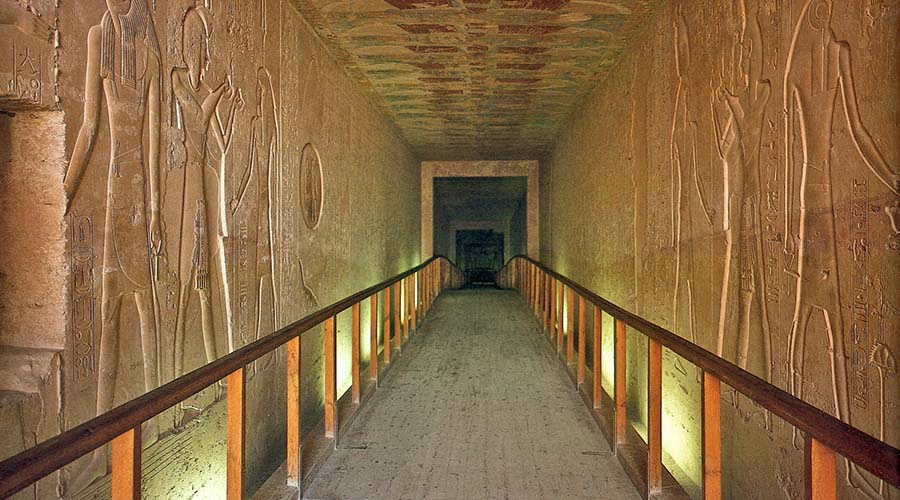
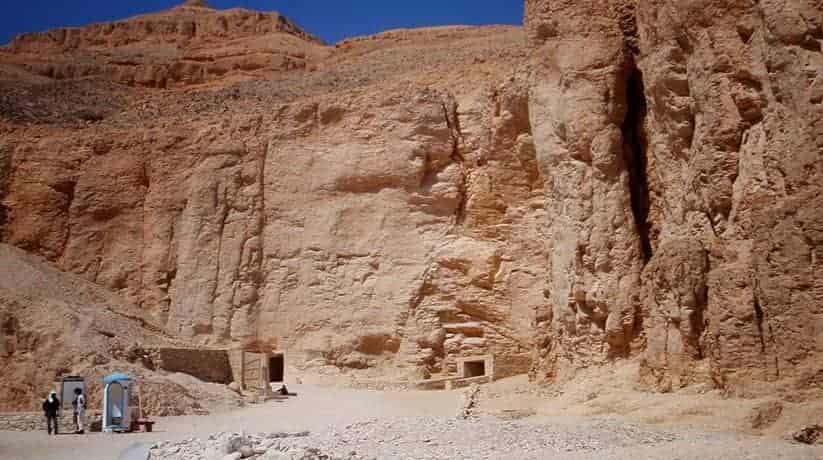
Siptah tomb Luxor found on the north face of a hill. The hill divides the southeast and southwest branches of the central wadi. It is within the Valley of the Kings on the West Bank at Luxor (ancient Thebes). In fact, It oriented north-south running straight for a distance of 114.04 meters into the hill. It also reaches a depth of about 13.12 meters. In fact, the name of Siptah means “Son of Ptah, Beloved of Ptah”. Moreover, King Siptah was the son of Seti II and Queen Tiaa. This throne name was Akh-en-re Setep-en-re, meaning Beautiful for Re, Chosen by Re. He not chosen, for he suffered the deformity of a club foot. His reign lasted from about 1193 until 1187 BC.

Like his father we know precious little about Siptah, though perhaps, there is little for us to know. He was also the seventh ruler of Egypt’s 19th Dynasty. Though in fact he may have never actually ruled at all. Moreover, he was also the second son of Seti II, by Tiaa, a relatively minor queen. He came to the throne because his older brother, Seti-Merneptah, died before the death of Seti II. He inherited the throne while still a minor. It was his stepmother, Tausret, along with her Chancellor who actually controlled Egypt. It was during the kings short life. In fact, Siptah seems to have died in the 6th year of his reign. It was after which his stepmother took full royal titles.

Further details about Siptah tomb Luxor:

Siptah tomb Luxor discovered by Edward Ayrton on December 18th, 1905. It was while working for Theodore Davis. He noted that the debris in the entrance had dug out, creating a passage. The passage filled back up. He felt that the likelihood of finding anything of interest would be slim. It was because of the bad condition of the rock. He only excavated down to the antechamber. In 1912, Harry Burton excavated Siptah tomb for Davis. He also worked between the four pillared chamber and up to and including the the burial chamber. Yet the tomb never completely cleared until 1994. In addition, Howard Carter cleared the area around the tomb in 1922. He discovered a few objects belonging to the tomb.

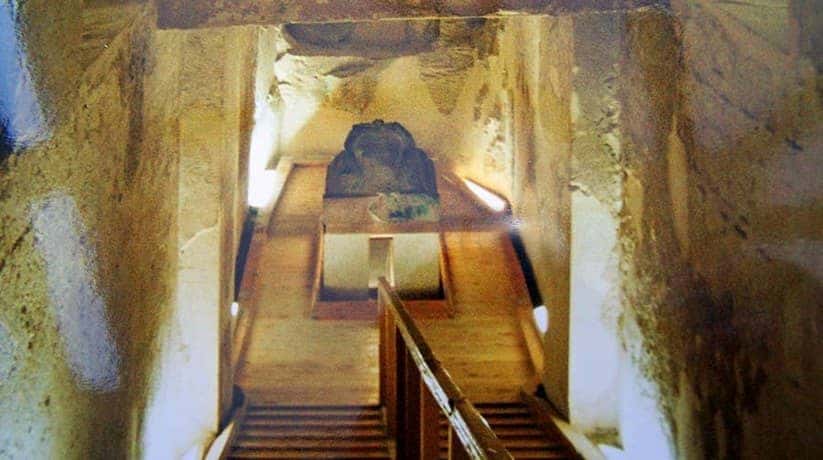
In fact, the first part of Siptah tomb Luxor structure follows that of his father, Seti II. The rear sections are somewhat unusual. Furthermore, the initial opening corridor leads into the tomb. It is in the open air. It also consists of a central ramp with two stairways of cut stone blocks. They embedded into the bedrock to either side of the ramp. The first true corridor descends, leading to a second level corridor. Moreover, we find a pair of beam slots used for lowering the sarcophagus. This corridor gives way to a third corridor that, like the first, descends once more. Furthermore, at the rear of this corridor are a pair of rectangular niches. Afterwards, we find the well room that lacks a shaft. It also followed by a four pillared chamber.

More details about Siptah tomb Luxor:

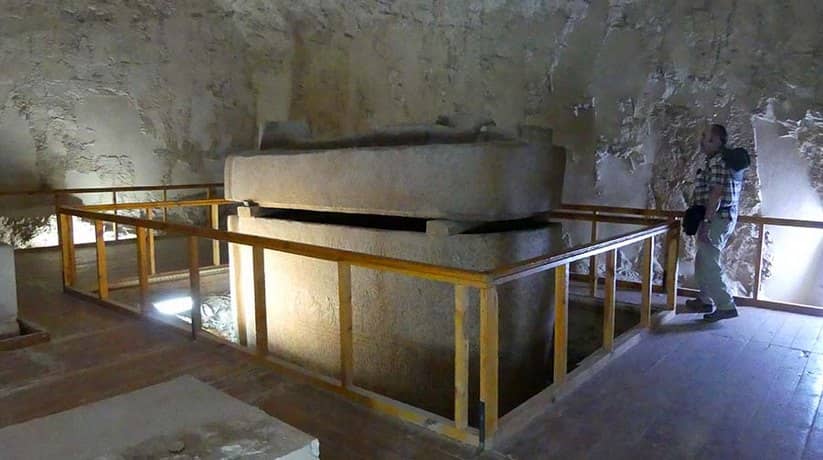
Siptah tomb Luxor continues through the pillared chamber with a descending passage. It leads into the first of two more level corridors. It is before communicating with an antechamber. A final wider corridor leads past two abandoned lateral corridors. It is before giving way into the unfinished, transverse burial chamber. A granite sarcophagus set into an roughly finished rectangular niche in the floor. It is just behind a transverse row of four pillars. Lateral corridors abandoned. They maybe meant to give into a burial chamber or storage annexes. But this work stopped after the a corridor broke into the nearby tomb, KV 32. The openings then sealed with limestone slabs.

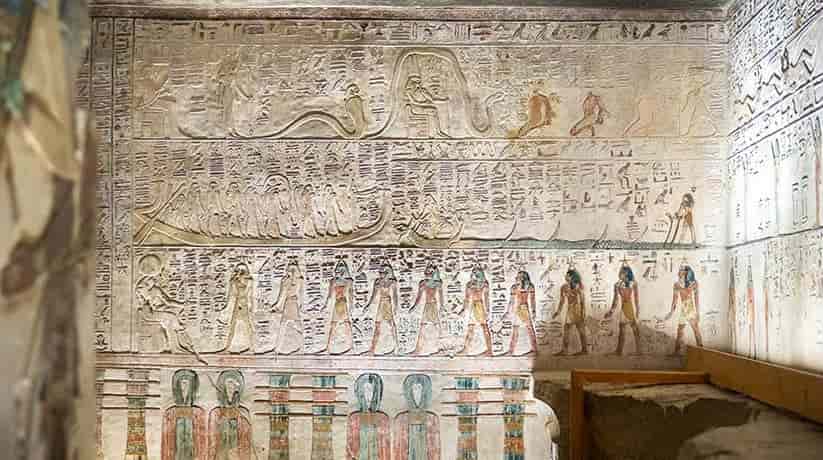
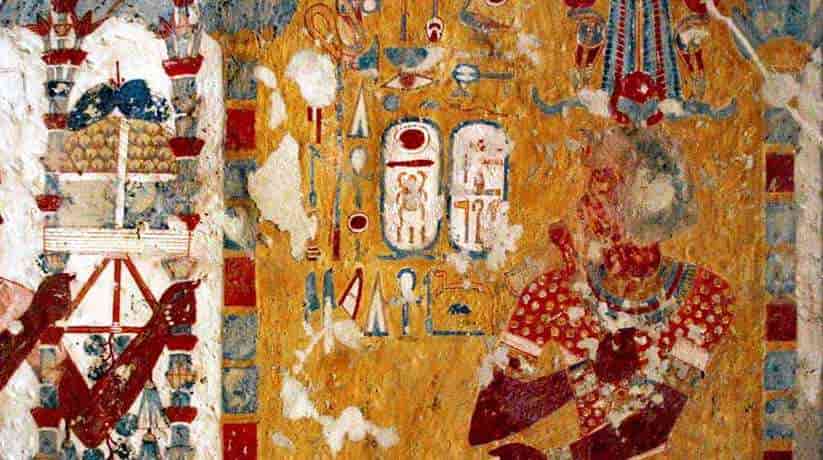
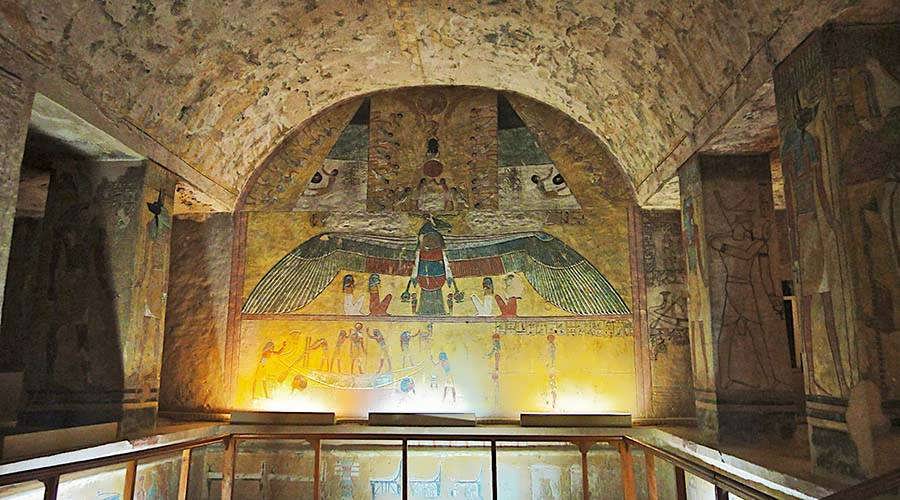
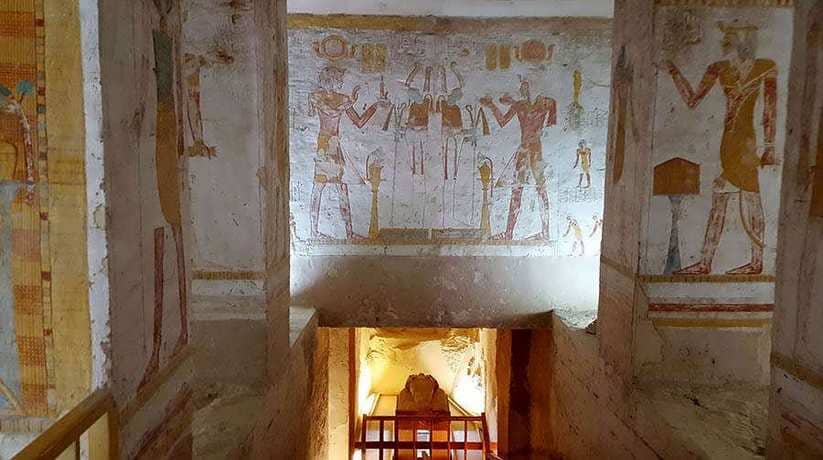
No decorations remain beyond the first four pillared chamber. The little exist beyond the second, level corridor. Siptah tomb Luxor also suffered the fate of KV 15. The cartocuhes of the tomb owner removed, and later re carved. No one knows who destroyed the cartouches and no one know who restored them. The process revolved around the rivalry of Ramses II’s descendants . Their quest for the throne after the death of Merenptah. On the lintel above the doorway to the first true corridor is usual scene. It depicts a scarab and ram headed god flanked by Isis and Nephthys.

More details about the tomb of Siptah in Luxor:

On the outer thickness and reveals of the door jambs found the name of the deceased king. It is along with inscribed prayers to the sun god and Osiris. On the inner thickness of the door jambs is a depiction of the goddess Ma’at. It winged and kneeling on baskets. It supported by the heraldic plants of Upper and Lower Egypt.

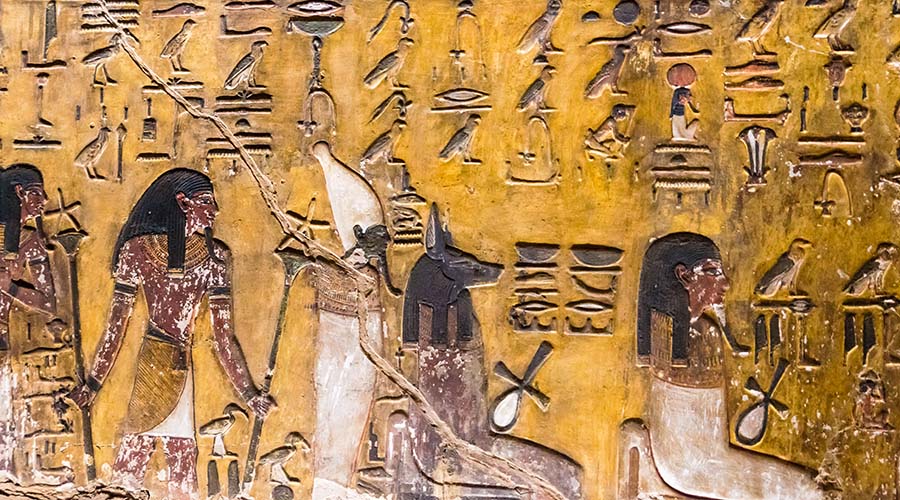
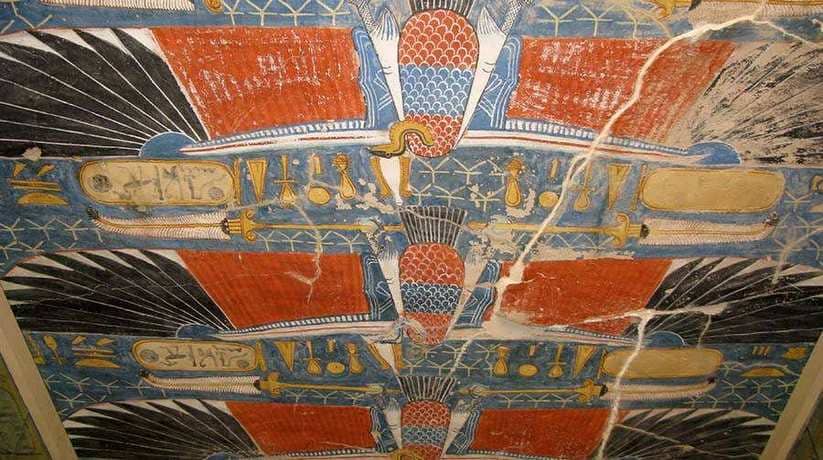
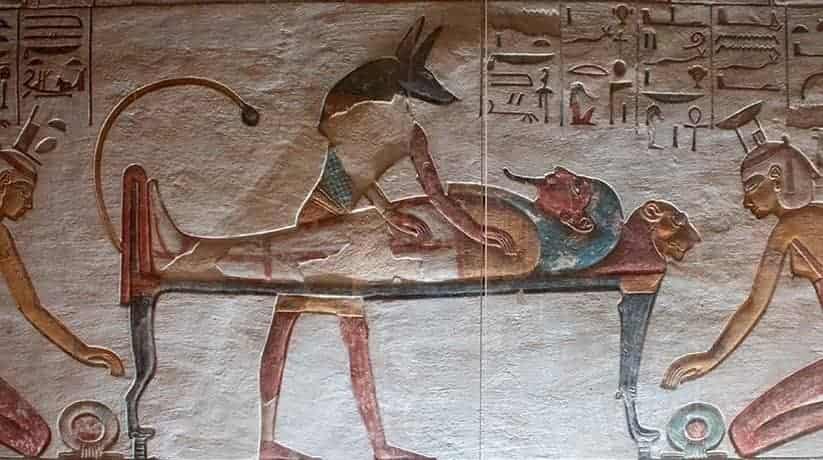
Inside this corridor on the northeast wall, a well preserved depiction of Siptah. It addressing Re-Horakhty followed by the opening lines of the Litany of Re. Further text and scenes from these passages fill the rest of this wall. They include a scene of Anubis before the bier of Osiris. And then flow into the next corridor. On the ceiling of this first corridor we also find representations of a series of flying vultures. On the ceiling of this corridor found the best preserved depiction of Isis and Nephthys. It is as kites to either side of the soul of Re.

Entrance to Siptah tomb Luxor:

Siptah tomb Luxor is currently open to visitors. Tickets for the Valley of Kings cost 200 Egyptian pound for three Tombs and can bought at the gate. Photography inside the tombs strictly forbidden and can incur heavy fines. There is a little train – Taftaf – runs from the coach park to the entrance of the monument area. It costs 5 Egyptian pound.

Nearby attractions Information, tours and Online Booking

More of Ancient Egypt

More of Egypt attractions
MORE
Seti I tomb Luxor Egypt

Seti I tomb Luxor Egypt

  • Seti I tomb Luxor Egypt
  • Seti I tomb Luxor Egypt
  • Seti I tomb Luxor Egypt
  • Seti I tomb Luxor Egypt
  • Seti I tomb Luxor Egypt
  • Seti I tomb Luxor Egypt
  • Seti I tomb Luxor Egypt

Seti I tomb Luxor KV 17 Egypt tours, prices, booking, reviews

Seti I tomb Luxor (Sethos I) is the longest, deepest and most completely finished in the Valley of Kings. It is at more than 120 meters. Seti I tomb Luxor also represents the fullest development of offset, or jogged royal tombs in the valley. The tomb discovered in October 1817 by the strongman of the early antiquarians. He was the Italian Giovanni Battista Belzoni. In fact, the tomb still known as Belsoni’s tomb. the tomb discovered only a few days after the tomb of his father, Ramses I. When discovered, the tomb made international headlines. Furthermore, the exhibits of the tomb held in London in 1821, and later in Paris. The tomb also located in a small lateral wadi in the Valley of Kings.

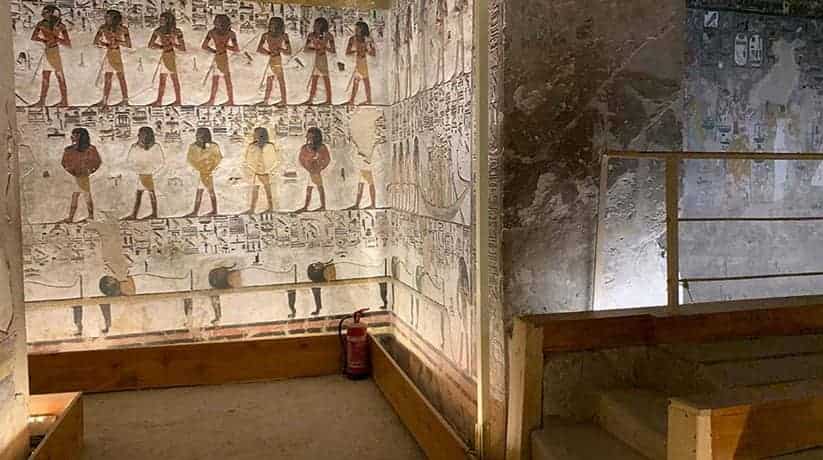
Indeed, the reign of Seti I’ known for high achievements in art and culture. In fact, Seti I tomb Luxor was one of the hallmarks of his building projects. In addition, it is with refined bas-reliefs and colorful paintings. The decorations more refined than in earlier tombs. It is with figures having larger ears and smaller mouths. Seti I tomb marks the first time that decorations cover every passage and chamber. The decorative style established in the tomb followed or in part by every succeeding tomb. It is through the rest of the valley’s history. Furthermore, the structure of the tomb is complex. There is also a clear division of the upper section of the tomb and the lower section.

Further details about Set I tomb Luxor:

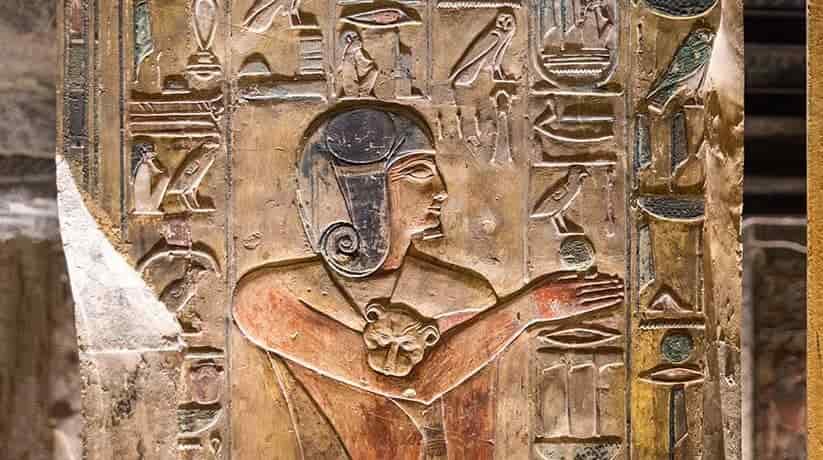
As in many of the tombs of the valley, a stairway leads to a first corridor. And then to a second stairway and a second corridor, which in turn leads to the ritual shaft. For the first time, the Litany of Re appears on the walls of these first two passages. In addition, it is with scenes from the Amduat (the third hour). It is also in the second passage (as well as deeper sections of the tomb). Just within the entrance to Seti I tomb Luxor is a scene on the left. It depicts the king praying in front of the sun god Ra in his falcon headed shape. Furthermore, within the ritual shaft, decorations follow an established pattern. It also shows the king before various gods. The deities also include Isis, Hathor and Osiris.

After the ritual shaft there is a four pillared room eight meters wide. Moreover, we find also scenes from the Book of Gates. They include fifth and sixth hours, each hour starts with a decorated gate, guarded by snakes. There is also another innovation. In fact, it the Osiris shrine. It marks the transition into the lower reaches of most Ramessid period tombs. In the back of this room to the right attached another room of similar dimensions with two pillars. Decorations in the two pillared room are only sketched. They depict the ninth through eleventh hours of the Amduat.

More details about the Seti I tomb Luxor:

On the back left of the four pillared room is a stairway. The stairway closed off and painted to suggest that the tomb ended here. It leads to a third corridor and then to a final stairway. It also leads to a small antechamber and then a six pillared burial chamber. In these lower passages are scenes from the “Opening of the Mouth” ceremonies.

In the antechamber, Seti shown sacrificing and praying. He is before Anubis, Isis, Horus-son-of-Isis, Hathor and Osiris. On the back wall of this chamber, he depicted in front of Ptah and Nefertum. The burial chamber divided into two parts, a six pillared room and at the back, a crypt. One of the pillars completely destroyed. Some of the decorations on the other pillars removed. They now displayed intact at the museum in Berlin. These all decorated with scenes dominated by Osiris. On all six sides of the pillars that faced the central axis were scenes. The scenes are of the jackal-headed and falcon-headed “souls” of Buto and Hierakonpolis.

Seti I tomb Luxor ceiling:

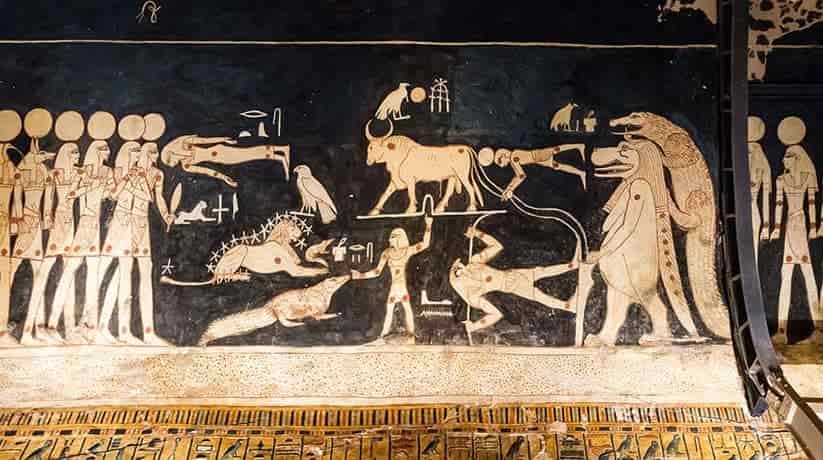
The ceiling of the burial chamber painted with astronomical decorations. For the first time, the ceiling in the crypt area vaulted. It also painted with astronomical decorations. Moreover, the ceiling records specific constellations of the night sky. It is along with the various decans or calendar units. The decorative theme of the burial chamber includes passages. They from the Book of Gates and the Amduat. There are also annexes on either side of the burial chamber towards the front. There are also small niches reminiscent of features in the tomb of Amenophis III. The left chamber decorated with the fourth hour from the Book of Gates. The right chamber also has an entire copy of The Book of the Celestial Cow.

Steps at the back pair of pillars in the burial chamber lead down into the crypt. Here, Belzoni found an elegant empty alabaster sarcophagus. In fact, it is a little less than three meters long. It is with walls only five centimeters thick, making it translucent. Upon it engraved passages from the Book of Gates as well as passages from the Book of the Dead. This sarcophagus later purchased by Sir John Soane. Moreover, John put it in his London Museum at Lincoln’s Inn Fields, where it remains today.

Further details about Seti I tomb Luxor:

Further annexes include a small annex at the back right of the crypt. They also include a two pillared annex to the back left. Moreover, they also include a four pillared annex off the back of the crypt. The right camber called the “Chamber of Djed” (a symbol of Osiris). The two pillared room is large and completely decorated. Osiris in various shapes decorate the pillars. In addition, on the upper walls are scenes from the sixth through eighth hour of the Amduat. But of real interest here is the lower walls. They show pictures of items in Seti I tomb Luxor. But unfortunately, much of these illustrations not well preserved. The burial chamber is not the end of the this tomb. The tomb connected to the underworld by a corridor. The corridor leads from the back of the crypt down to the water level.

Entrance to Seti I tomb Luxor:

The tomb is currently open to visitors. Ticket for Valley of Kings cost 200 Egyptian pound for three tombs including Seti I tomb Luxor. It bought at the gate. Photography inside the tombs forbidden and can incur heavy fines. There is a little train – Taftaf – runs from the coach park to the entrance to the monument area. It costs 5 Egyptian pound.

Nearby attractions Information, tours and Online Booking

More of Ancient Egypt

More of Egypt attractions
MORE
Userhat tomb Luxor

Userhat tomb Luxor

  • Userhat tomb Luxor
  • Userhat tomb Luxor
  • Userhat tomb Luxor
  • Userhat tomb Luxor
  • Userhat tomb Luxor
  • Userhat tomb Luxor

Userhat tomb Luxor Egypt tours, prices, booking, reviews

Userhat tomb Luxor TT 51 also called Neferhabef. It bore the title “First Prophet of the Royal Ka of Thutmose I”. It was during the reign of Seti I. His tomb is close to that of Khonsu in the village area of Sheikh Abd el-Qurna. In fact, it shows fine detailed paintings of the rituals about the mortuary cult of Thutmose I. The tomb also located in the West Bank of Luxor, Egypt. Moreover, Userhat tomb Luxor has a courtyard containing a stela on the left hand side. It leads into a transverse hall. To the left of the entrance of the tomb, there are funerary scenes. They show Userhat led by Anubis to the underworld. There is also a judgement scene in which his heart weighed against a feather.

The deceased shown kneeling before Osiris and Hathor (as the “Goddess of the West”). They kneel before the “Souls of Pe and Nekhen”. The funeral procession depicts the rites performed before mummies and a pyramid tomb. In fact, the bottom register damaged. Furthermore, the short wall on the left depicts some named ancestors of the deceased. It includes a vizier praising the god Montu. Below Userhat and his wife are fishing. There is also a northern wall opposite the entrance of Userhat tomb Luxor. It is on the left. In fact, It depicts scenes from a procession during the Thutmose I festival. It also includes men bringing gifts or supplies and Userhat adoring the royal barque. At the bottom the deceased receives his burial goods which includes masks.

Further details about Userhat tomb Luxor:

On the right hand side of the entrance, on the northern wall, Userhat also is with two women. There is also a son makes offerings to Osiris, Thutmose I and Ahmose-Nefertari. It is while a group of mourning women and priests make libations and offerings to the deceased and his wife. The short eastern wall on the right also shows Userhat with his wife Hatshepsut. In fact, it also shows his mother Tawosret in a beautiful scene. It depicts the goddess of the sycamore tree (Hathor or Mut). The Abydos Pilgrimage portrayed below.

The wall to the right-hand side of the entrance, Userhat kneels before the gods – Thoth. He presents him to Osiris and Anubis and then he appears before an offering table. Priests purified before worshiping Montu and Meretseger, “Goddess of the Theban Necropolis”. Moreover, the tomb has a second and larger undercoated chamber. It contains four square pillars with the burial shaft in the far corner, but this closed to visitors.

Entrance to Userhat tomb Luxor:

The tomb is open from 8 am to 4 pm in winter. Tickets for the three tombs of Khonsu, Userhat and Benia can bought at the ticket office.

Nearby attractions Information, tours and Online Booking

More of Ancient Egypt

More of Egypt attractions
MORE
Shuroy tomb Luxor Egypt

Shuroy tomb Luxor Egypt

  • Shuroy tomb Luxor Egypt
  • Shuroy tomb Luxor Egypt
  • Shuroy tomb Luxor Egypt
  • Shuroy tomb Luxor Egypt
  • Shuroy tomb Luxor Egypt
  • Shuroy tomb Luxor Egypt

Shuroy tomb Luxor TT 13 Egypt tours, prices, booking, reviews

Shuroy tomb Luxor referred to tomb TT13. It is a small, T- shaped and two chambered structure on the West Bank at Luxor. In fact, Shrouy tomb belongs to Shuroy and his wife, Wernefer. Moreover, Shrouy tomb located at Dra Abu el-Naga. Shrouy was the Head of the Brazier Bearers in the Temple of Amun at Karnak sometime during the 19th Dynasty. It is while his wife was a singer of Amun. Furthermore, Shrouy tomb characterized by scenes drawn, sometimes only in red ink outlines. They usually lack details. The coloration of Shuroy tomb Luxor is soft and almost pastels. It applied to a light gray or white background, with the heavy use of blue. In fact, Shrouy tomb Luxor unfinished, and a great part of its plaster work disappeared. It was the subject of a successful restoration in 2002.

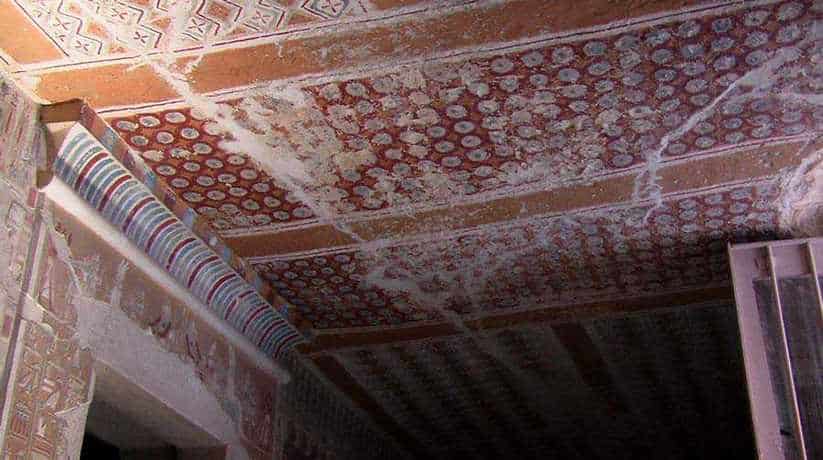
The modern entrance to Shrouy tomb cut into the rear chamber. To view the paintings in the correct sequence, one must first move to the smaller vestibule. And then he must begin at Shuroy tomb’s original entrance. Upon entering Shrouy tomb Luxor, one will find a depiction of Shuroy and his wife in a pose of adoration. It is within the right thickness of the doorway. In fact, only the upper part of their bodies is now visible. Each faces toward the tomb. On the left hand thickness of the tomb’s door there is a woman. Her features only sketched in red pain. She appears to hold the sistrum of Hathor. At the first chamber of the tomb, the ceiling painted with two different geometric patterns. It also divided into panels. The panels separated from one another by thick and gold colored borders.

Further details about Shuroy tomb Luxor TT 13:

They also framed by white, red and black lines. Just below the ceiling, a thick yellow band. It also bordered by two red lines encircle the room. It separates the registers from the ceiling. The columns for hieroglyphs are present in Shuroy tomb Luxor. In addition, they separated by vertical blue and red lines. No text ever entered. In the first chamber of Shuroy, the first quarter of the left wall not completed. It also lacks even the plaster that would have applied. Even so, the artists painted over the unfinished wall using red ocher to outline the scenes. On the left side of the chamber, in the upper register, are scenes from the Book of Gates. They also depict Shuroy and his wife before various deities. In fact, the first parts of these scenes unfinished.

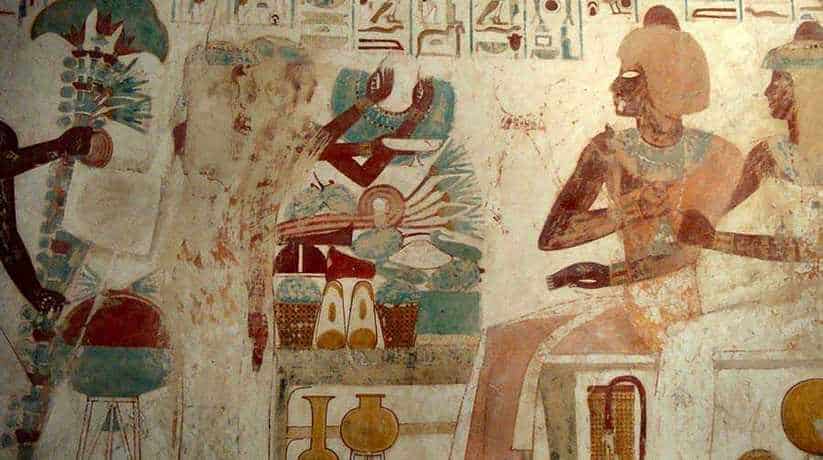
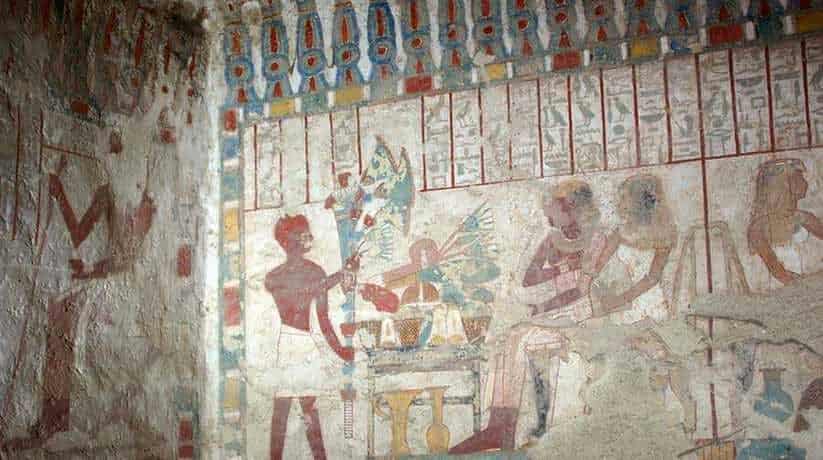
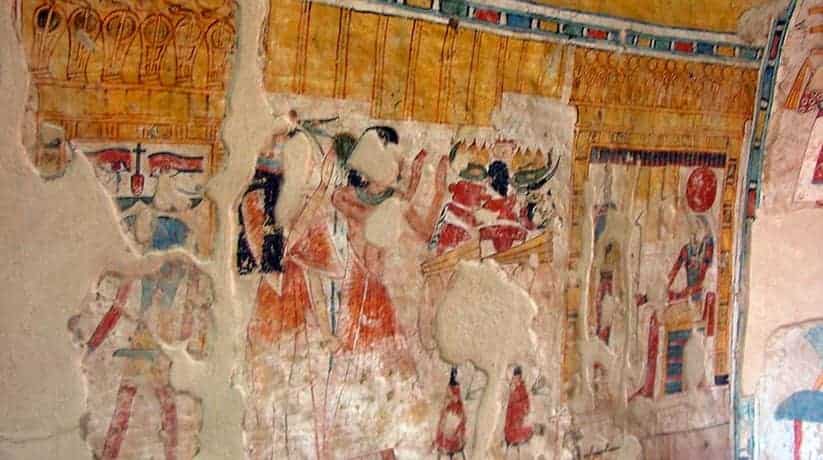
In the finished parts the curled wig of the wife surmounted by a lotus flower. She wears a transparent dress. At the center of the left wall in Shuroy tomb Luxor, the couple stands before a table of offerings. They laden with various items including breads and meats. The items also include mandrakes, grapes and cucumbers. To the right, Re-Harakhty, holding a scepter and an ankh-sign. He sits in a kiosk holding an ankh symbol and a was-scepter. The kiosk adorned. In addition, he faces left toward a standing figure of the goddess Ma’at. Though the god’s figure well painted. Furthermore, his arms and legs are long and thin. It makes the scene appear to be a caricature rather than a formal ancient Egyptian drawing. The front wall and the right side wall of Shruoy tomb continue the representations from the Book of Gates.

More details about Shuroy tomb Luxor TT 13:

In fact, it is as if they were one wall. Moreover, they are with various genie which shown in the same order as on the left wall. The scenes begin on the front wall. They are with a damaged depiction of Shuroy who holds a stem of papyrus in his right hand. Before him is a door, but also the representation of a genie. The genie stands on a pedestal with a scepter in his hand. As on the left wall, the couple moves on from gate to gate within these scenes. Also as on the left wall of Shuroy tomb Luxor, we find Shuroy with a shaven head. He dressed in a loincloth, facing another kiosk, or shrine. About him are tables of offerings. This time, the shrine contains Osiris, with dark green flesh, as he often painted.

In front of Osiris, rising from a lotus flower, are the Four Sons of Horus. On the left side of the chamber’s rear wall, a large, damaged, personified djed-pillar. It surmounts a large hieroglyph meaning “the West”. It clothed in linen and a red sash, and holds the crook and flail. Then, on the right side of the rear wall, we find a similar personified djed-pillar. Below this one shaped loaves of bread and vessels. The depiction of the bread loaves well drawn. There are also small dots which painted across the bread’s surface. They like those made by modern Upper Egyptian women when baking at home. Moreover, they claim that the holes ensure that the loaves bake. On the thickness of the doorway of the second chamber, there are also two figures which destroyed. They are also of Shuroy and his wife. Moreover, they drawn in red ink only.

Further details about Shuroy tomb Luxor TT 13:

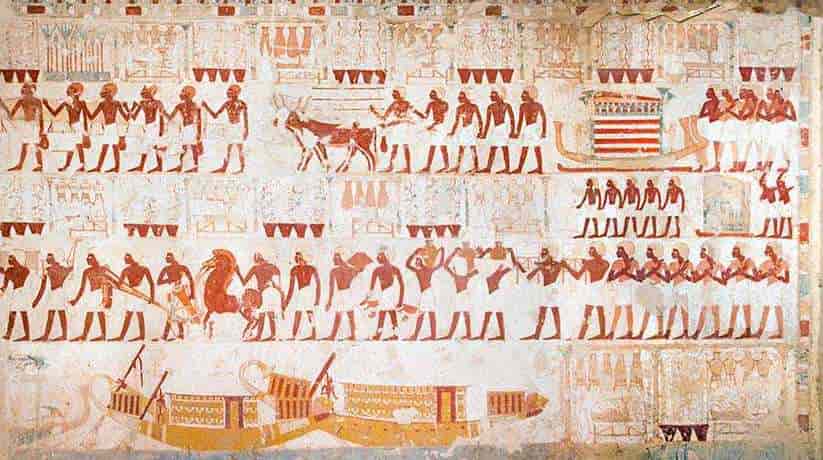
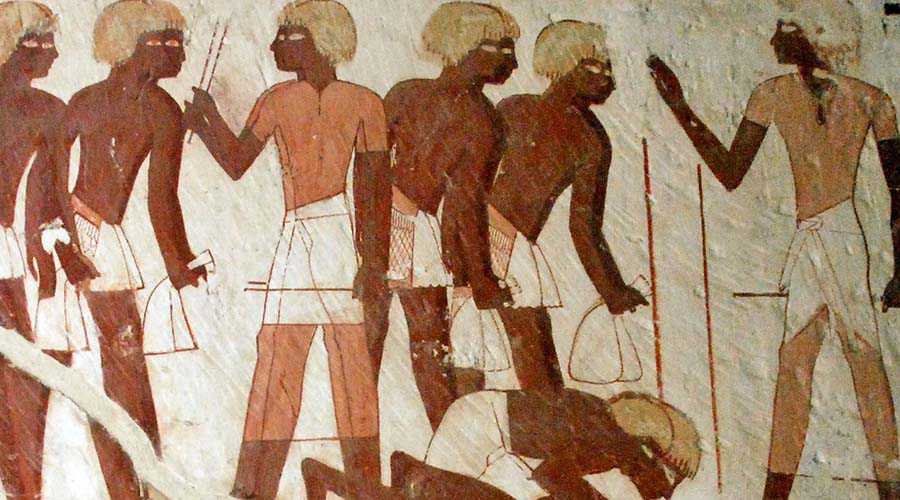
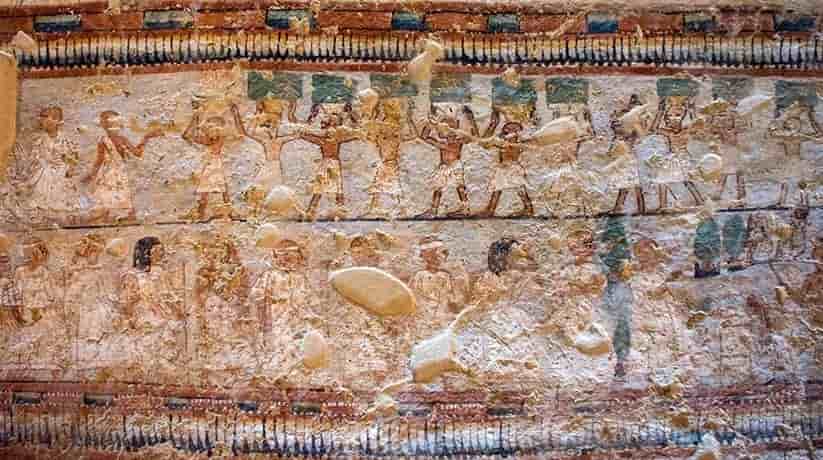
Moreover, the second chamber of Shuroy tomb Luxor has short walls at the north and south. They not decorated, or at least no longer decorated. In fact, they used to be the entrance to the tomb. The ceiling of this chamber decorated with a light yellow and white checkerboard pattern. In addition, a series of red and yellow circles arranged in large squares. Within the second chamber, four registers adorn the long front wall to the right of the door. In the upper register, twenty two male offering bearers stride forward. Moreover, Nineteen of them carry large, painted boxes on their heads. The three others have bundles of vegetables. The next register, Shuroy and an unknown male relative shown approaching a garden. To the right, a small group of drawn trees, with servants sitting beneath them.

The servants all are holding their heads in their hands, as if sleeping. In the next lower register, a funeral procession proceeds forward with servants bearing foodstuffs. It is while others are squatting before baskets of vegetables. Furthermore, at the right side of the scene, men carry a yoke on their shoulders to which chests attached. It is as a cow walks to the right of them. In these scenes, there is a distinct separation between nobles bearing offerings. The servants who toil with the majority of offerings and funerary equipment. Moreover, the rich clothing of the nobles distinguishes them from the simple bearers. It is with their loincloths who follow them. In the lowest register, the procession continues. It is with young, naked girls dancing beside their mother in the center of the register.

More details about Shuroy tomb Luxor TT 13:

In fact, their hands are in the air. Furthermore, their knees bent as if they jump or skip. Shuroy’s mummy stands at the right end of the wall, with a group of male bearers walking toward the mummy. Mourning women kneel at his feet, wailing and pouring dirt on their heads. At the top left of the rear wall, a priest grasps instruments. They used in the Opening of the Mouth ritual. In addition, a female mourner stands in front of the mummy, along with other women. Below this, Shuroy seen kneeling and holds braziers. It is before a figure of Hathor, shown as a cow with an elaborate plumed headdress. She is emerging from a mountain.

Within the central niche in the rear wall, there is a figure of a squatting man on the right. Shuroy is behind the man, offering braziers. Behind him is his wife and another male who unidentified. There were women who depicted to the left of Shuroy. To the right of the niche, Thoth leads Shuroy before a seated figure of Osiris. It accompanied by Isis and Nephthys. Below this, a scene of libation which almost completely destroyed. Shuroy tomb Luxor well restored and does have vivid colors. Though incomplete, its unfinished nature is also instructive from an artistic standpoint.

Entrance to Shuroy tomb Luxor:

The tomb opens from 8 am to 4 pm in winter. A ticket for the Dra Abu el-Naga tombs. It includes Roy tomb and also Shuroy tomb Luxor. It costs 60 Egyptian pound and can bought at the ticket office.

Nearby attractions Information, tours and Online Booking

More of Ancient Egypt

More of Egypt attractions

MORE
Sennefer tomb Luxor

Sennefer tomb Luxor

  • Sennefer tomb Luxor
  • Sennefer tomb Luxor
  • Sennefer tomb Luxor
  • Sennefer tomb Luxor
  • Sennefer tomb Luxor
  • Sennefer tomb Luxor
  • Sennefer tomb Luxor

Sennefer tomb Luxor TT 96 Egypt tours, prices, booking

Sennefer tomb Luxor (TT96) is famous for for its decorations. In addition, Sennefer well known as “The mayor of Thebes”. Sennefer tomb situated high on the southern hillside of Sheikh Abd El-Gurna. It is on the West Bank at Luxor (ancient Thebes). Sennefer tomb Luxor is in an area which known as the Tomb of the Nobles. Moreover, it is close to several other tombs of the time of Amenhotep II. This also include the well known tomb of Rekhmire (TT 100). The tomb overlooks the Ramesseum and the alluvial plain of the Nile. It takes the classic “T” plan of the private tombs. It also differs from other 18th Dynasty tombs in the amplitude of the burial chamber. In fact,  both the antechamber and burial chamber decorated. The scenes within Sennefer tomb were the work of at least two different artists.

Sennefer Tomb Luxor opened since at least the Graeco-Roman Period. The tomb visited by Sir John Wilkinson sometime after 1821. In 1826, Robert Hay, part of who’s notebook is in the British Museum Library, copied many of the scenes. Howard Carter reported that the tomb “reopened” by Sir Robert Mond. It was in 1904. It should also noted that this may not have been Sennefer’s final resting place at all. Howard Carter speculated that he may have buried in tomb KV 42. It based on canopic jars, but all the evidence has not analyzed. If this is true, it might explain why no objects associated with Sennefer unearthed in Sennefer Tomb Luxor. Over the years there were many of attempts to rob Sennefer tomb Luxor of its paintings.

Further details about Sennefer tomb Luxor:

We find one such suspect scene in the Florence Museum. Other scenes restored. In 1994, the tombsuffered some damage due to a particularly violent storm. Since that time the walls completely conserved. It is with glass which installed to protect the images. Furthermore, the tomb, known by 19th century travelers as the “Tomb of the Vineyards”. It is because of the decorative theme of its ceiling. The ceiling of Sennefer tomb Luxor attests to the fact that he received a fair share of these proceeds. Sennefer’s tittles shown on the walls of his tomb. The titles varied, but the main one attached to his name is that of Mayor of Thebes.

In fact, Sennefer was in charge of the administration of the city. He also was responsible for works in the necropolis. Sennefer also was for upkeep of Amun’s temples, granaries, cattle, fields, gardens and orchards. His other titles included Chancellor to Amenhotep II. Titles also include “Overseer of the Granaries of Amen”. In fact, to hold such positions meant that he trusted and respected by the king. Sennefer thus so calls himself, in his tomb “Great Confidante of the Lord of the Two Lands”. Moreover, he also called himself “praised by the living god”and “of enduring favor”. Moreover, he also called himself “beloved one”. He also called himself “efficient and trustworthy servant of the Lord of the Two Lands”. Furthermore, he was efficient and loyal to his lord. He thus earned the king’s high esteem, as reflected in his final resting-place.

More details about the tomb:

Sennefer’s parents named Ahmose and Nub. Their names only found within the superstructure of the tomb. We know that he married to Meryt, who he refers to as beloved within Sennefer tomb Luxor. He maybe also married to as many as four other wives. They named Sentnefert, Senetnay. Moreover, they were both Royal Nurses to the king, Senetmi and Senetemiah. In fact, there is debate whether these were all different wives or different names for only one or two wives. They might all refer to Meryt or to Meryt and a second wife. Official documents record his marriage to Senetnay, who was almost the same as Meryt.

Senetnay also attested to by a statue from Karnak that is now in the Egyptian Museum in Cairo. In Sennefer tomb Luxor, Meryt depicted on the sides of several pillars. She presents gifts, as well as making the Pilgrimage to Abydos with her husband. It is while Senetnay found performing various duties. She also seen with him while making offerings to Amen. Furthermore, Sennefer also had at least three daughters. They included Mut-tuy. She seen in several scenes within the burial chamber of Sennefer tomb. Daughters also include Mutnefert, who shown on a statue in the Egyptian Museum in Cairo. The third daughter is Nefertiry, who is on a statue in the London Museum.

Further details about the tomb:

Sennefer tomb Luxor has a large and rectangular courtyard. It enclosed by a rough rock wall finished with plastered mud brick. Here, a superstructure, which referred to as a funerary chapel, damaged. It consists of a hall, passage and pillared inner hall. On the east wall of this room are three statue niches. It communicates with a single pillared hall. Yet the paintings in the funerary chapel are of even a higher quality. They are indeed much better than those within the substructure of Sennefer tomb. The most important of these indeed is a scene that shows Amenhotep II blessing the harvest. It is the earliest of only five such known scenes.

This superstructure has used to store artifacts from other tombs in the area. Moreover, it also used to store the treasures of Tutankhamen’s tomb. It is since 1905. Perhaps visitors will someday have access to this area. Sennefer tomb Luxor reached by way of a steep staircase. It is with 44 irregular rock cut steps, leading out of the yard facing the chapel, down twelve meters. These steps lead, after taking an elbow bend into an antechamber. They which in turn communicates thought a small doorway. Furthermore, It is with a four pillared burial chamber. In fact, both rooms plastered and have a pale bluish gray background, which was typical of this period.

More details about Sennefer tomb Luxor:

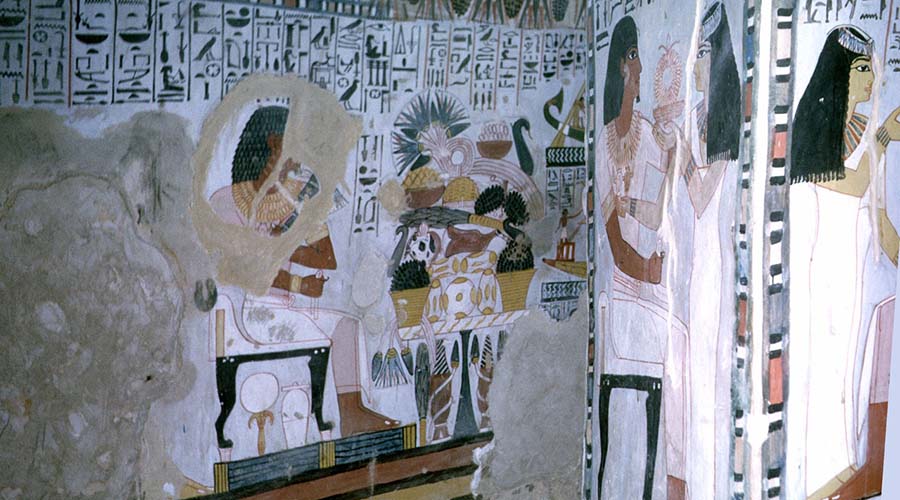
The remaining scenes in the antechamber indeed well preserved. The antechamber of Sennefer tomb Luxor measures 3.5 meters by 2.35 meters. Here, the staircase bends to the right. One presented with Sennefer sitting under a grape laden pergola. It is a theme which repeated in the whole of Sennefer tomb’s ceiling. Moreover, on the western wall we find Sennefer receiving offerings. They presented by priests led by one of his daughters. The consisting of linen tissues, torches, a foreleg of beef and bread. His daughter, Mut-tuy the “Singer of Amun”, offers him two necklaces and a heart amulet. Furthermore, on the eastern (right hand wall), the scene depicts the funerary entourage. It is with bearers presenting the tomb equipment.

These items include a large menat collar, leather sandals and two shawabti figures. They also include the funeral mask and a heart shaped amulet. Moreover, it painted blue to symbolize lapis lazuli. There are also a bed and Sennefer’s personal possessions which locked up in two small boxes. Beside the door to the burial chamber on the northern wall there is another scene. It also depicts the woman named Setneferet, “much beloved sister and singer of Amun”. She plays the sistrum while holding a menat necklace. Along with her deceased husband, depicted worshiping Osiris and Anubis. Osisris and Anubis are the two major deities of the afterlife. The short passage between the antechamber and burial chamber decorated. But the scenes damaged.

Further details about the tomb:

The burial chamber of Sennefer tomb Luxor itself indeed is cheerful, if one may say that about a tomb. In fact, Its irregular surfaced ceiling is spectacular. Its portrayal of vineyard grapes at the entrance. The ceiling and portrayal give way to a multicolored carpet of geometric designs. It provides an impression that one is standing under a tent. The pillars only enhance this perception. The decorative theme is complex and reveals the life of the deceased. It also reveals his wife Meryt in the after-world. Sennefer tomb’s walls painted in a precise order. It tells the story of the deceased’s journey through the afterlife. Moreover, it begins with the initial offerings to the gods. It ends with the deceased regenerated and his appearing in daylight.

The order of these scenes actually begins on the northwestern wall. From there, they proceed clockwise around Sennefer tomb Luxor. Here the first scene portrays Sennefer and Meryt. They make offerings to Osiris-Unnefer (Lord of the Holy Land, Price of Eternity). It is beside Hathor (Lady of the Western Necropolis). This scene in turn, followed by Sennefer’s funeral procession. It is where his sarcophagus hauled by four oxen and proceeded by servants. The servants carry the funeral equipment which locked up in wooden coffers. There are also offerings and procession accompanied by friends. They are besides to high ranking officials.

More details about Luxor Sennefer tomb:

Another scene, depicts the funerary rites. It including washing and cleansing the body of the deceased. It also includes the transportation of the canopic jars as well as other ceremonies. Turning the corner, we find on the northeast wall a double scene of offerings to Osiris. It is where the deceased and his wife found facing a well stocked table of food offerings. It is in front of which there are priests carrying torches and libations. These scenes also have accompanying offering formulas.

While most of the scenes are in precise order in Sennfer tomb, there are two scenes are out of order. The first portrays Sennefer and his wife worshiping Anubis and the resurrected Osiris. Osiris face painted a reddish (blood) color. The color used to represent the living. It followed by a river scene recalling the pilgrimage to Abydos. Moreover, it is a common occurrence in private tombs. It is in the holy city of Abydos that the traditional tomb of Osiris considered to locate. In fact, it was necessary for the deceased to make this trip in order for his soul. It is to judged by weighing it on a set of scales against the feather of Ma’at.

Further details about the tomb:

The boat that Sennefer and his wife travel aboard on the Nile is green. It symbolizing papyrus but also regeneration. They sit beneath a baldachin. It is while a priest performs a cleansing ceremony before leaving on their journey. Their bark pulled by a second, larger boat complete with helmsman, rowers and a captain. In a second register, they shown on the return journey back to the Thebean necropolis. This time with the lead boat depicting a sail.

On the next wall (southeast), the grape motif of the ceiling winds down around the next scene. It is where we find Sennefer and Meryt first depicted worshiping Osiris and Anubis. It followed by a scene from Chapter 151 of the Book of the Dead. Here, the deceased lies on his death bed. Anubis, the divine embalmer, accompanied by Isis on the right and Nephthys on his left. He attend to his mummy. Beneath the bed is Sennefer’s ba, or soul. It represented as a bird. In each corner of this scene are one of the four sons of Horus. They consist (clockwise) of Qebhsenuef, Duamutef, Imset and Hapy. In the lower part of this scene shown two shawabi figures. It is along with passages from Chapter 6 of the Book of the Dead.

More details about the tomb:

This text includes the magic formula. It allows the deceased to call upon the shawabti so that they undertake his labors in the Afterworld. At the far end of this same wall is another curious scene. It depicts Sennefer and his wife cleansed by water from a nemset-jar by a sem-priest. In fact, it is the most ancient representation. It is with the priest wearing his traditional leopard skin garment. Here one finds an ancient Greek graffito from an early tourist to Sennefer tomb Luxor. It appears on the left of a double heart scarab amulet worn around Sennefer’s neck. He holds a bouquet of lotus buds, while Meryt also holds lotus buds as well as her sistrum and menat.

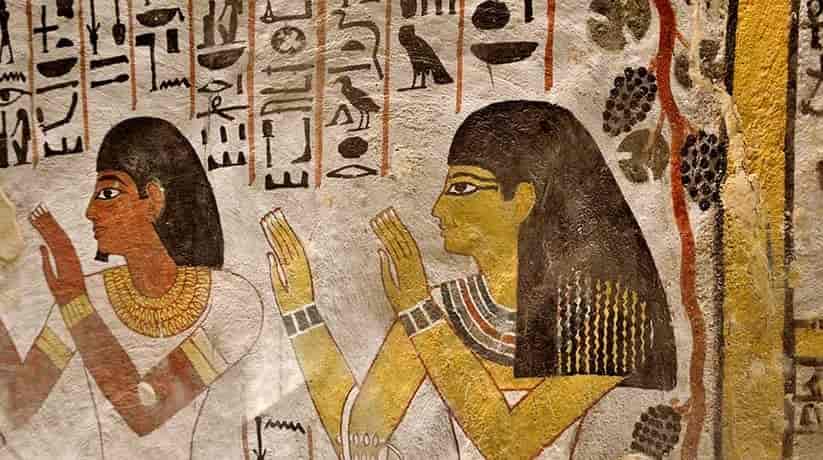
Next to the chamber’s entrance, a depicted priest bringing libations and burns offerings. On the left front wall we discover a scene representing Sennefer and his wife. They seated on high backed chairs in a conventional attitude. Meryt’s hair tied with a band that adorned with a large lotus flower. Above the doorway is a double scene of Anubis as a black jackal crouching on a pylon shaped shrine. It is to either side of some lotus flowers. The Pillars within the burial chamber at Sennfer tom also decorated. On three sides, each of them portray Meryt offering lotus flowers and perfume ointments. She also offers food, myrrh, protecting amulets and linen bands. She also offers necklaces and a sistrum to her husband.

Further details about Sennefer tomb Luxor:

One exception is the southeast pillar where she stands before him. One one side of each pillar, the scenes vary. On the southwest pillar, the deceased and his wife are beneath a sycamore. It is with Sennefer sitting on a chair while Meryt sits on the floor at his feet. The deceased smells a lotus flower and holds a Sekhem scepter, symbol of power and authority. It is while in front of them is a table with three vessels containing beer and wrapped in lotus stems. On the northwest pillar depicted the “goddess of the sycamore”. They offering water to the couple surmounted by a portrayal of Anubis in canine form.

Entrance to the tomb:

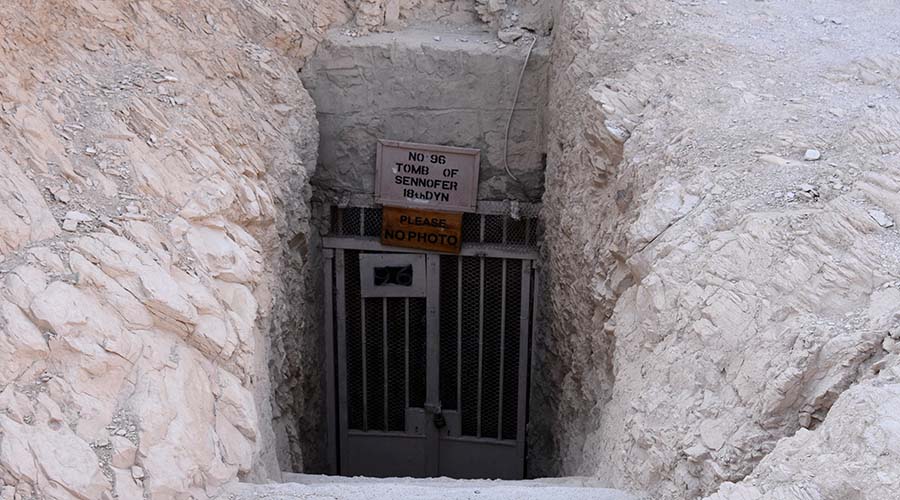
Sennefer tomb Luxor is open 8 am to 4 pm in winter. A ticket for the tombs of Sennefer and Rekhmire can bought at the ticket office.

Nearby attractions Information, tours and Online Booking

More of Ancient Egypt

More of Egypt attractions
MORE
Sennedjem tomb Luxor

Sennedjem tomb Luxor

  • Sennedjem tomb Luxor
  • Sennedjem tomb Luxor
  • Sennedjem tomb Luxor
  • Sennedjem tomb Luxor
  • Sennedjem tomb Luxor
  • Sennedjem tomb Luxor

Sennedjem tomb Luxor TT 1 Egypt tours, prices, booking, reviews

Sennedjem tomb Luxor TT 1 located in the necropolis of Deir el Medina on the West Bank at Luxor. It indeed was one of the great discoveries which found in tact by Italian archaeologists in 1886. Nothing had disturbed, as was not even the case with the tomb of Tutankhamun. In fact, all the decorations within Sennedjem tomb Luxor, painted on a background of yellow ocher. They are intact and indeed some of the most beautiful within the necropolis. In fact, Sennedjem had the title “Servant in the Place of Truth”. Furthermore, he lived during the reigns of Seti I and Ramses II of Egypt’s 19th Dynasty. In fact, the tomb is simple with a narrow stairway leading into a small room. Furthermore, the room followed by the burial chamber.

The rectangular burial chamber oriented westward and has a vaulted ceiling. Moreover, Sennedjem tomb Luxor had a wooden door opening into the first small room. It is with a scene depicting Snnedjem and his wife, Lyneferti playing the board game, Senet. The game connected with Chapter 17 of the Book of the Dead, and may represent the Judgment of Osiris. Furthermore, on the other side of the door we find Sennedjem and his relatives worshiping Osiris and Maat. It is in the upper register, and Ptah-Sokar-Osiris and Isis in the lower register. In fact, the style of decorations in the tomb is typical of the Ramessid period. It is spontaneous and fresh with lively details. They represent a conventional funerary theme.

Further details about Sennedjem tomb Luxor TT 1:

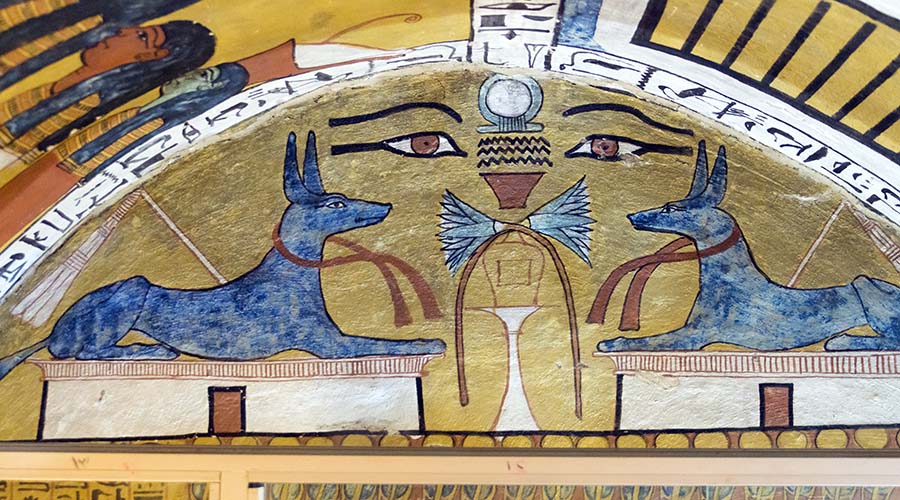
Entering the burial chamber, on the left front wall we first find a scene. The scene depicts the mummy of the deceased in his sarcophagus. He lying on a funeral bed and protected on the left by Isis. Moreover, on the right by Nephthys, both in the form of falcons. Under this in a lower register is a scene. It is of the deceased sons who bring him offerings. They also purify themselves before his parents while other relatives sit nearby. In the next scene on this wall of Sennedjem tomb Luxor, the deceased shown with his wife. He holds a sekhem-scepter, a symbol of power. Turning the corner, we encounter a scene of Snnedjem and his wife worshiping the gods of the dead. It is below a dual representation of Anubis in the form of a jackal crouching on a shrine.

On the back wall we find scenes of the deceased entering the after-world. First Anubis preparing Sennedjem’s mummy, which stretched out on his funeral bed. Here we also find text from the Book of the Dead. In the next scene we find Osiris, in full regalia. He is before an alter on which rests a water pot cooled by lotus blossoms. On either side of him are Wadjet-eyes at the top and two sacred fetishes below. In the following image, Sennedjem worshiping this image of Osiris. Finally, on this wall we find Anubis in human form but with a jackal’s head. He introduces Sennedjem into the after-world. Turning the corner, again we find many of scenes including one famous depiction of the Fields of Laru. It is in the blessed after-world.

More details about Sennedjem tomb Luxor TT 1:

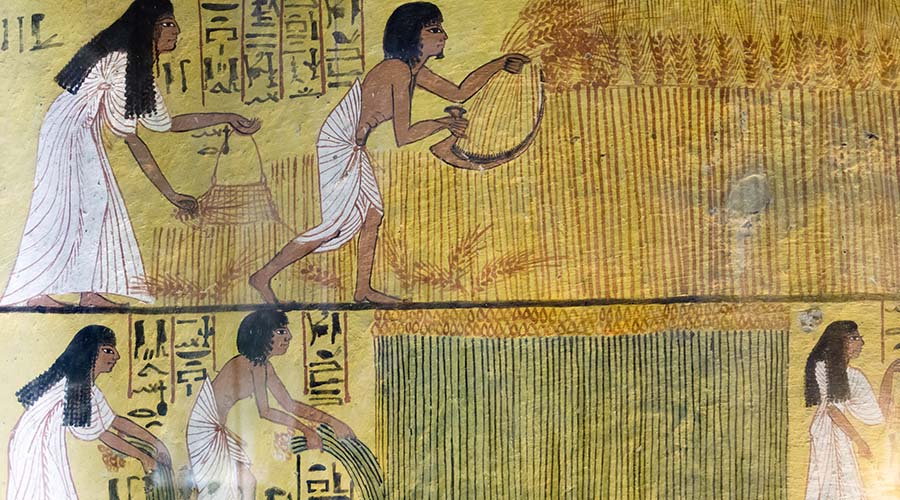
The deceased and his wife sow, reap and plow reflecting chapter 110 of the Book of the Dead. Above this scene, Sennedjem and Lyneferti worshiping Re, Osiris and Ptah. They followed by a boy on a papyrus boat. In fact, the boy most likely a dead son of the couple and one of the deceased sons. He performs the Opening of the Mouth ritual on his father. At the top of the wall is a scene of baboons worshiping Re on his bark (boat). On the front right wall of Sennedjem tomb Lixor there is a scene of the deceased and his wife. They face the guards of the gates of the kingdom of Osiris. The roof of Sennedjem tomb also decorated with text running down its middle. It is with three strips crossing it, dividing the ceiling into two groups of four squares.

In the first square are scenes of the deceased worshiping different divinities. They include including Thoth, Re-Herakhty and Atum, along with others. In the next box is a scene depicting Sennedjem and Lyneferti. They receive offerings of food and beverages from the goddess of the sycamore. This is a representation of the goddess Nut in her role as protector of the dead. These scenes followed by others representing the couple worshiping four stellar spirits. They are the benu-bird and the embodiment of the soul of Re. Moreover, they also include the couple with Re-Harakhty and the members of the Heliopolitan Ennead. They also include Sennedjem opening the gates of the West, Osiris’ Kingdom. Sennedjem tomb Luxor indeed is one of the great private tombs in Egypt . It is must-to-visit in case you are in the West Bank at Luxor.

Entrance to Sennedjem tomb Luxor:

The tomb located in Deir el-Medina above the Village of the Workmen. In fact, the tomb is open from 6 am to 4 pm in the winter season. Tickets can bought at the main West Bank ticket office before going to the workmen’s village. Tickets cost 80 Egyptian pound for Sennedjem tomb, Inherkau tomb and Hathor temple.

Nearby attractions Information, tours and Online Booking

More of Ancient Egypt

More of Egypt attractions
MORE
Suryan Monastery Egypt

Suryan Monastery Egypt

  • Suryan Monastery Egypt
  • Suryan Monastery Egypt
  • Suryan Monastery Egypt
  • Suryan Monastery Egypt
  • Suryan Monastery Egypt
  • Suryan Monastery Egypt

Suryan Monastery Egypt information, tours, prices, booking

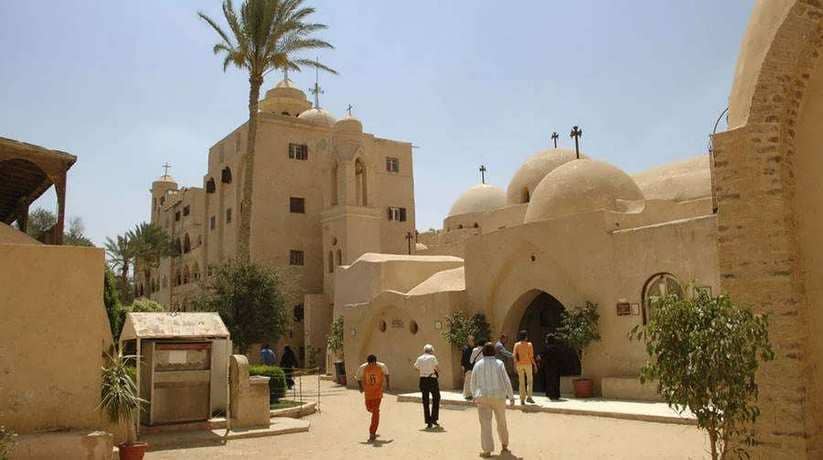
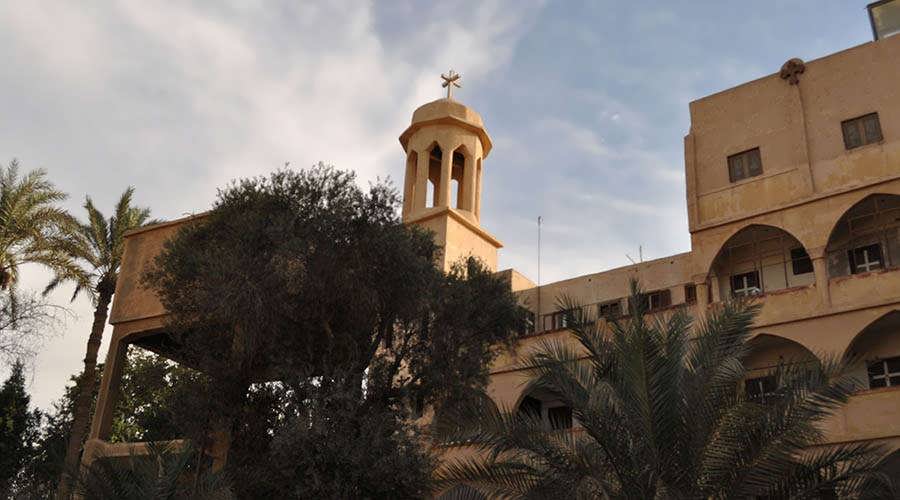
Suryan monastery Egypt is one of the four monasteries which well known in Wadi El Natrun, Egypt. In fact, it also know as Syrian monastery, Al Sourian monastery and Deir al-Sorian. The monastery founded in the sixth century, though some might date it later. Moreover, it is about five hundred meters northwest of St. Bishoi monastery. In 550 there was approach to Julianist which owes its name to its principal exponent Julian. He was a theologian and bishop of Halicarnassus (Halicarnarsus) in Ionia. Furthermore, he also called Aphtartodocetism. Julian exiled to Egypt. He defined the doctrine of the incorruptibility of Christ’s body. Julianist is believing in an extreme view. It is that the body of the Jesus Christ was incapable of corruption. They held that Christ’s body united with the Holy Father.

Christ took human flesh which prevented him from being ideal. Thus, the Orthodox Church reaffirmed and clarified the idea of the real human nature of Christ. The majority of the monks became followers of Aphtartodocetism. Others who refused the doctrine obtained permission from the governor Aristomachus. It was to erect new churches and Monasteries. So, they could settle apart from the Julianists. In fact, Suryan Monastery established by those of St. Bishoi monastery who were against Julianist doctrines. The problems between the Orthodox Christians and the Julianists died out. It was in the beginning of the eighth century. And then, there was no longer any necessity to maintain two distinct Monasteries.

Further details about Deir al-Sourian Egypt:

They settled in Al Fustat in Old Cairo. Acertain Marutha from Takrit in eastern Syria converted it for use by Syrian monks. Moreover, they renamed it the Monastery of the Holy Virgin of the Suryan. Some manuscripts refer to it as the Monastery of the Mother of God of the Suryan at that point. In fact, there were Syrian monks at Wadi El Natrun since the end of the fourth century. They were living among the other monks. Perhaps, the Syrian wished to live in a monastic community. It would be ethnically and culturally homogeneous. All Monasteries in the Wadi El Natrun subjected to horrible attacks by desert tribes.

Berbers in 817 AD was particularly disastrous to Suryan Monastery. In 850, it rebuilt thanks primarily to the persistent labor of two monks, Matthew and Abraham. Moses of Nisibis (c. 907-943 AD) traveled to Syria and Mesopotamia in search of manuscripts. Moreover, he spent three years gathering material. He returned to Egypt bringing with him 250 Syrian manuscripts. The monastery became an a prosperous and important facility. In fact, it has many artistic treasures and a library rich in Syrian texts. The monastery became a fundamental source of history and culture of Syria.

More details about El Suryan monastery Egypt:

The onastery walls enclose an unusual plan. It is in relationship to others in the Wadi El Natrun. They are form an almost rectangular quadrilateral. Moreover, they are with the short sides measuring 36 meters at one end and 54 meters at the other. The two longer sides measure some 160 meters. Furthermore, the height of the walls varies between nine and a half and eleven and a half meters. The monks explain this abnormal plan in an unlikely way. According to them, the monastery built on a model of Noah’s ark. These walls most likely date to the end of the ninth century. The entrance to the El Suryan monastery located at the west end of the northern side of this enclosure wall. The mammoth keep (qasr) situated west of the north entrance to Syrian monastery.

We believe it built in the middle of the ninth century. At any rate it built after the enclosure walls. In fact, it belongs to a less well developed type of tower. It is of which the oldest examples may found at Kellia. It consists of four stories, with access granted by a wooden drawbridge to the second floor. The bottom floor used for storage of food supplied. It also was for the production of flour, oil and wine to assure supplies during a siege. To further insure the complete autonomy during times of trouble, there was also a water well. The second floor used to house the precious library of manuscripts. They that surrendered. Some of the niches that once held the manuscripts are still visible. The third story consists of a corridor with four vaulted rooms to one side and two on the other.

Further details about Suryan Monastery Egypt:

Moreover, the fourth floor of the keep reserved as a chapel dedicated to the Archangel Michael. Here, one finds a nave and a choir separated by the traditional wooden screen. The sanctuary surmounted by a brick cupola supported by four pendentives. Furthermore, the Church of the Holy Virgin inside Suryan monastery is ancient. It dates back to 645 (though some references date it as about 950 AD). It constructed in the basilica style with a wooden roof.

This church has an entrance on its north side through a court. The court is square and surmounted by a cupola. Moreover, it opens into the monastery courtyard. The main building of church divided between the nave, the khurus and the triple sanctuary. The nave completely roofed with a barrel vault and flanked by two small side aisles. Furthermore, there is a masonry balustrade somewhat over one meter in height. It divides the nave into two sections.

The Chapel of the Forty Nine Martyrs in Suryan Monastery Egypt:

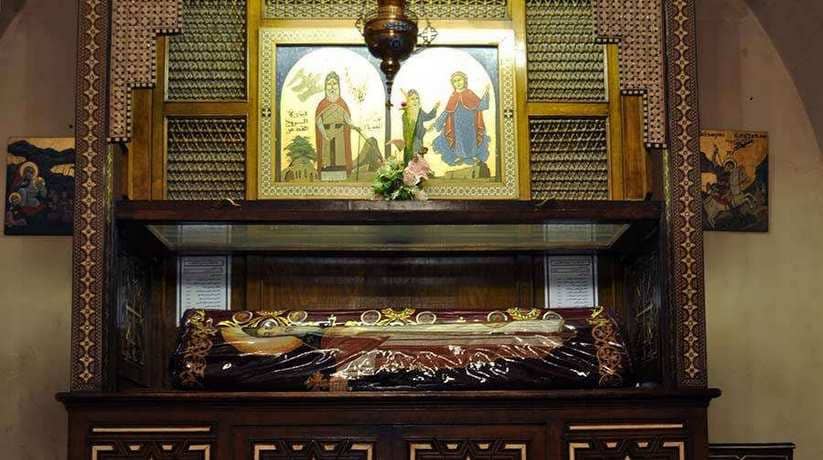
Attached to the north side of the Church of the Holy Virgin is the Chapel of the Forty Nine Martyrs. Moses of Nisibis was also responsible for this building. It entered through the court at the north entrance of this church. Moreover, in 444, forty nine martyrs massacred during a bloody raid. It was by the Berbers who plundered the Monasteries of Wadi El Natrun. In fact, it is to them that the chapel dedicated. Buried within the chapel is Anba Christodulus. He was the abun of Ethiopia at the beginning of the seventeenth century. Recent restorations have also revealed ancient paintings in this chapel.

In fact, the eastern wall of the sanctuary has three niches. They surrounded by the rich, decorative stucco work. It is like to that one in the central sanctuary of the Church of the Holy Virgin, revealed several scenes. In the central niche is a scene of the Holy Virgin holding Christ before her. The niche to the right adorned by a standing figure. It is with a Syriac inscription identifying him as “St. Mark the Evangelist”. Though the figure in the left niche not identified by text, he might be the Patriarch Athanasius. A similar composition found in the old Church of St. Antony (monastery) at the Red Sea. These paintings are newer than the tenth century stucco decorations that surround them. Dedicated to the Holy Virgin, this structure dates back to the ninth century.

Further details about Suryan Monastery Egypt:

It also made up of a naos, khurus and triple sanctuary. They maybe built in the fourteenth or fifteenth century. Moreover, the nave entered through a portico on the south side. The entrance level is three steps lower than the present grounds of Suryan monastery courtyard. There are three more steps that connect this portico with the nave of the church. Contrary to other Coptic Churches, the nave is transverse in relationship to the main east west axis. This is a characteristic feature of Churches in Mesopotamia.

In fact, it has a barrel vaulted roof. It divided into three bays by arches resting on consoles, another Mesopotamian feature. In the west end within the floor the marble laggan (also called a lakan). There is a central large door and two smaller side doors that lead into the choir. The central door is of inlaid woodwork and dated back to the fourteenth or fifteenth centuries. The choir is also rectangular and transverse in relation to the principal axis. It likewise has a barrel vaulted roof which divided into three parts. The iconostasis is screen separating the choir from the sanctuary. It made of dark, inlaid wood and dates from the fifteenth century.

The Church of St. Honnos and Marutha in Suryan Monastery:

This church, which no longer in use, attached to the east wall of the Church of St. Mary. It dates back to the beginning of the fifteenth century. In this period, the monks from the ruined monastery of St. John Kama took refuge in this monastery. St. John Kama, who’s remains transferred here, associated with this monastery. Saint John Kama was a native of Jebromounonson (Shubra Manethou) in the district of Sais. At an early age he forced into marriage. He persuaded his wife to consent to a life of virginity. Furthermore, he permit him to live the life of a monk. He inspired by a vision to enter the Wadi El Natrun. It is where he became a disciple of Saint Teroti. He inhabited a cell in the vicinity of the Monastery of Saint Macarius.

The Church of St. John the Little in Suryan Monastery:

In fact, the ruins of the Church dedicated to St. John the Little. They stand in the northeast corner of the monastery enclosure wall. Ethiopian monks occupied this church after their own monastery had fallen into ruins. Moreover, Ethiopian monks lived in the monastic communities of Scetis in the twelfth century. At one time occupied a monastery dedicated to St. Elisha. After the monastery fell into ruins, they received by the monks of Holy Virgin of St. John the Little monastery. Furthermore, the monastery also abandoned because of its precarious state. Few remaining Ethiopian monks then welcomed by the monks in the monastery.

The Refectory at Suryan Monastery Egypt:

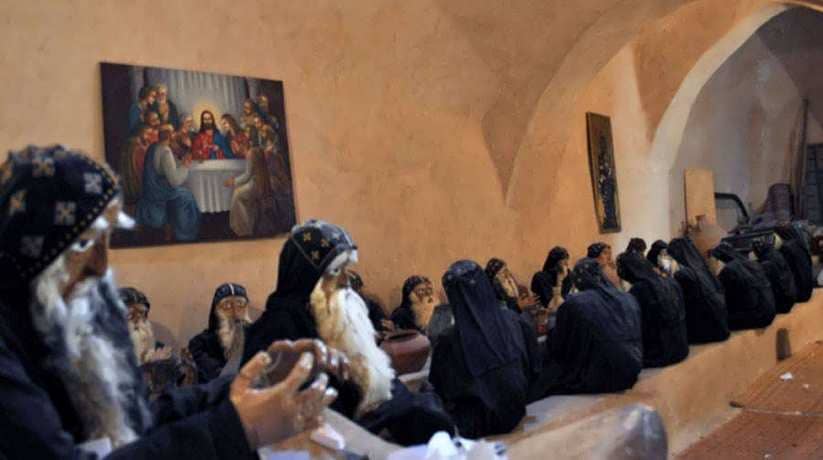
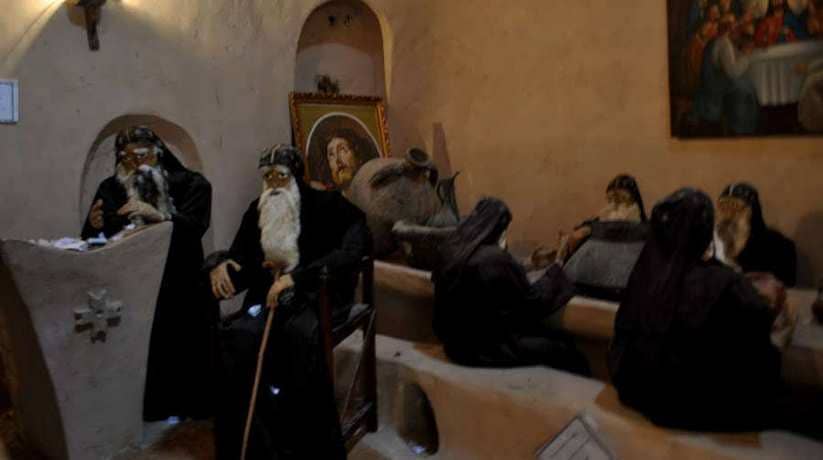
West of the Church of the Holy Virgin is the ancient refectory, which is no longer in use. It is rectangular with a masonry table running down its axis. This table flanked by chairs that are also of masonry. The room roofed with a vast cupola in which small windows opened to admit illumination. Near the east wall of the refectory is a large stone pulpit. It is from which the sacred texts raid and the saints’ lives revealed during the common meal. Above Suryan monastery grounds are, of course, other buildings of various uses.

The cells of the monks and gardens occupy the eastern and southern parts of the monastery grounds. A water tower built between 1955 and 1956 in the eastern part of Suryan monastery. It now provides it with running water. A guest house including a library and museum built by Qummus Maksimus Salib in 1914. It replaced during the 1960s with extra cells, a special library building and a museum. Today, this library contains over three thousand volumes including several hundred valuable manuscripts.

Nearby attractions Information, tours and Online Booking

More of Coptic Egypt

More of Egypt attractions
MORE
Tausert tomb Luxor

Tausert tomb Luxor

  • Tausert tomb Luxor
  • Tausert tomb Luxor
  • Tausert tomb Luxor
  • Tausert tomb Luxor
  • Tausert tomb Luxor
  • Tausert tomb Luxor

Tausert tomb Luxor KV 14 Egypt tours, prices, booking, reviews

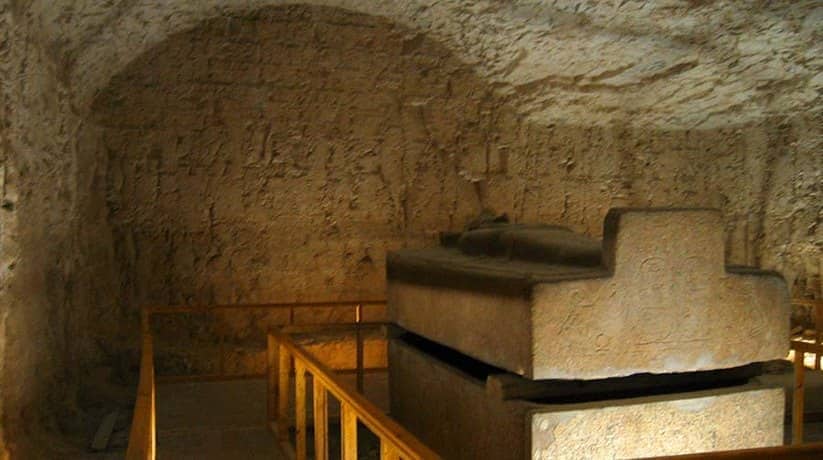
Tausert tomb Luxor KV 14 known in fact as Tawosret and Setnakht tomb. It indeed is one of the most unusual tombs in the Valley of the Kings. Moreover, Tausert tomb Luxor is also one of the largest tombs in the Valley of Kings. It encompasses two complete burial chambers. The tomb open and known since antiquity. Between 1983 and 1987, it studied in detail by Hartwig Altenmiller. The tomb built by Tausert, a queen and wife of Sethos II who later ruled Egypt as Pharaoh. The tomb shows four distinct phases of construction. The beginning was when Tausert was still the queen. The construction thus ordered by Seti II. The second phase of construction occurred after the death of Seti II. It was under the reign of King Siptah.

Further details about Tausert tomb Luxor:

King Siptah allowed the construction to go on much as Seti II had instructed. During this period, a sarcophagus hall created for the tomb. But it not of course designed as a king’s burial chamber. Around 1190 BC, Tausert became the co-regent of Siptah. Furthermore, she accepted the royal regalia and and began work on the second burial chamber. It was with the proper dimensions for a king. In fact, the entrance to Tausert tomb Luxor and the corridors had to enlarge. It is to accommodate the size of what was now to be a royal coffin. Around 1187 BC, Queen Tausert actually ascended to the thrown of Egypt as Pharaoh. She also ordered modifications to the tomb to reflect her exclusive royal status.

Setnakht was the father of Ramses III. He created his own tomb, KV 11 in the Valley of Kings. It was as the normal custom for kings of this period. In fact, KV 11 unfinished at the time of the king’s death. There appears to have plenty of time for it to complete. It is before the Kings burial. Moreover, Ramses III decided at the last minute to have his father interred in the tomb of Tausert. It was rather than his own. It was against the final wishes of his father. In fact, Ramses III would likewise not build his own tomb. He rather would take his fathers original tomb as his own (KV 11). It was against the current custom.

More details about Tausert tomb Luxor:

In fact, we know nothing about his reasoning on these sharp departures from custom. Almost all the other Pharaohs buried in the Valley of the Kings built their own tombs. They then occupied upon their deaths. The tomb not really Setnakht’s tomb at all. It almost built for Tausert. The first part of Tausert tomb Luxor includes an entrance and three corridors. They lead to a ritual shaft and then a small hall with no pillars. Moreover, a fourth corridor leads to a small antechamber. And then, it leads to the first burial chamber with several annexes. Just past this burial chamber are several more annexes. And then two more corridors that lead to the second burial chamber.

It also has four annexes and a corridor leading off from its rear. Furthermore, both the first and the second burial chambers have eight pillars. The axis of Tausert tomb Luxor approximates an east-west alignment. The various extensions constructed at different times shift in their orientation. In the first corridor, we find images of Tausert before deities. In fact, some of these have usurped to show a king rather than Tausert herself. Moreover, these images appear to be about the only decorations which changed for Setnakht. Most of the remaining decorative plan remained the same. It is with the exception that most of the places where the queens image or name appears. The area plastered over and painted with king Setnakht’s image and name.

Further details about tomb of Tausert in Luxor:

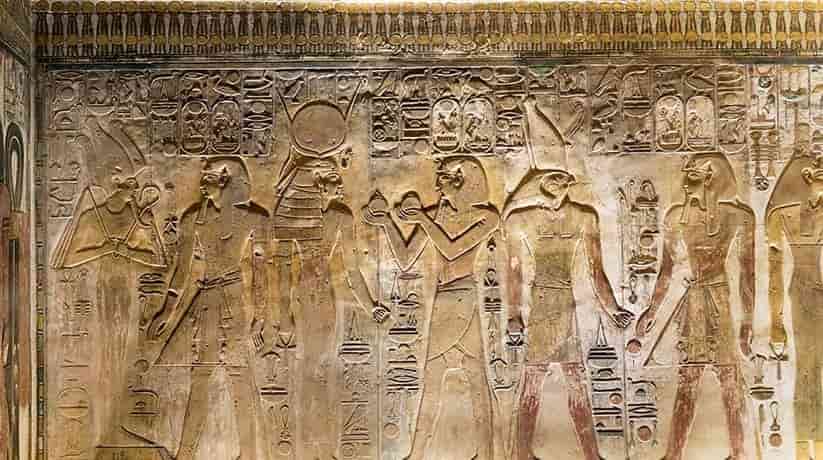
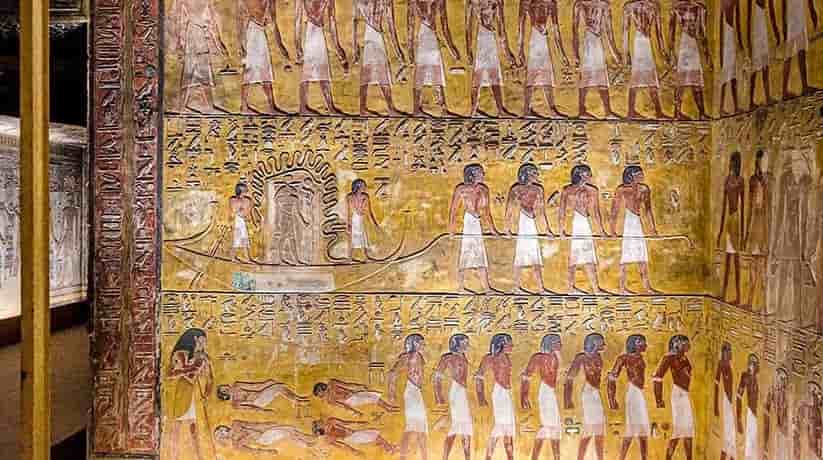
Furthermore, within the second and third corridors are passages from the Book of the Dead. In the ritual shaft are also images of various deities. Moreover, in the first small hall are again scenes from the Book of the Dead. In the following antechamber are images of deities. Just before the antechamber to the first burial chamber, we find scenes. They are from the Opening of the Mouth ritual. The first burial chamber has also scenes from the Book of Gates. It also has the closing scenes from the Book of Caverns, along with an astronomical ceiling. After the first burial chamber, the corridors decorated with scenes from the Amduat. The second burial chamber has an astronomical ceiling. It is also along with scenes from the Book of Gates on its walls. Little in the way of funerary equipment found in this tomb, other then a smashed sarcophagus.

Entrance to Tausert tomb Luxor:

The tomb is currently open to visitors. Ticket for the King’s Valley cost 200 Egyptian pound for three Tombs. It includes Tausert tomb. It can bought at the gate. Photography inside the tombs strictly forbidden and can incur heavy fines. There is a little train – Taftaf – that runs from the coach park to the entrance to the monument area. It costs 5 Egyptian pound.

Nearby attractions Information, tours and Online Booking

More of Ancient Egypt

More of Egypt attractions
MORE
error: Copyright © www.etltravel.com !