Activities in Nile Valley

Things to Do

Al Azhar mosque

Al Azhar mosque Cairo
  • Al Azhar mosque Cairo
  • Al Azhar mosque Cairo
  • Al Azhar mosque Cairo
  • Al Azhar mosque Cairo
  • Al Azhar mosque Cairo
  • Al Azhar mosque Cairo

Al Azhar mosque Cairo Egypt tours, booking, prices, reviews

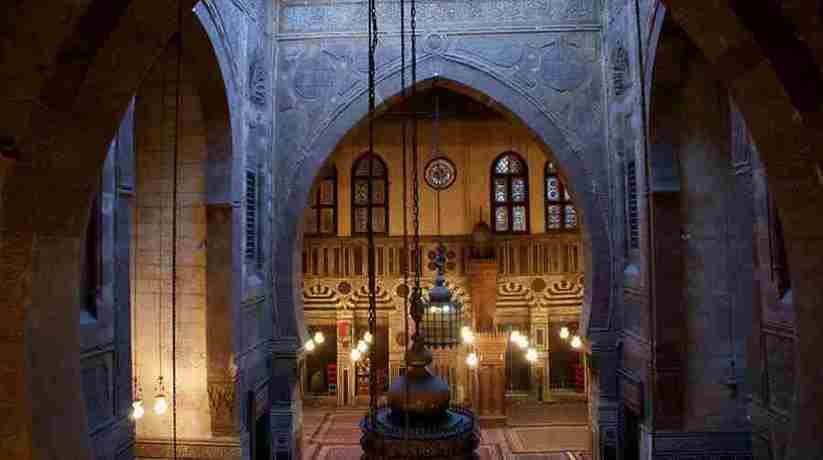
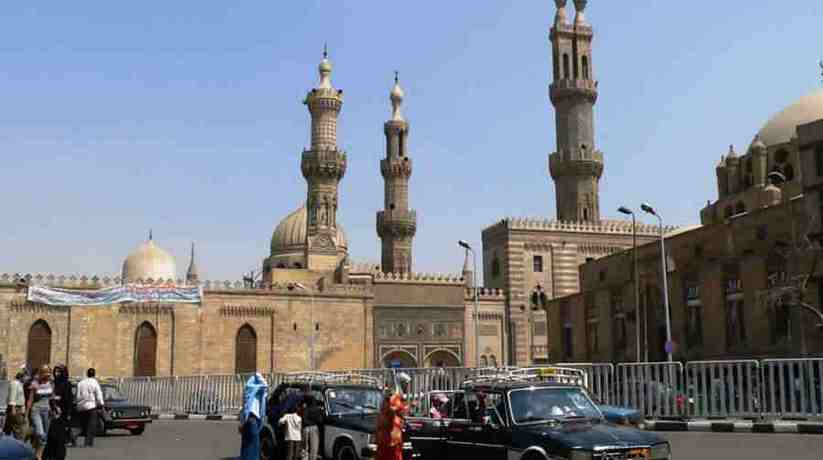
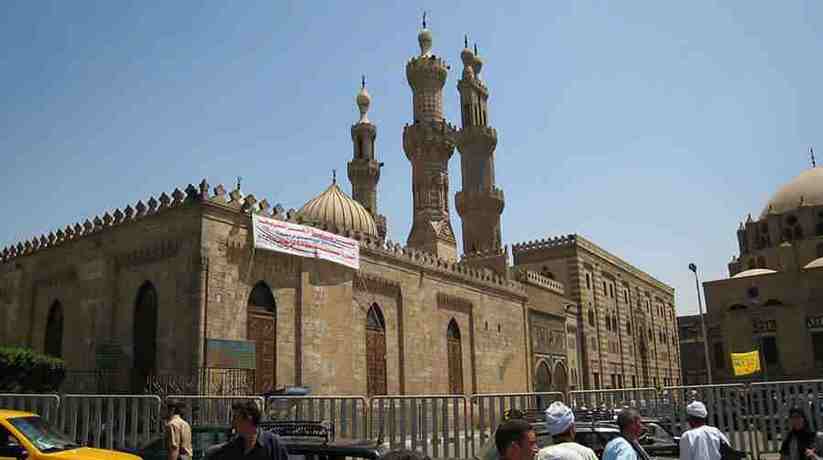
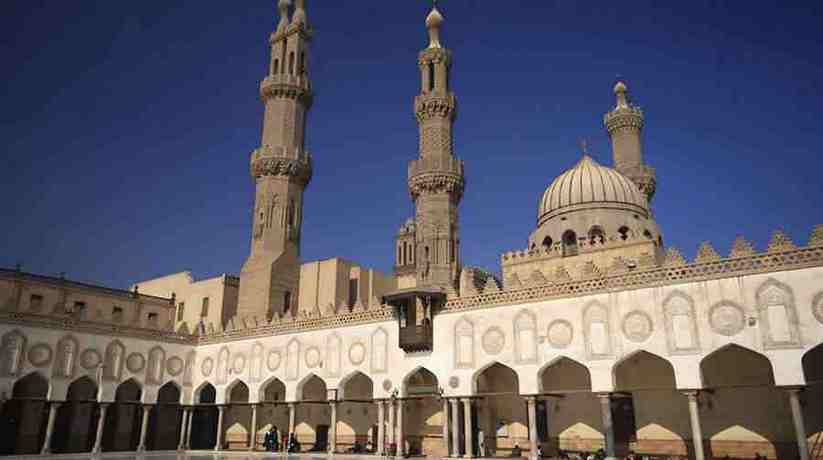
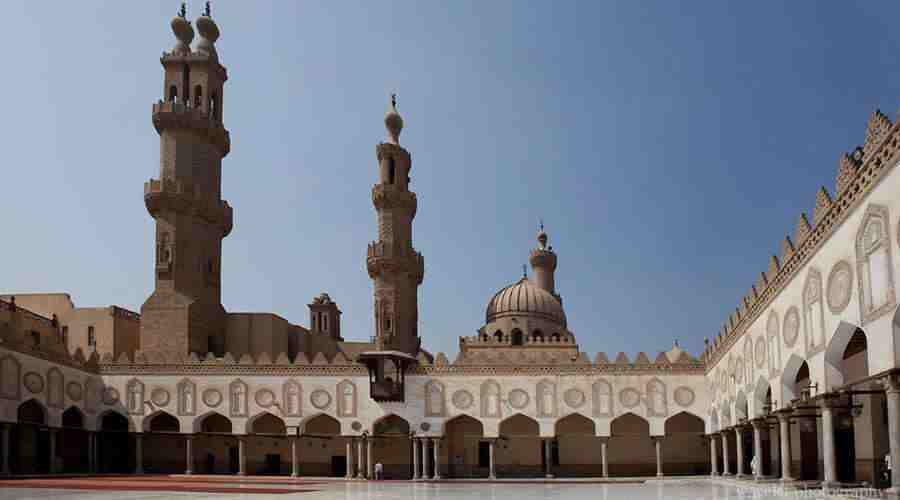
Al Azhar mosque Cairo is the first Islamic university which built in Cairo around 1000 years ago. Moreover, Al Azhar mosque in Cairo was the official mosque which has the Friday prayers. In fact, it built by the great Fatimid army leader and the builder of Cairo, Gawhar El Seqelly. It was due to the orders of the Fatimid Caliph, Al Mui’z le Din Allah. The building of Azhar mosque started in the year 970 AD. In fact, it finished three years afterwards in 972 AD. The objects behind building was to make it the official mosque of Cairo. It is the same as Amr Ib Al Aas Mosque and the Ahmed Ibn Tulun mosque. Al Azhar mosque in Cairo established to be an educational institution. That is to teach Shiite teachings and spread it all over the country.

Architectural description of Al Azhar mosque in Cairo:

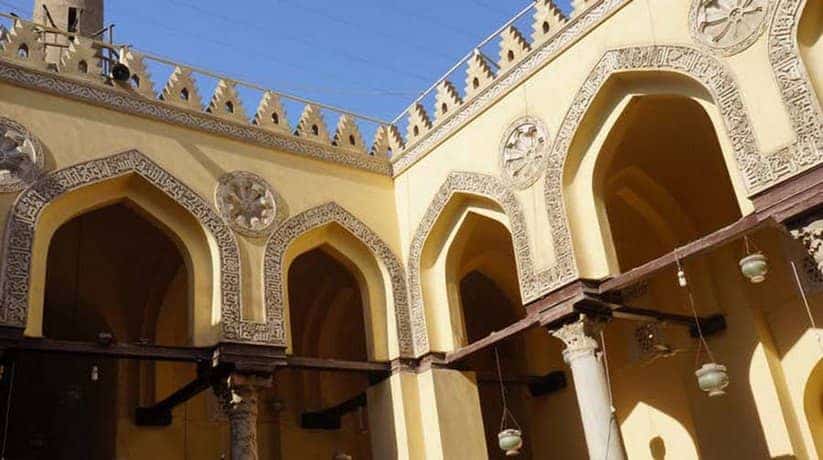
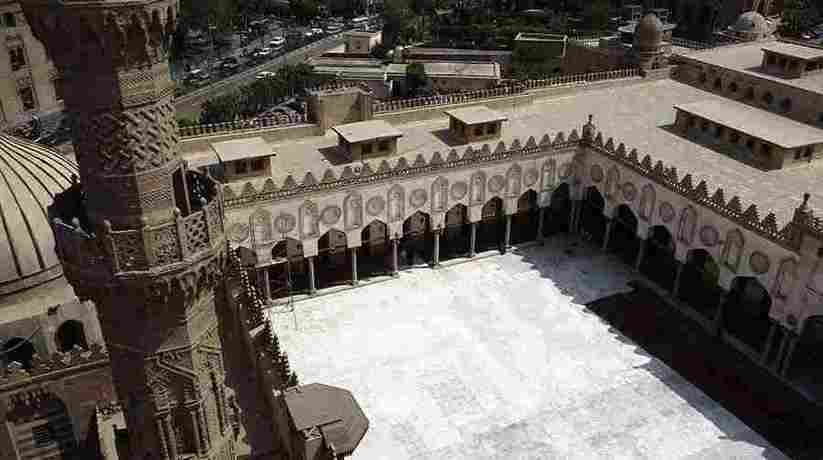
The old area of Azhar mosque was only half the area it has now. New buildings, and restorations done during all the following eras made it as it shape now. The early mosque of Al Azhar consisted of three iwnas, prayers halls, and a Sahn. Sahn is an open air courtyard. The gate of the mosque located in the mosque’s Western walls. This section contained a simple Fatimid minaret. It decorated with Kofy Islamic writings and plant ornaments. They are the only remaining feature of the ancient mosque that is still available now.

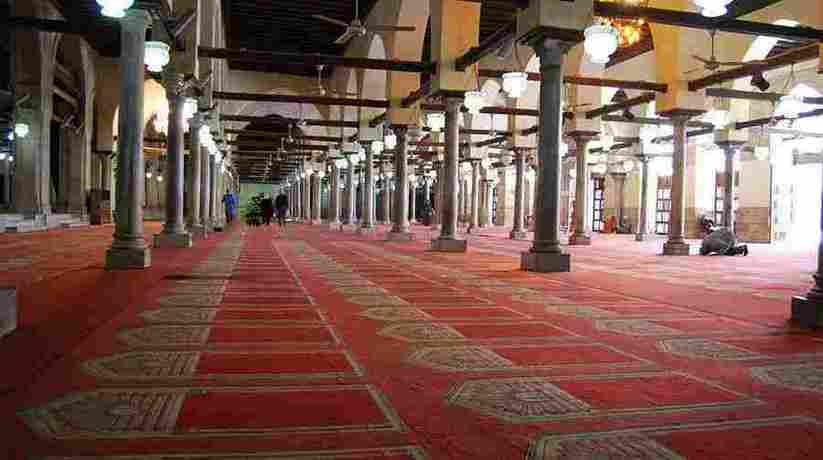
The old Mihrab of the mosque decorated with ornaments and Kofi writings of Quran. There is also a Mamluk style dome. In fact, the dome goes back to the 15th century which took the place of the Fatimid dome. The mosque of Al Azhar had three gates in its Northern, southern, and western walls. The original Minnbar built by Gawher El Seqqely. In fact, it was then transferred to Al Hakim mosque.

Al Azhar Mosque Cairo in the Fatimid period:

In fact, Al Azhar mosque went through a lot of changes in the Fatimid period. Al Hakim be’amr Allah added 27 amazing lamps to the mosque. The lamps made of silver. What remains of the works of Al Hakim is a small wooden door. The decorated with Kufi writings which was the dominant decoration feature of this era. In 1125, the Fatimid ruler Al Amer be’ahkam Allah established a Mihrab for Al Azhar mosque in Cairo. It made out of the Aro Turkish wood which decorated with a lot of plant and geometric shapes. Fatimid Caliph, Al Hafez Le Dine Allah wanted to expand the area of the mosque. In fcat, it was In 1149 AC. He added some space to the Sahn of the mosque. He also added some decorations to the walls of the mosque and it built out of plaster.

Al Azhar Mosque Cairo in the Mamluk period:

In 1266 AD, Al Zaher Baybars ordered to build a Minbar. Nothing remains of it except its historical building note which now kept in the museum in Algeria. The Tabrisy Madrasa which is Islamic teaching institution built by Baybars Khazendar. He was the army commander in the reign of Al Nasser Mohamed Ibn Qalaun. It is to right hand when you enter the Al Azhar mosque. This added a bigger space to the mosque. It hosted Islamic teachings classes and also had a large Islamic books library. The Afghaweya Madrasa built in 1340 AD. It located on the left hand side of the entrance. Moreover, it hosts the library of Al Azhar in the present time. Al Gawhareya Madrasa built in the Eastern Southern section of the mosque, is a small Madrasa. It consists of four Iwans and a small Sahn.

Al Azhar mosque Cairo in the Ottoman era:

In fact, the mosque had a lot of building works in the Ottoman era. The biggest and most important building work done by the Amir Abdel Rahman Katkhuda in 1753 AD. He expanded the area of the mosque by adding a Riwaq behind the Mihrab. It built on a higher level than the whole mosque. He also added a new Minbar and Mihrab. Katkhuda added two great gates as well. The first one is in the Southern wall. It called the Sa’ayda gate. The Shroba gate is in the Eastern section of the mosque. Furthermore,  a minaret added beside it.

Katkhuda was also responsible for building the beautiful Western gate. It is now the main entrance of the mosque. The mosque also restored by the supreme council of antiquities in the modern time. Al Azhar as a mosque and as an educational institution has played a major role in the whole Egyptian history. It is especially in fighting the French and British occupation.

Al Azhar University:

It is the largest and most important Islamic teaching institution in the whole world. It is the second modern university to built in history. Islamic teaching in Al Azhar University transformed from Shiite teaching to Sunni teaching. In fact, it started in the Fatimid era. It is still one of the most important education institutions in Egypt and in the whole world.
Nearby attractions Information, tours and Online Booking

More of Islamic Egypt

More of Egypt attractions

MORE
Al Ghouri complex Cairo

Al Ghouri complex Cairo

  • Al Ghouri complex Cairo
  • Al Ghouri complex Cairo
  • Al Ghouri complex Cairo
  • Al Ghouri complex Cairo
  • Al Ghouri complex Cairo
  • Al Ghouri complex Cairo

Al Ghouri complex Cairo Egypt tours, booking, prices, reviews

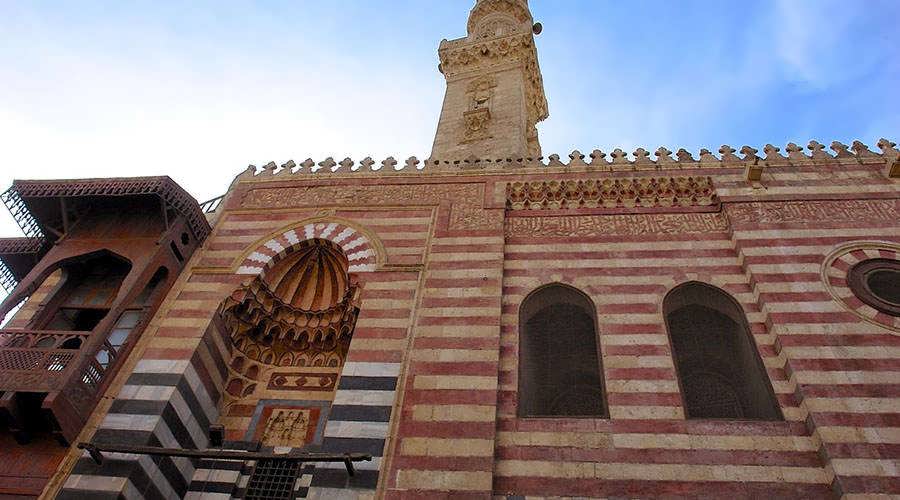
Al Ghouri complex Cairo built as a funerary complex established by Sultan Qansuh Al Ghouri. In fact, Al Ghouri complex built between 1503 and 1504. It was in the Fahhamin quarter on Al Mu’izz street in Islamic Cairo. There was a clear decline in the quality of craftsmanship. Moreover, it was particularly in stone carving and marble inlay during his reign. The complex indeed is an interesting architectural composition. It built on both sides of a street. In this regard, they form one of the most impressive hyphen, or double ensembles in Cairo. The western side in the complex includes a Friday madrasa and mosque. They built on the Qa’a plan. The eastern side of Al Ghouri complex Cairo includes a Khanqah and mausoleum as well as a Sabil kuttab.

In fact, Qansuh Al Ghouri was the next to last Mamluk sultan. Moreover, he was the last to enjoy a reign of any duration between 1500 and 1516 AD. Al Ghouri seems to have an energetic fellow who was still playing polo in his 70s. Furthermore, he was also a somewhat arbitrary depot who could be cruel and superstitious. Al Ghouri appears to have taken his responsibilities and was a great builder. He also loved flowers and music. Moreover, he wrote poetry and attracted to Sufi and other pious men. He died (some say of a heart attack) fighting the Ottoman Turks outside Aleppo. He followed the defection of Amir Khayrbak in the midst of the battle. His body never found. His tomb was thus occupied by his successor the unfortunate Tumanbay. Tumanbay buried in the courtyard of Al Ghoury complex behind the mausoleum.
Further details about Al Ghouri complex Cairo:

The madrasa at the complex inaugurated on the eve of the Feast of the Sacrifice. Feast of the Sacrifice called Eid Al Adha in Arabic language. It was in May 1503 with a great banquet which attended by the Abbasid Caliph Mustamsek. Mustamsek was the chief judges of the four orthodox rites. The madrasa and mosque at Al Ghouri complex Cairo built in the late Mamluk cruciform style. They inspired by Qaitbay’s Mausoleum and Madrasa. But they are larger in scale and their details are less elegant. The western facade of the complex has a trilobed stalactite portal. It also has a tiraz band and a minaret projecting at its south edge. The minaret of the complex is atypical of this period. Mamluk minarets consist of square, octagonal and round layers.

This four story minaret is rectangular from top to bottom with arched panels on each side. The top of Al Ghouri complex had four bulbs instead of just one. They made of brick covered with green tiles. In 1505, the minaret was leaning. It reconstructed and the upper part made with bricks covered with blue faience tiles. The present top with five bulbs is a modern addition and a misrepresentation of the original one. There were already minarets with double bulbs such as those at Qanibay Al Rammah mosque. When Muhammad Bey Abu Al Dahab built his Mosque, he crowned its minaret with five bulbs. The red and white checkerboard squares that adorn the minaret actually painted on. There is distinctive poly-chrome marble dado. It flagging laid in geometric patterns and gilt.

More details about Al Ghouri complex Cairo:

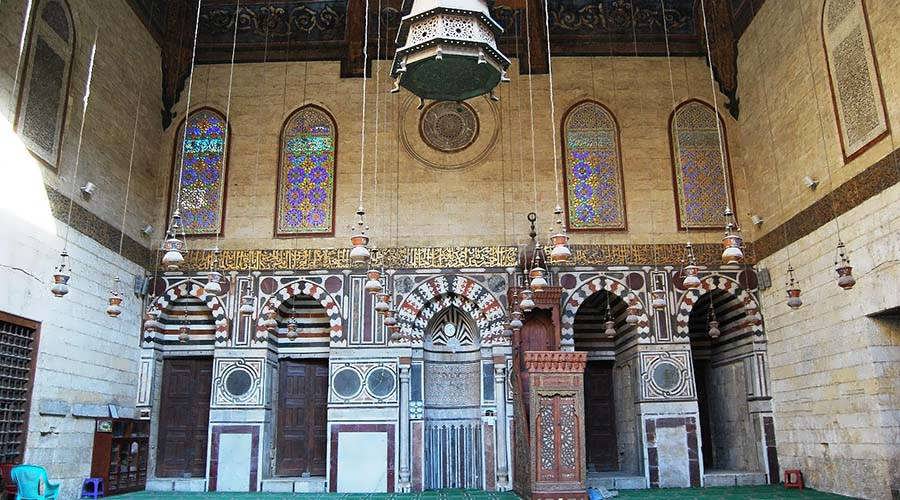
It painted wood paneling. There is a central sunken and open courtyard which surrounded by four Iwans. The two largest of the Iwans have Moorish arches. The smaller two have raised arches. The interior paved and paneled with black and white marble. Stone carving covers the walls but it is of poor quality, shallow and repetitive. The stalactites that frame the upper walls of the covered courtyard, underneath the skylight. The Khanqah and mausoleum of Al Ghouri complex function as a cultural center today. The Khanqah is a religious hostel for Sufi monks. The facade of the khanqah and mausoleum also has a trilobed stalactite portal and a tiraz band. On its northern edge a sabil-kuttab projects into the street with three facades.

The interior of the sabil-kuttab is decorative, with marble floors. The ceiling supported by rounded, painted and gilt beams. From the vestibule of Al Ghouri complex Cairo, the funeral chamber is on the right. To the left is a prayer hall with three Iwans which distributed around the raised. They covered part of a lantern. The mausoleum of the complex was on the south side of the interior. Now it has only its rectangular base and transition zone of the dome. The dome made of brick and covered over with green tiles. It collapsed at the beginning of the 1900s. Actually, the dome had been unstable from the beginning. It rebuilt three times during Al Ghouri’s lifetime. The builder never got it right. The mausoleum dome of Imam Shafi’i also covered at one time with green tiles. It was perhaps after Al Ghouri’s restoration.

Further details about the Complex of Al Ghouri in Cairo:

The transition zone of Al Ghouri complex made of stone pendentives. Perhaps the most interesting feature here the carved surface of the wall. The marble slabs that once decorated the madrasa, having confiscated by Al Ghouri. It was from someone else in the first place. They were in turn confiscated and taken to Istanbul by Selim I in 1517. On the left or north side of the entrance vestibule is a qa’a, which here called a khanqah. No living units attached to it. Earlier Khanqahs did provide housing for Sufi. This one was increasing rare during the late Mamluk period. The Waqf deed states that Sufi should have their meetings there. It does not refer to any living accommodations provided for them. There are a few living units attached to the madrasa across the street. It was student housing those the foundation deed does not mention teaching activities.

These structures are an example of a royal religious foundation. They are with facades which not adjusted to the street alignment. In fact, they instead make an angle, leaving the space between the two facades widening into a sort of square. The square of Al Ghouri complex is semi-enclosed at the north ends. Moreover, it is by the projection of the Sabil-Kuttab of the mausoleum. At the south end is by the projection of the minaret of the madrasa. The square rented for market stalls. It was the income which contributed to Al Ghouri’s endowment of the foundation. At one time, the square roofed over. And when David Roberts drew the square in 1839, it was a silk market.

More details about Al Ghouri complex:

In fact, this support continues even today. Moreover, there are still shops here on both sides of the street. The rend now collected by the Ministry of Waqfs. Furthermore, it used in maintaining the religious buildings and their personnel. In fact, Al Ghouri himself never buried in his mausoleum. Several others buried before the sultan’s death. The first was his daughter in 1505. It followed by his son, Nasser Al Din Muhammad and by one of his concubines. The latter two were victims of the plague. In 1510, Al Ghouri also had the three year old daughter of his secretary of State, Tumanbay, buried here.

Nearby attractions Information, tours and Online Booking

More of Islamic Egypt

More of Egypt attractions

MORE
Al Aqmar mosque Cairo

Al Aqmar mosque Cairo

  • Al Aqmar mosque Cairo
  • Al Aqmar mosque Cairo
  • Al Aqmar mosque Cairo
  • Al Aqmar mosque Cairo

Al Aqmar mosque Cairo, Egypt information, tours, booking

Al Aqmar mosque Cairo located in the heart of Cairo city. In fact, Al Aqmar mosque located north of the site which once occupied by the great Fatimid. Moreover, Al Aqmar means the Moonlit and sometimes also known as the Gray Mosque. The mosque Cairo founded by Ma’mun al-Bata’ihi, during the caliphate of al-Mustanser. Moreover, it built during a time of great political and spiritual crises for the Fatimid regime. It located on the main artery of the city. In plan, it is a regular, rectangular hypo-style mosque with a square courtyard. It is the plan of a small congregational mosque. This structure is of major importance for Cairo’s architecture for several reasons. Al Aqmar mosque Cairo indeed is one of the seminal monuments in Cairo’s architectural history.

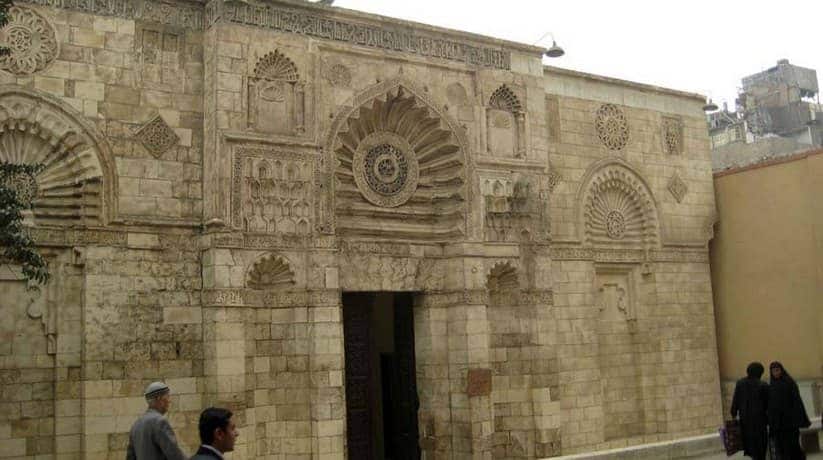
Al Aqmar mosque is the first mosque with an entrance which is not on an axis with the qibla wall. Here, the facade follows the alignment of the street, while the qibla wall oriented to Mecca. The mosque is the first with a ground plan adjusted to an existing urban street plan. A phenomenon which over the ensuing centuries was to become common and complex. Here, the plan is rather simple. The interior of the mosque has a regular layout with the exception. The exception is that the facade wall is thicker on one end than the other. Into the thicker part of the wall, a vestibule, a staircase and two rooms opening into the interior. Al Aqmar mosque Cairo is also the first mosque in Cairo to have a decorated stone facade.

Further details about Al Aqmar mosque Cairo:

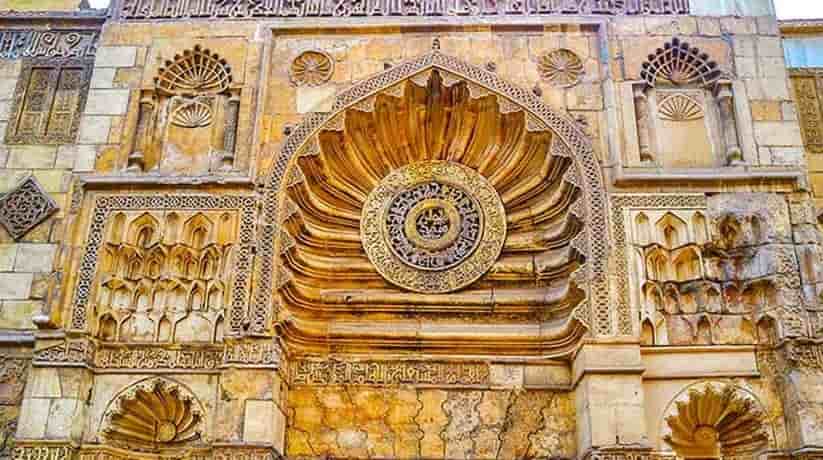
The facade is brick which faced with stone. A wing to the right of the entrance salient covered up by a later house. In the 1980s, a restoration unveiled the hidden part. It returned the facade to its original balanced proportions. This restoration done by the Bohara Indian sect. The middle of the tripartite composition dominated by a protruding portal. It decorated with a large keel arch niche. They carved with fluting radiating from a central medallion. It is like a sunrise or shell motif. The medallion has the name of Muhammad repeated in a circular interlacing pattern. It forms a circle, with the name ‘Ali at the center, all in Kufic and pierced right through the stone.

This is all surrounded by a circle of arabesque. And also of pierced Kufic, with a final circular band decorated with interlacing scrolls. The work of engraving and piercing shows both skill and perfection. The ribbed shell hood of the entrance salient is with its pierced medallion. It appears here for the first time. Moreover, it was the prototype of all the later ribbed. Moreover, it is blind and keel arch decoration which remains somewhat vogue on Cairo’s buildings. The niches on either side of the entrance each crowned with four tiers of stalactites. Set back within these are two smaller ones. Each has a small fluted semi-dome. Above these two niches are two small ones. Each has a fluted hood and supported by two engaged columns.

More details about Al Aqmar mosque Cairo:

To the left of the portal another shallow niche. It repeats the sunrise or shell motif with a medallion in the center. Above it, a circular clean cut in the stone reveals the brick wall. It indicates that a medallion once existed there. Two lozenges, one with geometric carving and the other with a vase and plant motif. They surmounted on both sides of the missing medallion by two strange, carved panels. The one to the right represents a closed door. It is like the door of Al Hakim. It is now in the Islamic Museum. The one to the left shows a niche with a geometric grill resembling a window. From its apex hangs a lamp. Al Aqmar mosque Cairo has a symbolic meaning within a Shi’a context.

The two plants standing in the vase has interpreted to be symbolic of Hasan and Husayn. They are the sons of the Caliph ‘Ali by his wife Fatima. This pattern is also repeated in Christian Coptic art. There are many examples existing in the Coptic Museum in Old Cairo. The niches with the hanging lamp and closed door placed. On each side of the missing medallion there is more decoration. There are three inscription bands that run along the facade of Al Aqmar mosque Cairo. The first is at the summit. It contains the name of Al Amir Bi-Ahkam-Allah. And next to it is the name of his Wazir (Minister) Ma’mun al-Bata’ihi. They are together with his titles, and the date of foundation. The second runs at the springing of the entrance arch.

Further details about mosque of Al Aqmar Cairo:

In fact, it also contains the names of al- Ma’mun and his titles and the date of foundation. The third band runs at the level of the door lintel and only contains verses from the Quran. Another special feature of the facade is a corner which carved with the names of Muhammad and ‘Ali. The original minaret of Al Aqmar mosque Cairo has not survived. We can see on the left door jamb of the portal the circular base of the minaret. It built in the late fourteenth century by Amir Yalbugha Al Salami. In fact, it is a brick construct which covered with stucco chevron. Moreover, it carves and a molding with open work bosses and a stalactite cornice. Above the balcony, the structure is of even later date. The interior of the mosque has not retained much of its original form.

The small sanctuary has three aisles and faces the courtyard with only a triple arcade. The closet door of Al Aqmar mosque Cairo features a fine example of Fatimid wood. It is with panels of arabesque ornament. On the northwest side of the sanctuary. The three other arcades have only one aisle each. Bands of Quranic verse in Kufic script on an arabesque background still survive. They are around the keel arches of the courtyard, which supported on marble columns. The keel arches did not appear in Egypt until the latter part of the Fatimids period. They first seen in the dome of Sheikh Ynis, attributed to Badar al-Gamali. The spandrels decorated with shallow saucers. They composed of eight ribs radiating from a central medallion.

More details about Al Aqmar mosque Cairo:

There is special feature of the interior architecture. It is that each bay’s ceiling covered by a shallow brick dome instead of being flat. In fact, it is except for the aisle parallel to the qibla wall, which is wider than the rest. Moreover, it covered with a flat wooden ceiling. Al Aqmar mosque Cairo was in ruins when the Mamluk Amir Yalbugha al-Salami restored it in 1396/97. (799H). Some scholars assume that he also restored the ceiling. The ceiling hase been flat. This type of ceiling not known from the Fatimids period. It used in the early fifteenth century at the mosque of Faraj Ibn Barquq. Yalbugha al-Salami also restored the minbar of the mosque. It retains its Fatimid ornament. It can observed on the entrance arch and at the back of the speaker’s seat.

Nothing of the original interior decoration remains. It is except some wood carving on the beams and doors. Moreover, it is also except a stucco inscription band along some of the arches. The mosque once again restored in the nineteenth century. It was during the reign of Muhammad Ali by Amir Sulayman Agha Al Silahdar. Al Silahdar also built the mosque across the street from this one. Al Aqmar mosque Cairo was not at street level as it is today. In fact, it was much higher than the street and stands above a row of shops. The rising ground level has now buried the these shops. At the time, they had an important function. The income of their rents were waqf.

Nearby attractions Information, tours and Online Booking

More of Islamic Egypt

More of Egypt attractions

MORE
5 days Lake Nasser cruise

5 days Lake Nasser cruise

  • 5 days Lake Nasser cruise
  • 5 days Lake Nasser cruise
  • 5 days Lake Nasser cruise
  • 5 days Lake Nasser cruise
  • 5 days Lake Nasser cruise
  • 5 days Lake Nasser cruise
  • 5 days Lake Nasser cruise

5 days Lake Nasser cruise booking, prices, reviews

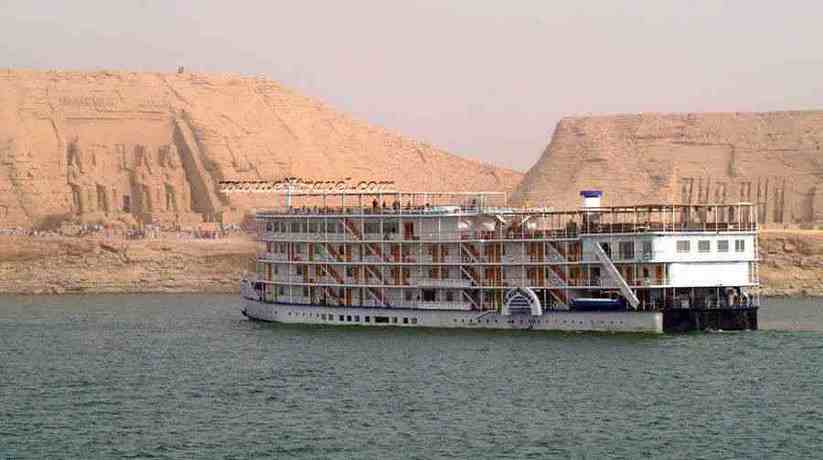
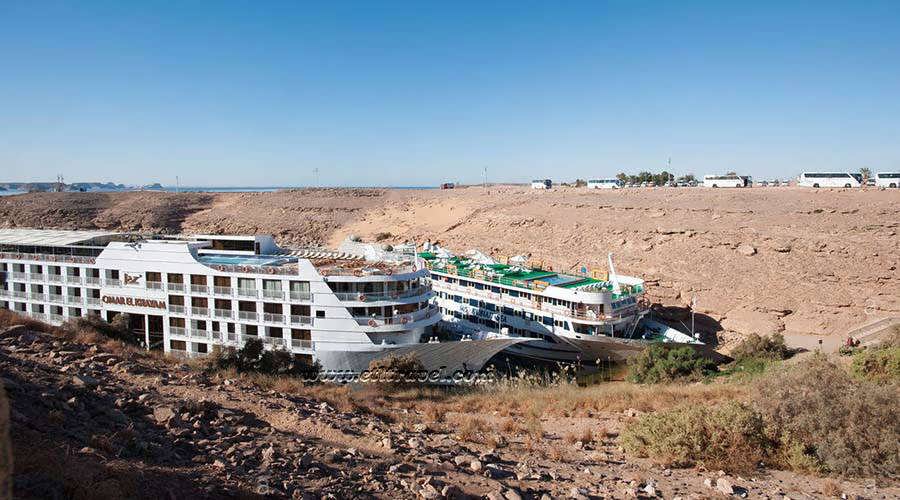
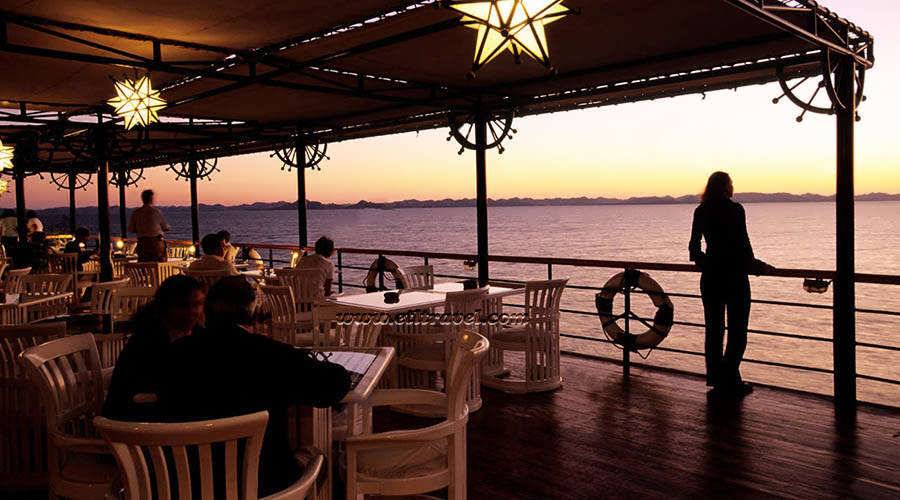
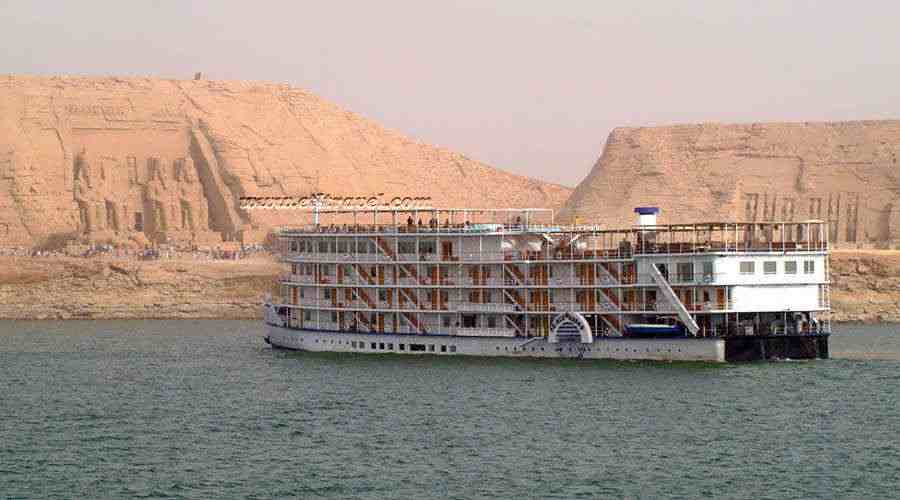
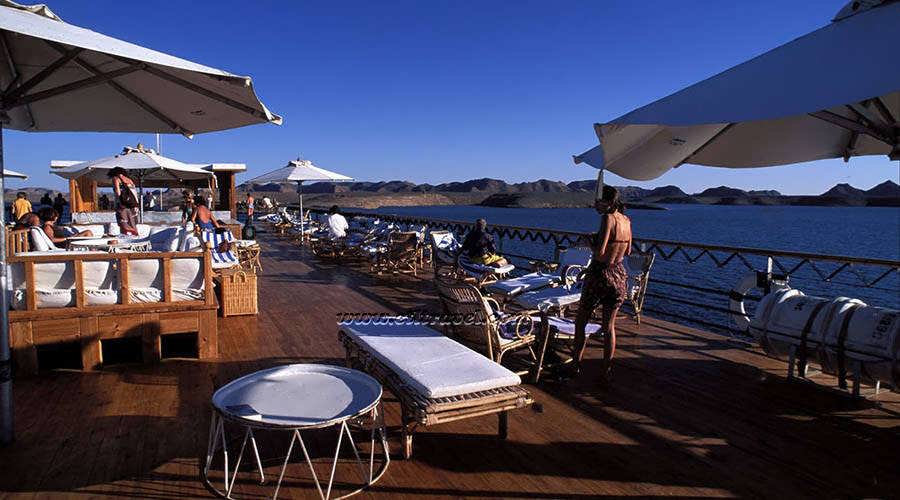
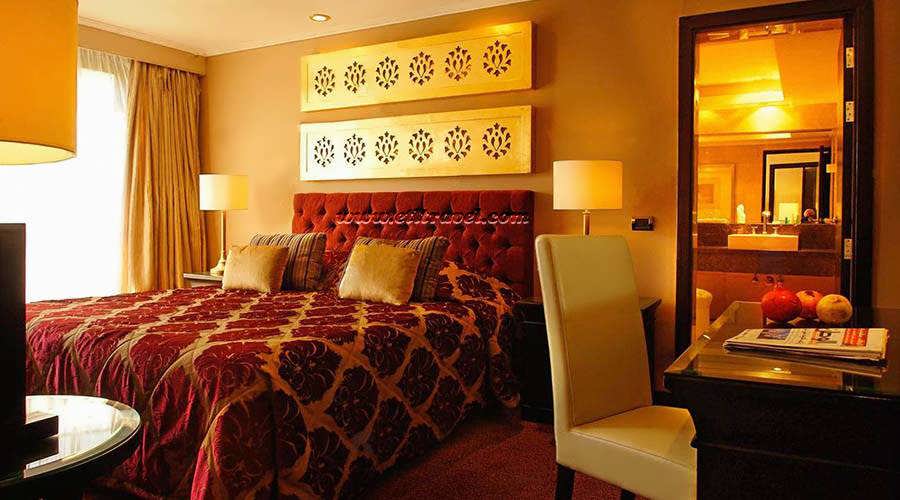
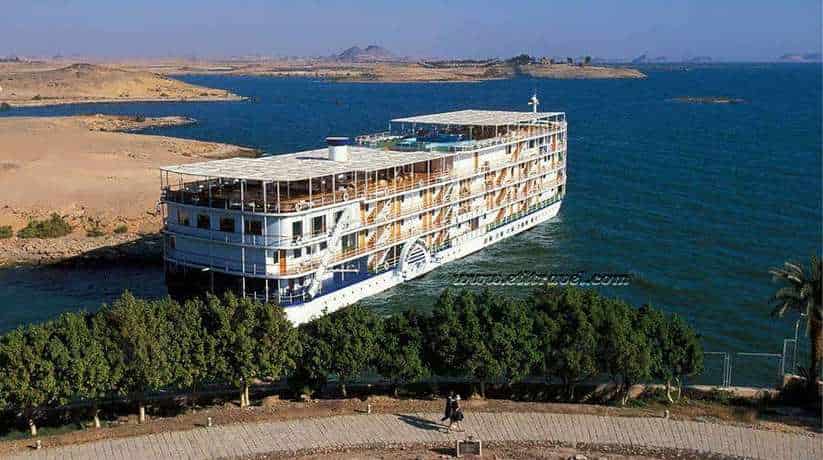
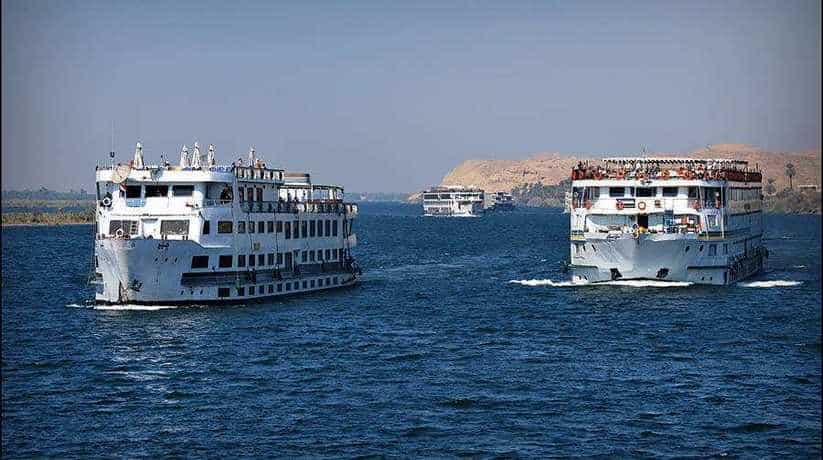
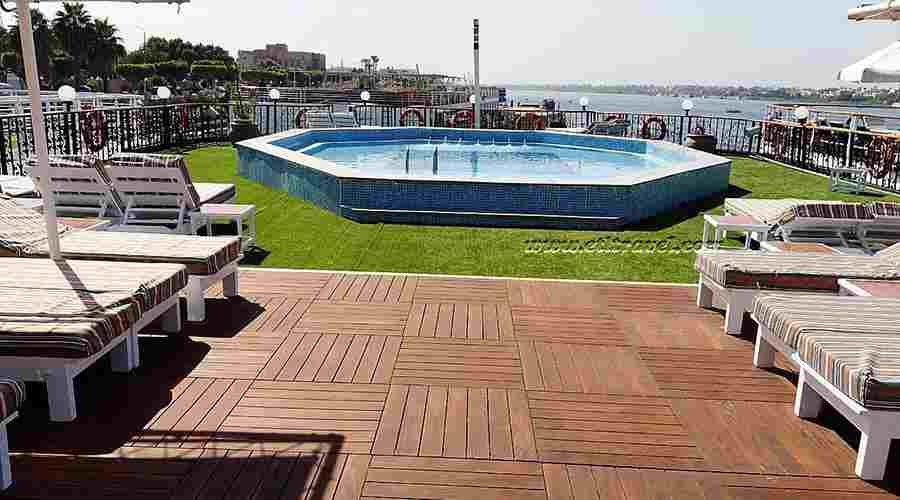
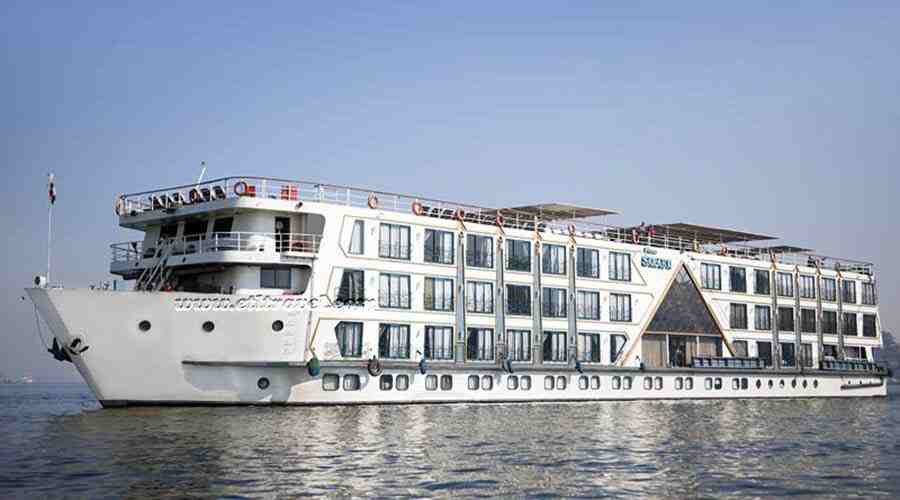
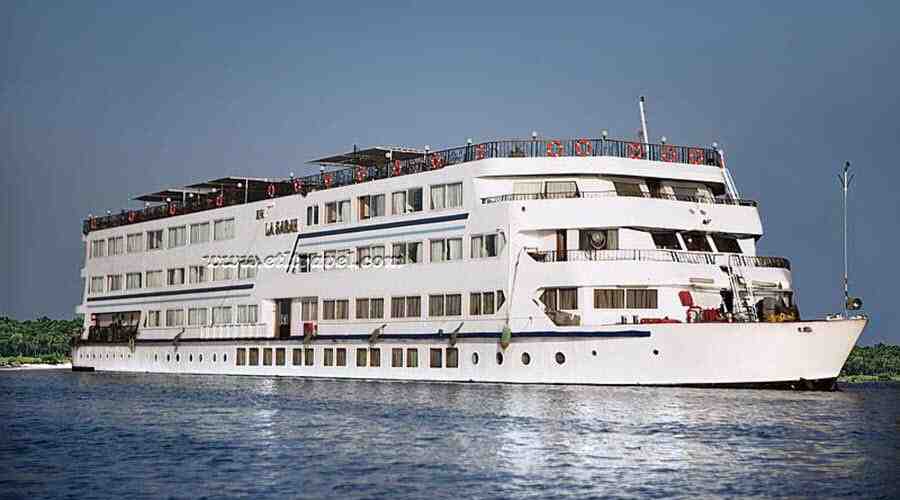
5 days Lake Nasser cruise is a wonderful cruise holiday. The cruise sails on Lake Nasser from Aswan to Abu Simbel. In fact, Lake Nasser is the largest lake in the world which made by the man. However, you’ll find its serene waters and pristine banks full of natural wonders. It also full of ancient monuments. Lake Nasser cruises are cruises ships which taken to the highest level of comfort and luxury. They offer different ambiance than the one you might find on the regular Nile cruises. In fact, only six cruisers allowed to sail on Lake Nasser. The boats designed with touches of modern or Art Deco elegance. They usually include a swimming pool, a gym, a Jacuzzi, a bar and a gourmet restaurant. Guests pampered with treats such as classical music in front of the Abu Simbel temples.

On the first day of 5 days Lake Nasser cruise, you will embark on the cruise. The embarkation will be before lunch at 12.00 noon. Lunch will be on the cruise board. The rest of day will be at leisure to enjoy the cruise activities. Dinner and overnight will be on the cruise board. On the second day of 5 days Lake Nasser cruise, you will visit Kalabsha temple. The temple dedicated to the Nubian god Mandulis. And then, you will visit the beautiful Kiosk of Qertassi. Over there, you will watch Nubian style temple dedicated to the goddess Hathor. Lunch will be on the cruise board while sailing to wadi Es Seboua. Dinner and overnight will be on the cruise board.

Further details:

On the third day of 5 days Lake Nasser cruise, you will visit Wadi es Seboua temple. In fact, the temple is the third style temple that Ramses II built in Nubia. This temple built out of stones except the sanctuary. The inner vestibules carved into the bed rock. Moreover, the temple consists of a sphinx avenue, an entrance and 3 pylons. It also has 3 courtyards, a hypo-style hall and inner sanctuary. The walls of the temple decorated with many religion scenes and important relief. Then you will take a camel ride or walk to El Dakka and Mehraka. Lunch will be on the cruise board while sailing to Amada. And then, you will visit Amada temple. In fact, it is the oldest Egyptian temple in Nubia. It first constructed by pharaoh Thutmose III of the 18th dynasty.

Moreover, it dedicated to Amun and Re-Horakhty. Continue to visit Ed Deir and Pennut tomb. Sailing to Qasr Ibrim. Dinner and overnight on board. On the fourth day of 5 days Lake Nasser cruise, you will visit Qasr Ibrim. In fact, it is an archaeological Qasr Ibrim site in Lower Nubia. It was a major city which perched on a cliff above the Nile. The flooding of Lake Nasser transformed it into an island and flooded its outskirts. It was after the construction of the Aswan High Dam. Qasr Ibrim is the only major archaeological site in Lower Nubia to have survived the Nile floods. Lunch will be on the cruise board while sailing to Abu Simbel. Upon arriving Abu Simbel, we will visit Abu Simbel temples, the two massive rock temples.

More details about 5 days Lake Nasser cruise:

The temples situated on the western bank of Lake Nasser. It is about 230 km southwest of Aswan (about 300 km by road). The complex is part of the UNESCO World Heritage Site. It known as the “Nubian Monuments” which runs from Abu Simbel downriver to. The twin temples carved out of the mountainside during the reign of Pharaoh Ramses II. It was in the 13th century BC. Dinner and overnight will be on the cruise board. On the fifth of 5 days Lake Nasser cruise, you will disembark after the breakfast.

Nearby attractions Information, tours and Online Booking

More of Egypt cruises

More of Egypt attractions

MORE
7 days Nile cruise

7 days Nile cruise ex Luxor

  • 7 days Nile cruise ex Luxor
  • 7 days Nile cruise ex Luxor
  • 7 days Nile cruise ex Luxor
  • 7 days Nile cruise ex Luxor
  • 7 days Nile cruise ex Luxor
  • 7 days Nile cruise ex Luxor
  • 7 days Nile cruise ex Luxor

7 days Nile cruise ex Luxor booking, prices, reviews

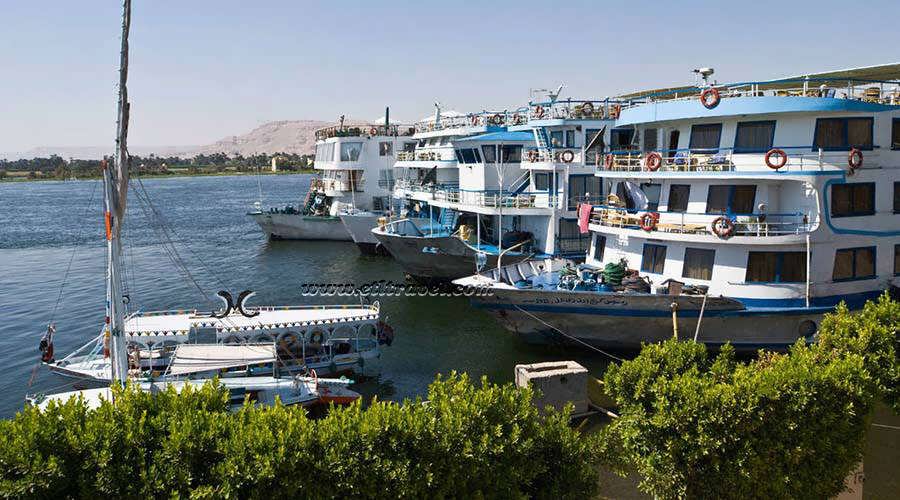
7 days Nile cruise ex Luxor is not common in Egypt. A very few Nile cruises do this tour. The 7 days Nile cruise ex Luxor includes a visit to Dendera temple. In fact, it is the main difference of the other Nile cruises tours. In the itinerary, the cruise ship sails towards Quena which located north of Luxor. However, here under the detailed itinerary

Day 01 of the 7 days Nile cruise ex Luxor: Luxor

This day of, we will start by the embarkation on the cruise. It will be before the lunch. The lunch will be on the cruise board. The rest of day will be at leisure on the cruise. The open buffet dinner and overnight will be on the cruise board.

Day 02: Luxor-Quena-Luxor

Open buffet breakfast will be on the cruise board. Today we will sail to Quena. This day of the 7 days Nile cruise ex Luxor will include a visit to Dendera Complex. In fact, the complex located about 2.5 km south-east of Dendera, Egypt. Moreover, the complex has one of the best preserved temple complexes in Egypt. The area used as the sixth Nome of Upper Egypt, south of Abydos. The whole complex covers some 40,000 square meters. In fact, it surrounded by a hefty mud brick enclosed wall. Dendera was a site for chapels or shrines from the beginning of history of ancient Egypt. It seems that pharaoh Pepi I built on this site. An evidence exists of a temple in the eighteenth dynasty 1500 BC.

The earliest extant building in the compound today is the Mammisi. In fact, it raised by Nectanebo II who was last of the native pharaohs (360-343 BC). The features in the complex include Hathor temple which called the temple of Tentyra. The temple modified on the same site starting as far back as the Middle Kingdom. Furthermore, it continued right up until the time of the Roman emperor Trajan. The existing structure built no later than the late Ptolemaic period. The temple which dedicated to Hathor, is one of the best preserved temples in all Egypt. The open buffet lunch will be on the cruise board while sailing back to Luxor. The open buffet dinner and overnight will be on the cruise board.

Day 03: Luxor

The open buffet breakfast will be on the cruise board. This day of the 7 days Nile cruise ex Luxor will include tour to the awe inspiring Luxor temple. In fact, the temple founded in 1400 BC and built with sandstone from the Gebel el-Silsila area. The area located in south western Egypt. And then we will continue to visit Karnak temple. In fact, the temple comprises a vast mix of decayed temples, chapels and pylons. It also has other buildings. The building at the complex began in the reign of Sesostris I in the Middle Kingdom. It also continued into the Ptolemaic period. And then, we will be back to the cruise for open buffet lunch. The open buffet dinner and overnight will be on the cruise board.

Day 04: Luxor-Edfu

After the open buffet breakfast, we cross to the west bank of the Nile . The 7 days Nile cruise ex Luxor will include a visit the Colossi of Memnon. In fact, they are two massive stone statues of Pharaoh Amenhotep III. For the past 3400 years (since 1350 BC) they stood in the Theban necropolis. It is across the Nile River from the modern city of Luxor. And then will go to the Valley of the Kings and the Valley of the Queens. Over there, we will visit Hatshepsut temple.

The temple located beneath the cliffs at Deir el Bahari. It is on the west bank of the Nile near the Valley of the Kings. The mortuary temple of Hatshepsut dedicated to the sun god Amun-Ra. It located next to Mentuhotep II temple which served both as an inspiration and later, a quarry. Open buffet lunch will be on the cruise board while sailing to Edfu. The open buffet dinner and overnight will be on the cruise board.

Day 05: Edfu-Kom Ombo-Aswan

The open buffet breakfast will be on the cruise board. The 7 days Nile cruise ex Luxor includes a visit to Edfu’s beautiful preserved temple of Horus. In fact, it is the best preserved of all large Egyptian temples and built by the Ptolemy’s. The open buffet lunch will be on the cruise board while sailing to Kom Ombo. In Kom Ombo, we will visit the temple of Sobek, the crocodile god which situated on the riverbank. Continue to Aswan. We enjoy a sumptuous Oriental dinner and dance all night away to the Egyptian Galabeya Party. Overnight will be on the cruise board.

Day 06 of the 7 days Nile cruise ex Luxor: Aswan

After the open buffet breakfast, we view the Aswan High Dam. In fact, the dam is an embankment dam which situated across the Nile River in Aswan. The tour itinerary will also include a visit to the Unfinished Obelisk. The obelisk located in the northern region of the stone quarries of ancient Egypt in Aswan. Archaeologists are unsure which pharaoh created this structure. It indeed is one third larger than any ancient Egyptian obelisk ever erected. Open buffet lunch will be on the cruise board. PM, we will sail by traditional Nile Felucca. The sailing will be along the shores of Elephantine Island to visit Philae temple. The open buffet dinner and overnight will be on the cruise board.

Day 07 of the 7 days Nile cruise ex Luxor: Aswan – Disembarkation

Open buffet breakfast will be on the cruise board. Disembarkation will be after the breakfast.

Nearby attractions Information, tours and Online Booking

More of Egypt Nile cruises

More of Egypt attractions

MORE
5 day Nile cruise from Luxor

5 day Nile cruise from Luxor

  • 5 day Nile cruise from Luxor
  • 5 day Nile cruise from Luxor
  • 5 day Nile cruise from Luxor
  • 5 day Nile cruise from Luxor
  • 5 day Nile cruise from Luxor
  • 5 day Nile cruise from Luxor
  • 5 day Nile cruise from Luxor
  • 5 day Nile cruise from Luxor
  • 5 day Nile cruise from Luxor

5 day Nile cruise from Luxor to Aswan, tours, booking

5 day Nile cruise from Luxor to Aswan starts by the meeting at Luxor airport. In fact, the tour of 5 day Nile cruise from Luxor to Aswan includes a transfer by a private coach to the cruise. Embarkation will be before lunch. Lunch will be on the cruise board. And then, we will tour the awe inspiring Luxor temple. In fact, the temple founded in 1400 BC and built with sandstone. The area located in south-western Egypt. The tour itinerary will also include a visit to Karnak Temple. The temple comprises a vast mix of decayed temples, chapels, pylons, and other buildings. Building at the complex began in the reign of Sesostris I in the Middle Kingdom. It continued into the Ptolemaic period. And then, we will be back to the cruise. Dinner and overnight will be on the cruise board.

Optional Tour: Sound & Light Show at Karnak temple.

5 day Nile cruise from Luxor to Aswan day 2: Luxor – Edfu

Breakfast will be on the cruise board. It will be before we start 5 day Nile cruise from Luxor to Aswan day 2. And then, we cross to the west bank of the Nile to visit the Colossi of Memnon. The two massive stone statues of Pharaoh Amenhotep III. For the past 3400 years (since 1350 BC) they stood in the Theban necropolis, across the River Nile. And then, we will go to the Valley of Kings and Queens.

5 day Nile cruise from Luxor to Aswan will also include a visit to Hatshepsut temple. The temple located beneath the cliffs at Deir el Bahari on the west bank of the Nile. It is near to the Valley of the Kings. The mortuary temple dedicated to the sun god Amon-Ra. Moreover, it located next to the mortuary temple of Mentuhotep II. Lunch will be on the cruise board. Sail to Edfu through Esna lock. Dinner and overnight will be also on the cruise board.

Day 3: Edfu – Kom Ombo – Aswan

Breakfast will be on the cruise board. It will be before we start 5 day Nile cruise from Luxor to Aswan day 3. Today we will visit Edfu’s beautiful preserved Temple of Horus. In fact, the temple is the best which preserved of all large Egyptian temples. It built by the Ptolemy’s. Lunch will be also on the Nile cruise board while sailing to Kom Ombo. In Kom Ombo, we will visit the Temple of Sobek the crocodile god, conveniently situated on the riverbank. And then, we will continue to Aswan. We enjoy a sumptuous Oriental Dinner and dance all night away to the Egyptian Galabeya Party. Overnight will be on the Nile cruise board.

Day 4: Aswan

Breakfast will be on the cruise board. It will be before we start 5 day Nile cruise from Luxor to Aswan day 4. Today we will we view the Aswan High Dam, an embankment dam situated across the Nile River in Aswan. And then we will visit the Unfinished Obelisk. In fact, the obelisk is much of the red granite. It used for the ancient temples and colossi. In fact, it came from quarries in the Aswan area. Around these quarries are many inscriptions, many of which describing successful quarrying projects. Lunch will be also on the Nile cruise board.

In fact, the tour itinerary also includes sailing by traditional Nile Felucca along the Nile river. The sailing will be to visit Elephantine Island. It will also include a visit to Philae Temple at Philae Island. In fact, Philae Island was a rocky island in the middle of the River Nile, south of Aswan. It called in Hieroglyphic “Apo” which means Ivory. Dinner and overnight will be on the Nile cruise board.

5 day Nile cruise from Luxor to Aswan day 5: Aswan – Disembarkation

Breakfast will be also on the Nile cruise board. Disembarkation will be after the breakfast. Transfer to Aswan airport.

** Optional Tour: Excursion to Abu Simbel temples either by private coach or by domestic flight.

Abu Simbel temples are 300 km southwest of Aswan. In fact, Abu Simbel complex is a part of UNESCO World Heritage Site. It known as the “Nubian Monuments” and runs from Abu Simbel downriver to Philae. Furthermore, The twin temples originally carved out of the mountainside. It was during the reign of Pharaoh Ramses II in the 13th century BC. They are a lasting monument to himself and his queen Nefertari. In fact, it was to commemorate his alleged victory at the Battle of Kadesh. Furthermore, it was also to intimidate his Nubian neighbors. The complex relocated in its entirety in 1968. It is now on an artificial hill. The hill made from a domed structure, high above the Aswan High Dam reservoir.

Nearby attractions Information, tours and Online Booking

More of Egypt cruises

More of Egypt attractions

MORE
Al Ashraf Barsbay complex

Al Ashraf Barsbay complex

  • Al Ashraf Barsbay complex
  • Al Ashraf Barsbay complex
  • Al Ashraf Barsbay complex
  • Al Ashraf Barsbay complex
  • Al Ashraf Barsbay complex
  • Al Ashraf Barsbay complex

Al Ashraf Barsbay complex Cairo, ُEgypt tours, Booking

Al Ashraf Barsbay complex built in 1432 on Al Mu’izz street in Cairo. In fact, the complex belongs to Sultan Al Ashraf Barsbay who ruled Egypt from 1422 to 1438. Madrasa means school and Khanqah means hospital. They built at Al Ashraf Barsbay complex in Northern Cemetery of Cairo. In fact, it was a few years after he built his complex. Moreover, the  complex located south of Sultan Qalawun complex. The Khanqah contains three mausoleums. Madrasa built to accommodate only about seventeen Sufis. Four years old were students and ten years old were housed. It provided training to Sufi students studying the Hanafi rite. Moreover, the complex takes up both sides of the street south of Khanqah. Furthermore, it covered a large area but many of its subsidiary structures lost now.

Moreover, the mausoleum at Al Ashraf Barsbay complex had four domes. The larger one carved with an undulating star pattern. It was like that one on the domes of Sultan Faraj. Furthermore, the domes cover the mausoleum and attached to Al Ashraf mosque. The interlaced star pattern is the earliest example. It carved on the exterior of stone domes. A shift from the dominant zigzag moldings of other stone domes from this period. It is including this Sultans monument on Al Muizz street within the city. Two other domes cover a smaller mausoleum on the building’s northern side. There is another mausoleum opens on three sides on it’s eastern side. The eastern dome has a stepped and exterior transition while.

Further details about Al Ashraf Barsbay complex in Cairo:

The one on the northern side has a pyramidal structure at each corner. It leads from the rectangular to the octagonal section. The fourth dome now gone. The two smaller mausoleums built for various relatives of the Sultan. The present facade of Al Ashraf Barsbay complex includes an unattractive minaret. The portal not built using the stalactite-vaulted style. That style was popular during the era. But it rather with a trilobed vault, including groins instead of stalactites. This type of pattern used in the late Mamluk and the Ottoman periods.

Within the structure there is a cross-vaulted vestibule. It communicates through a bend with the prayer hall. The hall is also of a different style than other such buildings of this period. This is an oblong hall some twenty by fifteen meters. The roof supported by two pairs of columns. It is with classical capitals carrying three arches. Each running parallel to the Qibla wall. That is why there are three aisles. The central aisle is somewhat lower than the two side aisles. There are windows on both the east and west that illuminate the hall. Al Ashraf Barsbay complex features unusual decoration. The windows are with stucco and colored glass. The floor adorned with inlaid poly-chrome marbles of high quality.

More details about Al Ashraf Barsbay complex in Cairo:

The prayer niche (Mihrab) of Al Ashraf Barsbay complex is also of plain stone. The ceiling of painted wood was a restoration of the Ottoman period. Even though the pulpit (Minbar) has a star geometric pattern of ivory inlaid in wood. It is also unusual in having curved segments. This masterpiece presented as a gift to the foundation in 1453. It is perhaps the most beautiful Mamluk Minbar in Cairo. On the northern side of the mosque, the central aisle leads to the door of the primary mausoleum. The plan of the mosque allows a perfect position for the sultan’s mausoleum. It is open on three sides, while at the same time attached to the prayer hall. On the interior, the dome’s transitional zone made up of stalactite pendentives.

Neither the exterior nor the rest of the interior prepares one for the height of the dome. Sultan Barsbay used materials from earlier buildings within this mausoleum. The marble inlays of the prayer niche is from good quality. The rows of niches running across the conch. They are reminiscent of the thirteenth and early fourteenth centuries. Sultan Al Ashraf Barsbay buried in this mausoleum. rather than his other mausoleum built in the city proper. Next to the mosque and mausoleum to the south are the remains of the student residences (rab). The foundation provides that there were ten of these. Unlike earlier accommodations, these were not single rooms. They were apartments in two storied duplexes, each with a latrine.

Further details about Al Ashraf Barsbay complex in Cairo:

In each of the upper rooms there is a window that looks out upon the main road. On the upper floor, there was also a hall. In fact, the hall for Sufi gatherings, of which all that remains is a prayer niche. These units appear comfortable. The families of the Sufism, who provided with a whole unit, allowed to live here as well. In earlier foundation deeds, Sufi often required to unmarried. There was no such in this one. At one time, Al Ashraf Barsbay complex extended along both sides of the road. Opposite the structure of the complex there was a zawiya for the Rifai order. It restored in 1478. A Zawiya is a small structure. It is where the ideology of one Shaykh and his order (Tariqa) practiced from which it spread.

Zawiyas superseded Khanqahs as centers of Sufi learning. it became popular among the religious community. The Khanqah here appears to have been independent of any particular order of Sufi. Domes most often surmounted funerary structures. This dome is quite different form those on contemporary mausoleums. Of course, this building not used for funerary purposes. The dome made of brick with a plain exterior surface. The height of the dome not increased. It supported by squinches that start within, not above, the rectangular space.

More details about Al Ashraf Barsbay complex in Cairo:

Later, these squinches rebuilt. Today they have a trilobed shape. They also have reminiscent of the portal treatment of the Khanqah of Barsbay. At one time, there was another zawiya on the same side of the street. It did not have a dome structure. Having two zawiyas unprecedented in previous complexes. There were also two Sabils (fountains) and other structures in the complex. It also includes large apartments and various dependencies. Al Ashraf Barsbay complex points to a trend in Sufism away from the monastic life and to one less regulated.

Nearby attractions Information, tours and Online Booking

More of Islamic Egypt

More of Egypt attractions

MORE
Abu Ballas Gilf El Kebir

Abu Ballas Gilf El Kebir

  • Abu Ballas Gilf El Kebir
  • Abu Ballas Gilf El Kebir
  • Abu Ballas Gilf El Kebir

Abu Ballas Gilf El Kebir Egypt tours, prices, booking

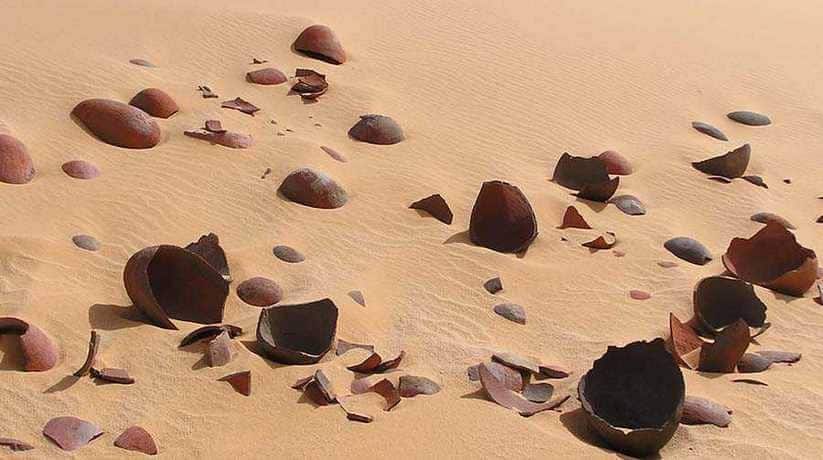
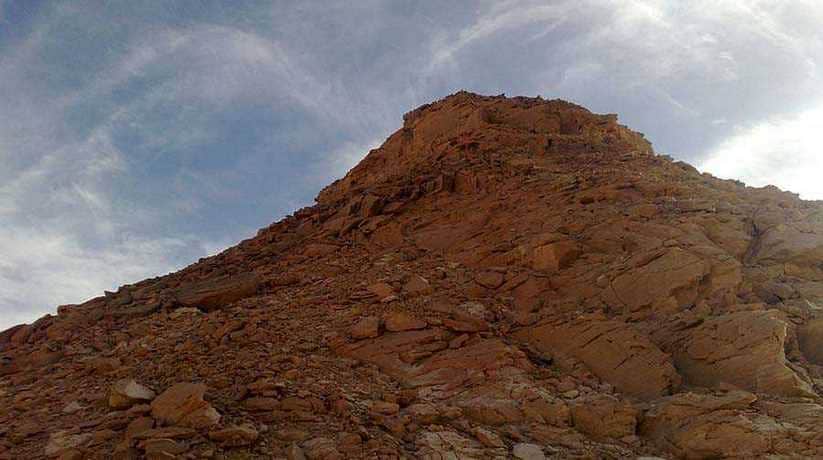
Abu Ballas is an archaeological site in Gilf El Kebir, Egypt. In fact, Abu Ballas known as “Pottery Hill” and located 200 km south-east of Dakhla oasis. In fact, it located in the Western desert of Egypt. Moreover, the site consists of two isolated sandstone cones in the Western Desert. Furthermore, both hills covered with Egyptian pottery. These vessels were at the beginning of the 20th century often well preserved. Much of them destroyed today. In fact, the site discovered in 1918 and 1923. Some recent research undertaken in the last years.

The nature of this site remained for a long time mysteries. In fact, Abu Ballas site was a station on an ancient desert road. The rout connected Dakhla Oasis with the Gilf Kebir and the Jebel Ouenat. The site installed in the late Old Kingdom or early First Intermediate Period. It was when some authorities decided to arrange supply depots on a track in the desert. Besides the pottery there, some rock carvings and stone tools discovered. Even a senet game board engraved on a stone found. In fact, the site has no water sources nearby. All water and food brought to the site from Dakhla Oases with donkeys. Most likely people lived here only for short periods of time.

Further details about Abu the area:

In fact, the “Pottery Hill”discovered by the surveyor Dr. John Ball in 1917. And then, it renamed Abu Ballas which means “hill of pots”by the Prince Kemal el Din. In fact, the prince was Egyptian explorer. The recently dated by thermos luminescence to about 1500 BC. It was the time when ancient Egypt still at the height of its power. In fact, the pots evidently contained water. So, it means that this had been a water depot in ancient Egyptian times.

During his 1926 visit, Prince Kemal El Din found some engravings half way up the rocky hill. He published together with the sites he found at Karkur Talh in Revue Scientific Illustrate. Abu Ballas site has figures of cow suckling a calf, gazelle hunter and a large indistinct human. In fact, they all seem to belong to the historic periods. Moreover, they havie more in common with rock art near the Nile Valley than the Gilf-Uweinat area.

Nearby attractions Information, tours and Online Booking

More of Egypt Deserts and Oases

More of Egypt attractions

MORE
Abu Simbel Sound Light Show

Abu Simbel Sound Light Show

  • Abu Simbel Sound Light Show
  • Abu Simbel Sound Light Show
  • Abu Simbel Sound Light Show
  • Abu Simbel Sound Light Show
  • Abu Simbel Sound Light Show
  • Abu Simbel Sound Light Show

Abu Simbel Sound Light Show tours, prices, booking

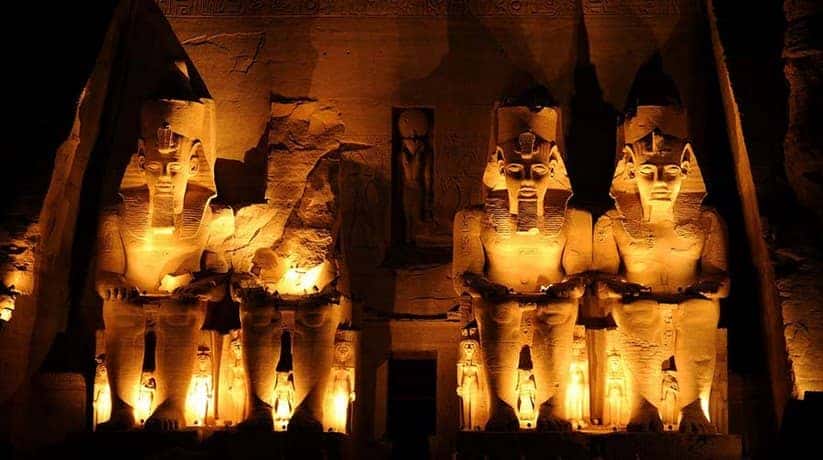
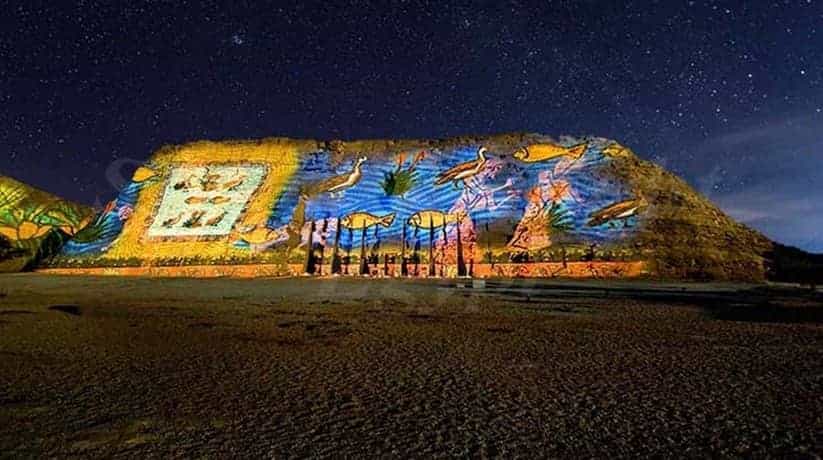
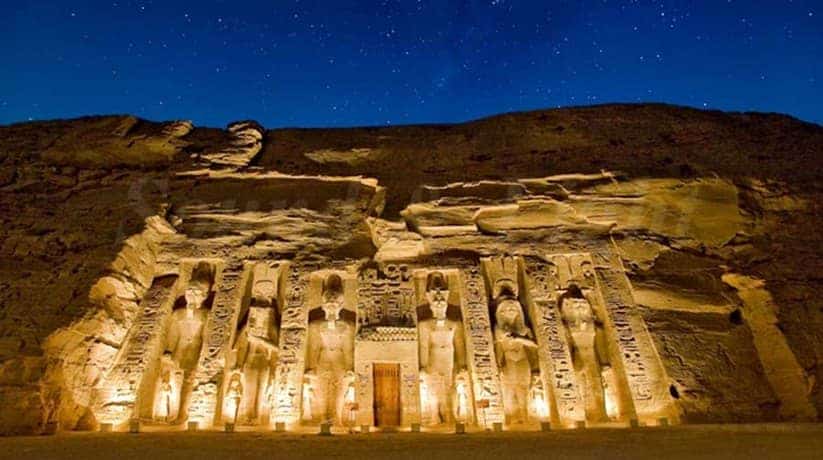
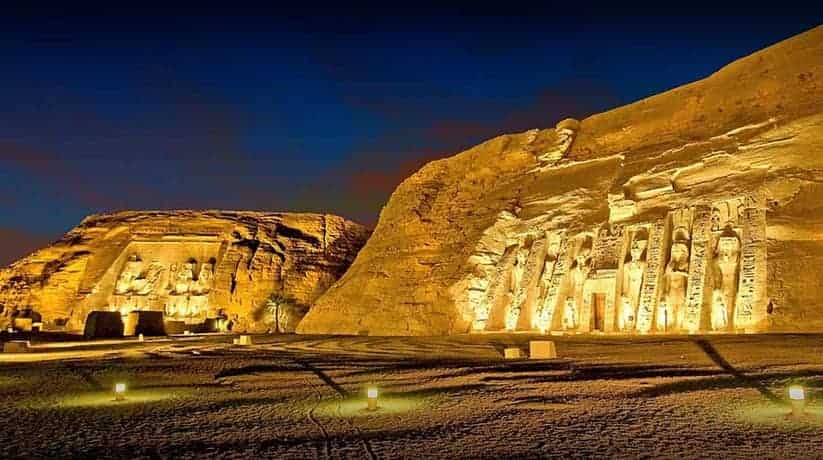
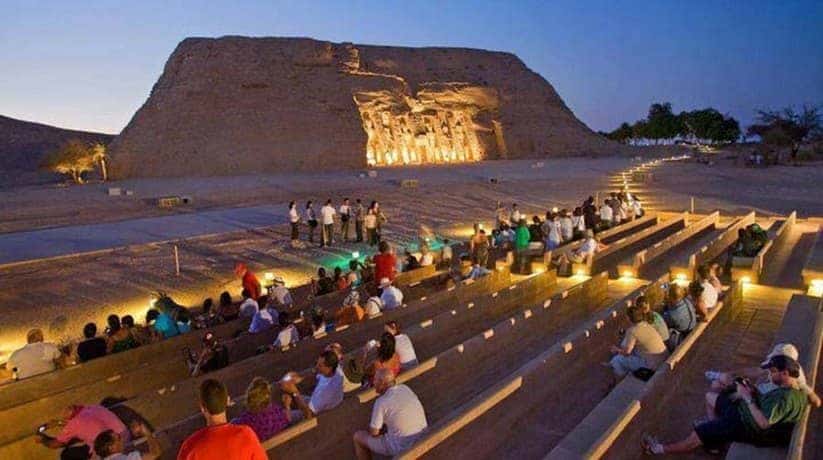
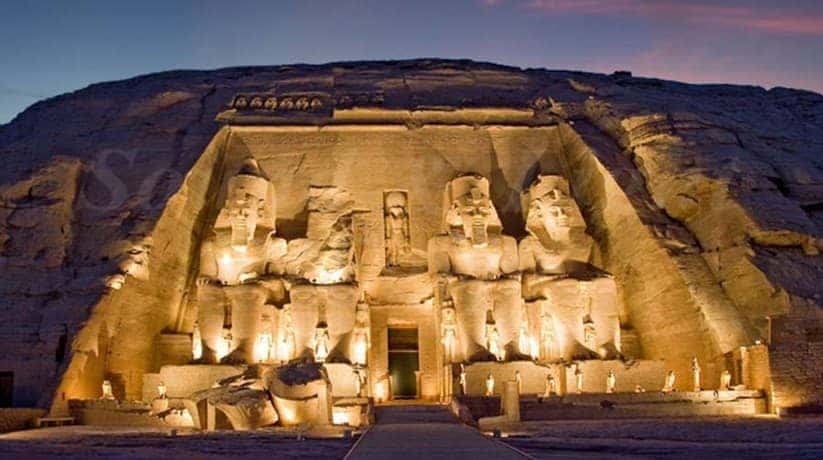
Abu Simbel Sound Light Show indeed is magnificent at the temple of Abu Simbel. In fact, the temples in Abu Simbel become even more enchanting at night. It is when the sound and light show lights up the facade. It is with wonderful lighting, music and narration. Moreover, the show performed by professional artists who inspired by its history. Furthermore, the show takes you back thousands of years ago to show you how Ramses the Great ruled Egypt.

Indeed the sound and Light show is a masterful spectacle. In fact, the show includes projections on the great and minor temple facades. The projections show you how they once looked. In fact, the script offered in nine languages.

More details about Abu Simbel Sound Light Show:

The languages include English, Arabic, French, Italian. and Spanish. German, Russian, Chinese and Japanese also included. Furthermore, the how includes earpieces which provided for your convenience. The Show usually played 3 times daily at 6, 7 and 8 pm. It can booked on-site or through any travel agency in Egypt or Aswan. Your hotel can also assist you in making a reservation and arranging the transport to Abu Simbel. Of course we will have the full pleasure to book you this amazing show. Just contact us either by email or phone.

Nearby attractions Information, tours and Online Booking

More of Ancient Egypt

More of Egypt attractions

MORE
Al Harrawi house Cairo

Al Harrawi house Cairo

  • Al Harrawi house Cairo
  • Al Harrawi house Cairo
  • Al Harrawi house Cairo
  • Al Harrawi house Cairo
  • Al Harrawi house Cairo

Al Harrawi house Cairo Egypt tours, booking, prices, reviews

Al Harrawi House Cairo (Beit El Harrawi) built in 1731 by Ahmed Ben Youssef El Serafi. In fact, Al Harrawi House indeed is one of the fine examples of the Islamic houses representing the Ottoman era. The house named after its last owner, Abdel Rahman Al Harrawi. He was a doctor at Qasr El Ayini Medical School. Moreover, the house located in the heart of a well known quarter in Cairo. It is behind Al Azhar Mosque. Furthermore, the house situated between two narrow Haraa (Alley). They are Haret Al Madrassa and Zuqaq Al Ayini.

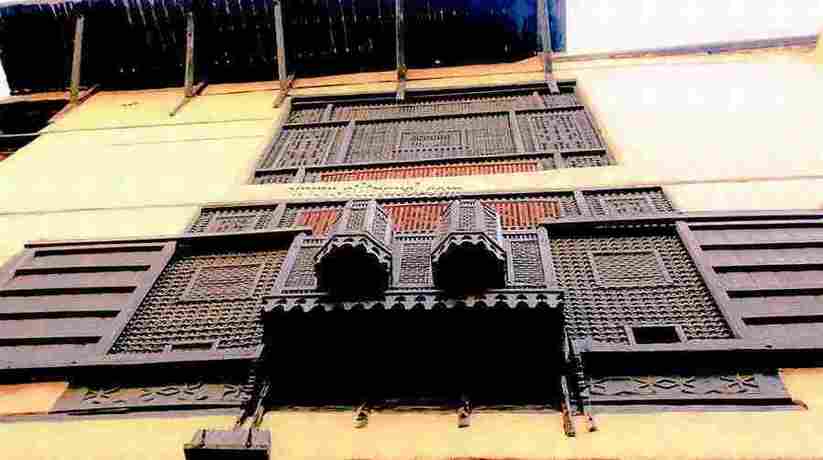
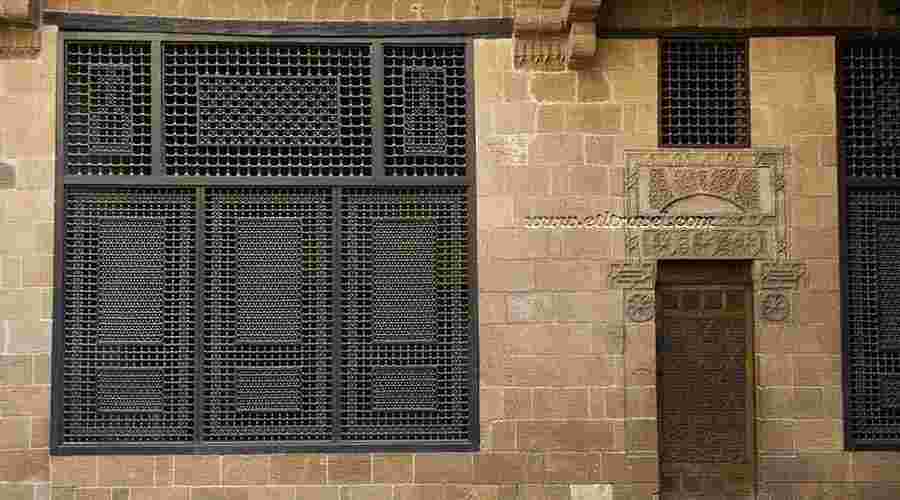
In fact, several other Islamic houses and monuments found in the Darb El Ahmar surroundings. Furthermore, the house has a common wall with Sitt Wasila house. It is next to the Zeinab Khatoun house and to the Ghannamiah Hall. Moreover, the house is also at a near distance is Al Ayini Mosque (15th century). Al Harrawi house’s main entrance is through Zuqaq Al Qasr alley. In fact, it no longer used. In spite of its importance, the house has a small street facade. The house’s southern facade is remarkable. This because of its height and a quite impressive large wooden Masshrabeyya. They show the presence of a Qaa on the first floor. Qaa means hall. The secondary entrance used nowadays was a later addition that dates back to the 19th century. It located right next to Sitt Wasila House. As you enter through the southern door, a long corridor leads you into the courtyard.

Further details about Al Harrawi House (Beit Al Oud):

In fact, the courtyard is an open air area controlling the entrance to all parts of the house. What is noticeable is the absence of a secondary space or porch which called “Maguaz”. It was one of the important Islamic design concepts which used to conceal the interior of the house. The women living in it. This tradition became less strict in the late 18th century. One of the main attractions of Al Harrawi House Cairo is the “Mandara”. It is a spacious sitting hall on the ground floor that occupies all the East wing of the house. The “Mandara” served as Male-guests reception area. It is a space that is quiet common in Islamic Houses. The “Mandara” designed in a manner consisting of three specific halls.

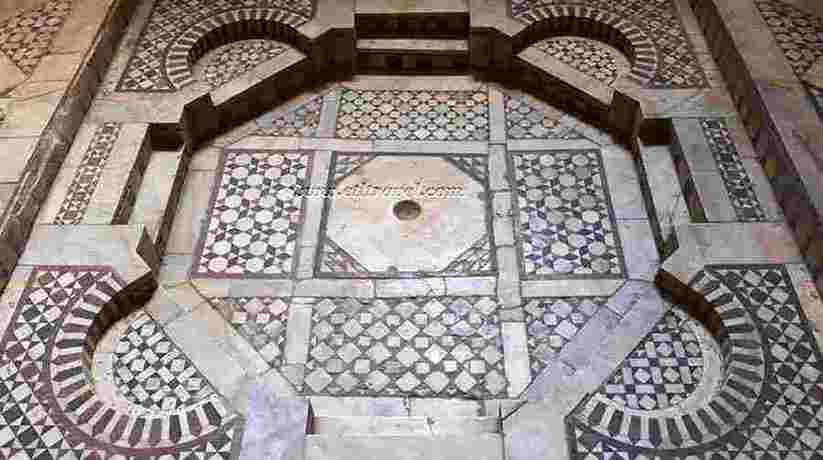
In fact, the entrance to this hall is always through the middle section which called the “Durqaa“. It is where you find an octagonal fountain decorated with mosaic pieces. The marble flooring and geometrical designs of the “Durqaa” are exceptional. Two “Iwan(s)” surround the fountain where one was always at a higher level. That is why the Master of the house could sit there in the middle of his guests. The ceiling ornamented with painted drawings. The walls-built-in cupboards in various colors distinguish those two “Iwans”. Iwans mean halls. Fountains were always the center of the “Qaa”. They were an essential element in Islamic building due to several reasons.

More details about Al Harrawi House Cairo (Beit Al Oud):

In fact, during those times, spying was common. It believed that fountains and the noise of running water was a way to prevent curious spies. They overhear what said between others. Moreover, the fountain was also an important design concept functioning. It is a natural method for cooling air during hot summer days. On the first floor, the main Qaa occupies the southern part of the house. The predominant spread color is blue, which gives an wonderful artistic combination. The ceiling of this hall considered evolutionary in the construction methods. It is also in the decorations. The first floor of Al Harrawi House Cairo consists of the private rooms. They reached by unique stairs in the eastern side of the yard.

Just a few walls still remain on the second floor, only the rooms above the Mandara. In fact, they still stand intact. Al Harrawi house Cairo is one of a few that remained in good shape over the years. It restored several times by the French Comite de Conservation between 1920 and 1950. The Comite de Conservation known to have worked on many other Islamic monuments in Cairo. A French architect called Bernard Maurey restored the house. It was under the supervision of the French Institute of Oriental Archaeology. At the moment the house reused as a Cultural Center. It is where different cultural events, lectures musical gala and artistic expositions take place. In fact, the house Cairo also known as Beit Al Oud. Beit and Manzel mean house.

Nearby attractions Information, tours and Online Booking

More of Islamic Egypt

More of Egypt attractions

MORE
error: Copyright © www.etltravel.com !