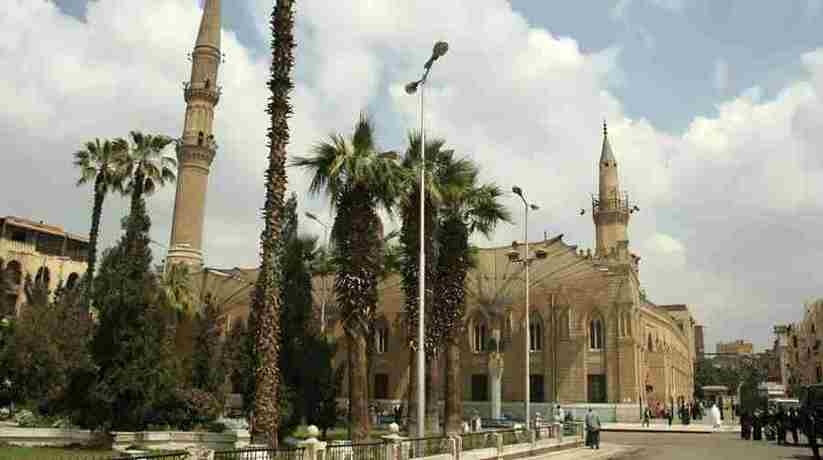
Activities in Islamic Egypt

Things to Do

Bab El Nasr Cairo Egypt

Bab El Nasr Cairo Egypt

  • Bab El Nasr Cairo Egypt
  • Bab El Nasr Cairo Egypt
  • Bab El Nasr Cairo Egypt
  • Bab El Nasr Cairo Egypt
  • Bab El Nasr Cairo Egypt
  • Bab El Nasr Cairo Egypt

Bab El Nasr Cairo Egypt, tours, booking, prices, reviews

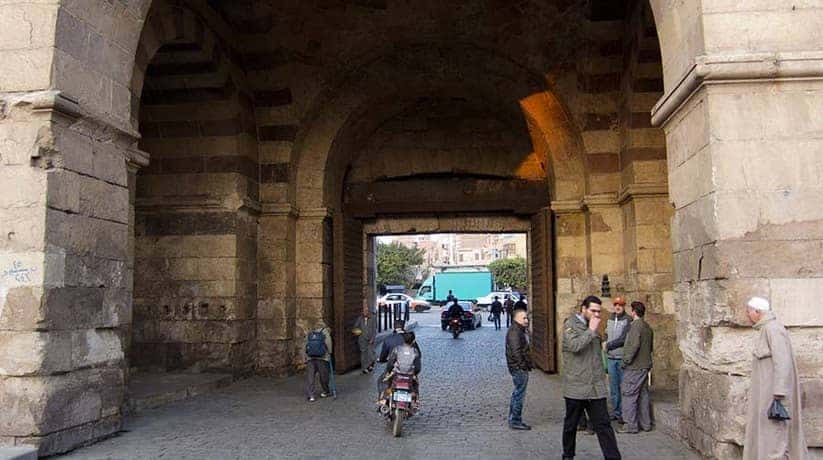
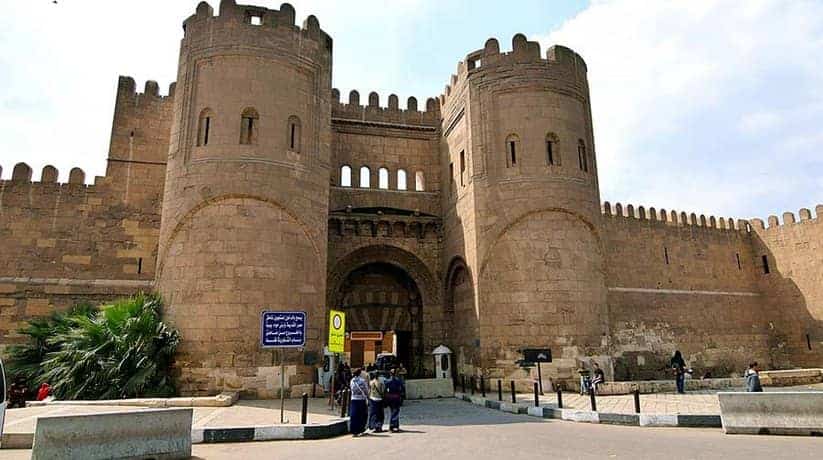
Bab El Nasr Cairo is a massive gate in Cairo, Egypt. In fact, it is one of famous three massive gates. Al Gamali was governor of Acre in 1074. The Fatimid caliph, Al Mustansir called him to put down a revolt. The revolt was of the Turkish military commanders and their troops. After executing the rebels, Al Gamali’s first task was to reinforce the defenses of Cairo. It was besides to rebuild Gawhar’s brick wall, which collapsed. He did so with stone, which marked the beginning of a newly cultivated taste for stone in Cairo. But, it should realized that a considerable amount of stone that he used originated in the Giza necropolis. So this also marks the destruction of many of those Pharaonic monuments around Cairo.

In 1087, Cairo was not much of a fortified city with its sun dried brick walls which built by Gawhar. Though this weakness demonstrated itself on occasions. Badr ad-Din el-Gamali, employed three Christian Syrian monks. One named John the Monk from Edessa. This is to build the three main gateways of the Fatimid wall. These massive gates called Bab Al Futuh (Gate of Conquest), Bab El Nasr Cairo (Gate of Victory) and Bab Zuweila. In fact, the gates mark the southern and northern boundaries of the ancient city. The present site replaced the original one, built by Gawhar a little to the south. Badr named it Bab Al Izz (Gate of Glory). The tradition of the people prevailed and its name never actually changed.

Further details about Bab El Nasr Cairo:

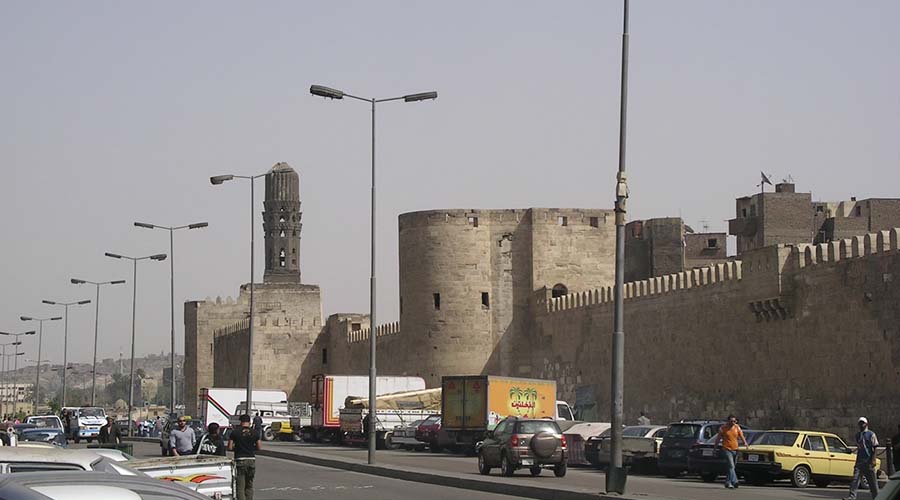
In fact, Bab El Nasr Cairo is the only one of the three major gates of ancient Cairo. In fact, the gates composed of two rectangular towers. Moreover, those of both Bab Al Futuh and Bab Zuweila have rounded towers. Bab El Nasr Cairo towers are solid stone up to the second level. This tower is perhaps the least decorated of the three. Moreover, the inscription over the entrance gives the name of Badr Al Gamali. Above the entrance arch an inscription slab in Kufic carries the shahada with the Shi’a reference to Ali. Furthermore, the towers let the defenders to deliver flanking fire. They also let them trying to scale the wall between the towers. The defenders could move from tower to tower under complete cover. Thus, they can guard rooms, living quarters and supply points.

Moreover, they also make each section of the wall a fortress in itself. Bab El Nasr has a significant feature of decoration. It is the the shields and swords that Creswell identifies as Byzantine in shape. In fact, some point downward while others are circular. They no doubt are symbolic of the protection that the walls afford against invaders. In fact, the name, “Gate of Victory,” like Bab Al Futuh, “Gate of Conquest,” should also understood as talismanic. These fine walls, really initially built to protect Cairo from the Seljuk Turks, never challenged by invaders. They were so encroached upon by other buildings which travelers often reported that Cairo had no fortification at all.

More details Bab Al Nasr Cairo:

Al Ma’mum Al Bata’ihi was the vizier during the reign of the Caliph Al Amir. He built the Al Aqmar Mosque. Moreover, he transferred the observatory from the Muqattam hill and established it at Bab El Nasr. The transportation of the heavy metal observatory was an difficult task. It needed scaffolds, wheels and a large team of workers and. It also needed an architectural structure to support it. Al Ma’mun fell into disgrace before the observatory could used. The angry Caliph ordered it to dismounted because it named Al Rasad Al Ma’muni. It attributed it to the vizier rather than to the Caliph.

Bonaparte’s troops used Bab Al Nasr Cairo to protect themselves from the rebellious Cairo population. The Husayniyya quarter was famous for its untamed and violent character. It was not easy to subdue. French officer of Polish origin, Schulkowky, killed by a Husayniyya resident. That is why the French troops bombarded the Husayniyya from these walls. They demolished the district. French officers’ names still carved near the upper level of the gates. The French blocked up the crenelations at the top and enlarged the arrow slits for canon holes.

Further details about Bab Al Nasr Cairo:

The other towers of the northern wall, Napoleon’s troops renamed the eastern tower Tour Corbin. The western one Tour Julien, after two of his aides-de-camp. Of course, these names left with the French. Creswell also attributes the Machicoulis at Bab Al Nasr Cairo, to the French. Machicoulis is a protruding structure used to spill burning liquids on attackers. It was not until the 20th century that the walls cleared of various obstructions. It is including more modern buildings and made visible again. Apart from being great representatives of Islamic military architecture, all three of these gates particularly important. They are among the few examples of military work predating the Crusades.
Nearby attractions Information, tours and Online Booking

More of Islamic Egypt

More of Egypt attractions

MORE
Bab Al Futuh Cairo Egypt

Bab Al Futuh Cairo Egypt

  • Bab Al Futuh Cairo Egypt
  • Bab Al Futuh Cairo Egypt
  • Bab Al Futuh Cairo Egypt
  • Bab Al Futuh Cairo Egypt
  • Bab Al Futuh Cairo Egypt
  • Bab Al Futuh Cairo Egypt

Bab Al Futuh Cairo Egypt tours, booking, prices, reviews

Bab Al Futuh Cairo built in 1087 by Badr al-Gamali. In fact, it replaced an earlier gate placed somewhat to the South. Moreover, it included in the original enclosure wall of Gawhar. The given name to Bab Al Futuh Cairo was Bab al-Iqba. The populace transferred the name of the old gate to the new. During Napoleonic times this called the Tour Lescale. In 1087, Cairo was not much of a fortified city with its sun dried brick walls. This weakness demonstrated itself on occasions. Badr Al Din El Gamali, the visor of El Mustansir, employed three Syrian brothers from Edessa. It was to build the three main gateways of the Fatimid wall. They made of stone which was to provide fortification. These massive gates called the Bab (gate) Al Futuh, El Nasr Gate and Zuweila Gate.

In fact, Bab Al Futuh in Cairo, or Gate of Conquest consists of a huge vaulted opening. Moreover, it carved from a massive block of stone and flanked by two rounded towers. The masonry considered to be finer than that of the southern gate (Bab Zuweila). Furthermore, it marks the northern boundary of the old Fatimid City. In past times, the great caravan of pilgrims returned each year from Mecca. It enters this gate and making their way to the Citadel. Today, the entrance appears squat. In fact, this is due to the base of the gate being sixteen feet below street level. The interior of the gate is accessible. One may traverse the wall either on top or from within to the more eastern Bab Al Nasr.

Further details about Bab Al Futuh Cairo:

In fact, the construction of Bab Al Futuh is lik Bab al-Nasr. Moreover, the structure solid for two-thirds of its height. In fact, the form is different. The flanking towers of the gate are 23 m high from original ground level. They have rounded fronts and the bases rest on chamfered rectangular plinths. Furthermore, each tower decorated with an arched panel on the front and on the sides. Only the latter decorated with an inner ring of cushion voussoirs. The three arrows slits in a rectangular panel surrounded by a continuous molding. Moreover, it runs around the tower across the gateway and onto the other tower. The great arch of the gateway decorated with a carved lattice pattern. It is inside the lozenges of which are flowers and geometrical motifs. Above, eight decorated brackets which support a stone shelf running between the towers.

In fact, this supports a shallow arch above. Moreover, it is a large rectangular panel which pierced by five round-arched openings. Across the top a small corbel supported on brackets. The whole structure crowned with round-headed crenellations. Inside the latticed arch the gate spanned by a flat massive joggled lintel. Under the great arch an elaborate voussoir with carved keystone. Behind the doorway a tunnel-vaulted passage leads into the porch. This covered (unlike the Bab al-Nasr) with a shallow dome on pendentives. On each side is a vaulted recess. At the inner end of the porch is a great arch with 27 voussoirs. At the summit of the rear face, there is a molding carried around the flanks of the gate. Inside each tower is a long vaulted room.

Nearby attractions Information, tours and Online Booking

More of Islamic Egypt

More of Egypt attractions

MORE
Balat Dakhla Oasis

Balat Dakhla Oasis Egypt

  • Balat Dakhla Oasis
  • Balat Dakhla Oasis
  • Balat Dakhla Oasis
  • Balat Dakhla Oasis
  • Balat Dakhla Oasis
  • Balat Dakhla Oasis
  • Balat Dakhla Oasis

Balat Dakhla Oasis, Egypt information, tours, prices, booking

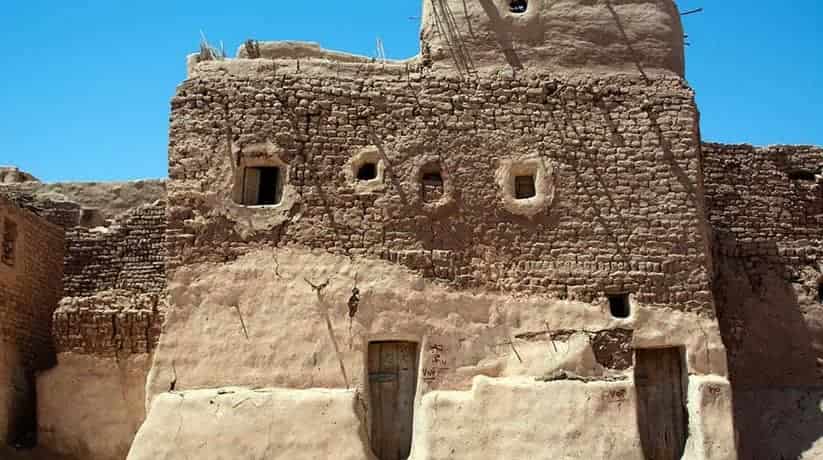
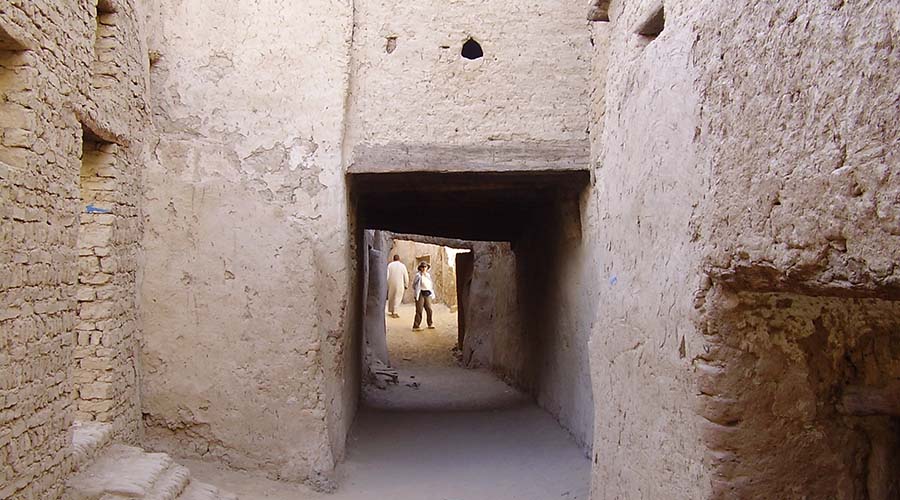
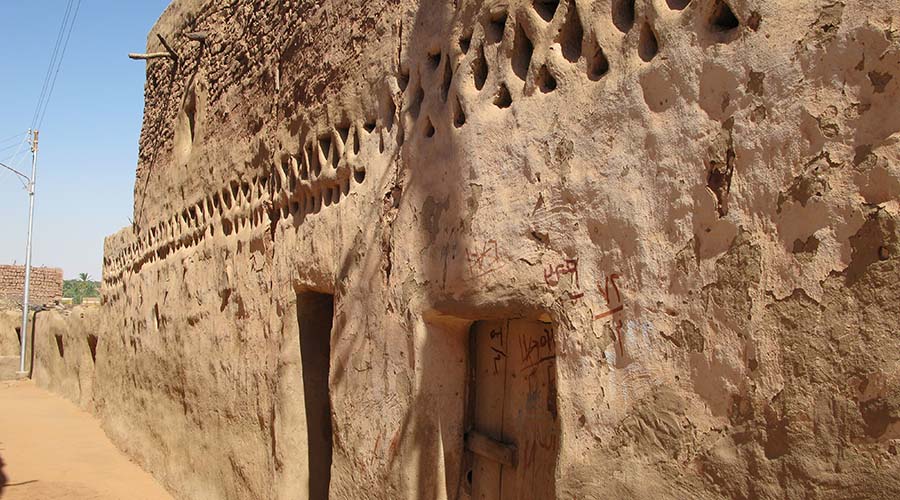
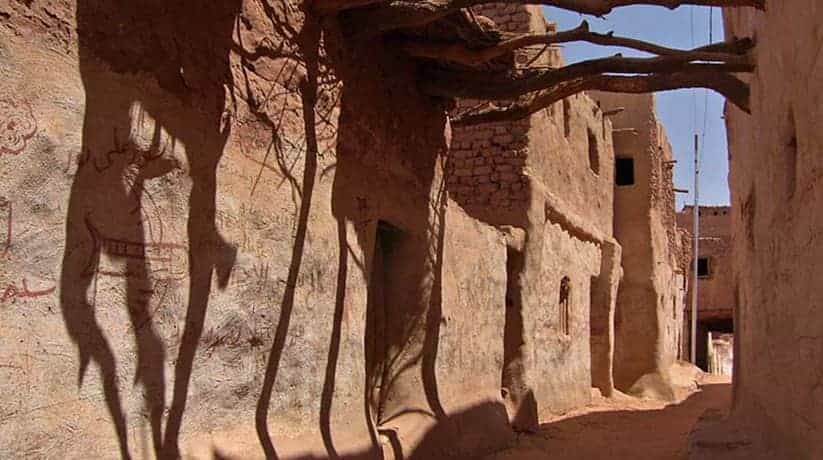
Balat Dakhla Oasis is a modern village which located around 9 kilometer west of Tineida, Egypt. In fact, Balat spread beyond the older fortified town of Al Qasr. Moreover, the site built during the Mameluke and Turkish eras. Furthermore, the Islamic town perched on a mound and little changed since Medieval times. Inside the walls of this once busy town, picturesque winding lanes roofed with palm fronds. They shelter dark and carved doorways of houses. In fact, they are typical of the Islamic architecture in the oases during this period. The roofed streets would acted as extra protection for the inhabitants. In fact, they were too low to admit mounted invaders. The old houses consisted of two or three stories with mud-brick walls.

More details about Balat Dakhla Oasis:

Moreover, they plastered and painted in pink or ocher. Bread ovens and storage containers can still seen on the roofs of some of the crumbling dwellings. Though few people live in the old town today. The Egyptian government hopes to clear the area so that it can restored and turned into a museum. Now, Balat is at the beginning to reveal its secrets of an even earlier history. Nearby, at Qila El Dab’a, there is an Old Kingdom necropolis. Moreover, there is also an associated settlement from the same period at Ain Asil. In fact, these areas currently excavated.

Nearby attractions Information, tours and Online Booking

More of Islamic Egypt

More of Egypt’s attractions

MORE
Amir Shaykhu mosque Cairo

Amir Shaykhu mosque Cairo

  • Amir Shaykhu mosque Cairo
  • Amir Shaykhu mosque Cairo
  • Amir Shaykhu mosque Cairo
  • Amir Shaykhu mosque Cairo
  • Amir Shaykhu mosque Cairo
  • Amir Shaykhu mosque Cairo

Amir Shaykhu mosque Cairo Egypt tours, booking, prices

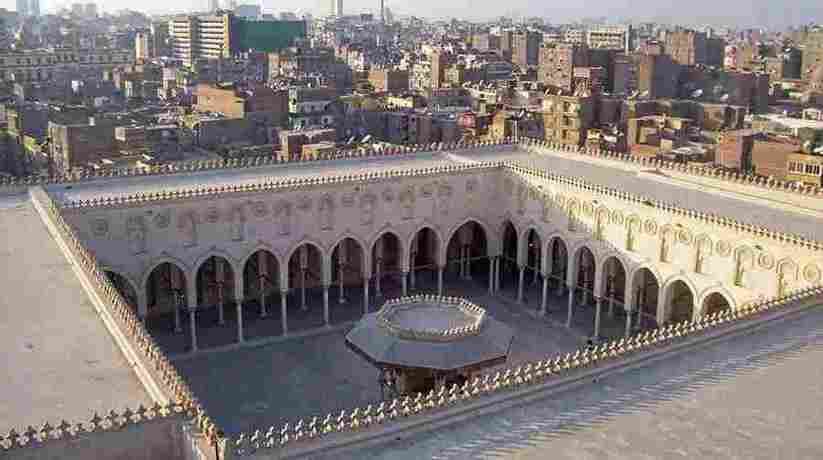
Amir Shaykhu mosque Cairo combines hypo-style features with a cruciform plan. It built in the style of a small congregational facility. After the vestibule there is a courtyard where to the left. A small mashrabiyya enclosure extends out from the wall. Amir Shaykhu mosque Cairo dates back to the mid-eighteenth century. On the Qibla side of the rectangular courtyard is an arcade sanctuary. It faced by another arcade hall across the courtyard. The two lateral sides of the courtyard are each occupied by a recess. It opens onto the courtyard through a double arch sustained by one column only. Amir Sayf al-Din Shaykhu Al-Umari rose through the ranks to become Commander-in-Chief. He also became al-Amir al-Kabir, or “Great Prince”. It was under Sultan Hassan reign in 1354.

He was the first to hold this latter title. His personality said to have alternated between cruel and mystical. Amir Shaykhu belonged to the last generation of Mameluke. He known to have interfered in religious affairs. Moreover, he also commended for his piety in washing the dead during the “Black Death”. He murdered in 1357 at more than fifty years of age. In fact, he built a mosque and madrasa, together with a Khanqah. The Khanqah is a religious hostel for Sufi monks. The two buildings, though built at different times, share many similar architectural elements. He established professorships in the four madhabs in Prophetic traditions and in Quranic readings. He endowed them with considerable wealth. It was although the famine of 1403-1404 reduced the school’s holdings.

Further details about Amir Shaykhu mosque in Cairo:

The mosque housed twenty Sufi. Some of their cells remain preserved behind the northern walls of the mosque. When the Khanqah finished, the Sufi moved to the new complex. They moved with their headmasters. with their first headmaster moved to the new complex. In fact, the mosque and madrasa date back to 1349. According to al-Maqrizi, it was one of the mosques outstanding and beautiful in Egypt. Amir Shaykhu mosque Cairo located on the northern side of Saliba Street in Cairo. Saliba street runs from below The Citadel of Saladdin to Ibn Tulun mosque and El Sayyeda Zeinab mosque. The mosque minaret stands above the portal’s vestibule. It employs prismatic triangles for the transition. They are from the square base to the octagonal shaft. The entrance to the mosque leads first into a vestibule.

It is where three of the walls have embedded pieces of polished black glass. The original purpose of this glass is decoration. Other say that it was to protect the establishment against jinni or evil spirits. They also say it used as curing panels. It is which anybody with an ailment seeking relief could touch or lean against. Just after you enter the vestibule, to the right, you will find a locked door. In fact, this door leads to a tomb. That perhaps intended for the founder. After the Khanqah built, he chose to interred there instead. Like many of the mosques in Cairo, the building not oriented towards Mecca. Inside the Qibla wall (the wall oriented to Mecca) of the sanctuary bent in a diagonal away from the street. Here, an interesting architectural element is also the stone Minbar.

More details about Amir Shaykhu mosque Cairo:

This is one of the few ancient stone Minbars that still exists in Cairo. Along the mosque sides are geometric decorations that have eroded away. There is also a carved stone which called “dikka”. In fact, it dates back to 1555-56. Dikka is a device to hold the Quran. It indeed is beautiful. Moreover, it consists of a rectangular platform mounted on eight columns. Today it continues to use for Quran readings and lecturing during festive occasions. The Mihrab (pulpit) of Amir Shaykhu mosque Cairo has traditional alternating courses. They are of red, white and blue stone. Its marble paneling belongs to the type favored in the mid-fourteenth century. In the lowest register there glazed tile. It seems to have imported from Tunisia or Spain and embedded at a later date. The mosque is the most beautiful mosque in Mameluke dynasties era.

Nearby attractions Information, tours and Online Booking

More of Islamic Egypt

More of Egypt attractions

MORE
Al Saleh Ayyub Complex Cairo

Al Salih Ayyub Complex

  • Al Saleh Ayyub Complex Cairo
  • Al Saleh Ayyub Complex Cairo
  • Al Saleh Ayyub Complex Cairo
  • Al Saleh Ayyub Complex Cairo

Al Salih Ayyub Complex Cairo Egypt tours, booking, prices

Al Salih Ayyub complex located on the famous Moezz Street in Cairo. It dates back to the mid-13th century. In fact, Al Salih Ayyub complex named after its builder, Al Salih Najm Al Din Ayyub. He reigned over Egypt from 1240 till 1249. Al Salih Ayyub was last Ayyubid sultan of Egypt. He died defending Egypt against the Crusader attack that led by Louis IX. He was the grandson of the more famous Salah Al Din Ayyub. In fact, he known in the West as Saladdin. Before his death, he built a rather unique school (madrasa) between 1242 and 1244. He then built a mausoleum. They now called Al Salih Ayyub complex. The mausoleum at the complex built in 1250 by Shajarat Al Durr. She was the wife of Al Salih Ayyub.

She outlived him and became famous as she ruled with the first of the Mamluk sultans after his death. Several madrasas built in Al Fustat (Cairo) during this period. Many of them are among houses and palaces. The construct of Al Salih Ayyub complex indeed is unique. It was the first known example of a tomb which attached to a madrasa. The transitional zone of the mausoleum has the earliest example. It is the example of a Cairene three-tiered brick. Another notable feature of the mausoleum at the complex is that its Mihrab. It is the earliest extant example of an Egyptian prayer niche. It is with a marble lining. There are two carved wooden Qaranic friezes around the chamber. A part of the mausoleum protruded into the street. On this side were windows which fronted by iron grilles.

Further details about Al Salih Ayyub complex Cairo:

The Mausoleum at the complex became a site of grand Bahri Mamluk ceremonials. The madrasa at the complex was the first to house all four Sunni legal schools. In fact, each was in a separate Iwan. Other schools of this period dedicated to either the Maliki or Shafi’i rites of Islamic law. This once also included the Hanafi and Hanbali rites as well. In doing so, it followed the example of the Madrasa Mustansiriyya in Baghdad (1233). In 1330, under the Mamluks, the Friday sermon introduced to this madrasa. The madrasa at the complex became more than just a center of worship and scholarship. Moreover, the Madrasa of Al Salih Ayyub complex occupies part of the site. It is where the Great Fatimid Palace once stood.

Moreover, it is within the heart of the Fatimid city, as does part of the famous Khan El Khalili bazaar. It is rather difficult to spot because only the minaret remains visible behind a row of shops. Furthermore, this minaret is the only one to have survived intact that dates from the Ayyubid Period. The minaret rests upon the roof of a passage. They consists of a rectangular shaft. It receding into a second story in the shape of an octagon. It topped by a ribbed, angular roof resting on stalactites. The minaret rests the passage upon. In fact, it today known as Haret Al Salihiya. It separates the two wings of the madrasa. The entrance to the ally is actually the doorway to the madrasa. Some relics of wooden beams state that this passage covered.

More details about Al Salih Ayyub complex Cairo:

The passage entrance crowned with a beautiful keel-arched niche. Moreover, it is of carved stone with a foundation inscription of Naskhi script in its center. Flutes radiate from this decoration outward evolving into a frame of
stalactites. They are on the the border of the niche. Flanking this large central niche are two somewhat smaller recesses. They have fluted hoods within a rectangular frame with stalactite cresting. The facade that fronted both wings still stands, adorned with niches, reliefs and inscriptions. The decoration of this facade is somewhat like that of the nearby Al Aqmar Mosque. It hidden by shops. Its most visible adornments are panels. They consist of a keel-arched central section and rectangular panels over the rest.

Each of these panels recessed. Moreover, it also includes a windows, a style first appearing at Al Salih Talai mosque. The lintels of these windows carved in stone. Furthermore, the plan of the madrasa reconstructed by Creswell. Creswell found that it was a near duplicate of the earlier ruined madrasa of Al Malek Al Kamel. His plan shows that the two opposing wings on either side of the passage each had their own courtyards. Al Kamel had only one courtyard with two Iwans. In Al Shaih Al Din’s madrasa, the courtyards each had two vaulted Iwans. They facing each other across the courtyards. These four Iwans divided between the two wings. They served as study areas. Each designated to one of the four schools. Teachers actually taught in their own houses.

Further details about Al Salih Ayyub complex Cairo:

The courtyard in the wing with its back to the street was smaller. In fact, the other larger wing oriented to Mecca. The Qibla orientation of the interior of this larger wing followed the street alignment. It accomplished by increasing the thickness of the wall of the Qibla facade. Thus, the windows became deep recesses. The lateral sides of each courtyard occupied by two stories of living units for the students. Today, only the northwest Iwan has survived. A doorway just to the left of the passage entrance. It gives access into the open courtyard at Al Salih Ayyub complex. In fact, the remains of the madrasa are evident in the form one of its Iwans. They still stand on the street side. A small, recent mosque was at one time which built into it.

Al Salih Ayyub complex represents the architectural and institutional transition. It is between the Fatimid monuments and the next Mamluk complexes. The minaret of the madrasa at the complex, also known as Al Salihiyya. It has undergone recent restoration. Clean and sparkling, it shows a patchwork of old and new stone. It revealing the layers of its history.

Nearby attractions Information, tours and Online Booking

More of Islamic Egypt

More of Egypt attractions

MORE
Al Nasir Muhammad mosque Cairo

Al Nasir Muhammad mosque

  • Al Nasir Muhammad mosque
  • Al Nasir Muhammad mosque
  • Al Nasir Muhammad mosque
  • Al Nasir Muhammad mosque
  • Al Nasir Muhammad mosque
  • Al Nasir Muhammad mosque

Al Nasir Muhammad mosque Cairo Egypt tours, booking

Al Nasir Muhammad mosque Cairo was the royal mosque of both the Citadel and Cairo itself. In fact, Al Nasir Muhammad mosque Cairo built by Sultan Al Nasir Muhammad in Cairo citadel. It was during his third and longest reign in 1340. The Sultans (kings) of Cairo performed their Friday prayers in it, except on religious feasts. In feasts, prayer took place in a large gathering at the hippodrome beneath the Citadel walls. The mosque in fact was large enough to hold five thousand worshipers. Moreover, the main entrance to Al Nasir Muhammad is across the entrance to the courtyard of Mohammad Ali mosque. The Citadel always had a mosque. The mosque is like most of the buildings which built on the site of a previous building.

In fact, there were several mosques in Cairo Citadel. The mosque was one of the most glamorous in Cairo. It was until the original dome covered with green tile over the nine-bay Maqsura. Maqsura is a private area in the prayer hall. In fact, it usually enclosed by a wood screen for the ruler and his entourage. It collapsed in the sixteenth century. Furthermore, the marble carried off by the Ottoman conquerors. In fact, Al Nasir Muhammad mosque Cairo founded in 1318. It pulled down and rebuilt on a larger scale in 1335. This hypo-style mosque built as a regular free-standing rectangle around a courtyard. It was with a large dome covering the prayer niche area. The mosque has three entrances. One is on the northeastern side with a trilobed shallow recess. Moreover, another one is on the northwestern wall with a stalactite portal.

Further details about Al Nasir Muhammad mosque in Cairo:

The third entrance is on the southern wall. It adorned with a pointed arch including a sun-rise motif in Ablaq masonry. None of the entrances has a Maksala or bench, making them the exception to the rule in Cairo. The facades of Al Nasir Muhammad mosque not paneled. They have no decoration except crenellation. The appearance is rather austere. It is except for the two exotic minarets at the northeast corner and at the northwest portal. They decorated with blue and green faience mosaics. Moreover, the minaret to the north directed its call to prayer to the officers and soldiers dwelling there. The other minaret faced the sultans’ palaces. The northern minaret is the taller of the two. That is why it could seen by the palace house some distance away. Both minarets built of stone.

The western minaret is conical, with a shaft which carved in a deep zigzag motif. It is vertical on the first story and horizontal on the second. It has no openings and has a garlic-shaped bulb resting on a ribbed, tapered cylinder. The whole upper structure covered with green, white and blue faience mosaics. It is like those which found at Al Nasir’s Sabil attached to the madrasa. In fact, this madrasa (school) built by his father, Qalawun. A Quranic inscription band made of white faience mosaic adorns the nick of the bulb. This minaret continues the Cairene tradition of placing minarets at the portals of foundations. The minaret at the northeastern corner of the mosque has a completely different shape. The base is rectangular and the second story is cylindrical.

More details about the mosque:

In fact, both are without carving. Its upper part has an open hexagonal pavilion. Moreover, it supports the top of the structure, which is like the top of the western minaret. Both minarets have balconies adorned with parapets. They made of stone panels pierced with arabesques. Furthermore, they carved in the same technique used to make the screens of Sanjar. The crenelation around the base of the bulbous is the earliest which known experimentation. This is with technique at the base of a Cairene dome. A craftsman from Tabriz came to Cairo during the reign of Al Nasir Muhammad. He was the one who built other minarets covered with faience, as was the fashion in Persia. The bulb shape also came from Tabriz technique, but also the bulb shape, seem to have come from Tabriz. Both minarets also have another common feature.

It distinguishes them from all other Mamluk minarets. Moreover, their base is below the level of the roof of the mosque. It is when the roof of the mosque rebuilt, the minarets were already standing. On the northern wall of Al Nasir Muhammad mosque underneath the minaret is a small balcony. It reached by a staircase inside the mosque. Its function is unknown. One may speculate that it intended for prayers or recitations addressed. This is to overflow crowds of worshipers outside the mosque. Furthermore, the interior of the mosque follows the hypo-style scheme. It is with the standard pattern of a rectangular courtyard. A sanctuary on the Qibla side and arcades surrounding its other three sides.

Further details about the mosque:

In fact, within Al Nasir Muhammad mosque, the walls supported by the arcades. They have a row of arched windows that give the building a special character. These windows must added when the roof raised. The openings help reduce the thrust carried by the arches, admit light and are ornamental as well. The voussoirs of the Al Nasir Muhammad’s arcades composed of ablaq masonry. They are of the same stone, but painted. The ceiling over the arcades is flat. It covered with traces of its light blue. In fact, the silver decorations are still visible. The crenelation around the courtyard is of the stepped type. It differs from the outer crenelation composed of rectangles. It is with rounded tops like those of the city and Citadel walls. At the corners near the crenelations of the courtyard are four decorative structures. They are like the Mabkhara (incense burner) minaret tops.

A special collection of pre-Islamic capitals crowns the marble columns of the mosque. The two pairs of Coptic Christian capitals at the main entrance are particularly interesting. Their white marble carved with a basket pattern. There are also capitals dating to the Greek and Roman periods. Al Nasir Muhammad mosque had many large iron-grilled windows that now walled up. It also paneled with high marble dados. They later removed by Sultan Selim. They shipped to Istanbul with other marbles from the palace. The Qibla wall completely restored. The ground level inside the Citadel has risen. The mosque was a much higher level and reached by a staircase.

More details about Al Nasir Muhammad mosque in Cairo:

The present dome of Al Nasir Muhammad mosque in Cairo is modern. It carried by granite columns like those of the Citadel palaces. These columns taken from ancient Egyptian temples. The original dome, like many others in Cairo, made of plastered wood. The transition zone consists of pendentives carved with stalactites. They, together with the inscription band referring to the founder, painted and gilded. During the later Mamluk period, the stalactite squinches supplanted by stalactite pendentives. Pendentives are triangles at the corners of the transitional zone of a dome. They transfer the thrust of the dome to the corners of the four walls. The squinches are arches or quarter-domes. They transfer the thrust into the middle of each of the four walls.

Nearby attractions Information, tours and Online Booking

More of Islamic Egypt

More of Egypt attractions

MORE
Al Zahir Barquq Mausoleum Cairo

Al Zahir Barquq Mausoleum

  • Al Zahir Barquq Mausoleum Cairo
  • Al Zahir Barquq Mausoleum Cairo
  • Al Zahir Barquq Mausoleum Cairo
  • Al Zahir Barquq Mausoleum Cairo
  • Al Zahir Barquq Mausoleum Cairo
  • Al Zahir Barquq Mausoleum Cairo

Al Zahir Barquq Mausoleum Egypt booking, prices, reviews

Al Zahir Barquq Mausoleum stands next to Sultan Al Nasir Muhammad madrasa. It is in a street called Al Mu’izz in Nahhasin district in Islamic Cairo. In fact, Al Zahir Barquq Mausoleum dates back to 1384. Madrasa is an Islamic school teaches Islamic religion. The architect Shihab al Din Ahmad belonged to a family of court architects and surveyors. Moreover, he was in charge of part of the construction. Jarkas al Khalili was master of Barquq’s horse and the founder of the famous Khan El-Khalili. His name appears in the inauguration inscription. The name is on the facade and courtyard of the mausoleum. The founder of the mausoleum was Sultan Barquq. In fact, he was of Circassian origin, recruited under the Turkish Bahri Mamluks.

The Circassians were subjects of the Tatar Golden Horde. They were first imported to Egypt as slave troops by Qalawun in the thirteenth century. In fact, Barquq freed in 1363. He established his dominance in the Mamluk government in 1382. It was when he seized power through a series of intrigues and assassinations. Moreover, he began recruiting Circassian Mamluks from Caucasus. Egyptian history references the following era as the Circassian Mamluk period. These Mamluks garrisoned at the Citadel. It is where also called the Burji or Burgi Mamluks. Sultan Barquq sought to legitimize his rule by associating himself with the previous dynasty. In fact, he bequeathed a legacy from Bahari Mamluk. It was fending off the Crusaders and Mongols. It was also espousing Sunni Islam.

Further details about Al Zahir Barquq Mausoleum:

Sultan Barquq established himself by marrying Baghdad Khatun. She was a widow of Sultan Sha’ban, one of the last descendants of Sultan Qalawun. Al Zahir Barquq ordered the construction of a funerary foundation for his family. To emphasize the continuity, he chose a site next to the early Qalawunid monuments. In fact, Al Zahir Barquq Mausoleum set the tone for architectural decoration in Cairo. It was between 1400 and 1450. Moreover, the mausoleum was teaching the four rites of Islam. Moreover, it has a Friday mosque and a mausoleum. The madrasa was also a Khanqah for Sufis. Furthermore, Al Zahir Barquq Mausoleum housed one hundred and twenty-five theology students and sixty Sufis. It had living quarters for the teachers and stables for their horses.

The facade of the mausoleum paneled with recesses surmounted by stalactites. Moreover, the upper windows pointed arches as well as wooden grills. This is a style that can seen in several mosques of the Bahri Mamluk period. The dome next to the minaret is not original. The two structures seem to be in harmony. Furthermore, the original dome was a wood and plaster structure. In fact, the dome collapsed in the nineteenth century. Al Zahir Barquq Mausoleum had theme of illustrations. These illustrations made it possible to reconstruct the dome. The new dome made of brick. Though the dome’s surface is plain and there is a cornice of stalactites at its base. This feature seen at the mausoleum of Sarghatmish.

More details about Al Zahir Barquq mosque:

An octagonal minaret recognizable at great distance. It is by its solid overlapping roundels and column-supported galleries. In fact, it is also by onion shaped copper finial. The minaret of Al Zahir Barquq mosque is completely octagonal. Moreover, it differs from most of the other fourteenth century minarets. There are intersecting circles where white marble inlaid in the stone. This design maybe inspired by the intersecting arches at the top of the minaret of Qalawun. Just as in the Qalawun mausoleum, the facade of the minaret on its lower part has columns. They attached to the wall. These columns with their capitals carved parts of the wall masonry. The capitals themselves are unusual. One of them adorned with a stylized ram’s head.

A trilobite stalactite portal graces the facade. To the north of the portal is a large dome which flanked by a minaret. This high, rectangular and offset entrance is next to Al Nasser’s Madrasa. Moreover, The original bronze door adorned with geometric stars inlaid with silver. Barquq’s name is visible on the raised boss of the center star. In fact, Barquq means plum in the Egyptian dialect. The recess of the portal decorated with a large rectangular panel. It is with inlaid marble, also reminiscent of that at Sultan Hassan’s vestibule. The mosque retains many of its original windows, doors and other furniture. A bent entrance leads through a corridor to the cruciform interior. This vaulted passage has a recess on the left side. It used for water jugs, kept fresh by a wooden lattice door that is now missing.

Further details about Al Zahir Barquq mausoleum:

In fact, there are four Iwans face the courtyard. They have four large pointed arches. Moreover, above the arches, a large inscription carved in stone. The open court paved with marble mosaic and features large porphyry disks. The ablution fountain situated in the center of the courtyard. It has a bulbous wooden dome on eight marble columns. It is also like that in Sultan Hassan Mosque. The inauguration of this specific mosque, the ablution fountain filled with sugared water. The sweetmeats distributed to the congregation. During this period, the the sultan attended the first day of prayers. It was the traditional inauguration ceremonies of a mosque. The tripartite sanctuary has two pairs of granite columns on each side. They separate the central, large aisle from the side aisles.

The sanctuary has an un-vaulted wooden ceiling. Moreover, it painted and gilded due to a modern restoration. The Qibla wall, to the right, decorated with a marble dado and marble prayer niche. The Qibla Iwan was once lit with enameled mosque lamps that are today at the Islamic Museum. The current ones are replicas. The entrances to the four Madrasas pierced in recesses. The upper part of the recesses form round arches with zigzag. A device that can also be seen in the Roda Nilometer. We find a new feature on the doors inside Al Zahir Barquq Mausoleum. It is a central bronze medallion. There are also four quarter circles of medallions at the corners. They leave the wood background to contrast with the bronze.

More details about Al Zahir Barquq complex:

Even the bronze appliques pierced to show the wood background. This pattern of decoration, common in carpets, adopted from book bindings. The living units for the students all open onto interior passages. It is because there is no space on the facade or the courtyard. The Waqf deed refers to this complex as a Madrasa-Khanqah. Its dwelling units as a rab’, a term usually used to denote collective housing. On the north side of the prayer hall a door communicates with a vestibule. It is with a stone bench that leads into the mausoleum. The dome above the mausoleum has wooden pendentives. It painted and gilded with the usual decorations.

Nearby attractions Information, tours and Online Booking

More of Islamic Egypt

More of Egypt attractions

MORE
Al Muayyad mosque Cairo

Al Muayyad mosque Cairo

  • Al Muayyad mosque Cairo
  • Al Muayyad mosque Cairo
  • Al Muayyad mosque Cairo
  • Al Muayyad mosque Cairo
  • Al Muayyad mosque Cairo
  • Al Muayyad mosque Cairo

Al Muayyad mosque Cairo Egypt tours, booking, prices, reviews

Al Muayyad mosque Cairo and complex situated next to Bab Zuweila in Cairo. In fact, Al Muayyad complex contained a madrasa-khanqah, mosque and two mausoleums. Al Muayyad mosque Cairo and complex built between 1415 and 1422. Moreover, Al Muayyad Madrasa dedicated to Sufis only. The curriculum comprised the study of official religion according to the four rites. It is unlike Barquq’s madrasa-khanqah. In Barquq’s madrasa-khanqah, students dwelt under the same roof. They enjoyed exposure to each other’s teachings and religious practices. The mosque and complex built by Sultan Al Muayyad. Sultan Al Muayyad (Al Mu’ayyad) was a pious and oppressive man, but he was also a musician and poet. His reign cursed by plague and by his own unusual currency reforms.

When he died, everyone engaged in choosing his successor. Nobody attended his funeral and his body wasn’t wrapped with a towel. Al Muayyad mosque Cairo and it’s minarets became a land mark of Cairo. The site had unpleasant connotations because there was a prison adjoining Bab Zuweila. That is why they say that Al Muayyad was lucky to live when he was a prince. Sultan Al Muayyad Shaykh was a Burgi or Circassian Mamluk. In fact, he served as sultan between 1412 and 1421. Al-Maqrizi relates that during the reign of Farag ibn Barquq, Al Mu’ayyad captured. And he thrown into the prison on this site. He suffered from the lice, the fleas and vowed. When he came to power he would transform the infested prison into a “place for the education of scholars”.

Further details about Al Muayyad mosque Cairo:

Once he became sultan, he soon fulfilled his promise. Moreover, he spent some 40,000 dinars on its construction. “Marble taken from everywhere”. It relates the 15th century historian al-Taghribirdi, “even from (private) houses and palaces. The prize of marble in Egypt soon rose to astronomical height for the vast demand. It also does to the big dimensions of the mosque. Al Muayyad mosque Cairo became indeed the most beautiful mosque which built in Cairo. It is because of decoration and the use of marbles. Many donkeys occupied to carry away loads of bones of the dead which found in the prison. Due to the Sultan’s lavish endowments, the madrasa became one of the most prominent academic institutions. A large library collected. The most eminent scholars of the day filled professorial chairs.

Ibn Hagar al-‘Asqalani was The most famous specialist in Quranic exegesis in Egypt. He installed as lecturer in Shafi’i jurisprudence. There was a great ceremony for the opening of Al Muayyad madrasa. It was when Al Muayyad and his Mamluk entourage came down from the Citadel. The water basin in the middle of the vast courtyard filled with liquefied sugar and sweets. Al Muayyad mosque Cairo had three minarets. This is including the two we see above the towers of Bab Zuweila. They are twins. The third one, near the western entrance, was different in appearance. It destroyed sometime during the 19th century. The two remaining ones, though they present no innovation in the evolution of minarets. They are particularly slender and elegant with their zigzag carved shafts.

More details about mosque of Al Muayyad Cairo:

Noteworthy, is the signature of their architect. Moreover, they carved on a cartouche above the entrance to their staircases. They are on the northern side of each shaft and dating to 1419 and 1420 (AD). In fact, his name was al-Mu’allim Muhammad Ibn Al Qazzaz. This is the only which known signature of a Mamluk architect on a building. There is a story which related to the remaining minarets. It seems that after their completion, one began to lean dangerously towards one of the neighboring buildings. It decided to tear down the newly built minaret and rebuild it. The demolition work alone took a whole day, during which one of the local workers killed by falling pieces. Afterwards, Bab Zuweila closed for a whole month.

In fact, Al Muayyad mosque Cairo had four facades and four entrances. Moreover, the two main facades are the one parallel to Bab Zuweila. It is on the site of the Fatimid southern city wall. And which rebuilt in the 19th century. The facade is perpendicular to Bab Zuweila on its left with the main portal. Furthermore, the muqarnas portal is of grand proportions. It enhanced by a pishtaq or wall above the entrance that is higher than the others. A conch rests on a large vault. It is where nine tiers of dripping stalactites have incorporated. A band of carved stone inlaid with marble and red and turquoise colored stones frames the doorway. The panels on either side of the portal have examples of square Kufic. They are an arrangement of the shahada.

Further details about Al Muayyad complex Cairo:

Shahada is the first pillar of Islam, “There is no god but God; Muhammad is the Messenger of God.”Over the portal and on the bays to either side of the door is a Quranic inscription. It used in religious buildings. The door is indeed a masterpiece of bronze metalwork. In fact, it taken, along with a bronze chandelier from Sultan Hassan mosque. Moreover, it was against payment of a sum of five hundred dinar. Islamic law prohibits the acquisition of land or other properties for a new foundation. Once endowed, a property cannot change owners. Maqrizi mentions many such illegal acts connected with the foundation of religious buildings. Inside the complex, the vestibule covered by a magnificent groin cross-vault.

Moreover, it flanked by two half-domes on stalactites. It is perhaps the most remarkable feature of the entire complex. Today, one enters Al Muayyad mosque Cairo, he thinks it is a mausoleum. There was direct access into the courtyard. Furthermore, the mausoleum dome has an exterior like that of Faraj Ibn Barquq. In fact, it is smaller and has two cenotaphs. This is where Sultan Al Muayyad and his son buried. In fact, one of the cenotaphs is larger than the other. It is with remarkable Kufic inscriptions in marble which crafted during the Ikhshidid. Their texts are Quranic. In fact, they taken from an earlier building. These “foliate” beginnings lead to lush arabesque backgrounds for scripts.

More details about Al Muayyad mausoleum Cairo:

On the top part of the north western wall of the mausoleum, there are two blind windows. Moreover, they feature carved stucco decorations in the Andalusia style. The hypo-style plan of the Congregational mosque is like that of the khanqah of Faraj Ibn Barquq. But on columns rather than piers. This is a late example in Cairo of the open courtyard plan on a large scale. In fact, it is the last such hypo style mosque to build in Cairo. There is an ablution fountain in the middle of the courtyard. Of the four iwans, only the sanctuary section survived. There were plans for it to be flanked on either side by a domed mausoleum. In fact, only one built. This is where the tombs of the female members of the Family buried, though there is no mausoleum.

The sanctuary decorated with a high marble dado and a polychrome marble prayer niche. Moreover, it is with a row of inlaid niches which separated by blue glass colonnettes. A painted gilded wooden ceiling, stucco grilled windows and beautiful doors inlaid with wood and ivory. Besides to the marble columns with their pre-Islamic capitals. They contribute to the richness of the decoration. The prayer hall restored during the 19th century. It was when Ibrahim Pasha, the son of Muhammad ‘Ali, installed Turkish tiles. That were inset into the qibla wall. It was at that time that the ruined iwans torn down but only the western one rebuilt. The rest of the area turned into a garden. It was once again restored in more recent times.

Further details about Al Muayyad mosque Cairo:

In 2001, the Ministry of Culture removed the garden and. It rebuilt the missing arcades around the courtyard. The mosque also has its original wood and ivory pulpit. A doorway at one end of the sanctuary leads to the second story platform of the Bab Zuweila. It also leads to the minarets. In fact, the living quarters of the Sufi students were not around the courtyard as they are at Faraj’s khanqah. They formed a separate structure consisting of a courtyard. They surrounded by several stories of living units. It no longer exits. On the western side of the mosque. Sultan Al Muayyad built a hammam (bath). The pendentive in it that once supported a dome have remarkable stalactites.

Nearby attractions Information, tours and Online Booking

More of Islamic Egypt

More of Egypt attractions

MORE
Al Rifai mosque Cairo

Al Rifai mosque Cairo

  • Al Rifai mosque Cairo
  • Al Rifai mosque Cairo
  • Al Rifai mosque Cairo
  • Al Rifai mosque Cairo
  • Al Rifai mosque Cairo
  • Al Rifai mosque Cairo

Al Rifai mosque Cairo Egypt tours, booking, prices, reviews

Al Rifai mosque Cairo located next to Sultan Hassan in Salah El Din Square, near to The Citadel. In fact, Al Rifai mosque separated from the mosque of Sultan Hassan by a pedestrian street. Once you enter this lane you will overwhelmed by the huge structure of the Al Rifai Mosque. Khoshiar Hanem, the mother of Khedive Ismail, was the one who wanted the mosque built in 1869. In fact, the mosque’s construction took 40 years. It now contains the tombs of many Royal Family members in Egypt. It was the reason why Khoshiar Hanem wanted it built in the first place. She appointed Hussein Fahmy Pasha to be in charge of the mosque design. This enormous structure built upon the site of the former Rifa’i zawiya. It acquired and demolished by the Princess Khushiar.

Shaykh Ali Al Rifai was a medieval era Islamic saint. Zawiya was a pilgrimage site for locals. Those who believed that the tomb had mystical healing properties. Al Rifai Mosque in Cairo houses his tomb, along with that of Yehia Al Ansary, a companion of the prophet. In fact, the mosque is rectangular in shape, measuring some 6500 square meters in size. Moreover, 1767 square meters of this area reserved for praying. The rest of area is the mausoleum of the royal family. Furthermore, the mosque built in the Bahri Mamluk style which was popular in the 19th and 20th centuries. This style was like the European style of buildings at the time. Most of the materials imported from Europe. The building of the mosque in Cairo was part of a vast campaign by the 19th century rulers of Egypt.

Further details about Al Rifai Mosque Cairo:

Construction on the mosque moved along at a good pace. It was when, first Hussein Fahmy died and then in 1885, Khoshiar Hanem also died. She granted her wish of entombed here. And then in 1894, when her son Khedive Ismail also died, he entombed next to her. All this caused the process of building the mosque to stop for about twenty five years. They also completed the decorations of the mosque. In fact, this accomplished in 1911. Moreover, it opened for Friday prayer for the first time in 1912. The mosque came to represent a turning point in the cultural and political history of Cairo. Furthermore, the doorway of Al Rifai Mosque Cairo opens onto the narrow street between the two mosques. It had two huge marble columns to either side, with an unusual spiral design on their columns.

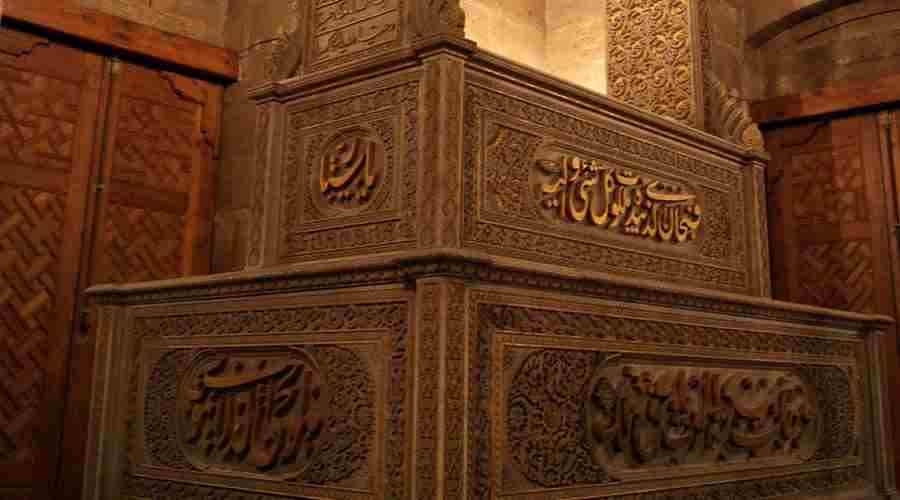
The decorations on the walls above the door and all around it are indeed fascinating. Even the ceiling of the entrance way is interesting. The designers seem to be articulate, paying attention to the smallest details. Moreover, the ceiling above this portal is wonderful. It is with golden Mamluk decorations. In fact, this was not its main entrance. Once inside Al Rifai Mosque in Cairo, one finds oneself in front of the mausoleum of Shaykh Ali Al Rifai. He is the head of the Al Rifai tariqa, or order of dervishes. Moreover, he was a saint during his lifetime. People still walk around his tomb, touching his hands to the sandalwood screen. In fact, they seek his blessed intercession in their lives.

More details about Al Rifai mosque Cairo:

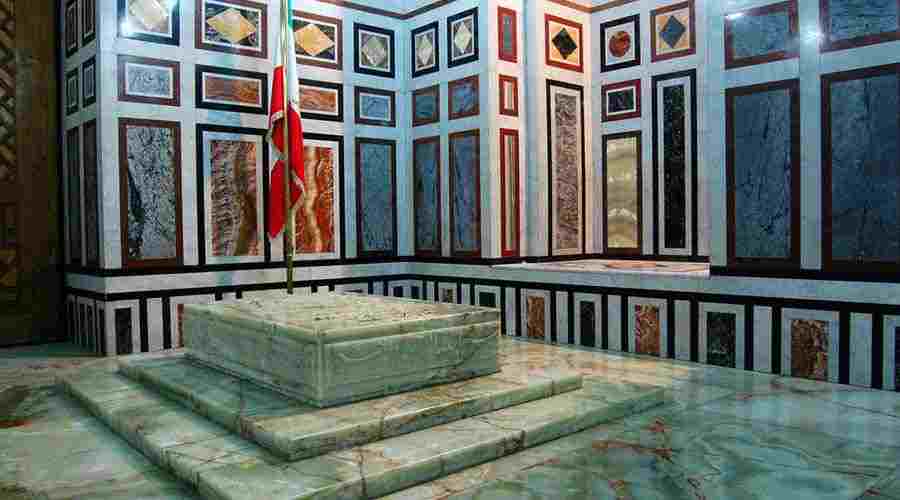
Some people still come to this mausoleum to read a verse of Quran for the Shaykh. Reading the verses of “Fatha” for the dead a well known Islamic tradition. His tomb covered with fine pieces of wood engraved with marvelous decorations. What completed the amazing scene were the many flowers and roses. They placed on top of and all around his tomb. To the left of this tomb, behind the mashrabeyya screen, in other chambers lie the Tombs of King Fuad. In fact, he reigned from 1917 to 1936, and his mother along with the mausoleum of the Shah of Iran. It contains the tomb of Mohamed Reda El Bahlwy, who died in exile in South Africa in 1944. It returned to Iran after World War II. Part of the burial chamber is currently occupied by Reza Shah.

He is the son of Mohammed Reza Pahlavi. He died in Cairo in 1980. For Iranians who find themselves in this mausoleum there is poignancy for an emperor. He reigned for 37 years . It was during which Iran was an island of stability and progress in a volatile part of the world. The mausoleum is small but it has many amazing decorations. Colorful designs and golden verses of Quran are all about the room. Here is one of the most beautiful Mihrabs you will ever encounter. It decorated with marble and gold and shines as if it built just yesterday. The room also filled with flowers. The tomb itself is only a small step. It rises from the floor with the name of the Shah and his dates of birth and death.

Further details about Al Rifai Mosque Cairo:

The ceilings of Al Rifai Mosque chosen and decorated in a charming style. The gold for its gilding imported from Turkey between 1906 and 1912. Muslims paid great interest to the ceilings especially in mosques. It is because when a Muslim speaks to God, he supposed to look upwards towards the sky. Thus he looks at the ceiling. Most of the walls of the mosque covered with colorful marble. They are with different styles of the Mamluk style ornamentation. Here, nineteen different kinds of marble from seven different countries used. Pointed arches divide the royal mosque into three porticoes. Two marble columns, one white and the other dark green, stand at the sides of the great dome.

There are forty-four grand columns in all, and eighteen window grills. There are many doors in the walls. All doors made with the finest wood and decorated with pieces of expensive Abanos wood. Many of the walls have blue decorations highlighted by golden lines all around them. Lighting has always been an interesting element of mosque design. The lighting of Al Rifai Mosque well suited. It consists of huge ornate brass lanterns that hang from the ceiling. These lanterns are electric now. In the past, they used candles as a source of light. There are also many smaller lamps which hung from the ceiling. The Dikka in the mosque indeed is one of the most beautiful you will ever see. It is a raised platform from which the respondents (qadi) repeat the ritual postures of the Iman.

Further details about Al Rifai Mosque Cairo:

This rectangular Dikka made out of white, pure alabaster supported on eight columns. It adorned with Quran verses engraved using pure gold all around it. Beside the Dikka, there is the Quran table which known as a kursi. It indeed is a wonderful work of art in wood. It well designed and in good condition. The Minbar of the mosque decorated with mother of pearl. The door to the minbar made of wood and decorated with abanos wood and alabaster. The platform of the minbar like many other in Cairo, surmounted by a dome. This minbar is the most brilliant one can see in the Mamluk style. Unlike the minbar, the mihrab of Al Rifai mosque Cairo is rather plain and familiar. It is only a niche in the wall to show the direction of the qibla. There are five lines of decorations in Mihrab.

Nearby attractions Information, tours and Online Booking

More of Islamic Egypt

More of Egypt attractions

MORE
Al Hussein mosque Cairo

Al Hussein mosque Cairo

  • Al Hussein mosque Cairo
  • Al Hussein mosque Cairo
  • Al Hussein mosque Cairo
  • Al Hussein mosque Cairo
  • Al Hussein mosque Cairo
  • Al Hussein mosque Cairo

Al Hussein mosque Cairo Egypt tours, booking, prices, reviews

Al Hussein mosque Cairo built in fact in Egypt in 1154. In fact, it located in Khan El Kahlili area. Moreover, Al Hussein mosque named for the grandson of Prophet Muhammad. Fatimid Shia, Dawoodi and Bohar believe that the Al Hussein head buried in the mosque. Many Shiah Muslims believe that the head of Al Hussein and his body in the Al Hussein Mosque in Karbala. The mosque indeed is one of the holiest Islamic sites in Cairo. It built on the cemetery of the Fatimid caliphs. It is a fact, it later discovered during the excavation. The mausoleum (dating back to 1154) is the oldest part of the complex. The current building built in the 19th century. It influenced by Gothic Revival architecture.

Al Hussein mosque Cairo houses some sacred items. They are like “the oldest complete manuscript of the Quraan”. There is a marble slab on the mosque. It contains the hadith in which the Prophet Muhammad says: “Hussein is from me and I am from Hussein. May Allah love whoever loves Hussein. Al Hussein is a grandson (chief) from the grandsons (chieftains). At the bottom of the slab of the mosque is a good (hasan) hadith related by Tirmidhi. It also related by Bukhari and Ahmad Ibn Hanbal.

History of transfer of the head of Hussein to Cairo in Fatimid belief:

Abu Mansour Nizar Al Aziz Billah traced the site of the head of his great-grandfather. It was through the office of his contemporary in Baghdad, in 985. In the city of Ashkelon, Israel, it remained buried at “Baab al Faradis”. It was for a long time (about 250 years up to 1153). After the 21st Fatimid Imam At-Tayyib Abi l-Qasim went into seclusion. His uncle, Abd al Majid occupied the throne of the Fatimid Empire. Al-Zafir, order to transfer the head of Al Hussein to Cairo. It was because of Fearing from disrespect and the atrocities of the traitors. Historians and Ibn Muyassar have mentioned that the casket reached Cairo. It was on Tuesday 2 September 1153.

The famous Mamluk historian of Egypt, Mohiyuddin Abd al Zahir wrote:

When Salahuddin came to power he seized all the Palaces of the Aimmat Fatemiyeen. He looted their properties and treasures. He destroyed the valuable and rare collection of the hundred thousands books. It was in the river Nile. When he learnt through his intelligence.. That one of the.. custodians of Raas Al Imam Al Hussein.. respected by the people of ..Qahera, he surmised that perhaps he .. be aware of ..treasures of the Aimmat Fatemiyeen. Salahuddin issued orders to present him in his court. He inquired of him ..of the Fatemi..treasures. The nobleman denied ..about the treasures“.

Further details about Al Hussein mosque Cairo, Egypt:

Salahuddin angered, and ordered his intelligence .. to ask him through ‘third degree torture’. But the nobleman bore ..torture and repeated ..statement. .. Salahuddin ordered his soldiers to put a cap on the head of the nobleman. The cap contains Centipedes. It was such type of punishment. It was so severe and unbearable. None could survive even for a few minutes. Before putting the Cap of Centipedes on the head, his hair shaved. It was to make it easy for the Centipedes to suck blood, which in turn made holes in skull. But! In spite of that punishment the noble custodian of Hussein’s Head. Felt no pain at all. Salahuddin ordered for more Centipedes to put on .. but it could not kill or pain him“.
Finally Salahuddin Ayyubi ordered for a tight cap full of Centipedes .. to do the result. Even this method could not torture or kill him. The Ayyubid brutes astounded further when they sawthe Centipedes were dead. It was when removed the cap. Salahuddin asked the nobleman to reveal the secret of this miracle. The nobleman revealed as follow:

“When Al Hussein head brought to Qasar, he carried the casket on his head. ‘O Salahuddin! This is the secret of my safety”.

More details about Al Hussein mosque Cairo, Egypt:

The burial place now also known as Raous (head)-us-Husain. A silver Zarih (Maqsurah) made on the place by Dawoodi Bohra Dai. The place visited regularly by all Shia. The presentation of the Maqsurah is also unique in the history. It is in loyalty and faithfulness. The Maqsurah of All Hussein head constructed for the Al Abbas Mosque at Karbala, Iraq. When this Maqsurah reached the mosque of Al-Abbas ibn Ali it would not fit on the place. The size of the Maqsurah and the site of the fitting place differed at the time of fitting. It is although every technical aspects and measurements of the site taken into account. The engineers astonished, as what had happened, although handled professionally.

The loyalty of Al-Abbas ibn Ali also seen on that day too. In fact, it seen on the day of Aashurah. There a divine guidance came to the effect by way of intuition. A sincere, faithful and loyal brother could not tolerate, that Al Hussein head should be without a Maqsurah. Thus how could he accept this gift for himself. Hence even after Shahadat, Al-Abbas ibn Ali paid his tribute to Hussein. He presented his own Maqsurah for Raas (head) al Imam Al Hussein. When this Maqsurah brought from Karbala, Iraq to Al Moizziyat al Qahera, Egypt. It fitted upon the original position of the grave. It known as Mashhad of Raas al Imam Al Hussein in such a manner.

Nearby attractions Information, tours and Online Booking

More of Islamic Egypt

More of Egypt attractions

MORE
error: Copyright © www.etltravel.com !