Activities in Islamic Egypt

Things to Do

Sabil Kuttab Sultan Qaitbay

Sabil Kuttab Sultan Qaitbay

  • Sabil Kuttab Sultan Qaitbay
  • Sabil Kuttab Sultan Qaitbay
  • Sabil Kuttab Sultan Qaitbay
  • Sabil Kuttab Sultan Qaitbay
  • Sabil Kuttab Sultan Qaitbay
  • Sabil Kuttab Sultan Qaitbay

Sabil Kuttab Sultan Qaitbay Cairo Egypt tours, prices, booking

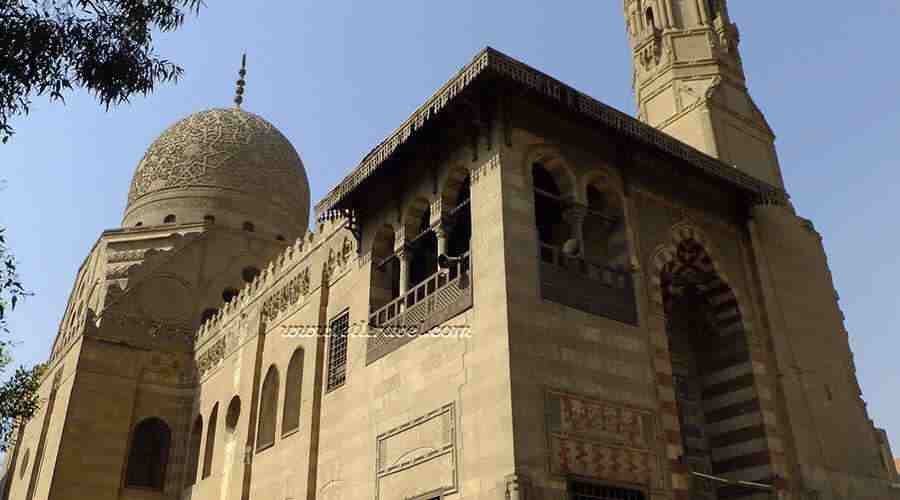
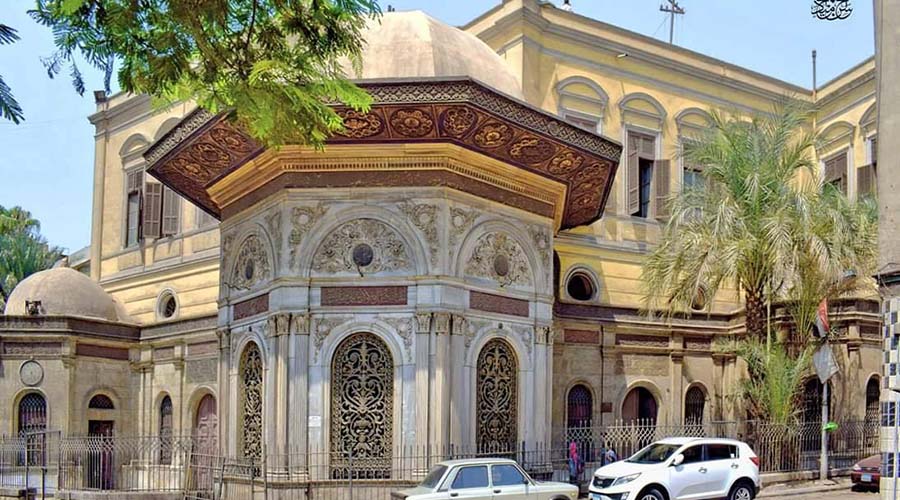
Sabil Kuttab Sultan Qaitbay is freestanding and elegant. In fact, it situated on Saliba street. Moreover, it is between Amir Shaykhu complex and the square below Cairo Citadel. Sultan Qaitbay ruled Egypt for some 29 years. He known as a patron of art and prolific builder. Of his many other structures, the best known is his mausoleum at the “City of the Dead”. It depicted on the one pound Egyptian note. His military edifices that crown the harbor in Alexandria. Sabil Kuttab Sultan Qaitbay is the first example of a freestanding version of this type of institution. Moreover, it usually incorporated into a corner of a mosque or madrasa (Islamic school).

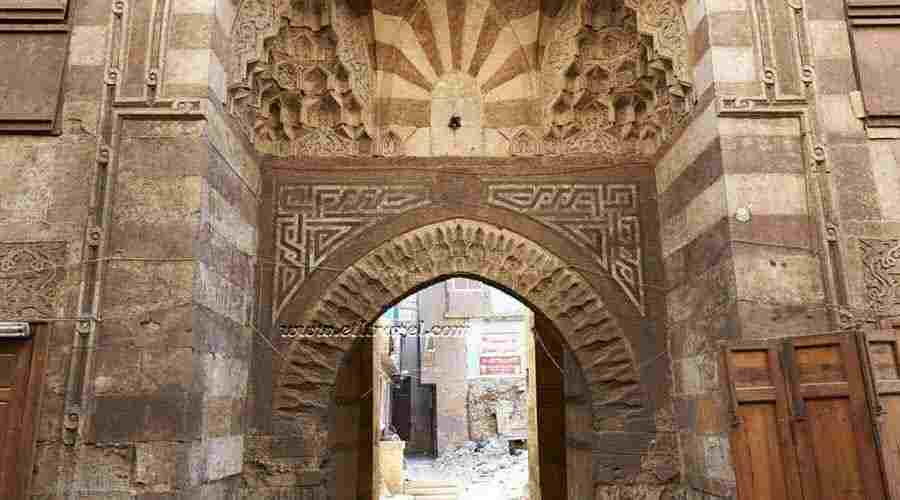
In fact, this type of independent structure became a favorite type of urban endowed building. It was during Othman Period. Two mercies most commended by the Islamic faith. It is that of water to the thirsty and instruction to the ignorant. The building offers indeed a good example of the trend in the later Mamluk period. Moreover, it applies a variety of rich decoration to the exterior of buildings. Sabil Kuttab Sultan Qaitbay built by Sultan Qaitbay in 1479. The upper structure is A kuttab, or elementary school. It has a trilobed portal on its western facade and large iron-grilled windows. Furthermore, below the facades of the Sabil, all decorated with poly-chrome marble. It inlays and carved stone in a style that approximates used in the later mosque of Qijmas al-Ishaqi.

Further details about Sabil Kuttab Sultan Qaitbay:

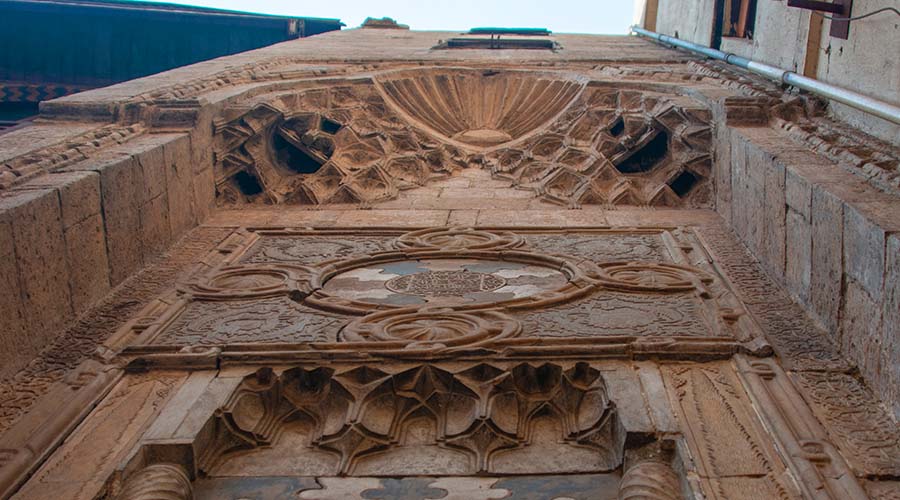
The ablaq courses of red, white and black renewed on the groin-vaulted trilobed. Its inlaid pattern and carved detail became more visible. It thus restored to its original glamour. Moreover, to either side of the portal vault carved medallions. It is with the name and epithet of Sultan Al Ashraf Abul Nassr Qaitbay. Today, this entrance of the building is no longer in use. The interior of Sabil Kuttab Sultan Qaitbay now accessed through a plain door in the back of the building. The lintels of the building joggled in the tradition of the Bahri Mamluk period. They inlaid with blue and white marble. They forms a variety of intricate arabesque patterns on the facade.

Above each window is two such decorative slabs. One is over the other. Both surmounted by medallions inlaid with arabesques in the same style. They framed by carved moldings. There are also bits of red stone and ceramic. In fact, they enhance the effect of stone and marble interaction. It is worthwhile to take a few minutes at Sabil Kuttab Sultan Qaitbay to examine the roundels, lintels and joggles. It is also for the corner columns of the facades. The marble veneer and carving are fine. Today, the building neither used nor generally open to the public. In fact, its main attraction at any rate is its exterior.

Nearby attractions Information, tours and Online Booking

More of Islamic Egypt

More of Egypt attractions

MORE
Sabil Umm Abbas Cairo

Sabil Umm Abbas Cairo

  • Sabil Umm Abbas Cairo
  • Sabil Umm Abbas Cairo
  • Sabil Umm Abbas Cairo
  • Sabil Umm Abbas Cairo
  • Sabil Umm Abbas Cairo
  • Sabil Umm Abbas Cairo
  • Sabil Umm Abbas Cairo

Sabil Umm Abbas Cairo Egypt tours, prices, booking, reviews

Sabil Umm Abbas Cairo built by the grand-daughter of Abbas I. Abbas I ruled Egypt from 1848 to 1854. In fact, Sabil Umm Abbas located in quite a remarkable spot off Saliba Street in Cairo. Moreover, it is at the corner of the side alley Al Siufiya. The same alley lies the Palace of Amir Taz. In fact, Sabil is an Arabic word means fountain. It provides the walker in the street with the fresh water. One who builds Sabil, aims to get closer to God according to Islam teachings. Saliba Street reached from Cairo Citadel square. Moreover, it also called Mohammad Ali Square where Sultan Hassan Mosque and Al Rifai Mosque stand. This street recommended for a day walk. It is indeed rich with a flow of interesting monuments. Many of them date back to the Mamluk period.

Sabil Umm Abbas built in 1867. It was upon the order of the Turkish Princess Bambah Qadin, mother of Khedive Abbas II. She known to be a beautiful, kind and distinguished lady. Moreover, she also called Umm al-Mohsenin, which means mother of charity. It was because she gave away so much of her considerable fortune. Sabils were common structures which found in many parts of Islamic Cairo. They date back to Mamluk and Ottoman Periods. In fact, they are small buildings. Moreover, they decorated with elaborate marble facades and bronze window grills. The purpose of the building was of great religious significance during the Islamic periods. It was a way of providing free water for all to drink. In fact, it something regarded in the Quraan.

Further details about Sabil Umm Abbas Cairo:

Quraan is the holy book of Muslims. Quraan refers to the value and importance of water in paradise. Cairo’s first Sabil attributed to Sultan Al Nasir Mohammad. In fact, it built in 1340 as a memorial to his famous father and it’s ruins still remain today. The second Sabil built in Cairo is that of Amir Shaykhoun. It dates back to 1344. Moreover, it located against a rocky cliff on what was once a royal route. It is at the foot of the Mountain Citadel. The purpose of its construction was to quench the thirst of desert travelers. It was also to water people passing between Cairo and the eastern City of the Dead. Another important section of Sabils was a drinking trough for animals.

Sabil buildings were almost a fashion in Cairo. For long periods of time, sultans, princes and rich merchants gifted the city with many of them. They built on busy street corners and whenever possible on the northeast side of a building. It was to provide greatest shade and coolness. It then also became a trend to construct a second story above the Sabil used as a kuttab. Kuttab is a small religious school. It is where the poor could still taught reading and writing Quraan. Umm Abbas spent too much on this little structure. She turned it into an distinguished building. Sabil Umm Abbas Cairo is rounded. It shows much influence of Turkish imperial fountains. It is with its historic inscriptions, bronze window grills and carved wooden hoods.

More details about Sabil Umm Abbas Cairo:

The building facade shows beautiful gilded Ottoman inscriptions. They set above each window grill and circulating around the whole facade. They are on blue and red backgrounds and provide color accents for the white marble faces. The facade also decorated with flowing lines and growing. They are forms of leafy spray and blossomed flowers. Sabil Umm Abbas Cairo held its supply of fresh water in a cool huge stone cistern underground. Once it rises to the surface. Moreover, the water flows out from a small arched marble niche high in the interior wall. It then flows over a beautiful sloping marble slab. It inlay with dazzling mosaic patterns and pours into side water basins. Many had quite a complex and fascinating underground flowing system.

Some Sabils were open only at certain hours. Others remained open day and night. It is except during the fasting hours of Ramadan, when the entire city’s Sabils closed. Sabils all run by a manager or a keeper who makes sure it functions well. He also keeps it clean. Sabil Umm Abbas built as semicircular pavilions. Its decoration was more of an Italian rococo style. The entrance of the building leads to the fountain chamber. It also leads to the staircase of the upper floor. In fact, the building recently restored. Today, the upper floor rooms occupied by a community service organization. The best view of the building is from the western end of the street. In fact, it is the direction of the Citadel.

Nearby attractions Information, tours and Online Booking

More of Islamic Egypt

More of Egypt attractions
MORE
Roda Island Nilometer Cairo

Roda Island Nilometer Cairo

  • Roda Island Nilometer Cairo
  • Roda Island Nilometer Cairo
  • Roda Island Nilometer Cairo
  • Roda Island Nilometer Cairo
  • Roda Island Nilometer Cairo
  • Roda Island Nilometer Cairo

Roda Island Nilometer Cairo Egypt tours, prices, booking

Roda Island Nilometer Cairo located on the southern tip of Roda Island. It faces Old Cairo. It has the properties of being one of the oldest structures in Cairo having a link to Egypt’s pharaonic past. Roda Island Nilometer Cairo built after the Arab conquest. In fact, the Nilometer and other Nilometers used to measure the flood levels of the Nile River. It is a heritage of Egypt’s distant past. Such structures doted the course of Egypt’s grand river. These types of devices continued to be useful up until the modern era when the Nile tamed by modern dams. The Nilometer used to regulate the distribution of water. In fact, it was during August and September.

It also computes the levy of taxes paid as tribute by Egypt to the the Arab Caliph. It was since the generosity of the Nile was in large part a sign of Egypt’s prosperity. There is an evidence that a Nilometer exited in this location since the Pharaonic Period. The Umayyads under Sulayman Abd El Malek had built a simple Nilometer. It was like those of the earlier period in 715 AD. In fact, it restored in 815 by Caliph Al Maamoun. Moreover, it destroyed by an high flood in 850 AD. Roda Island Nilometer Cairo built by order of the Abbasid Caliph Al Mutawakkel (847-861 AD). It was under the direction of Ahmad Al Hasib at the end of his reign in 861 AD. It devised by Abul Abbas Ahmad Ibn Kathir.

Further details about Roda Island Nilometer in Cairo:

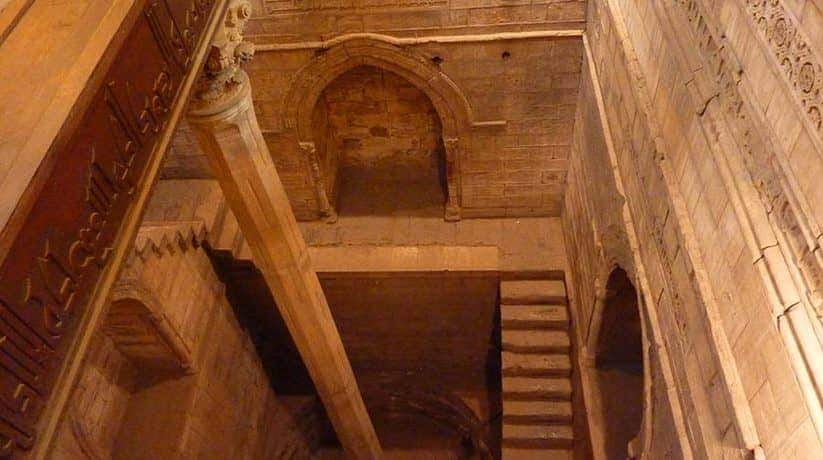
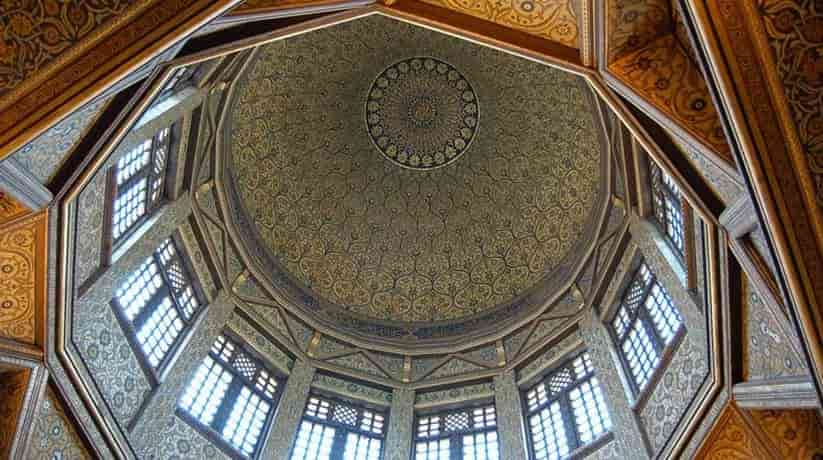
Ibn Tulun restored Roda Island Nilometer Cairo between 872 and 873 AD. It again restored in 1092 by the Fatimid Caliph, Al Mustanser. Moreover, it remains original, except for the wooden painted conical dome roof. It is a modern restoration. This cupola in the shape of today modeled from an earlier example. It built after the Nilometer bombarded by French troops. It was during their occupation of Egypt. The earlier dome destroyed by a nearby factory explosion in 1825. It refitted by using an 18th century painting. It was by the Danish traveler, Fredrik Ludvig Norden as a reference. Roda Island Nilometer is a more sophisticated instrument than the the one on Elephantine Island in the Nile at Aswan. It consists of a pit that extends well below the level of the Nile.

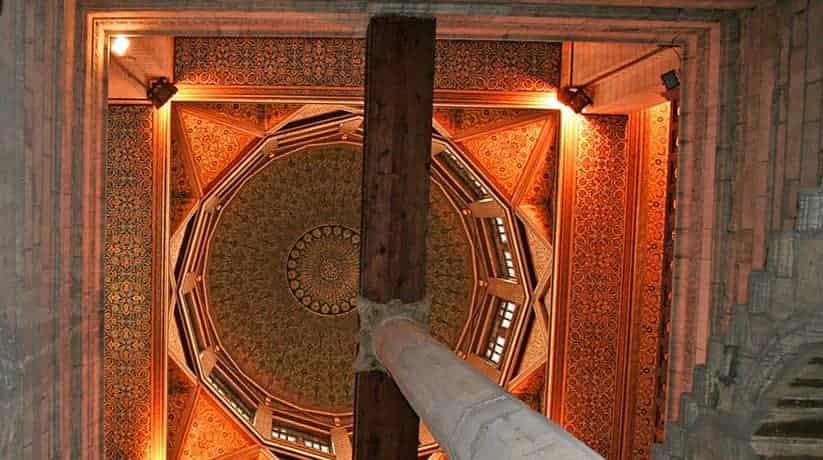
It connects with the Nile through tunnels dug on three levels on its eastern side. These tunnels now blocked off from the Nile. That is why Roda Island Nilometer Cairo no longer functions. The pit lined with stone, circular at the bottom and rectangular at the top. It accessed by a staircase on the interior walls. Its walls have four recesses with pointed arches and thin columns to either side. They adorned with two types of zigzag framing decorations carved on its stone voussoirs. These arches are the same type as those used in Gothic architecture. They proceeded the Gothic arch by some four hundred years. In the center of the pit, there is a marble, octagonal column with a Corinthian capital. It rises from its depths surmounting a millstone. At the top, there is a wooden beam spanning the Nilometer.

More details about Roda Island Nilometer in Cairo:

To measure the Nile flood, this column graded and divided into 19 cubits. A cubit is more than half a meter. Hence, it was capable of measuring floods up to about 9.2 meters. The flood which measured by Nilometer was important to the rulers of Egypt. It also was so for the whole population. An ideal flood filed the Nilometer up to the sixteenth mark and less than this could mean drought and famine. If the measurement exceed the 19 cubits, a catastrophic flood was at hand. In the days before to the expected flood, this column would anointed with saffron and musk. It was to help induce a good water level. Plain Kufic inscriptions adorn the walls of Roda Island Nilometer Cairo. They are the earliest surviving examples of architectural epigraphy in Egypt.

In fact, they taken from Quranic texts. They refer to water, vegetation and prosperity. Thus, they have a talisman meaning, but there is also secular text as well.  These inscriptions executed in white marble on a blue background. The letters themselves left in the natural stone color. The inscription recording the establishment of the Nileomter by Al Mutawakkel has removed. Creswell is a well known historian of this period. He believes that this done by Ibn Tulun. Ibn Tulun was the one who replaced it with extra verse. It was as part of a campaign to assert his independence from the foreign Caliphate. Roda Island Nilometer Cairo has a big importance in determining the prosperity of Egypt.

Further details about Roda Island Nilometer in Cairo:

It was the departure point of the greatest of Cairo’s celebrations throughout the medieval period. In fact, it was the Fath al-Khalij. Moreover, it was the festival of the Opening of the Canal. It ceased in 1899. It was when the Khalij (Khalig) filled in. Roda Island Nilometer Cairo continued to used up until the last flood in 1970. The Khalij Canal started opposite Roda Island and bordered the medieval city to the west. It irrigated its outlying gardens and fields. The Khalij canal blocked with an earth dam and cleaned before the flood. It would then opened when the water level reached the sixteenth cubit level. The caliph, later sultans and pashas would inaugurate the celebrations. They lasted for several days. The summer flood from the Nile would then fill this canal.

It was together with many ponds that would have winter beds green with vegetation. During the celebrations, decorated boats would crowed the waters. Among these, the most splendid would be that of the ruler. Those who seen this event refer to it as Cairo’s most spectacular celebration. During the hot summer months, the Khalij and the ponds remained filled with boats. Its shores lined with entertainment. Near Roda Island Nilometer Cairo was a mosque. It was for prayers during the flood celebration. There was also a palace for banquets which held by the various rulers. The grand celebration not guaranteed as an annual event. When the water failed to reach the sixteenth cubic mark, the celebrations canceled. Prayers and fasting held instead to ward off the expected drought and famine.

Nearby attractions Information, tours and Online Booking

More of Islamic Egypt

More of Egypt attractions
MORE
Sabil Kuttab Abdel Rahman Katkhuda

Sabil Kuttab Abdel Rahman Katkhuda

  • Sabil Kuttab Abdel Rahman Katkhuda
  • Sabil Kuttab Abdel Rahman Katkhuda
  • Sabil Kuttab Abdel Rahman Katkhuda
  • Sabil Kuttab Abdel Rahman Katkhuda
  • Sabil Kuttab Abdel Rahman Katkhuda
  • Sabil Kuttab Abdel Rahman Katkhuda

Sabil Kuttab Abdel Rahman Katkhuda Egypt tours, prices, booking

Sabil Kuttab Abdel Rahman Katkhuda located in Al Mu’iz Street in Cairo. It is in its second part. In fact, it starts with Al Azhar Street and ending at Bab Al Futuh at the other side. The building has a rather weird structure from outside. In fact, it located in the middle of the street dividing the street afterwards into two lanes. Moreover, the right one leads at the end to the back of Al Aqmar mosque. The other one continues till the end of the street at the Bab Al Futuh. Furthermore, the builder of the site is the Prince Abdel Rahman Katkhuda. He was the most talented architecture of his time.

His Sabil Kuttab is the best concrete evidence of his talent. It known that he restored around thirty monuments in Cairo. Moreover, he was also the leader of the Egyptian. In fact, the site built in 1744. It has two floors. The first one is the Sabil where fresh water kept for people to drink from. The second one is the Kuttab. It is where students used to attend classes studying Quran and the Islamic teachings. In fact, Sabil Kuttab Abdel Rahman Katkhuda provides the two commands of the prophet Mohamed. They are water for the thirsty and spiritual teaching. Moreover, in the back of this monument, there is a three stores building. It now used as a residential property and it is not open for public visiting.

Further details about Sabil Kuttab Abdel Rahman Katkhuda :

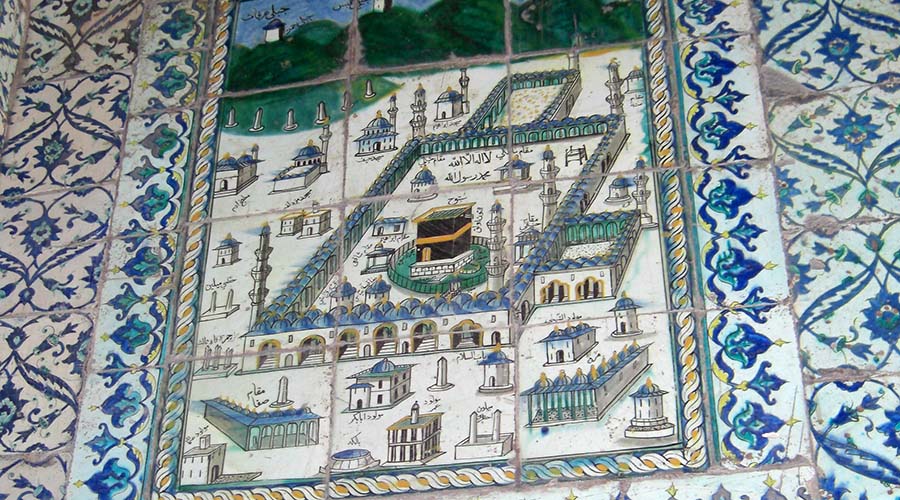
Sabil Kuttab Abdel Rahman Katkhuda has a special architecture importance. It displays the magnificence of the Mamluk art. The door to the Sabil located in the Southern Eastern part of the building. In fact, the Sabil room is rectangular shape. Moreover, the room features three large decorated windows. Under each window there is a large basin where fresh water kept. The walls of the Sabil room decorated with unique blue ceramic. It is with some Islamic inscriptions. There is also a drawing on the Eastern wall of the room of Mecca. Mecca is the place where Muslims go every year for pilgrimage. The ceiling of the Sabil is the most attractive among its architecture. It designed with colorful brown and blue paintings. One can stare at the ceiling of this room until his neck aches.

The Kuttab is a pleasant room with five marble columns. They are holding the startling carved wooden roof. The walls room for this covered with Mashrabeya windows. There is also a wooden cupboard in this room which fine carved. In fact, it is where they used to keep the holy book of Quran. The scenery looking out of the Kuttab is impressive. One can see the dome and minaret of the Barquq complex. One can also see Sultan Qalawun complex and Beshtak Palace. Sabil Kuttab Abdel Rahman Katkhuda well ornamented from outside with colorful marble outlines. They set above the windows of the building in a form of a jigsaw.

More details about Sabil Kuttab Abdel Rahman Katkhuda:

Furthermore, the three windows of the building looks glorious from outside. They have huge size and distinctive design. Moreover, the second floor looks appealing from outside. The dark brown color of its Mashrabeya windows decorated. The building is one of many monuments which spread in Khan El Khalili area.

Nearby attractions Information, tours and Online Booking

More of Islamic Egypt

More of Egypt attractions
MORE
Qanibay Amir Akhur Complex

Qanibay Amir Akhur Complex

  • Qanibay Amir Akhur Complex
  • Qanibay Amir Akhur Complex
  • Qanibay Amir Akhur Complex
  • Qanibay Amir Akhur Complex

Qanibay Amir Akhur Complex Cairo Egypt tours, prices, booking

Qanibay Amir Akhur complex Cairo belongs to Qanibay Al Sayfi. In fact, he was grand master of the horses during the reign of Sultan Al Ghuri. He also known as Al-Rammah because he was famous for his horsemanship and using spears. Al Rammah is an Arabic word means the lancer. Qanibay Amir Akhur complex sometimes known as madrasa of Qanibay Qura Al Rammah. In fact, it features a madrasa, mosque and a Sabil-Kuttab. The Mamluk era varied creative features to the already diverse and expressive Islamic Architecture. Moreover, Mamluk early buildings followed the traditional plans and designs. The Islamic architectural reached its most significant achievements during the Mamluk time. The complex built in 1503 AD in Cairo. It built on a hill overlooking Sultan Hassan mosque and Al Rifai mosque.

Qanibay Amir Akhur complex indeed has a unique location. It lies in Salah El Din Square opposite Bab Al Azab. Baba Ala Azab is one of the city gates. This gate lies next to the Horse market. Moreover, it leads to the Sultans horse stables. It located in the citadel grounds just off the square. The important complexes usually built on main streets. Designers often faced with most irregular plots of land. Creative architectural solutions required to do a successful building. One of these cases seen in the Qanibay madrasa. It built on stepped rocky ground. This conflict overcame by erecting the complex on storerooms and the madrasa basement. That is why the various parts of the facade would be at the same height.

Further details about Qanibay Amir Akhur complex Cairo Egypt:

It took full advantage of the view and at the same time exposing the mosque to the crowds below. For this reason, the building considered a suspended mosque. The mosque and madrasa occupy the upper floor while the Sabil is on the left of the entrance. It is above which located the Kuttab. Moreover, the mosque and madrasa reached by an exterior staircase. It is on the main south eastern facade. And then through a trilobed vaulted portal. Qanibay Amir Akhur complex has a long main facade overlooking the square. It consists of the same elements used in Mamluk architecture . They are such as rectangular niches that differ according to the function behind them.

Furthermore, the rectangular niche of the entrance has two sitting decks on the sides. It topped with calligraphic bands. It composed of a trilobed arch crowned by another taking the shape of trefoil leaves. As for the rectangular niche of the qibla iwan, it has two windows in each. The Sabil facade consists of a large rectangular window. It surmounted by four small wooden window screens. Qanibay Amir Akhur complex has a bent entrance leading to a vestibule. It isolating it from the exterior and working as a distribution space to all the elements of the complex. The vestibule has a beautiful wooden ceiling supported on stalactite frieze with colored ornaments.

Further details about Amir Akhur complex Cairo Egypt:

In fact, the madrasa follows the traditional Qaa plan. Moreover, it marked for the extravagance and richness of its interior golden decorations. It composed of an open central Durqaa (hall). Furthermore, it surrounded by two perpendicular Iwans and another two side ones. Facing the Qibla Iwan, is a stone Mihrab. It worked with various ornaments, a wooden Minbar and two bands of Quranic inscriptions. The Qibla Iwan roofed by a shallow vault on pendentives. The Iwan on the opposite side covered by a cross vault. Limestone used for building external and inner walls of the madrasa. The mausoleum occupies the corner of the adjacent building to the Qibla Iwan. It can reached from the Durqaa through the southeast door. The internal walls cl-added with marble and it has a Mihrab facing it with two side wall cupboards.

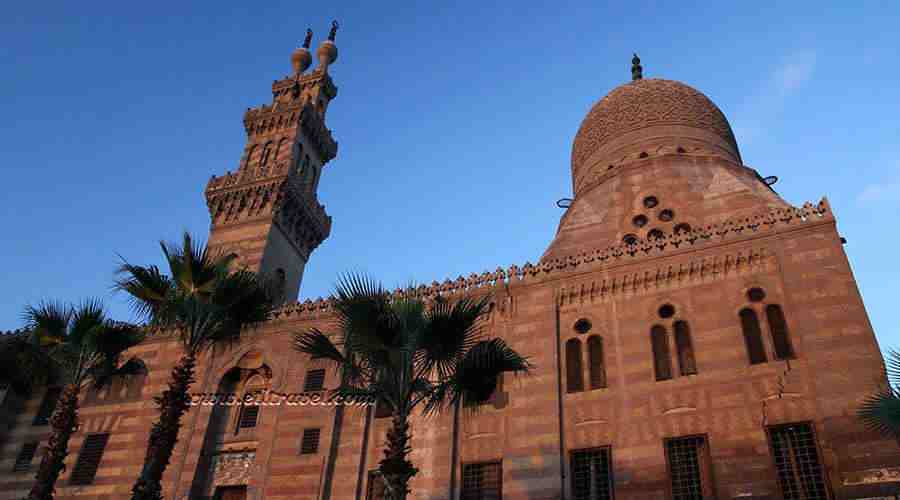
The mausoleum dome rests on four pendentives decorated. It is with seven rows of Muqarnas (stalactites). It is also with a drum containing sixteen arched windows topped by the calligraphic text. This dome has amazing arabesque carving patterns and floral forms seen from the outside. The minaret, located to the left of the entrance as a landmark. It consists of two pedestals. They are one on top of the other separated by rows of stone Muqarnas which carry the balconies. This minaret is a style that appeared in the end of the Mamluk era. It is the oldest of its kind. It is a twin-topped minaret rather than the usual one head. The double type minarets also used afterwards in Al Ghouri Mosque and Al Azhar Mosque.

More details about Qanibay Amir Akhur complex in Cairo Egypt:

Qanibay Amir Akhur complex minaret has a square lower and middle section. The upper section composed of two rectangular bodies with an arched recess on each side. Both surmounted by a Mamluk dome ending with a post. They crowned by a spherical bulb form domes and crescent. Prince Qanibay Qura Al Rammah known to be fond of architecture and construction. He also built a madrasa in Al Naseriyya. Prince Qanibay died in 1515 A.D. He buried in the madrasa at the complex. In fact, the complex first restored in 1895. And then in 1939 by the French Commission for the conservation of Arab Monuments.

Nearby attractions Information, tours and Online Booking

More of Islamic Egypt

More of Egypt attractions

MORE
Qaitbay Fort Alexandria

Qaitbay Fort Alexandria

  • Qaitbay Fort Alexandria
  • Qaitbay Fort Alexandria
  • Qaitbay Fort Alexandria
  • Qaitbay Fort Alexandria
  • Qaitbay Fort Alexandria
  • Qaitbay Fort Alexandria

Qaitbay Fort Alexandria Egypt tours, prices, booking, reviews

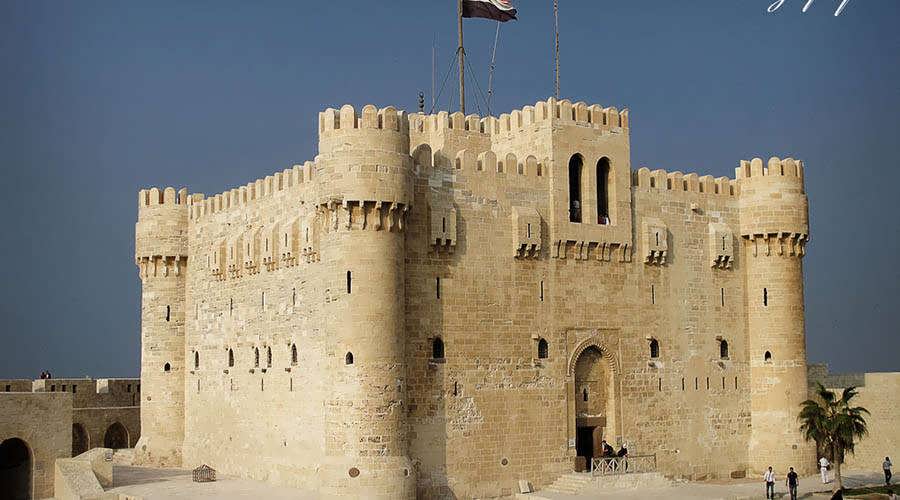
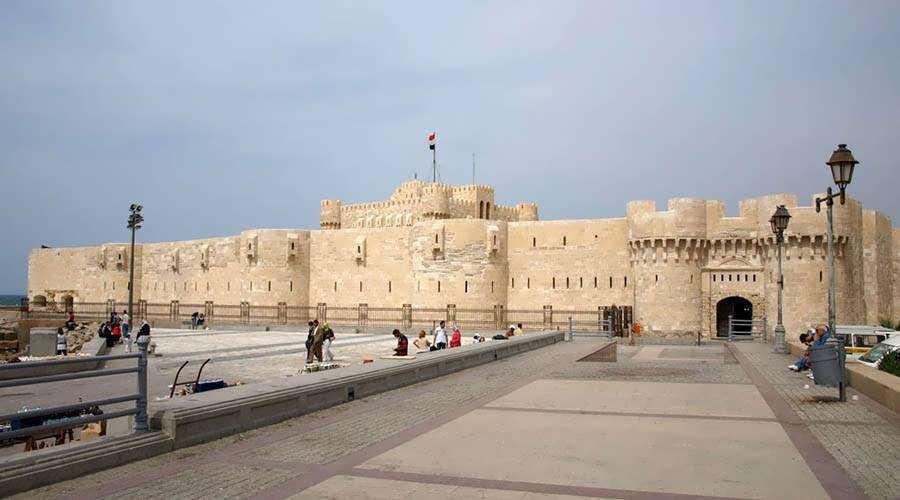
Qaitbay Fort Alexandria Egypt indeed is one of the most important defensive strongholds. It is not only in Egypt, but also along the Mediterranean Sea coast. Moreover, it formulated an important part of the fortification system of Alexandria. It was in the 15th century AC. Qaitbay Fort Alexandria situated at the entrance of the eastern harbor on the eastern point of the Pharos Island. It erected on the exact site of the famous Lighthouse of Alexandria. Alexandria Lighthouse was one of the Seven Wonders of the Ancient World. The lighthouse continued to function until the time of the Arab conquest. Several disasters occurred and the shape of the lighthouse changed to some extent. But it still continued to function.

Restoration began in the period of Ahmed Ibn Tulun in 880 H . During the 11th century an earthquake occurred, causing damage to the octagonal part. The bottom survived, but it could only serve as a watchtower. A small Mosque built on the top. In the 14th century there was a destructive earthquake. The whole building completely destroyed. Sultan Al Ashraf Qaitbay fortified the place as part of his coastal defensive edifices. It was against the Turks, who were threatening Egypt in 1480 AC. He built the castle and placed a mosque inside it. Qaitbay Fort Alexandria functioned during most of the Mameluke period, Ottoman period and Modern period. After the British bombardment of the city of Alexandria in 1883, it kept out of the spotlight.

Further details about Qaitbay Fort Alexandria Egypt:

Qaitbay Fort Alexandria became neglected until the 20th century. It restored several times by the Egyptian Supreme Counsel of Antiquities. The founder of the fort is Sultan Al-Ashraf Abou Anasr Saif El Din Qaitbay. He reigned Egypt from 1468-1496 AC. He born about 1423 AC. Moreover,he was a Mamluke, less than 20 years When he came to Egypt. He bought by Sultan Al Ashraf Barsbay. He remained among his attendants until Al Ashraf Barsbay died. Then the Sultan Djaqmaq bought Qaitbay and later gave him his freedom. Qaitbay then went on to occupy various posts. He became the Chief of the Army during the rule of the Sultan Tamar bugha.

When the Sultan dethroned, Qaitbay appointed as a Sultan. He titled Almalek Al-Ashraf on Monday 26th Ragab, 872 H. (1468 AC). He was one of the most important and prominent Mameluke Sultans, ruling for about 29 years. In fact, he was a brave king. He tried to start a new era with the Ottomans by exchanging embassies and gifts. He was fond of travel. In fact, he made many prominent journeys. Qaitbay was so fond of art and architecture. He created an important post among the administrative system of the state. It was the Edifices Mason (Shady Al-Ama’er). He built many beneficial constructions in Mecca, Medina and Jerusalem. In Egypt, there are about 70 renovated edifices. All of them attributed to him.

More details about Qaitbay Fort Alexandria Egypt:

Among them are Mosques, Madrasas, Agencies and Fountain houses (Sabils). They also include Kuttabs, houses and military edifices. The military edifices are like the Citadels in Alexandria and Rosetta. Nowadays Rosetta is the city of Rashid). They built to protect the north of Egypt, against the Ottomans. Ottoman power was increasing in the Mediterranean. Qagmas Al-Eshaqy, The Edifices Mason, was the architect of the Qaitbay Fort Alexandria. Before his arrival in Egypt he was a Mameluke of Djakmaq in Syria. During the rule of Qaitbay he became the edifices mason, and then the Viceroy of Alexandria. He appointed governor of Syria (Damascus).

In fact, he built a mosque outside the gate of Rashid (Bab Rashid). He also did a Cenotaph and a Khan. He also renovated the mosque of El Sawary outside the gate of Sadrah (Bab Sadrah). Qagmas was intelligent and modest. He also was the overseer of many constructions during the time of Qaitbay. In 1477 AC, Sultan Qaitbay visited the site of the old lighthouse in Alexandria. He ordered a fortress to built on its foundations. The construction lasted about 2 years. It said that Qaitbay spent more than a hundred thousand Dinars for the work on Qaitbay Fort Alexandria. Ibn Ayas mentioned that building of this fort started in Rabi Alawal 882 H.

Further details about Qaitbay Fort Alexandria Egypt:

He stated Sultan Qaitbay traveled to Alexandria, accompanied with some other Mameluke princes. It was to visit the site of the old lighthouse. During this visit he ordered the building of Qaitbay Fort Alexandria. In Shaban 884 H, the Sultan Qaitbay traveled again to Alexandria. It was when the construction finished. He provided the fort with a brave legion of soldiers and various weapons. He also dedicated several waqfs from which he financed the construction works. It was besides the salaries of the soldiers. Qaitbay Fort well maintained by all the rulers who came after Qaitbay. It was due to its strategic location. Sultan Qansoh El Ghoury gave the fort special attention. He visited it several times and increased the strength of the garrison.

He provided it with various weapons and equipment. It included a large prison made for the princes and the state-men. These whom Sultan kept away from his favor for some reason. In the episodes of the year 920 H, the Sultan El Ghoury traveled to Alexandria with other princes. They watched some man-oeuvres and military training on the defensive weapons in the fort. He issued a military decree to forbid weapons from taking out of Qaitbay Fort Alexandria. It was when he felt the approach of the Ottoman threat. Death penalty would be the punishment to those who try to steal anything from Qaitbay Fort. He ordered the inscription of this decree on a marble slate fixed to the door leading the court.

More details about Qaitbay Fort Alexandria Egypt:

It says: ” Bism Ellah El-Rahman El-Rahim”. A decree by the order of our master, the noble rank, King Al Ashraf Abou El Naser Qansoh El Ghoury. May God eternalize his reign. No body should take Makahel weapon, gun powder or tools. No body should anything from the noble tower in Alexandria. Any one of the tower party breaks this (decree) will hanged at the tower gate. And will deserve the curse of God. Whether he is Mameluke, Slaves or Zarad Kashia”. Dated Rabei Alawal 907 H.

After the Ottoman Turks had conquered Egypt, they cared for this unique Qaitbay Fort. They used it for shelter, as they had done with the Citadel of Saladin in Cairo. Moreover, they also did for the Citadels of Damieta, Rosetta, Al Borollos and El Arish. They kept it in good condition and stationed it with infantry and artillery. They also did with company of drummers. and trumpeters, masons and carpenters. When Ottoman military became weak, the Qaitbay Fort began to lose its military importance. In 1798 AC, during the French expedition of Egypt, it fell into the hands of the French troops. It was because of the weakness of the Qaitbay Fort garrison and the power of the French modern weapons. Inside Qaitbay Fort Alexandria, the French found some crusader weapons.

Further details about Qaitbay Fort Alexandria Egypt:

They dated back to the campaign of Louis IX. Maybe it was a spoil after the battle and capture of El-Mansoura!. When Muhammad Ali became the ruler of Egypt in 1805, he renovated the old Citadel. He restored and repaired its outer ramparts. He provided the stronghold with the most modern weapons of the period. They were particularly the littoral cannons. In fact, the reign of Mohamed Ali indeed was another golden era for the fort. Qaitbay Fort Alexandria retained the interest of Mohammed Ali’s successors until the year 1882. In this year Orabi revolution took place.

British fleet bombarded Alexandria on 11 July 1882. They damaged a large part of Alexandria, especially in the area of Qaitbay Fort. This attack cracked the fortress, causing great damage. The north and western facades damaged as a result of cannon explosions. The western facade completely destroyed and left large gaps in it. The fort then remained neglected until 1904. In this year, the Ministry of Defense restored the Upper floors. King Farouk wanted to turn Qaitbay Fort into a royal Rest house so he ordered a rapid renovation on it.

Nearby attractions Information, tours and Online Booking

More of Islamic Egypt

More of Egypt attractions
MORE
error: Copyright © www.etltravel.com !