Activities in Coptic Egypt

Things to Do

Sacred Heart Church Alexandria

Sacred Heart Church Alexandria

  • Sacred Heart Church Alexandria
  • Sacred Heart Church Alexandria
  • Sacred Heart Church Alexandria
  • Sacred Heart Church Alexandria

Sacred Heart Church Alexandria Egypt tours, prices, booking

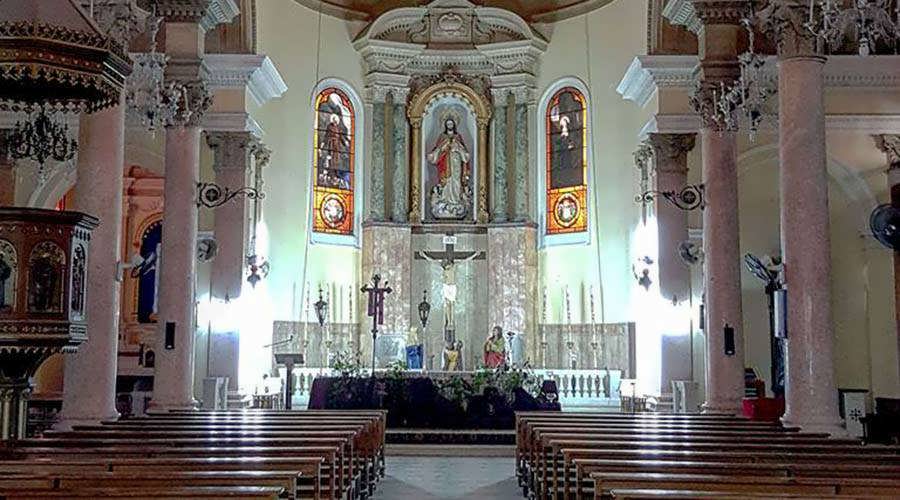
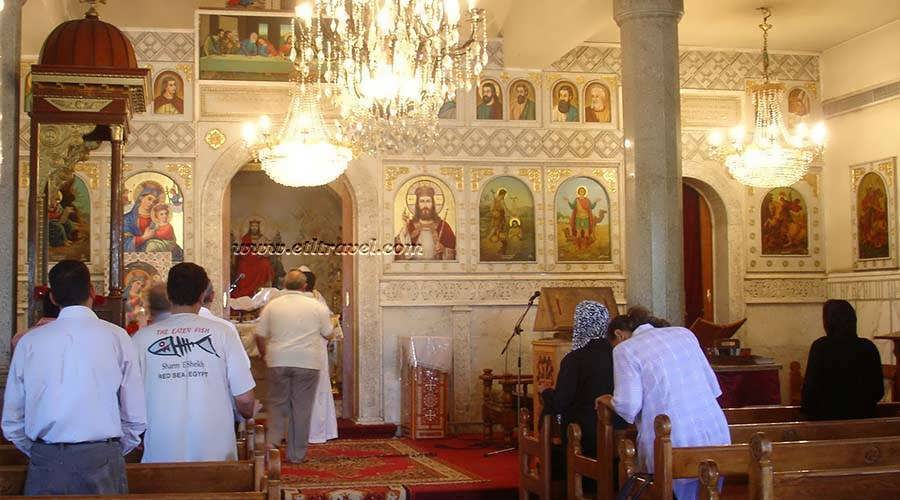
Sacred Heart Church Alexandria built in 1924 in Alexandria city, Egypt. In fact, the church is a Catholic church. It visited by the Latin Catholics of Alexandria. In fact, St. Francis served as the patron saint. He was also an Italian monk and born in 1181. Furthermore, he lent his name to the many Franciscan schools found around the world. In fact, the church indeed is worthy to visit for its breathtaking religious art. Moreover, you will see icons, murals, figurines and most exquisite stained glass artwork.

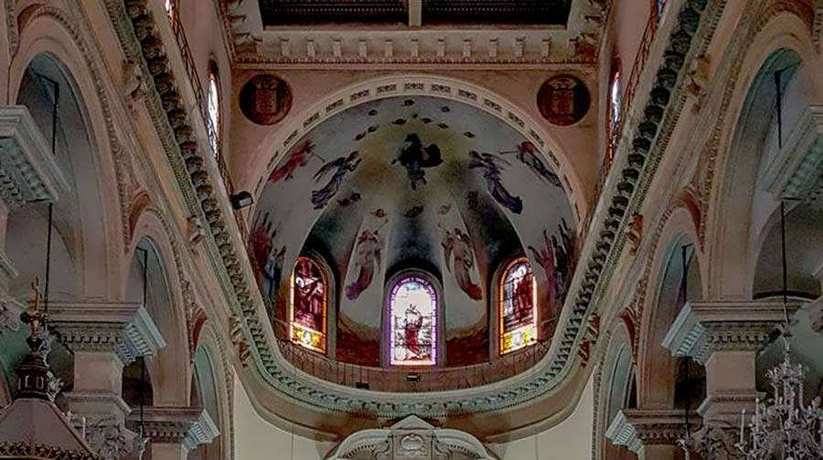
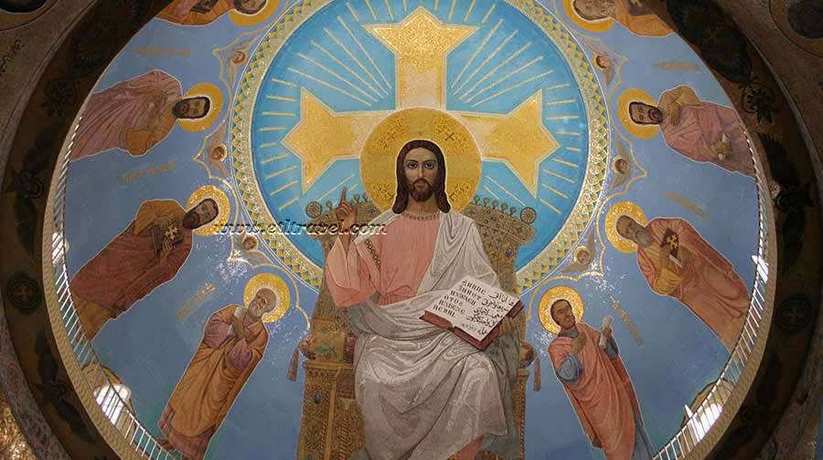
When you enter the Sacred Heart Church Alexandria, you will find images from the life of the Christ. They portrayed on one side of the church’s walls. It facing images portraying the life of St. Francis on the opposite wall. St. Clara who founded the Franciscan Order for Girls also features in the glass icons of the church. There are several altars and a beautiful pulpit. In fact, they engraved with events from the life of St. Francis. Furthermore, there are swimming angels painting and a stunning painting of Jesus Christ. They connect the walls to the beautiful ceiling.  The ceiling holds more even more artistic delights.

Further details about the Sacred Heart Church Alexandria:

In fact, the mosaics at the Church designed by Gabriel Pippet and carried out by Maurice Josey . They begun in 1921 and took 12 years to complete. Eight and a half tons of quarter inch glass imported from Venice for the purpose. Pippet traveled to Ravenna and Rome to study the mosaics before completing the designs. Walter Loveridge Hodgkinson was a main benefactor of the church. The architect was Frank Barry Peacock. In fact, the church is one of the most interesting churches all over Egypt.

More of Coptic Egypt

More of Egypt attractions
MORE
Saint Mina Monastery Egypt

Saint Mina Monastery Egypt

  • Saint Mina Monastery Egypt
  • Saint Mina Monastery Egypt
  • Saint Mina Monastery Egypt
  • Saint Mina Monastery Egypt
  • Saint Mina Monastery Egypt
  • Saint Mina Monastery Egypt

Saint Mina Monastery Egypt tours, prices, booking, reviews

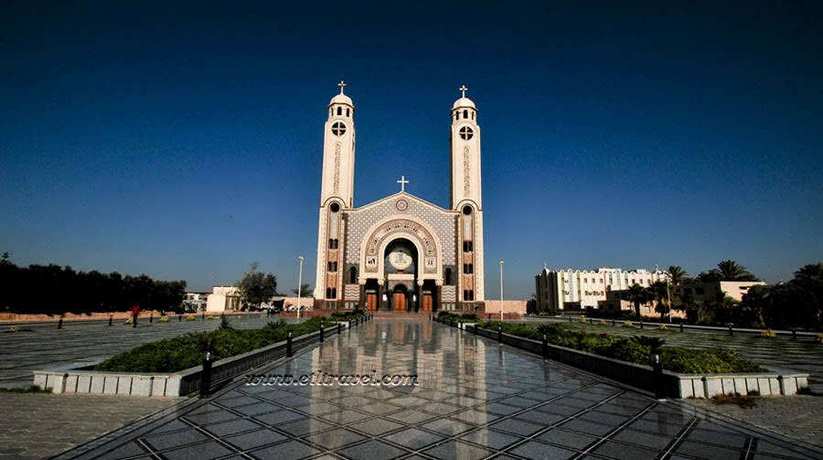
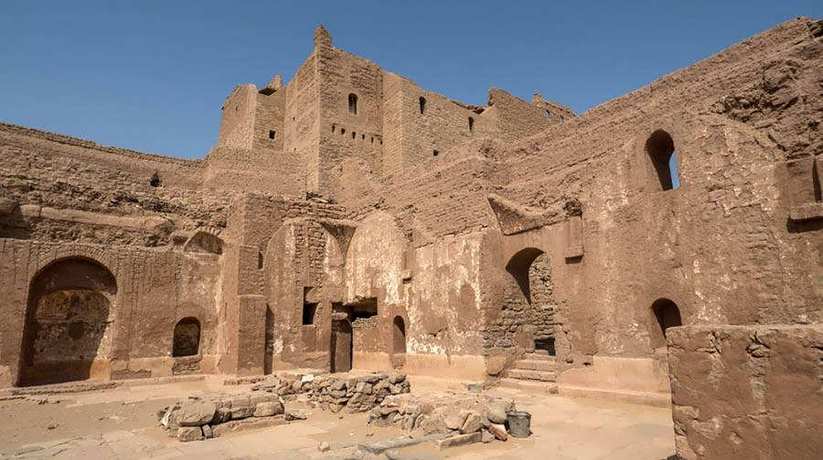
Saint Mina Monastery Egypt located approximately 50 km southwest of Alexandria city, Egypt. In fact, the monastery nestled in the small village-town of Abu Mina. That is why, sometimes the monastery called Abu Mina Monastery. St. Mina believed to have fallen as a martyr in the early 4th century. It was when the Roman Empire was persecuting Christians. Moreover, a modern monastery built on the location of an ancient church. It is where the Saint’s remains believed to be buried. A German archaeological team work at Abu Mina since 1969.

Buses depart regularly from Alexandria’s new station (Baheej Station) to Abu Mina town. After reaching Abu Mina town, you can catch a micro-bus to get to Saint Mina Monastery Egypt. The great martyr Saint Mina was an Egyptian young man who came from a large family, with rulers’ status. He left the army to live in the desert and be filled with the blessings of the heavens. Saint Mina then publicly declared his faith in Christ. Furthermore, Saint Mina martyred for Christ’s beloved name. It was after suffering great tribulations.

Further details about Saint Mina Monastery Egypt:

God declared the greatness of Saint Mina through the blessings from his relics and countless miracles at Mariut, Egypt. Moreover, several churches built in his name, in that area. The largest of which was the great Cathedral (Basilica) built with seven altars by the Roman emperor Arcadius. He built it with marble and precious stones. Along with the other churches in the area, it attracted many pilgrims. The pilgrims who visited the site to receive the blessings of Saint Mina. In fact, the area turned into a city with homes, mansions, factories, markets and much more. This shows us the saint’s rank among Church saints. Time passed and the area along with its churches faced tribulations, then destruction.

Saint Mina’s relics moved from city to city in threat of being lost. God preserved this saint’s relics from many dangers. Moreover, the relics thrown into fire and did not burn, but instead shone a bright light. In fact, these relics lost and moved to another place many times. Every time, God would show that they are the relics of his beloved soldier, the martyr St. Mina. There is no doubt that it was God who guided the late Pope Kyrillos (Cyril) VI to revive the glorious memory of this magnificent saint. It is besides to bring back life to that land (Mariut). It is which St. Mina once filled with life and miracles. What Pope Cyril did was a noble accomplishment. In fact, it was itself a miracle more than anything. It was that God used to keep this saint’s memory alive.

More details about Saint Mina Monastery Egypt:

St. Mina’s memory brought back in an extraordinary way. In fact, he left a flame burning in many people’s hearts, until this day. The Pope’s relationship with Saint Mina goes back to the years of his childhood. When he was ordained a monk,  Anba Youaness ordained him with the name Mina. In fact, it was God’s will that. It was in the Baramous monastery. He also became closer to Saint Mina by using him as an example and praying for his intercession. When he forced to leave the windmill, he built a church in the saint’s name in Old Cairo. In fact, it was not enough to quench his fire of love for this saint.

He kept sending requests for permission from the agency of Archaeology. It was to live in the lower room of Saint Mina’s ancient church in Mariut. He waited for an answer prolonged. Furthermore, he remained persistent until he received the approval. After the altar lot announced him to be the new Patriarch of the See of St. Mark. This was a sign from heaven that the Pope understood. He would not live in a room, which he remained persistent in getting. Instead he would liven up the whole area after becoming Pope of Alexandria. Visitors to Saint Mina Monastery Egypt region used to look at it. They look with sad heart, for the destruction that came about it.

Further details about Saint Mina Monastery Egypt:

However, today, they can look at it from a joyful angle for the glorious works that Pope Cyril accomplished. It is in an area that deserted for centuries. He covered it with his faith and gave it his building spirit. This gave the land the heart beat of life and raised the voice of praises within it once again. Its old owner, the Martyr Saint Mina, returned to his land, dressing it once more with the attire of peace. The Pope never discouraged, from work, by the hardship of the way. His old age, the danger of the place, the difficulty of bringing water or building tools to it. And thus many miracles manifested on his hands. The Pope sent to the agency of “desert development” a request. It was to purchase 50 acres next to the ancient city in Mariut.

And the, he also sent another request for 50 more. In 1959, on the first feast for Saint Mina after the Pope’s ordination a large festival tent put up. The Pope sent his secretary to pray evening and raise of incense. He also sent him to ensure that everything was ready for the feast’s Holy Liturgy in the morning. In the morning, his holiness prayed the hymns and the Holy Liturgy. Those who received Holy Communion that morning were about 500 men and women. He then went to the land, which he had bought from the agency of desert development. He prayed, blessed it and placed the cornerstone of Saint Mina Monastery Egypt. During the feast, the Pope asked by some of those who were present. It was to sit in the large chair prepared for him. But he refused saying: “This chair is for Saint Mina”.

More details about Abu Mina Monastery:

The two Alexandrian contractors, Sharobeem and Farag Akladious, built a small church and two rooms for his holiness. They built also another for making the holy host. The Pope and those accompanying him spent months in these two rooms with no safety nor rest. It was just to ensure that the work completed. The Agency of Archaeology agreed to transport of bricks. The brickes had no archaeological value to use in the building of Saint Mina Monastery Egypt. The students used tractors to transport these stones.  It took two full years. A brick wall built around about fifteen acres from Saint Mina Monastery Egypt’s land. Some monk cells built along with another church which blessed in a large celebration attended by thousands of people.

Pope Kyrillos’ yearning for Saint Mina’s ancient church pushed him to ride a donkey to the ancient church. It was to receive the blessing of Saint Mina’s land. The ancient church or Basilica of Abu Mina with its seven altars was taking Pope Cyril’s mind. So he planned to build something similar to liven up the memory of his beloved hero.  The hero who was once visited in this same land by people. The people from all corners of the Earth and all walks of life seeking his prayers and intercession. The area occupied by the new Saint Mina Cathedral in Mariut is more than that of the old St. Mark Cathedral in Cairo. Before his death, Pope Cyril left 55,000 Egyptian pounds to complete this cathedral. It was to suit the glory of that heroic martyr, Saint Mina.

Nearby attractions Information, tours and Online Booking

More of Coptic Egypt

More of Egypt attractions
MORE
Saint Simeon Monastery Aswan

Saint Simeon Monastery Aswan

  • Saint Simeon Monastery Aswan
  • Saint Simeon Monastery Aswan
  • Saint Simeon Monastery Aswan
  • Saint Simeon Monastery Aswan
  • Saint Simeon Monastery Aswan
  • Saint Simeon Monastery Aswan

Saint Simeon Monastery Aswan Egypt tours, prices, booking

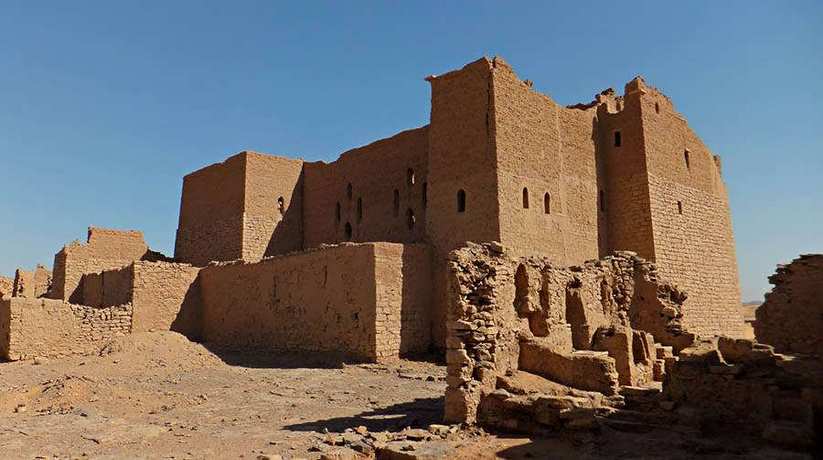
Saint Simeon Monastery Aswan known as Deir Anba Samaan. It also known as Anba Hatre Monastery. In fact, the tour to Saint Simeon Monastery also includes camel ride for about 15 minutes. The camel ride will be through ruins of the monastery. In fact, the monastery located some one thousand two hundred meters from the west bank. It is opposite to the southern tip of Elephantine Island. The monastery given the name St. Simeon by archaeologists and travelers. The earlier Arabic and Coptic sources called it Anba Hatre or Hidra. It was after an anchorite who consecrated a bishop of Syene which is now Aswan. Anba Hatre married at the age of eighteen. According to the traditions, after the wedding, he encountered a funeral procession.

In fact, the funeral inspired him to preserved his chastity. Later, he became a disciple of Saint Baiman. He retired to the desert and applied himself to study the life of Saint Anthony. It was After eight years of ascetic practices under the supervision of his teacher. Furthermore, he died during the time of Theodosius I. The monastery Aswan examined and a study about it published by Grossmann in 1985. In 1998 the inspectors of the antiquities removed some debris from Saint Simeon monastery Aswan. In fact, little else accomplished. There was a monastic settlement at the monastery Aswan. In fact, it was sixth or seventh century ago. It indeed is clear from wall paintings in some of the rock caves. The rock caves date back to that period. The monastery was subject to significant building activity.

Further details about Saint Simeon monastery Aswan:

Afterwards, the monastery Aswan occupied by monks. During the 1173 AC, Saint Simeon monastery Aswan suffered from violent attack and heavy damage. It was when the troops of Salah al-Din (Saladin) conducted their expeditions into Nubia. Saladin feared from marauding Christian Nubian. He feared that they maybe use the monastery to make forays into southern Egypt. By the end of the thirteenth century, about 1,000 monks abandoned the monastery. It was either because of the lack of water or the frequent raids by desert marauders. Although much of the monastery is in ruins, many of its main features are well preserved. In fact, the monastery indeed is of considerable architectural interest. It is because of its church and its tower as well. The church provides the most important example of a domed Christian church in Egypt.

The tower served as a permanent residential complex. It indeed is the most developed of its kind. Furthermore, the monastery has large number of tombstones in its cemetery. In fact, they are invaluable sources for the study of early Christian tombstones in Egypt. The ovens of Saint Simeon monastery Aswan also proved significant for research into archaic Aswan pottery. There is a cliff which separates the monastery into two natural terraces on two levels. Moreover, the monastery has a thin, six meter high trapezoid wall. The wall encloses the terraces which occupy about a hectare of land with two gates. The gates give access to each terrace. The lower part of the wall made of rough stone. The upper part made of unbaked brick and equipped with towers and lookouts.

More details about Saint Simeon monastery Aswan:

In fact, parts of the wall stood as high as ten meters. Today, most of the stone section of the wall remains intact. In the lower terrace are the original rock caves of the saints. It was also the church with its baptistery and lodging for pilgrims. The church of Saint Simeon monastery built during the first half of the eleventh century. In fact, it represents the oldest of its kind in Egypt. Though only the lower part of it remains. The naos has a nave and two side aisles. The domes are octagonal in shape with the two largest domes. They cover and divide the nave, which lined with pillars, into two square areas. The aisles of the nave end to the east along the sanctuary in a room. The room had an entrance in its east wall. This was an unusual arrangement for Coptic churches.

The room at the east end of the south aisle served as a baptistery. There is also a grotto at the west end of the north aisle of the church. It is where the structure rests against the rock which delimits the lower terrace. In fact, it is an ancient Egyptian rock tomb which used by the monks as a habitat. This maybe was original dwelling of Anba Hatre himself. Saint Simeon monastery Aswan has a rectangular cruciform sanctuary. It covered by another dome which once connected with the khurus. They altogether formed a large and single trefoil with three rectangular compartments. The addition of two rectangular rooms flanked the sanctuary. They covered with half domes which was a later expansion in the eastern zone of the church. Behind the sanctuary is a room. The room reminds us of the corridor in a similar location built into Nubian churches.

Further details about Saint Simeon monastery Aswan:

Behind the east wall of Saint Simeon monastery Aswan are a few cells for monks. Each with three stone beds. There were many of visible wall paintings. They were discernible at the end of the nineteenth century. Most of these now damaged or even destroyed. These paintings date back to the eleventh or twelfth century. In the eastern semi-dome, their remains show a scene of Christ enthroned. It is within the mandorla which held by two angles with flames rising to its base. Christ holds a book on one knee with his left hand. His right hand raised in blessing beyond the edge of the mandorla. A human figure with a square nimbus appears in a praying position on the extreme right. Below this scene, the walls adorned with arcades and pendentives. On the north wall of the sanctuary there is a painting of juxtaposed.

The painting represents the twenty-four Priests (elders of Revelation). Also, in a niche on the west side of the church is a painting. It depicts the Holy Virgin Mary who stands between two bowing angles. Within the grotto at the west end of the north aisle, the walls decorated. They with a sequence of figures numbering thirty-six in one register. In fact, they represent some of the seventy-two disciples of Christ. The ceiling of the grotto adorned with busts within large squares and small octagons. It sets against a geometrical design of fretwork patterns. These painting date back to the sixth or seventh century. The upper terrace consisted of the large keep. In fact, it provided permanent living quarters for the monastic community.

More details about Saint Simeon monastery Aswan:

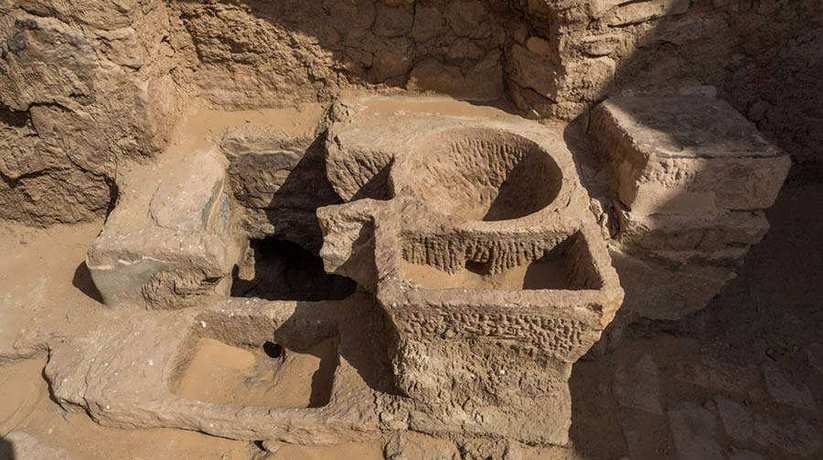
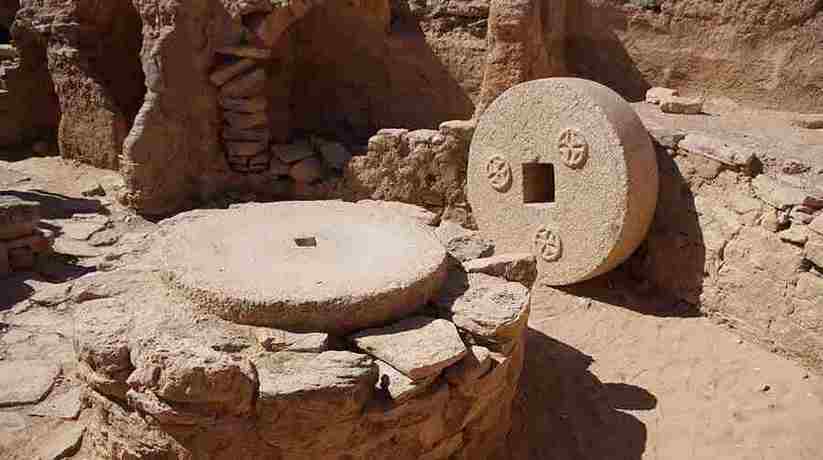
The upper terrace approached by a stairway. It is along the north wall of the church in the lower part of the monastery. The keep, its massive size unusual in comparison to those of other Monasteries. It is a three-storied building which dominates the ruins. Saint Simeon monastery Aswan structure included individual cells for the monks, a refectory and kitchen. It also included several workshops. The oil press, with its granite millstone decorated with three crosses. It situated on the upper terrace south of the keep. There was also a mill and bakery outside the keep. Many of ovens of different sizes found on both terraces. Other structures include a wine press, storage annexes and stables. Furthermore, they include a vat to decant the water and another to extract salt.

Nearby attractions Information, tours and Online Booking

More of Coptic Egypt

More of Egypt attractions
MORE
Saint Mark Coptic Cathedral

Saint Mark Coptic Cathedral

  • Saint Mark Coptic Cathedral Alexandria
  • Saint Mark Coptic Cathedral Alexandria
  • Saint Mark Coptic Cathedral Alexandria
  • Saint Mark Coptic Cathedral Alexandria
  • Saint Mark Coptic Cathedral Alexandria
  • Saint Mark Coptic Cathedral Alexandria

Saint Mark Coptic Cathedral Alexandria tours, booking, reviews

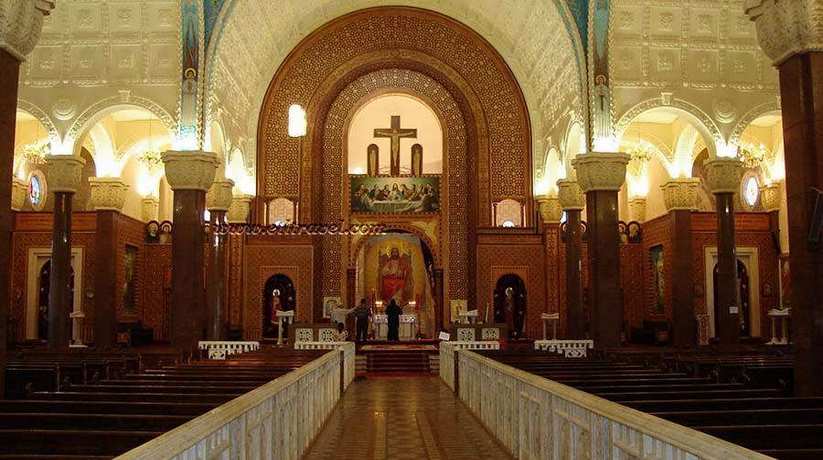
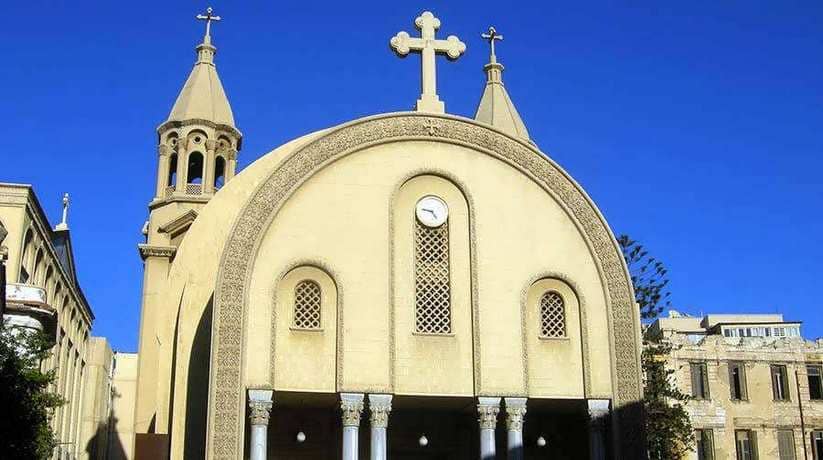
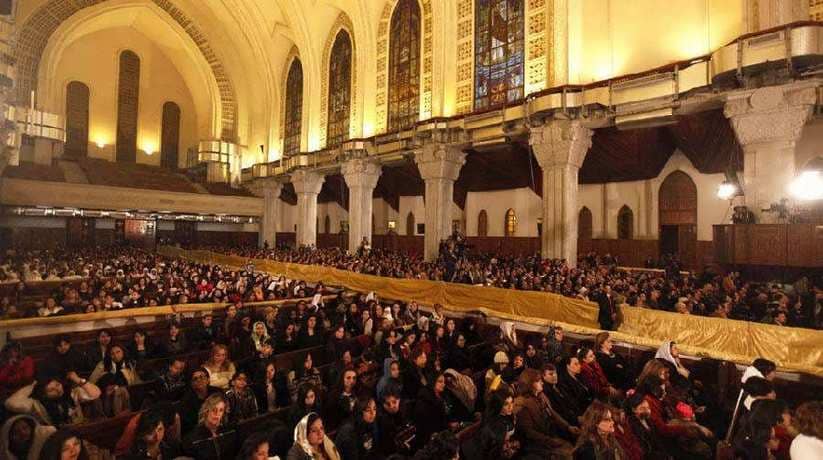
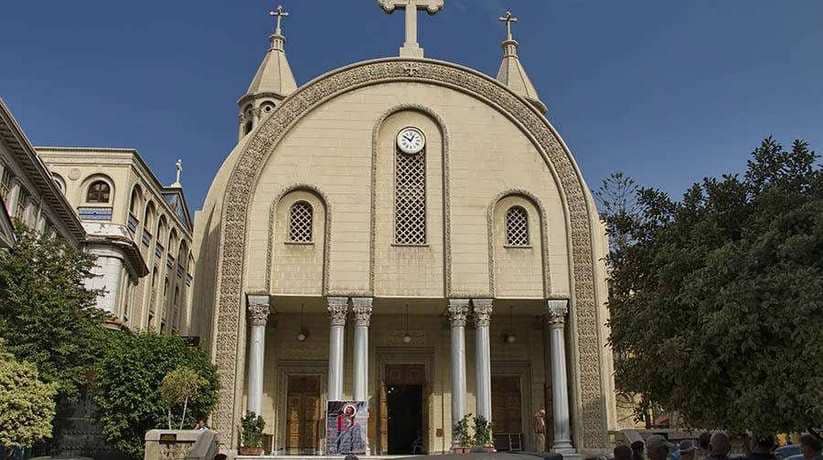
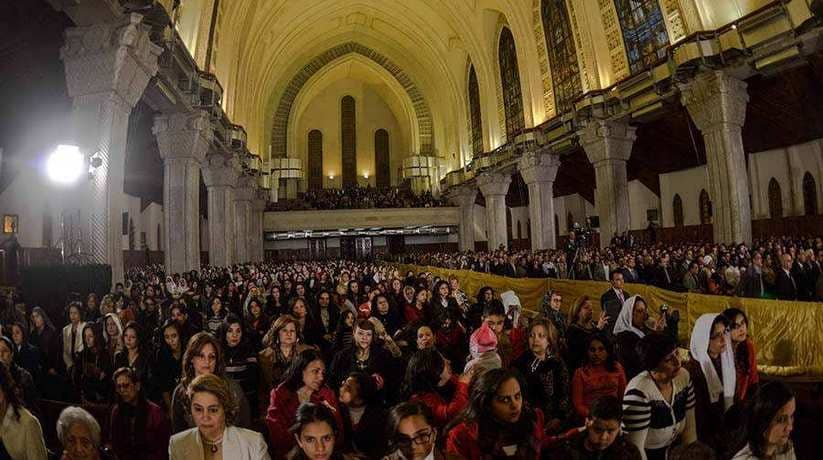
Saint Mark Coptic Cathedral Alexandria located in Alexandria city, Egypt. In fact, It is the historical seat of the Pope of Alexandria. The Pope of Alexandria is the head of the Coptic Orthodox Church. Moreover, Saint Mark Cathedral stands on the site of the church founded by St. Mark the Evangelist in AC 60. St. Mark the Evangelist is author of the second Gospel. He connected with the city of Alexandria since earliest Christian tradition. Coptic Christians believe he arrived in Alexandria around AD 60 and stayed for about seven years. In fact, during this time, Mark converted many to Christianity and performed many miracles. He is indeed the founder of the church in Alexandria and the first Bishop of Alexandria.

According to tradition, St. Mark was arrested during a festival of Serapis in AC 68. And then, he martyred by dragging through the streets. Moreover, he was buried under the church he had founded. In 828, the body of St. Mark was stolen from the Alexandrian church by Venetians. It was to enshrine in the grand new St. Mark Basilica in Venice. Moreover, the head of the saint remained in Alexandria. Every newly appointed Patriarch of Alexandria begins his service with holding the holy head of St. Mark in his lap. He also changed its cloth shroud.

Further details about Saint Mark Coptic Cathedral Alexandria:

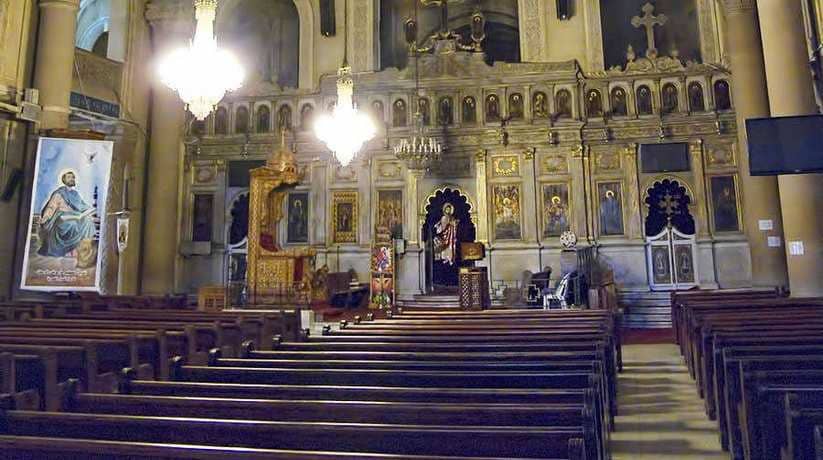
The head of St. Mark moved around a great deal over the centuries. Furthermore, it lost for over 250 years. Some of the relics from the body of St. Mark, however, returned to Alexandria from Rome. It was in 1968 during the papacy of Pope Cyril VI. In fact, the present Saint Mark Coptic Cathedral Alexandria is of recent date. In fact, it said to stand on the site of church founded by St. Mark himself. Take notice of the beautiful icons and mosaics that fill the silence of the Cathedral. Make sure to dress conservatively and respect the sanctity of the location.

Nearby attractions Information, tours and Online Booking

More of Coptic Egypt

More of Egypt attractions

MORE
error: Copyright © www.etltravel.com !