Activities in Coptic Egypt

Things to Do

Baramous Monastery Egypt

Baramous Monastery Egypt

  • Baramous Monastery Egypt
  • Baramous Monastery Egypt
  • Baramous Monastery Egypt
  • Baramous Monastery Egypt
  • Baramous Monastery Egypt
  • Baramous Monastery Egypt

Baramous Monastery Egypt tours, booking, prices, reviews

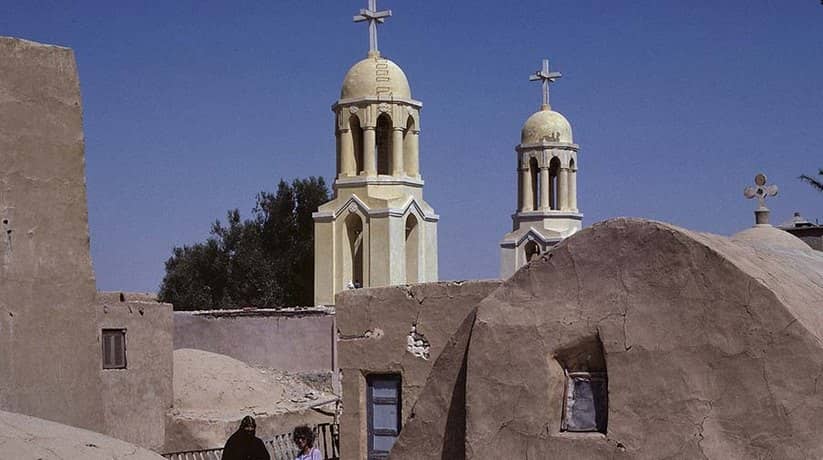
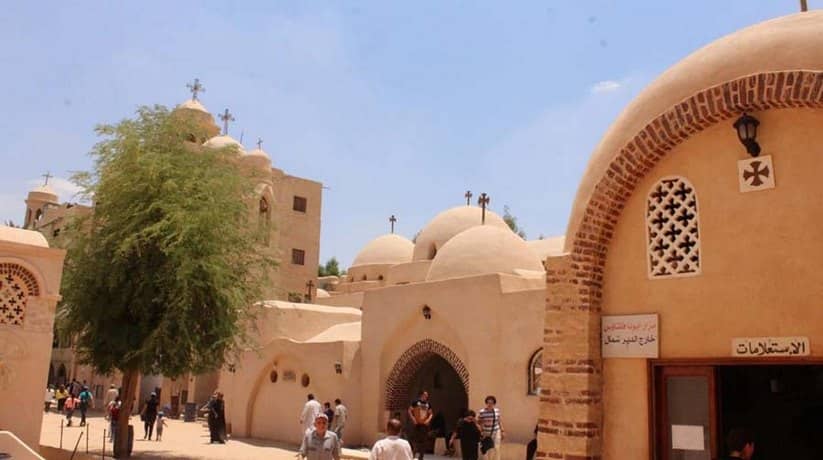
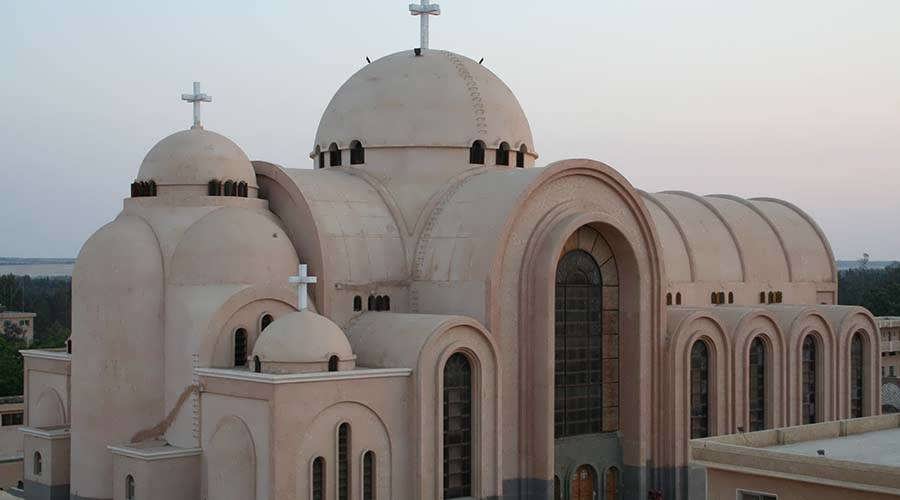
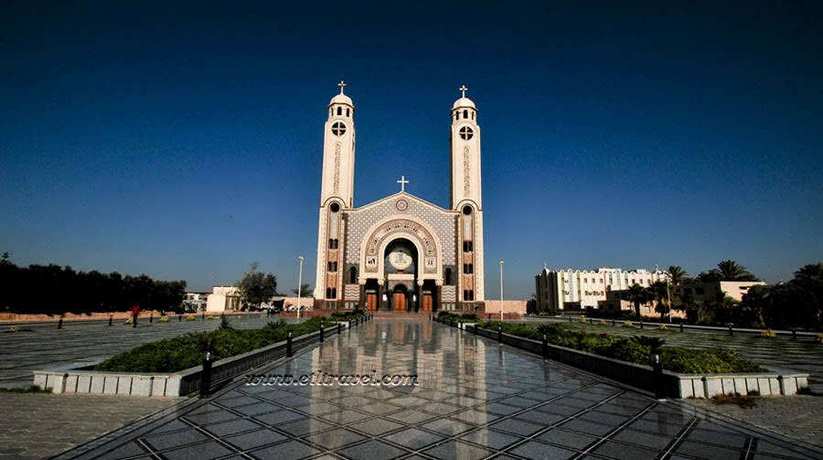
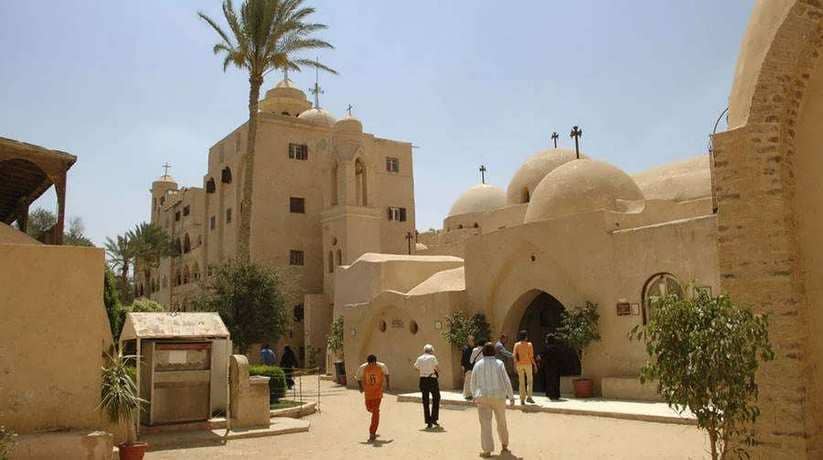
Baramous Monastery Egypt, also known as Paromeos Monastery, is a Coptic Orthodox monastery. The monastery located in Wadi El Natrun (the Nitrian Desert). It is in Beheira Governorate, Egypt. In fact, it is the most northern monastery among the four current Monasteries of Scetes. Baramous Monastery is about 9 km northeast of the Monastery of St. Bishoi. The name Paromeos derived from the Coptic Pa-Romeos, which means that of the Romans. The monastery dedicated to the Virgin Mary and carries her name. In fact, the monastery is probably the oldest among the four existing Monasteries of Scetes.

Baramous Monastery founded on 335. By St. Macarius the Great. The name Pa-Romeos or that of the Romans may refer to Saints Maximus and Domitius. They are the children of the Roman Emperor Valentinian I. They had their cell at the place of the modern monastery. According to Coptic tradition, the two saints went to Scetes during the time of St. Macarius the Great. He tried in vain to dissuade them from staying. Nevertheless, they stayed and attained perfection before dying at a young age. A year after their departure, St. Macarius the Great consecrated their cell by building a chapel. He told the monks “Call this place the Cell of the Romans”.

Further details about Paromeos Monastery:

Another theory holds that the name refers to the Roman Emperors Arcadius and Honorius, disciples of St. Arsenius. The latter was himself a Roman monk who established himself in Scetes. It is possible that the two emperors had visited their teacher in his seclusion. Thus, they gave to the monastery its name. Following the destruction of Baramous Monastery in 407 by the Berbers and the Bedouins, St. Arsenius returned to rebuild it. However, following a second raid also by the Berbers in 410, he retired to Troe. Now a neighborhood of Cairo known as Tura, where he died.

Beside St. Macarius the Great and St. Arsenius, other saints of the fourth and fifth century resided in the Baramous Monastery. They are St. Isidore, and St. Moses the Black who martyred at the raid of 407 A.D. Pope Shenouda I of Alexandria (859-880) built walls around the Monasteries. In fact, it was because of the attacks by the Berbers and the Bedouins. The walls height varies between ten and eleven meters, and their widths are about two meters. They also covered with a thick layer of plaster. During the first half of the fifteenth century, the historian Al-Maqrizi visited the monastery. He was responsible for identifying it as that of St. Moses the Black.

More details about the Monastery:

At that time, he found it to have only a few monks. Though the community of monks was fairly insignificant during the Middle Ages. Baramous Monastery apparently supplied one monk to the patriarchal throne in 1047. He was Pope Christodolos of Alexandria, who proved to be a man of great holiness. The monastery also supplied two monks in the seventeenth century to the patriarchal throne. They are Pope Matthew III of Alexandria and Pope Matthew IV of Alexandria. The monastery also produced many outstanding theologians. They are Father Naum, and Father Abdel Massih ibn Girgis el Masoudi. Both are of the nineteenth century.

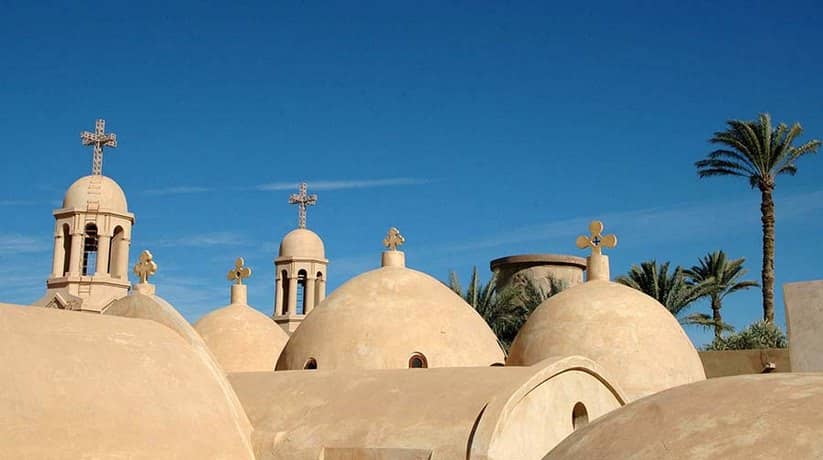
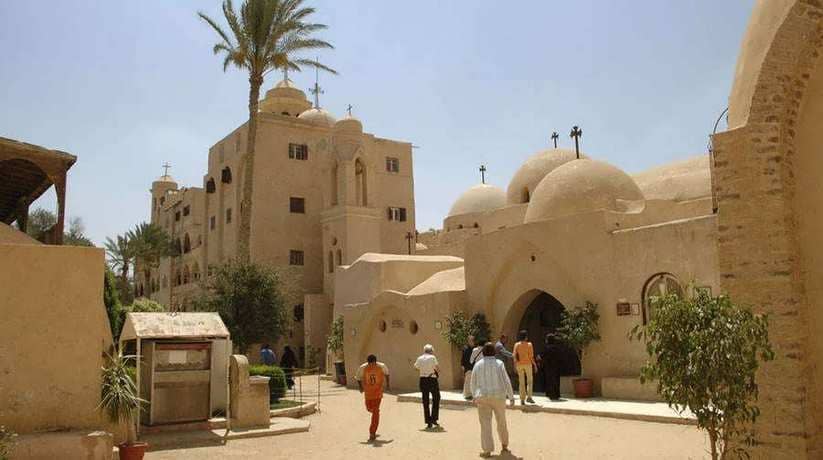
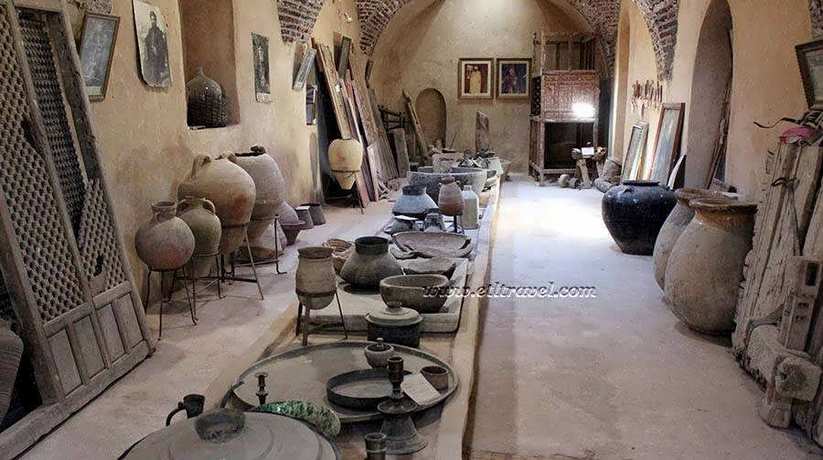
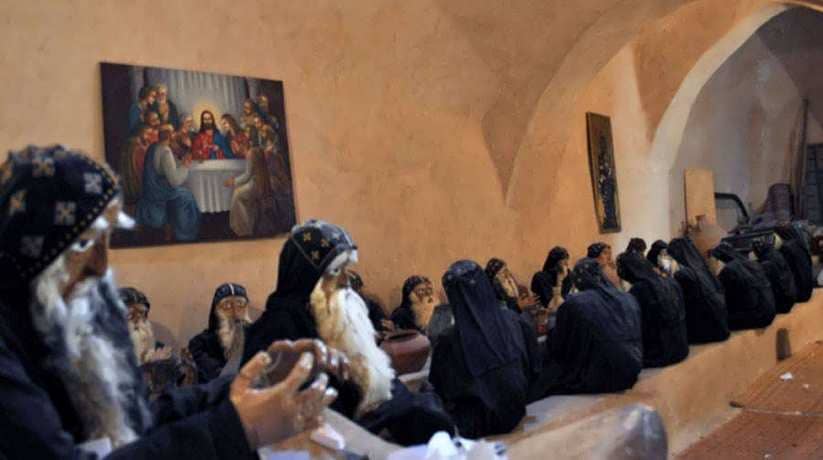
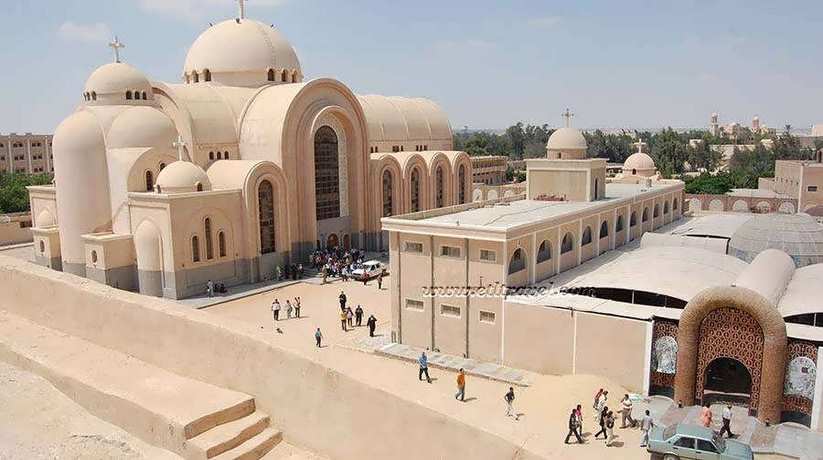
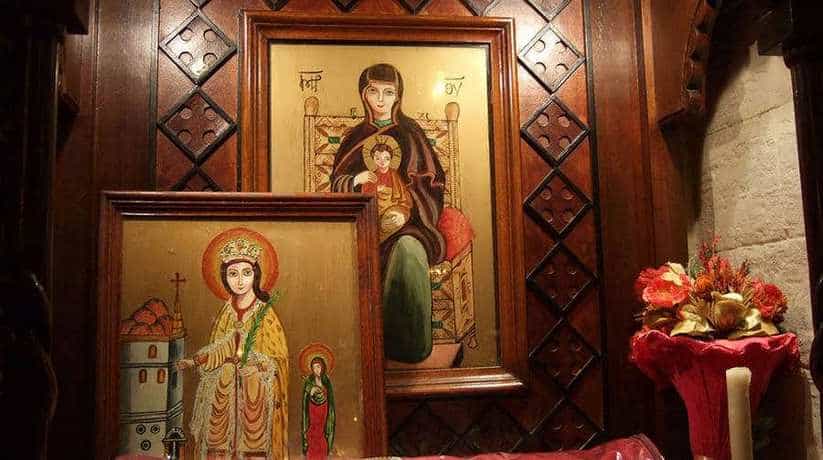
Today, Baramous Monastery still preserves much of its ancient character. It has five churches. The oldest church dedicated to the Virgin Mary and contains the relics of St. Moses the Black. It is indeed oldest church in Scetes still in existence, dating back to the sixth century. The second church dedicated to St. Theodore of Amasea. The third to St. Georges, the fourth to St. John the Baptist, and the fifth to Archangel Michael. The walls built by Pope Shenouda I of Alexandria are still standing today. The monastery also contains a keep, a tower, two refectories, and a guest house.

Further details about Baramous Monastery Egypt:

About two and a half kilometers northwest of this monastery, there is also the limestone cave. It is of the late Pope Cyril VI. Marked by twelve wooden crosses, it known as the Rock of Sarabamun and has become a popular place of pilgrimage. An iron lattice-work protects the entrance to the site. Within, the one room cave is spacious. It adorned with many pictures and icons of Pope Cyril VI. In the desert about the monastery there are also several caves. They apparently continue to inhabit by hermits. Under Pope Shenouda III, many recent renovations performed at the monastery. An asphalt road to the monastery built, and there are several major cultivation projects.

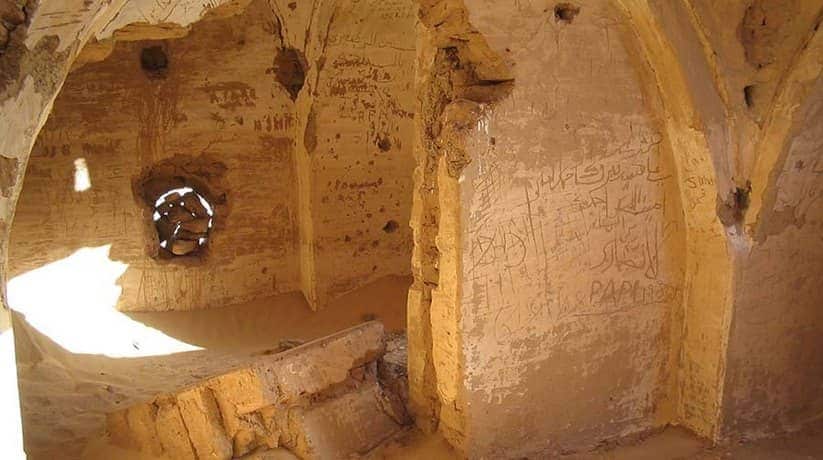
Besides, six water pumps, a sheepfold, a hen-house and two generators added. Together with the construction of new residential cells both inside and outside the monastery proper. There is now a clinic and a pharmacy to serve the monks. There is also a spacious retreat center for conferences and a large, two story guesthouse that opened in January 1981. This monastery surrounded by an enclosure wall that was perhaps a somewhat late addition during the ninth century. Within the old monastery, archaeologists discovered the remains of a square structure. They measuring some sixteen meters square. It was in the southeastern corner of the site.

More details about Baramous Monastery Egypt:

Though its original purpose was at first unclear. It determined to have most likely been a defensive tower. Or keep that may have stood some twenty-five meters in height. However, pottery from the 4th or early 5th century found on the site. It suggested that this tower built very early for monastic purposes. Particularly with regards to what was probably a fairly small community of monks. It suggested that this may have originally built as a Roman military structure. It was to defend the Nitrian Desert and its salt production. Then, after abandoned during the fourth century, it put to use by newly arrived anchorites.

In 1998, excavations uncovered a structure that proved later to be that of a church immediately north of the tower. The walls of the nave made from poor quality. They improvised masonry that suggest that the church perhaps rebuilt hastily after destroyed. The actual sanctuary of this church is of better quality. It apparently reconstructed somewhat later, perhaps at the end of the ninth or the beginning of the tenth century. The altar, which fairly well preserved, sits atop a one step high podium.

Nearby attractions Information, tours and Online Booking

More of Coptic Egypt

More of Egypt attractions

MORE
Cairo Churches

Cairo Churches Egypt

  • Cairo Churches Egypt
  • Cairo Churches Egypt
  • Cairo Churches Egypt
  • Cairo Churches Egypt
  • Cairo Churches Egypt
  • Cairo Churches Egypt
  • Cairo Churches Egypt
  • Cairo Churches Egypt

Cairo churches Egypt tours, booking, prices, reviews

Cairo Churches represented by Abu Serga Church. The church also known as Saints Sergius and Bacchus church. In fact, it is a 4th century church. The church is the oldest of Cairo’s Christian Churches. Abu Serga church Cairo dedicated to two early martyrs. It built on the spot where the Holy Family rested at the end of their journey into Egypt. The family journey lived here while Joseph worked at the fortress. Abu Serga church Cairo indeed has a significant historical importance. The church is where many patriarchs of the Coptic Church elected. The first elected here was Patriarch Isaac (681-692 AC). Moreover, the church is the episcopal church of Cairo. It also was the episcopal See of Misr (the district of Old Cairo) that replaced the former See of Babylon. Many bishops consecrated in the Church until the reign of Patriarch Christodulus (1047-1077 AC).

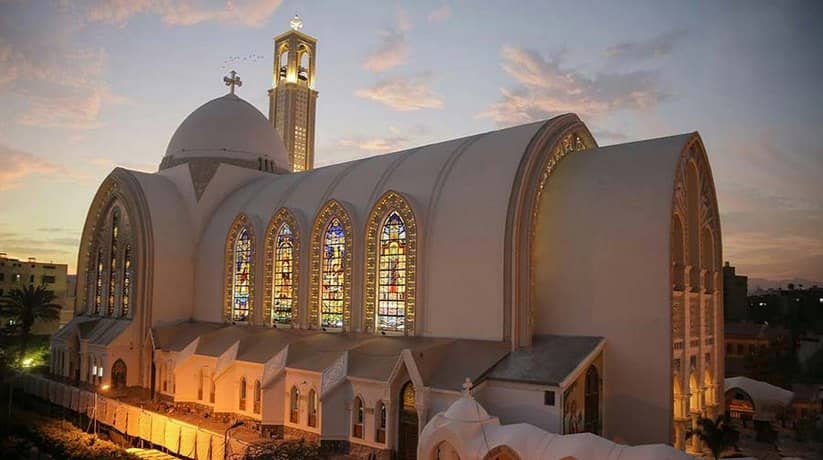
Cairo Churches also represented by St. Mark Coptic Orthodox Cathedral. The church is a Coptic Orthodox cathedral. The cathedral located in Abbassia district in Cairo, Egypt. Moreover, it is the seat of the Coptic Orthodox Pope. In fact, Cairo Saint Mark Cathedral built during the time when Pope Cyril VI of Alexandria was Pope. Moreover, he was Pope of the Coptic Orthodox Church. Furthermore, Cairo Saint Mark Cathedral inaugurated by Pope Cyril in 1968. In fact, the land where the Cathedral stands was for centuries as a cemetery for the Christians. This land also had the historic Anba Rouis church. However, the land had given to the Coptic Orthodox Church in 969 by Gawhar. It given as a replacement for the land that taken from the church. It taken to include in building the Palace of al-Muizz Li-Deenillah.

Further details about the Churches:

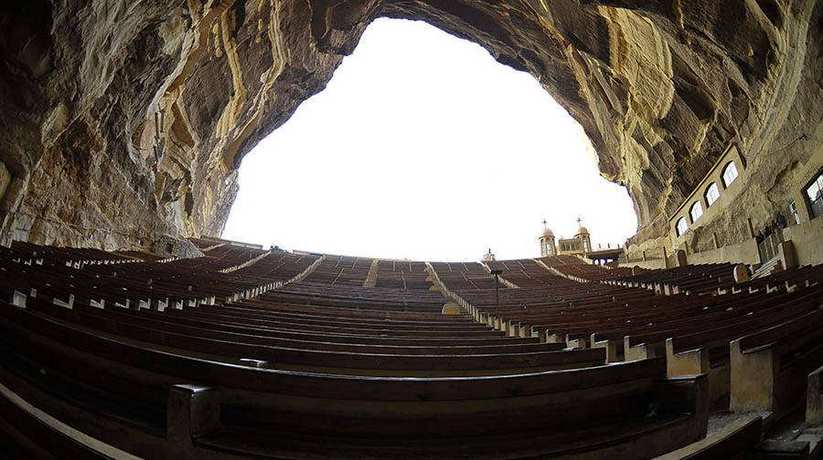
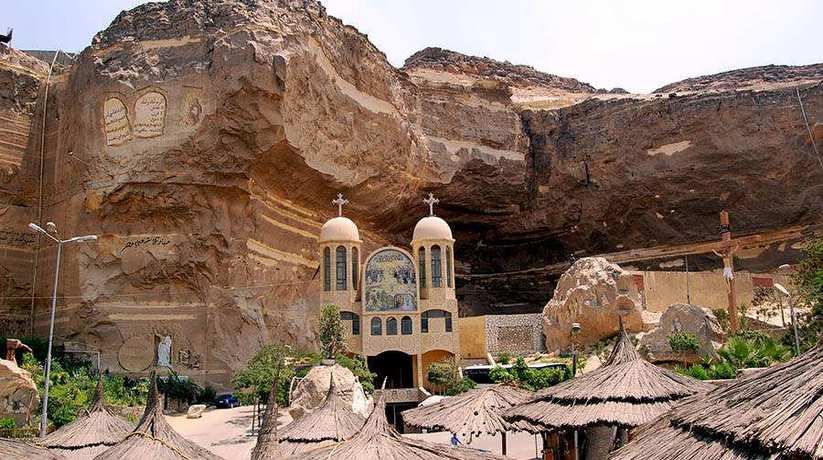
Cairo Churches also represented by the Cave church. The church also known as Saint Simon monastery. It located in the Mokattam mountain in southeastern Cairo, Egypt. In fact, the church is in an area which known as “garbage city”. It is because of the large population of garbage collectors or Zabbaleen live there. In fact, Cave Church Cairo in Egypt indeed is one of the largest churches in the country. Moreover, The Cave church Cairo is a church where 20,000-plus Christians gather every week. It is to worship and praise Jesus. Cave church Cairo is place that’s home to one of the world’s oldest Christian communities. In fact, the Zabbaleen are descendants of farmers who started migrating from Upper Egypt to Cairo. It was in the 1940. Fleeing poor harvests and poverty they came to the city looking for work.

Cairo Churches also represented by Hanging church. In fact, the church approached by 29 steps. Early travelers to Cairo dubbed it “the Staircase Church”. In fact, the land surface risen by some 6 meters. It is since the Roman period. The Roman tower buried below ground. It reduce the visual impact of the church’s elevated position. The entrance to Hanging church from the street is through iron gates. It is under a pointed stone arch. The nineteenth century facade with twin bell towers seen beyond a narrow courtyard. It decorated with modern art biblical designs. Up the steps and through the entrance is a further small courtyard. It leads to the eleventh century outer porch.

More details about Cairo Churches Egypt:

Cairo Churches also represented by St. Barbara church. The church is one of the many famous Coptic Orthodox parishes in Old Cairo district. In fact, the building located on the eastern part of the Babylon Fortress. Moreover, it is indeed one of the oldest buildings in Cairo. Saint Barbara church Cairo dates back to the 5th or 6th century AD. Like many other buildings of Coptic architecture, Saint Barbara church rebuilt several times. Most by the end of the 11th Century. Saint Barbara church Cairo stands north of the Coptic Museum. It is east of the Church of Saints Sergius and Bacchus (Abu Serga) on the eastern side of Babylon Fortress. It dedicated to Abu Kir and Yohanna or St. Cyrus and St. John. When the remains of St. Barbara brought here, a separate sanctuary built.

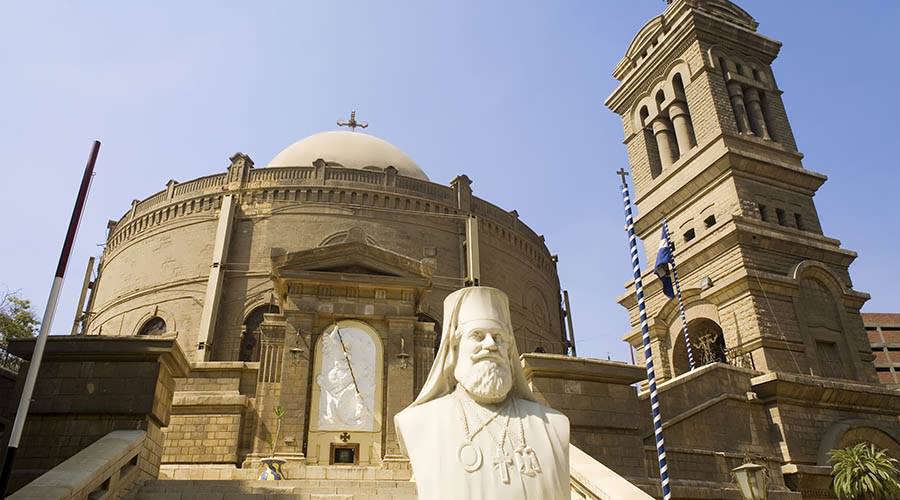
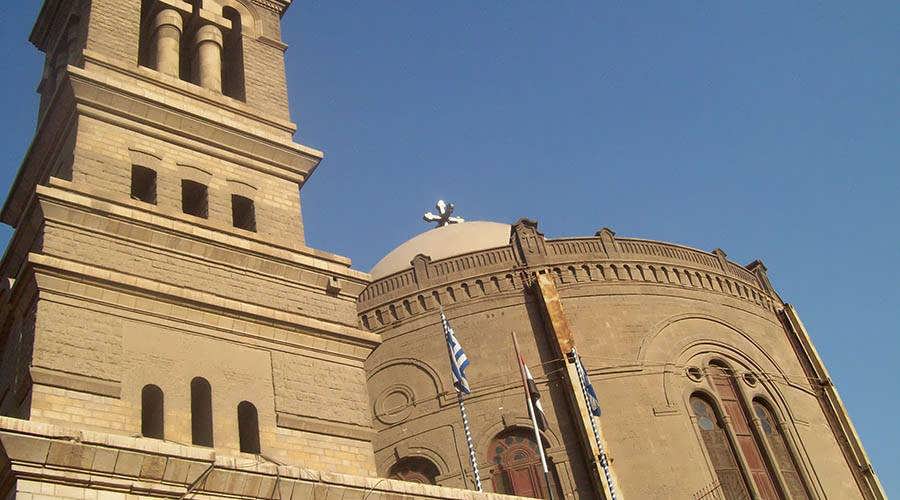
Cairo Churches also represented by St. George church. In fact, is a Greek Orthodox Church. In fact, the church is one of the few round churches still in existence in the East. Moreover, it formed from it’s placement atop a rounded Roman tower. The Holy Family took shelter in a place now covered by Saint George church Cairo. There is a long set of steps. In fact, it leads up to Saint George church Cairo. They built on the outer wall of the Roman towers. As one ascend these steps, he will find a relief of Saint George. He will find also the dragon wrapped around the outer brickwork of the tower. Saint George church Cairo burned many times. In fact, t burnt in 1904 and the current structure built in 1909. It still has some of the older structure’s beautiful stained-glass windows.

Further details about Cairo Churches Egypt:

Cairo Churches also represented by Virgin Mary church in Zeitoun. Virgin Mary apparitions in Zeitoun Cairo took place in Virgin Mary church Zeitoun in Cairo, Egypt. In fact, the church built in 1924 and consecrated by Athanasious, bishop of Beni Suef in 1925. It didn’t fall into the category of buildings more than 100 years old and protected by law. Moreover, Virgin Mary church Zeitoun has fine architecture and the site of an acclaimed miracle. That is why it become a popular attraction for pilgrims. People from all around the world visit the church day and night. A great deal of time and effort has gone into its restoration, which has been

Full list of Cairo Churches:

Abu Serga Church Cairo
+View details
Egypt Nile cruises and hotels
Cairo Saint Mark Cathedral
+View details
Egypt Nile cruises and hotels
Cave Church Cairo Egypt
+View details
Egypt Nile cruises and hotels
Load more

MORE
Holy Family Journey Egypt

Holy Family Journey Egypt

  • Holy Family Journey Egypt
  • Holy Family Journey Egypt
  • Holy Family Journey Egypt
  • Holy Family Journey Egypt
  • Holy Family Journey Egypt
  • Holy Family Journey Egypt
  • Holy Family Journey Egypt

The Holy Family journey in Egypt information, tours and online booking

The advent of the Holy Family to Egypt, seeking refuge, is an event of the utmost significance in our dear country’s long, long history. Moved by the spirit of prophecy, Hosea foresaw the flight from Bethlehem where there was no safe place for the Christ Child to lay his head, and the eventual return of the holy refugees from Their sanctuary in Egypt, where Jesus had found a place in the hearts of the Gentiles, when he uttered God’s words: “Out of Egypt have I called My Son”. (Hosea 11:1) In the Biblical Book of Isaiah, the prophet provides us with a divinely inspired prediction of the effect the holy Infant was to have on Egypt and the Egyptians: “Behold the Lord rides on a swift cloud, and will come into Egypt and the idols of Egypt will totter at His Presence and the heart of Egypt will melt in the midst of it”. (Isaiah 19:1).

The authority of Old Testament prophecy, which portended the crumbling of idols wherever Jesus went, further foreshadowed the singular blessing to be bestowed upon Egypt, for its having been chosen as the Holy Family’s haven, and upon its people for having been the first to experience the Christ’s miraculous influence. God’s message, also delivered through the prophetic utterance of Isaiah, “Blessed by Egypt, My People” (Isaiah 19:25) , was an anticipation of the coming of St. Mark to our country, where the Gospel he preached took firm root in the first decades of Christianity. For Isaiah goes on to prophecy: “In that day there will be an altar to the Lord in the midst of the land of Egypt; and a Pillar to the Lord, at its border. And it will be for a sign and for a witness to the Lord of hosts in the land of Egypt”. (Isaiah 19:19&20).

More information about the Holy Family Journey in Egypt:

As for the “pillar at its borders… which will be for a sign and for a witness..” surely there can be no more demonstrable, concrete proof of the fulfillment of the prophecy than that the Patriarchal See of the Apostolic Church in Egypt, established by St Mark himself, is situated in Alexandria, on Egypt’s northern borders. But the prophecy, knitting a perfect pattern of things to come, does not stop there. It continues, “Then the Lord will be known to Egypt, and the Egyptians will know the Lord in that day and will make sacrifices and offering”. (Isaiah 19:21). As Christianity in Egypt spread, churches were built throughout the length and breadth of the land, and the sites chosen were, primarily, those which had been visited and blessed by the Holy Family’s sojourns.

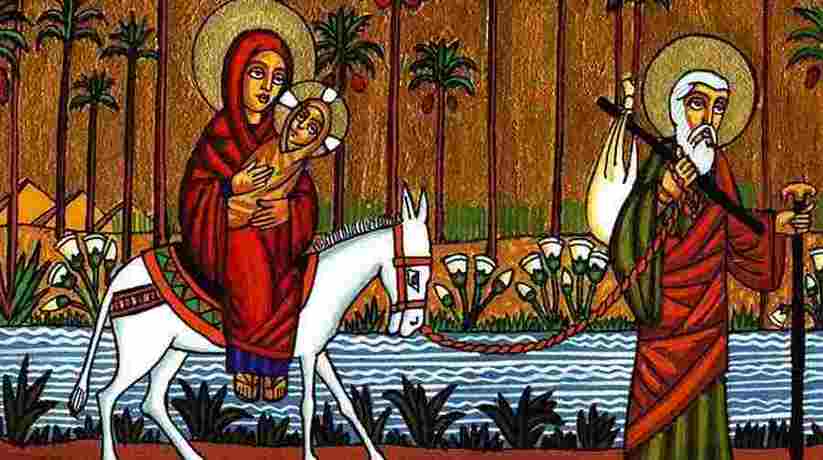
The New Testament records the fulfillment of these Old Testament prophecies as they unfold in their historical sequence. “…behold, an angel of the Lord appeared to Joseph in a dream, saying, Arise, take the young Child and His mother, flee to Egypt, and stay there until I bring you word, for Herod will seek the young Child to destroy Him”. (Matthew 2:13). Joseph complied. A donkey was fetched for the gently Mother, still so young in years, to ride with her new-born Child in Her arms. And so they set out from Bethlehem on their pre-destined journey, the hardened old carpenter, who was Mary’s betrothed, striding ahead, leading the donkey by its leash into the untracked paths of a wilderness dark as the desert nights, and unending as the months of never ending horizons. Such an arduous journey it was, fraught with hazard every step of the way.

More details about the Holy Family Journey in Egypt:

In those far-off days, there were three routes which could be followed by travelers traversing Sinai from Palestine to Egypt, a crossing which was usually undertaken in groups, for without the protection of well-organized caravans, the ever-present dangers – even along these known and trodden paths – were ominously forbidding. But, in their escape from the infanticide fury of King Herod, the Holy Family – understandably – had to avoid the beaten tracks altogether, and to pursue unknown paths, guided by God and His Angel.

They picked their way, day after day, through hidden valleys and across uncharted plateaus in the (then) rugged wastelands of Sinai enduring the scorching heat of the sun by day and the bitter cold of the desert nights, preserved from the threat of wild beasts and savage tribesmen, their daily sustenance miraculously provided, the all-too-human fears of the young Mother for her Infant allayed by the faith that infused her with His birth. And so they arrived, at last, safely, for God had pre-ordained that Egypt should be the refuge for the One who was to bring the message of peace and love to mankind.

Further details about the Holy Family Journey in Egypt:

The tortuous trails they followed in their passage across Sinai, and their subsequent travels within Egypt, are chronicled by Pope Theophilus, 23rd Patriarch of Alexandria (384-412 AD). He testifies, in his celebrated annals that on the eve of the 6th of Hathor (the Coptic month corresponding roughly with November), after long prayer, the Holy Virgin revealed herself to him and, after relating the details of the Holy Family’s journey to, in, and from Egypt, bade him record what he had seen and heard. It is a source which no Christian believer would question. Besides, it is a virtual certainty that, at a time when happenings of a momentous or historical nature were transmitted by word of mouth from one generation to the next, the account of Pope Theophilus’ vision confirmed the oral tradition of supernatural occurrences which accompanied the arrival of a wondrous Child in the towns and villages of Egypt some 400 years earlier.

The Holy Family at El Zamalek and Farma:

According to the sources of the Coptic Church, chief among which is the vision documented by Pope Theophilus, and recorded in the Coptic Senexarium the Holy Family proceeded from Bethlehem to Gaza, and then to El-Zaraniq (also known as Floussiat), some 37 km west of El-Arish; then they threaded their way along northern Sinai until they reached Farma (ancient Pelusium) mid-way between El-Alish and present-day Port Said. It was their last stop in Sinai; and with the next leg of their journey they put the perils of the wilderness behind them.

The Holy Family at Basta Town:

Tel Basta – or Basta – which they now enter, is a short distance from Zagazig, the main town in the Sharqiah Governorate about 100 km north-east of Cairo. Here, Jesus caused a water spring to well up from the ground, and His presence caused the idols to crumble, as foretold by the prophets of old. The townsfolk, in consequence, turned malevolent and aggressive, whereupon the Holy Family turned their backs on the town and headed southwards.

The Holy Family at Mostorod Town:

In due course, they reached Mostorod (which came to be called, in those days, ‘Al Mahamma’) only about 10 km away from Cairo. ‘Al Mahamma’ means ‘the Bathing Place’, a name given to the town because the Virgin Mary bathed the Christ Child and washed his clothes. It is worthy of note that, eventually, on their way back to Palestine, the Holy Family stopped once more at Mostorod and, this time, caused a spring to gush from the earth which still flows forth to the present day

The Holy Family at Belbeis Town:

From Mostorod, the Holy Family made their way north-eastwards to Belbeis (ancient Philippos), back in Sharqiah Governorate, and at a distance of about 55 km from Cairo. They rested there in the shade of a tree which came to be called, “The Virgin Mary’s Tree’.

The Holy Family at Menyet Samanoud:

Having left their mark on Belbeis, the Holy Family set off in a north-westerly direction and, reaching the small township of Meniet Samannoud (known also as Meniet Genah), they crossed the Nile to the city of Samanoud (or Jemnoty) in the Delta, where the local population received them with a kindness and hospitality that earned them deserved blessing. There is in Samannoud, to this day, a large granite trough which, according to local belief, was used by the Virgin for kneading dough, and a water-well which the Christ Child Himself hallowed.

The Holy Family at Sakha Town:

The Coptic name of the town, ‘Pekha-Issous’, (vernacularized to Lysous) means, ‘the foot of Jesus’; for the Holy Child’s foot-print was marked, here, in bas-relief on a rock. The rock was preserved, but hidden for centuries for fear of robbery, and only unearthed again 20 years ago. The natural course of the Holy Family’s journey from Samannoud to Sakha would have taken them through many of the towns and cities now lying in both the Governorates of Gharbia and Kafr El-Sheikh and, according to some folk traditions, through the Belqas wastelands as well.

The Holy Family at Wadi El Natroun:

Their trail from Sakha, is recorded in the documentation of Pope Theophilus’ vision, and attested to by Coptic practice in the Christian era. For it was to Wadi el-Natroun (Natroun Valley) that they now came, after crossing the Rosetta branch of the Nile to the western Delta and heading south into Wadi el-Natroun (then called Al Asqeet) in the Western Desert of Egypt. In the earliest decades of Christianity, the desert expanses of Wadi el-Natroun became the site of anchoretic settlement and, later, of many monasteries, in spiritual commemoration of the Holy Family’s passage through the Valley.

The Holy Family at Matareya and Ein Shams – Cairo:

Eventually, they left the desert behind them and made their way southwards, crossing the Nile to its eastern bank, and heading for Matareya and Ain Shams (ancient Heliopolis, the site of the oldest ‘university’ in history called since earliest Pharaonic times, ‘On’). Both these adjacent districts are outlying suburbs of present day Cairo, only 10 km or so from the city center.

The Holy Family at El Zeitoun – Cairo:

At the time of the Holy Family’s arrival there, Ain Shams was home to a large Jewish community, who had erected a temple – the Synagogue of Unias, – for their worship. In Matareya, a tree still stands to this day, still regularly visited, called “Mary’s Tree”, for the Family is believed to have rested in its shade. Here, too, the Infant Jesus caused water to flow from a spring, from which He drank and blessed, and in which the Virgin washed His clothes.

She poured the washing water on to the ground, and from that spot, the fragrant balsam plant blossomed: besides the healing and pain-soothing properties of this balm, its essence is used in the preparation of the scents and perfumes of which the holy Chrism is composed. Setting out next towards Old Cairo, the Holy Family rested for a while in Zeitoun, on their way; then proceeded along a course which traverses what are now crowded, bustling quarters of Cairo, within which the serene landmarks of an earlier Coptic heritage still stand, marking the paths the Holy Family followed. A listing of these landmarks, at this point, may be of pertinent interest.

The Holy Family at the area of Old Cairo:

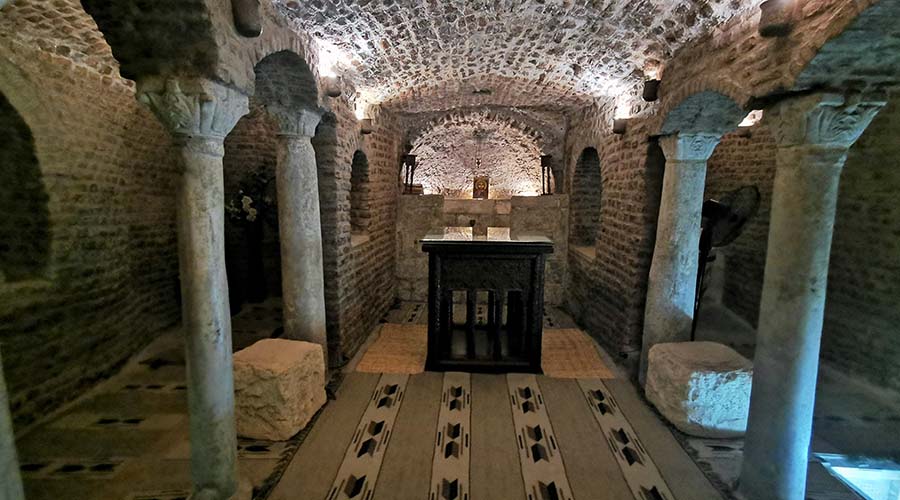
The area now called Old Cairo, known as Misr El Kadima, is among the most important locations visited by the Holy Family where the spiritual impact of their presence is most felt still, though their stay was brief, for the Governor of what was then Fustat – enraged by the tumbling down of idols at Jesus’ approach – sought to kill the Child. But they took shelter from his wrath in a cave above which, in later years, the Church of Abu Serga (St Sergious) was built. This, and the whole area of the Fort of Babylon, is a destination of pilgrimage not only for the Egyptians but for Christians from around the world. An air of piety and devotion pervades the whole district.

The Holy Family at the area of Maadi – Cairo:

After their short, but all-too-felt, stay in Old Cairo, the Holy Family moved in a southerly direction, reaching the modern Cairo suburb of Maadi which, in earliest Pharaonic times, was an outlying district of Memphis, the capital of Egypt then; and, at Maadi, they boarded a sailing-boat which carried them up the Nile towards southern Egypt. The historic church built upon the spot from which they embarked, also dedicated to the Virgin, is further identified by the denominative, ‘Al-Adaweya’, the Virgin’s Church ‘of the Ferry’. (In fact, the name of that now modern suburb, Maadi, derives from the Arabic word which means ‘the Crossing Point’).

The stone steps leading down to the River’s bank, and believed to have been used by the Holy Family, are accessible to pilgrims through the Church courtyard. An event of miraculous importance occurred on Friday the 3rd of the Coptic month of Baramhat – the 12th of March – 1976 AD. A Holy Bible of unknown provenance was carried by the lapping ripples of the Nile to the bank below the Church. It was open to the page of Isaiah 19:25 the page declaring, “Blessed be Egypt My People”. The Bible is now behind glass in the Sanctuary of the Virgin in the Church for all to see.

The Holy Family at Al Garnous Monastery in Maghagha City in Minya:

The sailboat docked at the village of Deir Al-Garnous (the later site of the Monastery of Arganos) 10 km west of Ashnein el Nassara (a small village near the town of Maghagha). Outside the western wall of the Church of the Virgin there, a deep well is believed to have provided the Holy Family with the water they needed.

The Holy Family at Al Bahnassa:

They went on from there to a spot later named Abai Issous, “the Home of Jesus”, the site of present-day Sandafa village, east of Al-Bahnassa which, itself, stand some 17 km west of the town of Beni Mazar.

The Holy Family at Al Teir Mountain, Samalout City – Minya:

On towards the south they went from Bahnassa to Samalout and crossed the Nile again from that town to the spot on the east bank of the River where the Monastery of the Virgin now stands upon Gabal El-Tair (‘Bird Mountain’) east of Samalout, 2 km south of Meadeyat Beni Khaled. It is known by this name (Gabal El-Tair) because thousands of birds gather there. The Holy Family rested in the cave which is now located inside the ancient church there. Gabal El-Tair is also called Gabal El-Kaf (‘Palm Mountain’). Coptic tradition maintains that, as the Holy Family rested in the shade of the Mountain, Jesus stretched His little hand to hold back a rock which was about to detach itself from the mountain-side and fall upon them. The imprint of His palm is still visible.

The Holy Family at Al Ashmounein, Mallawi City – Minya:

When they resumed their travels, the Holy Family passed a laurel tree a stone’s throw south of Gabal El-Tair, along the pathway flanking the Nile and leading from the Mountain to Nazlet Ebeid and the New Minya Bridge of today. It is claimed that this tree bowed to worship the Lord Christ – glory be to Him – as He was passing. The configuration of the Tree is, indeed, unique: all its branches incline downwards, trailing on the ground, then turn upwards again, covered in a cloak of green leaves. They call the tree, Al Abed – ‘The Worshipper’. Once more crossing the Nile, back to its west bank, the Holy Family traveled southwards to the town of Al-Ashmounein or Hermopolis Magna – but it seems that they did not tarry long there. Leaving behind them the rubble of fallen idols, they continued still in a southerly direction, for another 20 km or so to Dairout Al-Sharif (which, like Al-Ashmounein, had an alternative Greek name: Philes); and thence to Qussqam (or Qost-Qoussia).

Here, too, the recorded events testify that the townsfolk were infuriated when the stone statue of their local deity cracked and fell, and evicted the Holy Family from the town. A historically recorded incident dating to that period refers to the devastation of Qussqam, and Coptic tradition asserts that the ruin that befell the town was the consequence of its violent rejection of the gentle visitors. We have an entirely different story in the warm welcome with which the holy refugees were met at their next stop at Meir (or Meira) only 7 km west of Qoussia. Here, they found only consideration and hospitality wherever they went, for which treatment the town and its people were signally blessed

The Holy Family at Qussqam Mountain:

Now it was time for the Holy Family to set out for what is, arguably, the most meaningful destination of all in the land of Egypt, the place where there would be “an altar to the Lord in the midst of the land of Egypt”. Gabal (Mount) Qussqam, which takes its name from the town nearby that was laid waste, is 327 km south of Cairo, and stand in the Governorate of Assiut. The Monastery of Al-Muharraq nestles against the western foothills of the Mountain. It was built around the area where the Holy Family remained just over six months. Their time was spent mainly in a cave which became, in the Coptic era, the altar of the Church of Virgin Mary, built at the western end of the Monastery compound.

The altar stone was the resting place of the Child Jesus during the months He dwelt there. The whole area – the Monastery and its surroundings – is redolent of the Coptic Christian ethos. So hallowed are its intimations, that the Copts of Egypt named it the Second Bethlehem. It was here, at the very spot where Al-Muharraq Monastery stands, that the Angel of the Lord appeared to Joseph in a dream, and said “Arise, and take the young Child and His mother, and go into the land of Israel; for they are dead which sought the young Child’s life” (Matthew 2:20&21).

The Holy Family at Dronka Mountain – Assyout (The Return of The Holy Family):

And so they set forth on the return journey. The route they took deviated slightly from the one by which they had come. It took them to Mount Dronka, 8 km south-west of the city of Assiut, and their blessing of this location was commemorated in the Christian era by the building of the mountain-top Monastery of Drunk. Eventually, they arrived at Old Cairo, then Matareya, and on to Mahamma, retracing more or less their steps on their outward journey across Sinai to Palestine. Subsequent Biblical history says it all: at the end, they arrived home, Joseph’s old house, in the small town of Nazareth, in Galilee, in the land of Palestine, from where the message of Christ would, in the fullness of time, be heard.

The whole journey, from the initial flight from Bethlehem to the return to Nazareth lasted over three years. They had covered something like 2000 km; their means of transport a weak beast of burden and the occasional sailboat on the Nile. But for much of the way, the delicate Mother and the rugged old Carpenter must have trudged on foot, enduring the fierce summer heat and the biting winter’s cold, suffering the pangs of hunger and the parching affliction of thirst … like hunted outlaws. It was a journey of indescribable agony and anguish which the Child Jesus, His Virgin Mother and the Sainted Joseph bore with inner joy, and survived, for the sake of mankind.

The Holy Family’s Journey in the land of Egypt:

On the 24th day of the Coptic month of Bashans, which corresponds to the 1st of June, the Coptic Church celebrates the entry of the Lord Jesus Christ into the land of Egypt. On that day, the churches throughout the length and breadth of the land that gave the Holy Family shelter resound with the words of the Doxology: “Rejoice, Oh Egypt; Oh, people of Egypt and all ye Children of Egypt who live within its borders, rejoice and lift up your hearts, for the Lover of all mankind, He who has been before the beginning of ages, has come to you”.

Nearby attractions Information, tours and Online Booking

More of Coptic Egypt

More of Egypt’s attractions

MORE
Cairo Egypt

Hanging church Cairo Egypt

  • Hanging church Cairo Egypt
  • Hanging church Cairo Egypt
  • Hanging church Cairo Egypt
  • Hanging church Cairo Egypt
  • Hanging church Cairo Egypt
  • Hanging church Cairo Egypt

Hanging Church Cairo Egypt tours, prices, booking

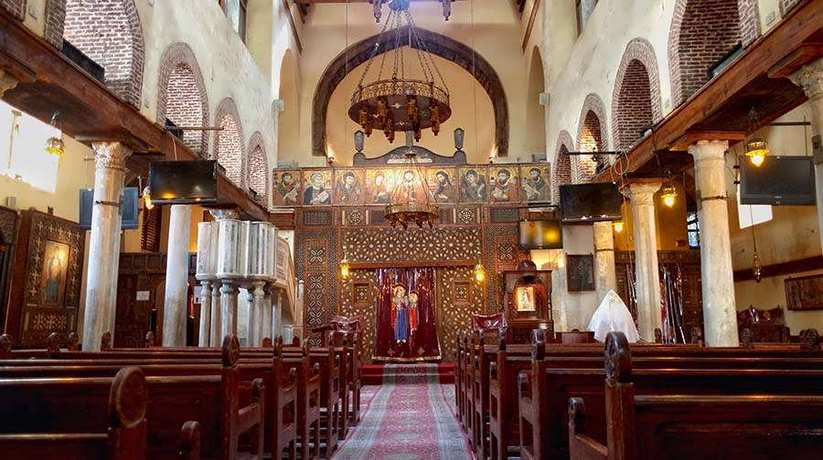
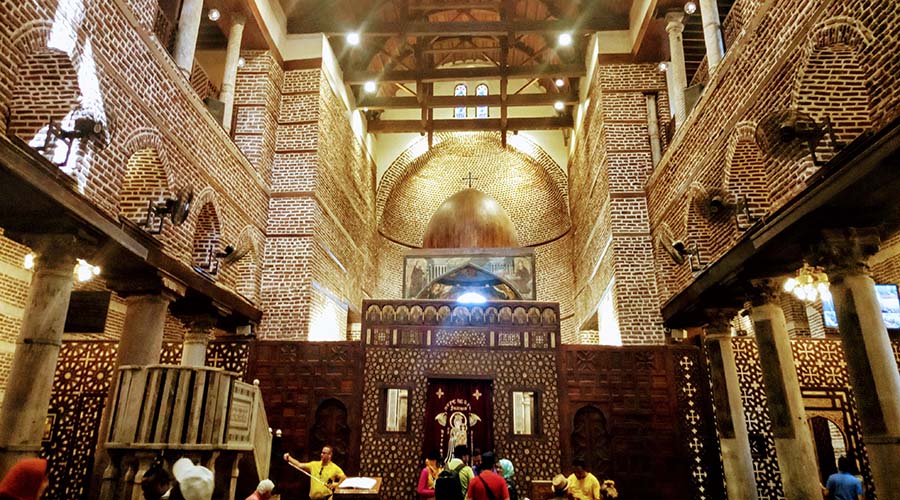
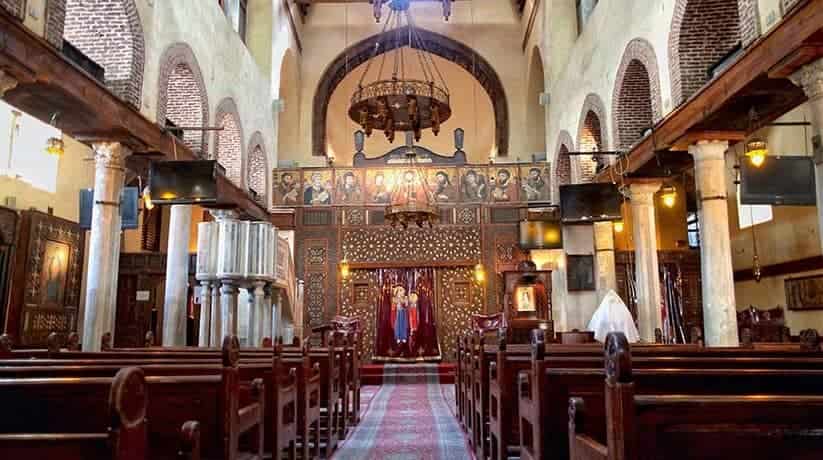
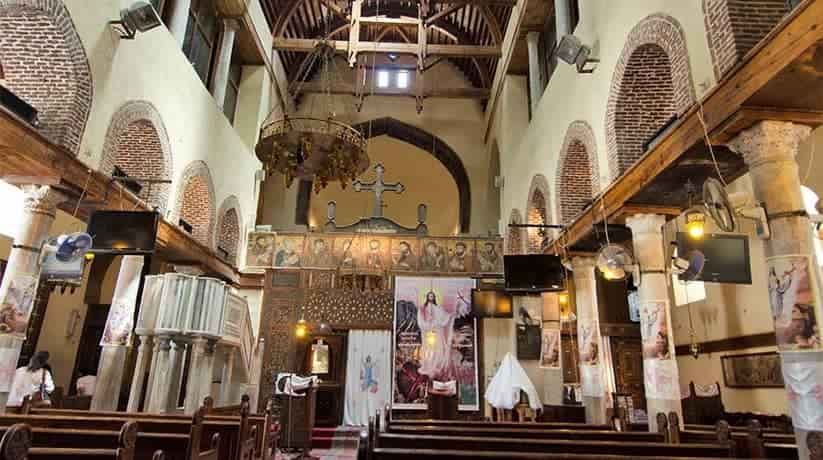
Hanging Church Cairo Egypt indeed is Cairo’s most famous Coptic church. In fact, it first built in the 3rd or 4th century AC. The church known as El Muallaqa church and it is Virgin Mary’s church. In fact, the church named for its location above a gatehouse of Babylon Fortress. Babylon Fortress is Roman fortress in Old Cairo. Its nave suspended over a passage. Moreover, The church approached by 29 steps. Early travelers to Cairo dubbed it “the Staircase Church”. The land surface has risen by some 6 meters. It is since the Roman period. The Roman tower buried below ground. It reduces the visual impact of the church’s elevated position. The entrance to the church from the street is through iron gates. In fact, it under a pointed stone arch.

The nineteenth century facade with twin bell towers seen beyond a narrow courtyard. Moreover, it decorated with modern art biblical designs. Up the steps and through the entrance of Hanging Church Cairo, is a further small courtyard. It leads to the eleventh century outer porch. In fact, the church built in Basilican style. Furthermore, it built during the patriarchate of Isaac (690-92). An earlier church building may have existed elsewhere dating as early as the 3rd or 4th century. An earliest mention of the church was a statement in the biography of the Patriarch Joseph I (831-49). It was when the governor of Egypt visited the establishment. Hanging Church rebuilt by the Pope Abraham (975-78). There are many other restorations including one recently.

Further details about The Hanging church Cairo Egypt:

The objects of historical interest that were no longer of service went to the Coptic Museum. By the 11th century AC, The Hanging Church served as the Seat of the Coptic Orthodox Pope of Alexandria. In fact, it based in Alexandria, Egypt. The ruling powers moved away from Alexandria to Cairo. It was after the Arab invasion of Egypt during Pope Christodolos’s. Cairo became the fixed and official house of the Coptic Pope at The Hanging Church Cairo in Cairo in 1047. Infighting between Abu Serga church and the church broke out. It was due to that patriarch’s desire. It was to consecrated in the church. In fact, The church has 110 icons. The oldest of them dates back to the 8th century and most of them date back to the 18th century.

Nakhla Al-Baraty Bey gave some of them as gifts in 1898. It was when he was the overseer of the church. The iconostasis of the central sanctuary made of ebony inlaid with ivory. Moreover, it surmounted by icons of Virgin Mary and the Twelve Apostles. The main altar screen of the Hanging church Cairo also made of ebony inlaid with ivory. Furthermore, it carved into segments. It shows several Coptic Cross designs that date back to around the 12th or 13th century. Over the altar screen the central one of which Christ seated on the Throne. In fact, it lies a long row of seven large icons. Moreover, on one side, the icons of the Virgin Mary, Archangel Gabriel and St. Peter lined up. On the other, icons of St. John the Baptist, Archangel Michael and St. Paul.

Nearby attractions Information, tours and Online Booking

More of Coptic Egypt

More of Egypt attractions

MORE
El Bagawat Necropolis Kharga Oasis

El Bagawat Necropolis Kharga

  • El Bagawat Necropolis Kharga Oasis
  • El Bagawat Necropolis Kharga Oasis
  • El Bagawat Necropolis Kharga Oasis
  • El Bagawat Necropolis Kharga Oasis
  • El Bagawat Necropolis Kharga Oasis
  • El Bagawat Necropolis Kharga Oasis

El Bagawat Necropolis Kharga Oasis information, tours, prices and online booking

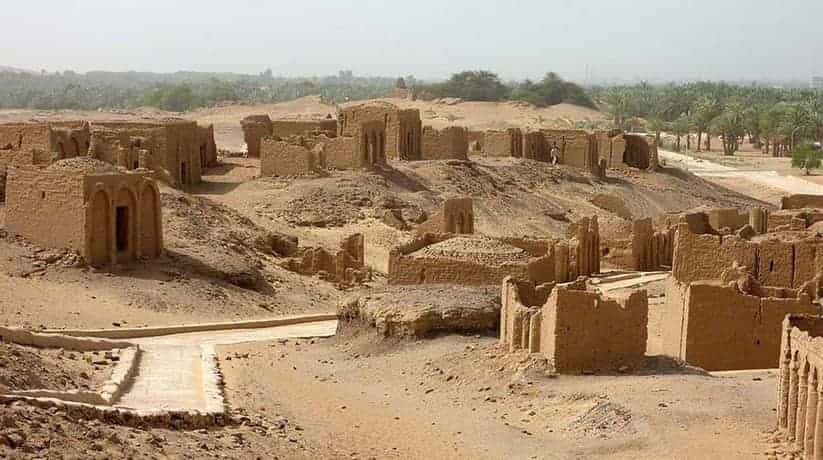
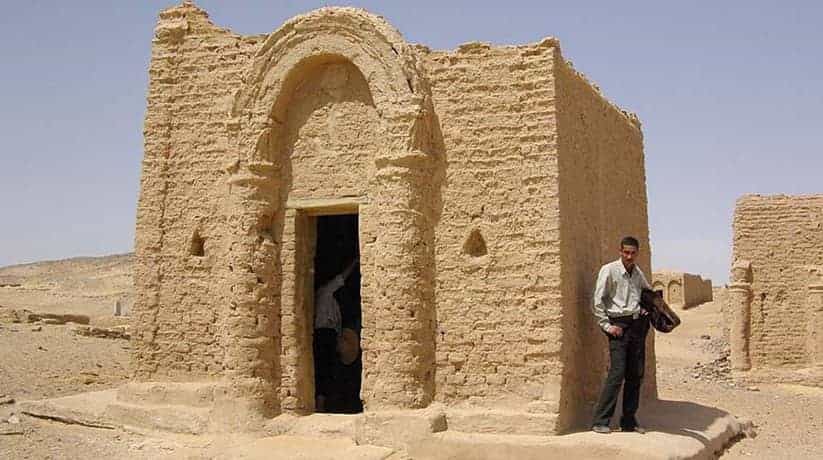
El Bagawat Necropolis located about 3km from the center of el-Kharga Oasis. In fact, it is 1km north of the temple of Hibis. Moreover it sprawls up the lower southern foothills of Gebel El Teir. Furthermore, El Bagawat (or Al Bagawat) is perhaps the oldest major Christian cemetery in the world. In fact, it became a main tourist attraction for Kharga Oasis. The cemetery consists of a vast expanse of domed mud brick mausoleums. Moreover, it also consists of underground galleries which dates back to the 4th century AD. Furthermore, it built over the site of an earlier Egyptian necropolis of pit-graves.

As a burial ground El Bagawat Necropolis appears to be in constant use until the 11th century. In fact, it is although the mud-brick structures date only up to the 7th century. The architectural style of the 263 tomb-chapels varies from simple one-room structures to family mausoleums. It is with ornate façades enhanced with faux columns and arches and domed roofs. The chapels arranged in “streets” and interconnecting narrow alleyways. In fact, they make this one of the earliest “cities of the dead”. Each superstructure constructed over a deep pit beneath the floor level which contained shelves for the coffins and funerary goods.

More information about El Bagawat Necropolis in Kharga Oasis:

It is interesting that some of the equipment re-used from earlier Egyptian burials. It is with painted scenes of Horus and Thoth still visible. The early Christians of Kharga also continued with the “pagan” custom of embalming their dead long. In fact, it is after the tradition had been discontinued in other areas. Unfortunately, virtually all of the tombs in the El Bagawat Necropolis plundered over time. Moreover, most of the mummies destroyed in the process. Many of the chapels undecorated and consisted simply of a single chamber built over the tomb shaft. But some were much more elaborate and contained plastered walls. It is with painted biblical scenes in a strange mixture of styles. The others have elements reminiscent of earlier Egyptian architecture.

Two of the most outstanding and best preserved of the decorated chapels named “Chapel of the Exodus” and “Chapel of Peace”. In fact, the Chapel of the Exodus is one of the earliest in the cemetery. Inside the Chapel of the Exodus, the interior of the dome decorated in two bands illustrating scenes from the Old Testament. Adam and Eve, Moses leading the Israelites through the Sinai desert in the Exodus, Pharaoh (Rameses II) and his armies, Noah’s ark, Daniel in the lion’s den, Jonah and the whale and several other biblical episodes. In the Chapel of Peace, similar themes depicted on the dome. This includes the Annunciation of the Virgin Mary and others, each identified in Greek.

Further information about El Bagawat Necropolis in Kharga Oasis:

The interior walls also painted with many Byzantine frescoes of grape vines, peacocks, allegorical figures and inscriptions. The purpose of the Christian tomb-chapels, like their ancient Egyptian counterparts, was for the reverence of the deceased. Numerous Arabic graffiti dating from the 9th century to the present day can also be seen in some of the chapels, including some by Turkish soldiers thought to be garrisoned at Bagawat in the late 18th century. In the center of the cemetery a mud-brick church once had Christian saints depicted on its walls and at the rear niches for icons and lamps can still seen.

Nearby attractions Information, tours and Online Booking

More of Coptic Egypt

More of Egypt’s attractions
MORE
Egypt Monasteries

Egypt Monasteries

  • Egypt Monasteries
  • Egypt Monasteries
  • Egypt Monasteries
  • Egypt Monasteries
  • Egypt Monasteries
  • Egypt Monasteries
  • Egypt Monasteries
  • Egypt Monasteries
  • Egypt Monasteries
  • Egypt Monasteries
  • Egypt Monasteries
  • Egypt Monasteries

Egypt monasteries information, list, tours and online booking

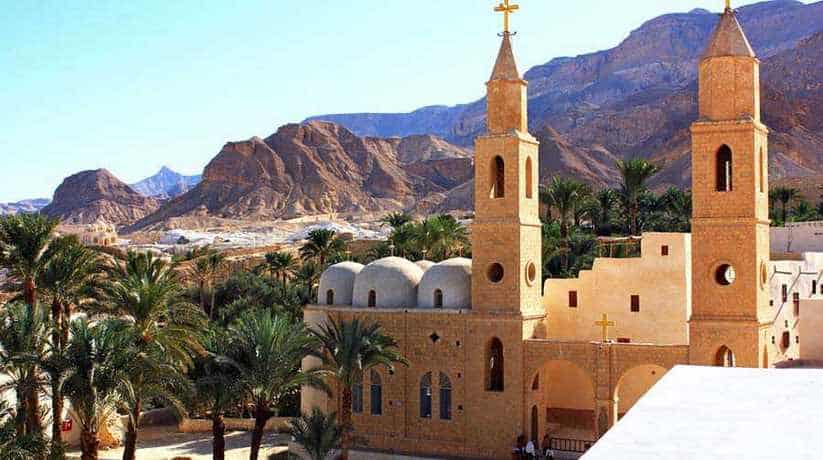
Egypt monasteries are ones of the most important sites which Egypt is famous for. Located approximately 50 km southwest of Alexandria , the small village-town of Abu-Mina is home to St. Mina Monastery. St. Mina is believed to have fallen as a martyr in the early 4th century when the Roman Empire was persecuting Christians. A modern monastery has been built on the location of an ancient church, where the Saint’s remains are believed to be buried. A German archeological team has been working at Abu Mina since 1969. A spiritual experience awaits you on top of a hill opposite the south end of the Elephantine Island in Aswan. Reached by foot on the riverbank, the Coptic Monastery of St. Simeon has been preserved from the 6th century, and is one of the largest Coptic monasteries in the world.

Its original name was “Anba Hatre Monastery”, and due to a water shortage a century after it was built, it was abandoned and left untouched for many years. Take a look around the monastery and gaze at the view from the top of the hill: look down at the desert below; you’ll surely appreciate the wonders of nature and life. Located near Asyut, this is an especially significant Coptic location; it is home to three churches. One of which – Church of Al-Adhra (Church of the Virgin) – is the first ever consecrated Christian church. Deir Al Muharraq is translated into the “Burnt Monastery” due to the damage which was happened to it during raids by invaders; it is one of the holiest Christian sites in Egypt as it is believed that the holy family stayed in a cave here for over six months as they fled through the land of the Pharaohs.

More details about Egypt Monasteries:

This monastery is a sanctified and peaceful place. Every year, for one week in August, it is home to a feast attended by masses of pilgrims. Virgin Mary’s Monastery in Dronka (also pronounced as ‘Deir Dronka’) is located 100 meters high on Western Asyut Mountain, 100m high and 10km from the city of Asyut. Deir Dronka is approximately 50km south of Deir Al Muharraq and 9km south of Asyut city, the historical city of Lycopolis. According to traditions, the Holy Family started their journey back to Palestine from an ancient date to 2500 BC . It is believed to be the last destinations visited by the Holy Family on their journey through Egypt. The monastery was built around the cave in which they stayed. Within the monastery, the cave Chapel of Virgin Mary is said to date from the first century.

Enjoying a great stature, the monastery is visited by many a great deal of Christians every year. It is known that this monastery is better equipped than any other place on the route of the Holy family to receive large numbers of pilgrims, especially during the festival of the Holy Virgin in August. Also known as the Roman Monastery, Deir El-Baramous (Baramous Monastery) is the northernmost of the Wadi Natrun Monasteries. This monastic community offers some of the most beautiful icons and wall paintings in the region, as well as ruins of the monastery in previous ages. There is much you can see here, including the ancient enclosure wall, the Church of the Holy Virgin with its two chapels and baptistery, and the Church of St. John the Baptist.

Further details about Egypt Monasteries:

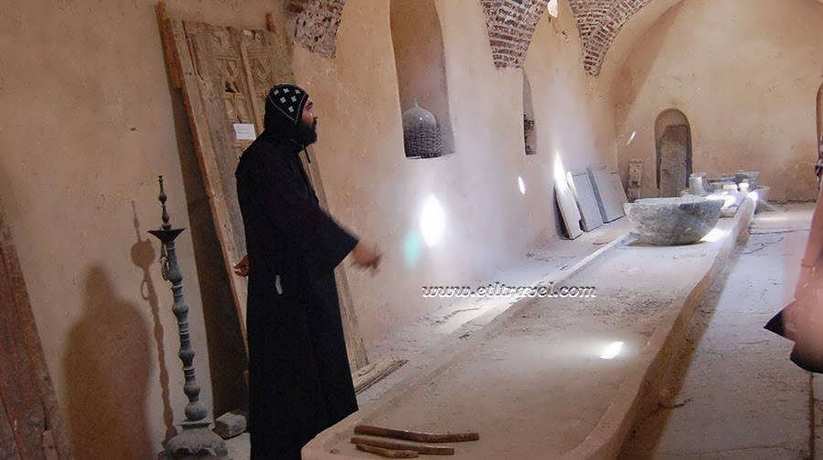
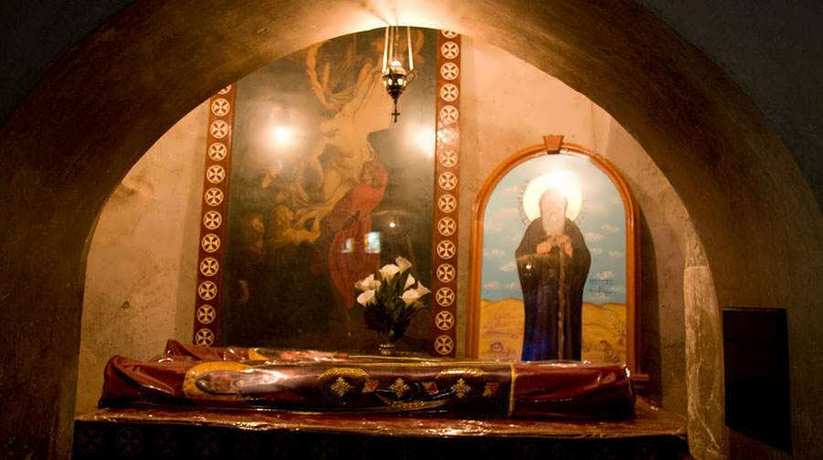
One of the monastery’s refectories is open to visitors and boasts a massive stone table that takes up almost all of the room, and there is even a guest house for visitors. Please make sure to dress modestly while visiting the monastery. Also known as “Deir Anba Makarius Al-Akbar, Deir Abu Makar is the oldest and most secluded of the Wadi Natrun monasteries. The monastery is named after Saint Makarius the Great, an Egyptian monk who lived in a cave and spent his days in prayer. Upon his death, his fellow hermit monks buried him in his cave and built a monastery around it. His relics lay there to this day

Deir Anba Bishoi (Saint Bishoi’s Monastery) in Wadi El-Natrun, not far from Cairo, is an image of serenity. It includes a church which holds the body of the Saint Bishoi, founder of the monastery, as well as several other saints; his body is still intact in a “tube-like” coffin, which is taken on procession around the church on July 17th each year.
You can sit in the garden of this monastery, or wander around the new cathedral and watch the resident monks go about their daily chores; you can also enjoy lovely views of the desert from its rooftop. Please dress modestly while visiting the Coptic Monasteries.

More information about Egypt Monasteries:

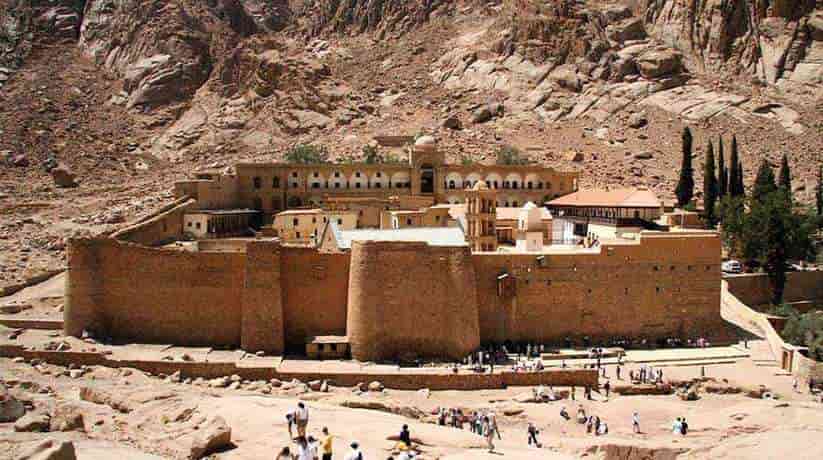
Around half a kilometer from St. Bishoi Monastery, is Deir As-Suryan or the Syrian Monastery which, of the four in Wadi Natrun is most renowned for its exquisite frescoes, icons, and other religious artwork. Suryan Mnastery gets its name from times long ago when many Syrian monks called it home. The church of the Virgin was built in Deir As-Surian around the cave in which St. Bishoi spent most of his days and is a lovely and serene place of worship; with its charming gardens and scenic desert backdrop this monastery is one of the most pleasant to visit in the region. As with all of the monasteries of Egypt, modest dress is required. St. Catherine’s Monastery is located at the foot of Mount Moses to honor the site of the burning bush depicted in the Old Testament.

With a spectacular natural backdrop, St. Catherine’s Monastery has priceless multicultural works of art that include icons, mosaics, oil paintings and one of the largest collections of illuminated manuscripts. Deir Al-Adra (sometimes referenced as Deir al-Adhra, both meaning ‘monastery of the Virgin’) stands on the Gabal Al-Tayr (sometimes referenced as Jebel el-Teir, both meaning ‘Mountain of the Birds’), Markaz Samalut in El-Minya. This is an old Monastery/church built by Empress Helena in 328 on the site where the Virgin, Christ and Joseph, the Carpenter, stayed during their flight to Egypt It is about 58 miles south of Beni Suef and just east of the city of Samalut, situated on a hill on the east bank of the Nile. Faithful pilgrimage here between January 29th and August 22nd.

Further details about Egypt Monasteries:

To the north are ancient quarries and a low relief of Ramesses III. Just south are the Frazer Tombs, which date to the 5th and 6th Dynasties. There are four tombs are simple, and built into the desert cliffs. The monasteries of St. Anthony & St. Paul are the oldest Christian monasteries; they both date back to the 4th century AD, when monks began to settle at the foot of the Red Sea mountain of Galala Al-Qibliya, in hidden cliffs and caves. Both monasteries are considered as the holiest sites of the Coptic Church in Egypt. Located off the Zafarana Road leading to Beni Suef, some 70 km south from Ain El-Sukhna, 45 km from Hurghada , the Monastery of St Anthony is a large complex encircled by high walls, including churches, chapels, a bakery, a garden and a spring, celebrating the father of monasticism, Saint Anthony.

Things have evolved drastically from the time when back in the 4th century, there were only a few hermits hiding in these cliffs. The Necropolis of Al-Bagawat is one of the oldest Christian cemeteries in the world. While most of the tombs are unadorned mud-brick crypts, a few have well preserved biblical scenes etched on the walls.
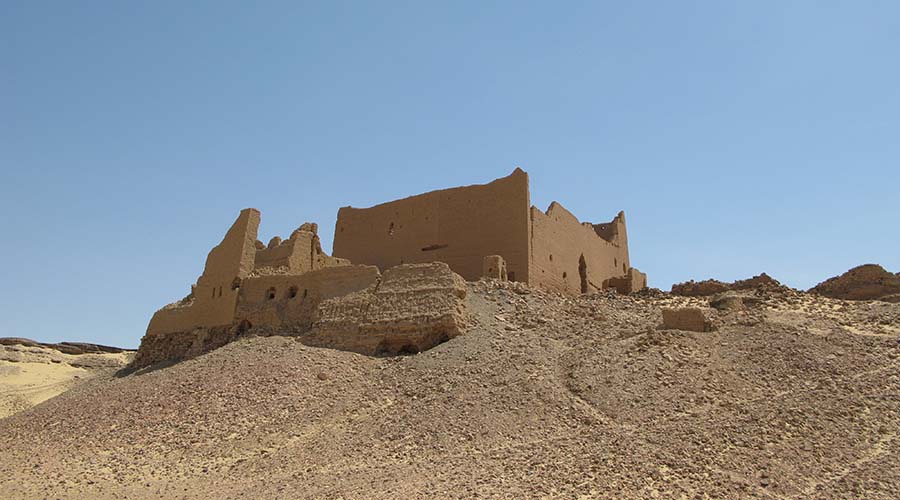
On site guides are more than willing to take you to see paintings of Moses, Jesus and Abraham and other colorful tombs for a tip. Strategically situated to overlook a crossroad of the Western Desert, the Monastery of Al-Kashef stands over the cliffs north of the Necropolis of Al-Bagawat, near the oasis of Kharga. Walk or drive from the necropolis to see impressive mud-brick ruins and fallen arched corridors that date back to the early Christian period.

More details about Egypt Monasteries:

Located near Sohag, in the Nile Valley, Deir Al-Ahmar, or The Red Monastery, has been so named after the building material made from: burnt bricks. Situated in a small village near Sohag , the monastery is still mostly standing, which isn’t sadly the case of the nearby The White Monastery. Deir Al Abyad, Deir Anba Shenouda, The Monastery of St. Shenute and The White Monastery are all names of this early Coptic Monastery. It referred to as the White Monastery because of its very light limestone walls, the stones of which were taken from Pharaonic temples to build it in the beginning of the 4th century. If you look closely you can see ancient reliefs still visible on the stones of this once huge monastery which at one time housed the largest library in Egypt. There is a new church in the ruins of the site located near the original church and renovations are being carried out at present.

Egypt Monasteries list:

Al Kashef Monastery Egypt
+View details
Egypt Nile cruises and hotels
Al Muharraq monastery Asyut
+View details
Egypt Nile cruises and hotels
Baramous Monastery Egypt
+View details
Egypt Nile cruises and hotels
Load more

MORE
Egypts churches

Egypt churches

  • Egypt churches
  • Egypt churches
  • Egypt churches
  • Egypt churches
  • Egypt churches
  • Egypt churches
  • Egypt churches
  • Egypt churches
  • Egypt churches
  • Egypt churches
  • Egypt churches

Egypt churches information, list, tours and online booking

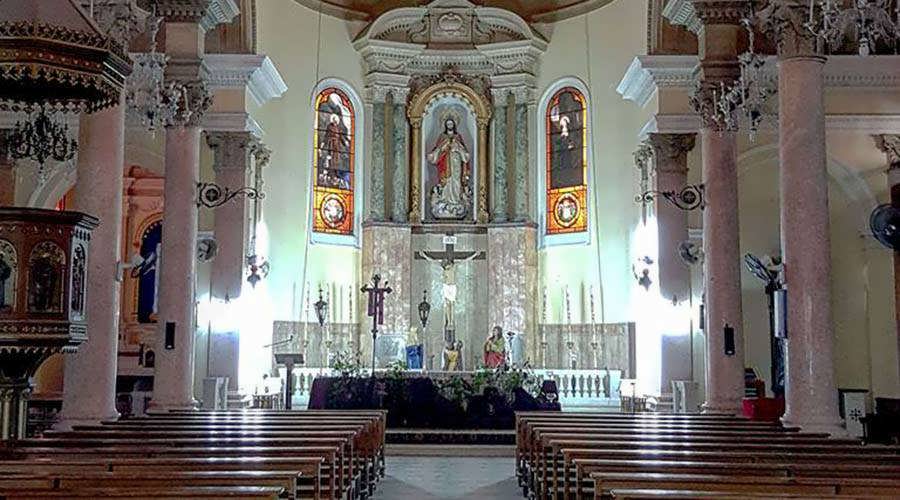
Egypt Churches include a great number of churches all over Egypt. Visit St. Mark’s Coptic Cathedral the oldest church in Africa and the seat of his Holiness the Pope of Alexandria , Patriarch of all Africa and the Holy Synod of the Coptic Orthodox Church. Take notice of the beautiful icons and mosaics that fill the silence of the Cathedral with a surreal beauty. Make sure to dress conservatively and respect the sanctity of the location. Built in 1924, the Church of the Sacred Heart is a Catholic church, primarily visited by the Latin Catholics of Alexandria.

St. Francis serves as the patron saint, he was an Italian monk born in 1181 who also lends his name to the many Franciscan schools found around the world. The church is worth visiting for its breathtaking religious art. You will see icons, murals, figurines and most notably exquisite stained glass artwork. The church of Saint Sergius and Bacchus is one of the oldest Coptic churches in Cairo . Coptic tradition has it that the church was built over the site where the Holy Family once rested during its journey into Egypt. The event is commemorated every year on June 1st with a mass. Take the steps that lead to one of the most beautiful churches in the Middle East known as the Hanging Church Built on top of the Roman fortress gatehouse called Babylon, the nave of the Hanging Church is suspended over the passageway.

More information about Egypt churches:

Located just south of the Coptic Museum in Cairo, the Hanging Church boasts 13 magnificent pillars in its interior, representing Jesus and his 12 apostles. Listen in on the ancient liturgical Coptic language used in service and witness a living vestige of Ancient Egyptian history. A small and historically significant church near Abu Serga Church, the Church of St. Barbara, or “Sitt Barbara” houses some interesting icons and the relics of the Saint herself, who was murdered by her father after attempting to convert him to Christianity. Many of the treasures of this ancient church can now be found in the Coptic museum which is a two minute walk away. Built between the 4th and 5th centuries this church retains a beautiful ambience owing to the artful icons and its breathtaking Coptic architecture.

The unique Church of St. George is the only round church found in Egypt. Built in the 10th century on top of a Roman tower of the fortified town called Babylon, the church is connected to the Monastery of St. George and is the seat of the Greek Patriarchate of Alexandria . Ascend the steps along the Roman towers and see a relief of St. George slaying a dragon on the outer brickwork of the wall. Inside, the austere ancient artwork grace the church with depictions of St. George and his quest to defend Christianity.

Egypt Churches list:

Abu Serga Church Cairo
+View details
Egypt Nile cruises and hotels
Cairo Churches Egypt
+View details
Egypt Nile cruises and hotels
Cairo Saint Mark Cathedral
+View details
Egypt Nile cruises and hotels
Cave Church Cairo Egypt
+View details
Egypt Nile cruises and hotels
Hanging church Cairo Egypt
+View details
Egypt Nile cruises and hotels
Holy Family Journey Egypt
+View details
Egypt Nile cruises and hotels
Load more

MORE
Saint Barbara church Cairo

Saint Barbara church Cairo

  • Saint Barbara church Cairo
  • Saint Barbara church Cairo
  • Saint Barbara church Cairo
  • Saint Barbara church Cairo
  • Saint Barbara church Cairo
  • Saint Barbara church Cairo

Saint Barbara church Cairo Egypt tours, prices, booking

Saint Barbara church Cairo is one of the many famous Coptic Orthodox parishes in Old Cairo district. In fact, the building located on the eastern part of the Babylon Fortress. Moreover, it is indeed one of the oldest buildings in Cairo. The church dates back to the 5th or 6th century AD. Like many other buildings of Coptic architecture, Saint Barbara church rebuilt several times. Most by the end of the 11th Century. Saint Barbara church Cairo stands north of the Coptic Museum. It is east of the Church of Saints Sergius and Bacchus (Abu Serga) on the eastern side of Babylon Fortress. It dedicated to Abu Kir and Yohanna or St. Cyrus and St. John.

When the remains of St. Barbara brought here, a separate sanctuary built. Thus, there are now two separate Churches that built on this location. Athanasius, a wealthy scribe and a secretary built the Church. Abdel-Aziz Ibn Marwan is the governor of Egypt between 685 and 705 AD. A door found during one of the church’s many restorations could date as early as the 4th Century. In fact, between 1072 and 1073, the Church restored to house the relics of Saint Barbara. These relics remain to this day.

Further details About St. Barbara church in Cairo:

In fact, the church damaged again by another fire during the 12th century. Moreover, Saint Barbara church Cairo renovated the beginning of the 20th century. Furthermore, the Church of St. Barbara known for its many precious items. These items sent to the nearby Coptic Museum, which is only a two-minute walk from the church. Basilican structure and tripartite sanctuary of the church resembles the one of Abu Serga. Nearby there is a convent which comprises several buildings. It includes a school built by the well known architect Ramses Wissa Wassef.  In fact, Saint Barbara Church Cairo has been a long-lasting example of ancient Coptic architecture. It resembles the shape of ancient Basilicas.

Moreover, it comprises an entrance, a narthex, a long nave, several aisles and three sanctuaries. Most other Coptic Orthodox Churches have more than one Sanctuary. The middle sanctuary is the one of main importance which dedicated to St. Barbara. After entering from the narthex’s lobby, there are five marble columns. They separate the nave from the two aisles. In front of the middle sanctuary there is a semi-circular choir, which consists of 7 large steps. There are several other icons on the southern aisle of the church. They representing Virgin Mary and Jesus when he was a child. They also represent Jesus entering Jerusalem and the baptism of Christ.

Nearby attractions Information, tours and Online Booking
More of Coptic Egypt

More of Egypt attractions

MORE
Saint George church Cairo

Saint George church Cairo

  • Saint George church Cairo
  • Saint George church Cairo
  • Saint George church Cairo
  • Saint George church Cairo
  • Saint George church Cairo
  • Saint George church Cairo
  • Saint George church Cairo

Saint George church Cairo Egypt tours, prices, booking

Saint George church Cairo in Old Cairo is a Greek Orthodox Church. In fact, the church is one of the few round churches still in existence in the East. Moreover, it formed from it’s placement atop a rounded Roman tower. The Holy Family said to have taken shelter in a place now covered by the church. There is a long set of steps. In fact, it leads up to the church. They built on the outer wall of the Roman towers. As one ascend these steps, he will find a relief of Saint George. He will find also the dragon wrapped around the outer brickwork of the tower. Saint George church Cairo burned many times. In fact, t burnt in 1904 and the current structure built in 1909. It still has some of the older structure’s beautiful stained-glass windows.

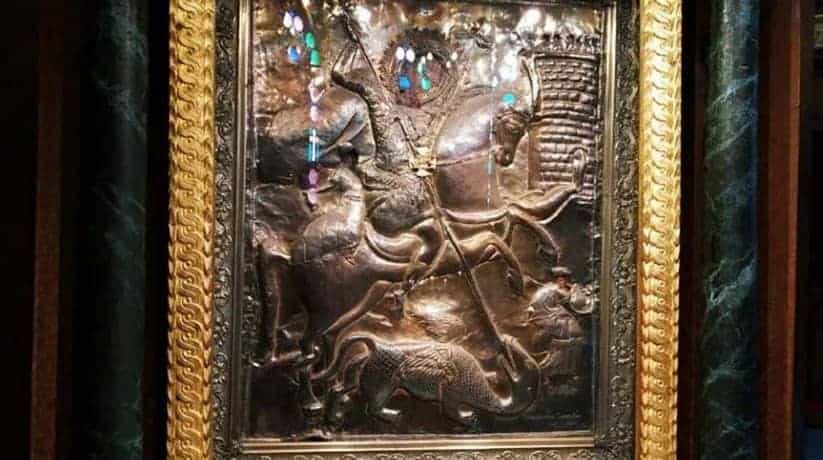
In fact, for centuries, the church alternated between ownership by the Copts and the Greek. Since the 15th century it remained Greek Orthodox. The original Church of Saint George burnt. It was indeed one of the most beautiful and richest in the Roman Fortress of Babylon. In fact, the earliest church built in 684 by Athanasius, who was a wealthy scribe. During the Papacy of Pope Gabriel the relics of the saint relocated to the present church in Old Cairo. Moreover, next door is the Monastery of St. George. It is now the seat of the Greek Orthodox Patriarchate of Alexandria. Furthermore, the monastery rarely admits tourists. The image of Saint George is a Roman soldier. In fact, it mounted on a fine Arabian horse and spearing a dragon. In fact, it is a familiar one throughout Old Cairo. It is where two facilities dedicated to him.

Further details about Saint George church Cairo:

Throughout the Christian East, Saint George is indeed the most popular warrior-saint. In the Coptic Churches of Cairo there are now more than twenty relics of the equestrian saint. The Coptic biography of Saint George does not mention his flight and victory over the dragon. Around 14 century this theme was a transferal from the biography of St. Theodore to Saint George. Though it is also possible that the Christians adopted this tale from the Western Christians. In fact, the origin of Saint George monastery located in Old Cairo. Moreover, it called Deir Al Banat which means Monastery of the Girls. The foundation of the structure dates back to 7 or 8 century. Today, the monastery is the home of about forty religious women. The place of Saint George church Cairo dates back to Mamluk era. It transformed into a church in the fourteenth or fifteenth century.

Here, Saint George’s icon venerated. The large room with an anteroom separated from the chapel by a double door of surprising height. It measures some seven meters. The nuns in charge of the church features an iron collar and chain. The chain is about 4.2 meters long. In fact, it attached to the south wall of the inner room of the shrine. The chain applied to women. Men sometimes seek the blessings of the saint through the chain. The church has the iron chain which the saint torture with before his martyrdom. Visitors to Saint George church Cairo love to put the chain on their necks and wind it around their body. They also kiss it piously and offer prayers to Saint George to be in a state of an exceptional grace.

More details about Saint George church Cairo:

In the Middle East they believe that the chains of Saint George posses miraculous powers. It cure the demon-possessed and paralytics. Moreover, it also cures anxiety neuroses, conversion hysteria, obsessional neuroses and even schizophrenic psychoses. The origins of the Coptic attachment to the chains of Saint George are in the Byzantine tradition. Furthermore, the chains of Saint George used to tie up those suffering from nervous disorders. It also used for anxiety neuroses, conversion hysteria and obsessional neuroses. Moreover, it also used even for schizophrenic psychoses. Today, large numbers of Christians and even Muslims visit the Shrine of the Chains of Saint George in the Convent. They do that on Fridays and Sundays.

Nearby attractions Information, tours and Online Booking
More of Coptic Egypt

More of Egypt attractions

MORE
Saint Bishoy Monastery

Saint Bishoy Monastery Alexandria

  • Saint Bishoy Monastery Alexandria
  • Saint Bishoy Monastery Alexandria
  • Saint Bishoy Monastery Alexandria
  • Saint Bishoy Monastery Alexandria
  • Saint Bishoy Monastery Alexandria

Saint Bishoy Monastery Egypt tours, prices, booking, reviews

Saint Bishoy Monastery is the most famous Coptic Orthodox monastery named after Saint Bishoy. Moreover, it located in Wadi El Natrun. It is the easternmost monastery among the four current monasteries of the Nitrian Desert. The monastery founded by St. Bishoy in the fourth century. On 13 December 841 Pope Joseph I fulfilled the desire of Saint Bishoy. He moved his body as well as that of Saint Paul of Tammah to this monastery. Up to that date, the two saints bodies were at the monastery of Saint Bishoy at Deir El Barsha. Today, the two bodies lie in the main church of the monastery.

Saint Bishoy monastery contains the relics of Saint Bishoy, Saint Paul of Tammah. It is besides to the relics of other saints. The body of Saint Bishoy remains in in-corruption until the present time. Pope Shenouda III also interred there. In fact, the monastery has five Churches. The main one named after Saint Bishoy. The other Churches named after the Virgin Mary, Saint Iskhiron. They also named after Saint George and Archangel Michael. The monastery surrounded by a keep. It built in the fifth century AD to protect the monastery against the attacks of the Berbers. An initial castle built early in the twentieth century.

Further details about Saint Bishoy Monastery:

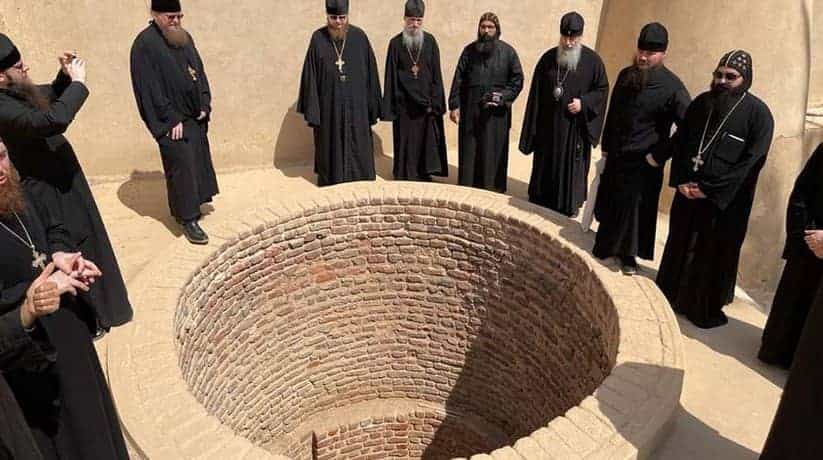
Later, it replaced by a four-storied castle built by Pope Shenouda III. Besides, the monastery contains a well known as the Well of the Martyrs. Berbers washed their swords in this well after killing the Forty Nine Elder Martyrs of Scetes. They threw the bodies of the martyrs in the well. Christians buried the bodies in the nearby Monastery of St. Macarius the Great. Under the reposed Pope Shenouda III, the Monastery of Saint Bishoy began to expand. It was with new land around the monastery which purchased and developed. Cattle breeding, and poultry dairy facilities also developed. Ancient buildings and churches also restored.

Cells for monks, retreat houses, a house for the Coptic Pope built. Annexes for a reception area, an auditorium, conference rooms, fences and gates also built. Pope Shenouda buried here after his death in March 2012. You can sit in the garden of Saint Bishoy monastery. Moreover, you can wander around the new cathedral. You can watch the resident monks go about their daily chores. You can also enjoy lovely views of the desert from its rooftop. Please dress while visiting the Coptic monasteries. Wadi El Natrun located 100 km northwest of Cairo in the Western Desert. The only way to get there is by car or by bus. West Delta Buses leave every hour from the Heliopolis station.

Nearby attractions Information, tours and Online Booking

More of Coptic Egypt

More of Egypt attractions
MORE
error: Copyright © www.etltravel.com !