Activities in Ancient Luxor

Things to Do

Menna tomb Luxor Egypt

Menna tomb Luxor Egypt

  • Menna tomb Luxor Egypt
  • Menna tomb Luxor Egypt
  • Menna tomb Luxor Egypt
  • Menna tomb Luxor Egypt
  • Menna tomb Luxor Egypt
  • Menna tomb Luxor Egypt

Menna tomb Luxor Egypt TT 69 tours, prices, booking, reviews

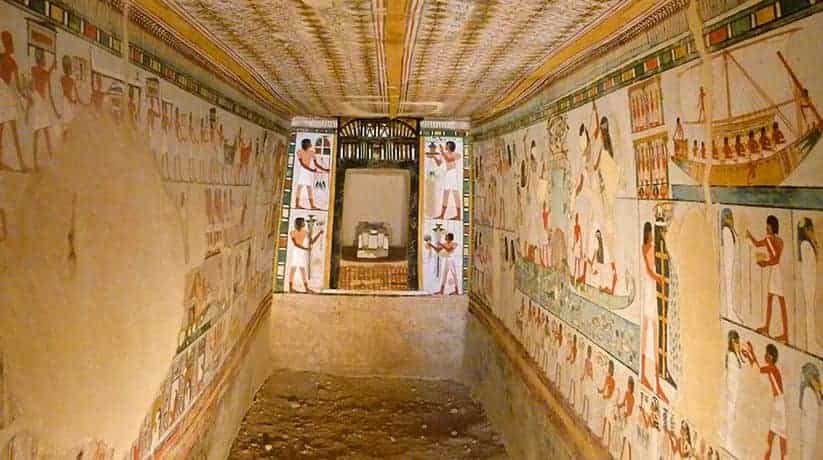
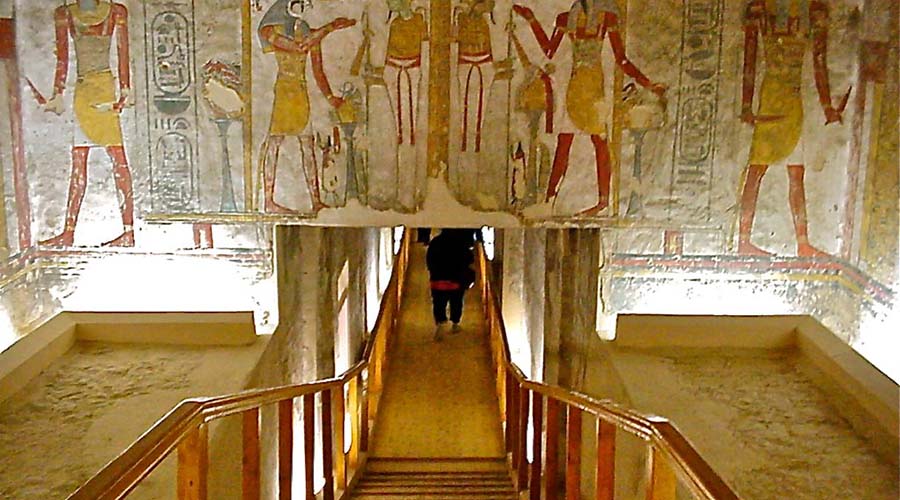
Menna tomb Luxor Egypt found in the upper enclosure at Sheikh Abd el-Qurna, to the west of Nakht tomb (TT 52). In fact, the tomb is well-known for its superb wall paintings of scenes of daily life. The scenes depicted in bright colors. The classical private tombs on the West Bank at Luxor referred to as T-shaped. It particularly those located on the slopes of Sheikh Abd el-Qurna. The tomb is in the area which known as the Tombs of the Nobles. In fact, the tomb Luxor has an entrance corridor or a courtyard. Moreover, it leads into a wide vestibule, with another short corridor that leads into a long chapel. It is also with a small niche at its rear. Furthermore, Menna tomb Luxor (TT 69) is completely classic in this regard.

Menna held the title, “Scribe of the Fields of the Lord of the Two Lands of Upper and Lower Egypt”. It was besides to field overseer of Amun. These were not two separate positions. Moreover, he supervised temple owned agricultural lands which were dependencies of state granaries. Moreover, he thought to have worked for the Temple of Amun at Karnak. He also supervised the measuring of fields and inspected the work on the land. Moreover, he also prosecuted defaulters and recorded the crop yield. In fact, he lived during the 18th Dynasty. He worked under both Thutmose IV and Amenhotep III.

Further details about Menna tomb Luxor Egypt:

Menna tomb Luxor indeed has details that Egyptologists can gleam from subtle differences in the artwork. In fact, Private tombs often reflect the style imprinted by the current pharaoh. For example, Thutmose IV favored lean female figures in artwork. Amenhotep III was more prone to voluptuous curves. Thutmose IV preferred almond shaped eyes with round pupils that touch the lower lid. Amenhotep III’s females had closed, slanted and almond shaped eyes. It is with pupils that touch almost half of the upper eyelid. Egyptologists are actually able to date tombs to various pharaohs from these differences. Menna’s wife, Henuttawy (Henut-taui), maybe also was literate. In fact, we find a scribal palette depicted under her chair in several tomb scenes.

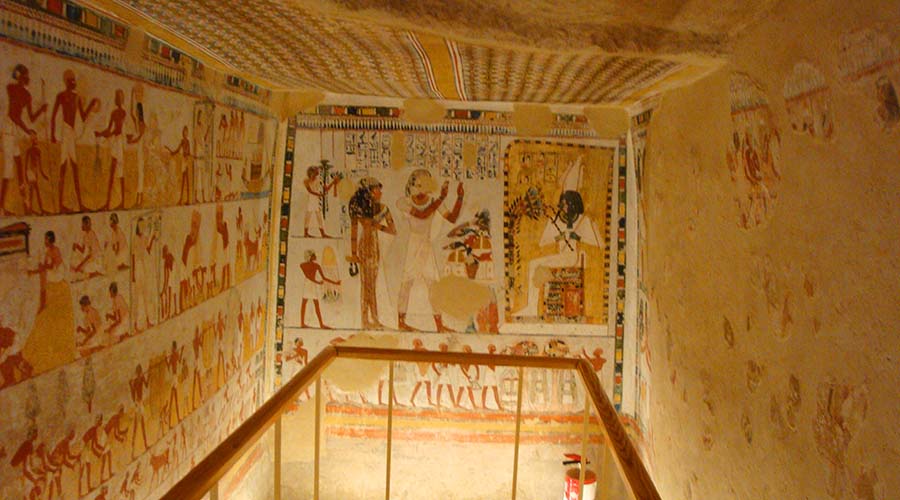
Moreover, Menna and Henuttawy had several sons, one of which followed in his profession. They also had three daughters, including one, Amenemwaskhet. She was a lady-in-waiting in the court of the pharaoh. In fact, Menna tomb Luxor is often a favorite of tourists. It is because of the sophisticated paintings and the decorative program. Moreover, the tomb is one of the most complete in the Theban necropolis. Menna’s family is prominent in these decorations. Many of the scenes are touching. As might expected, agriculture also documented. When you enter the tomb and make a left turn in the vestibule, you will find four registers. They are with different stages of reaping and of the wheat harvest. These activities carried out under the supervision of scribes who record the yield.

More details about Menna tomb Luxor Egypt:

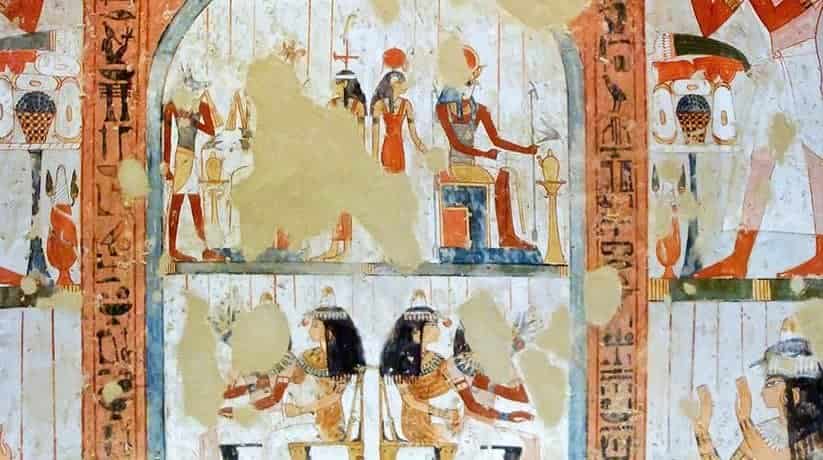
On the next shorter wall, we find a scene of Menna and Henuttawy before a table of offerings. They are worshiping the god, Osiris, who seated on a throne inside a chapel. Furthermore, on the rear left wall of the vestibule are also fragmentary scenes. They represent the deceased and his wife at the funeral banquet. On the right rear wall are scenes of the couple receiving offerings. It is along with a list of the ritual offerings. On the next wall (the western wall) of the vestibule is a painting of a stele divided into three registers. In the upper register, we find Re-Harakhty, along with the main gods of the funeral cult. The middle register is a double representation of Menna and Henuttawy. They seated, and in the lower register the couple shown in an act of worship.

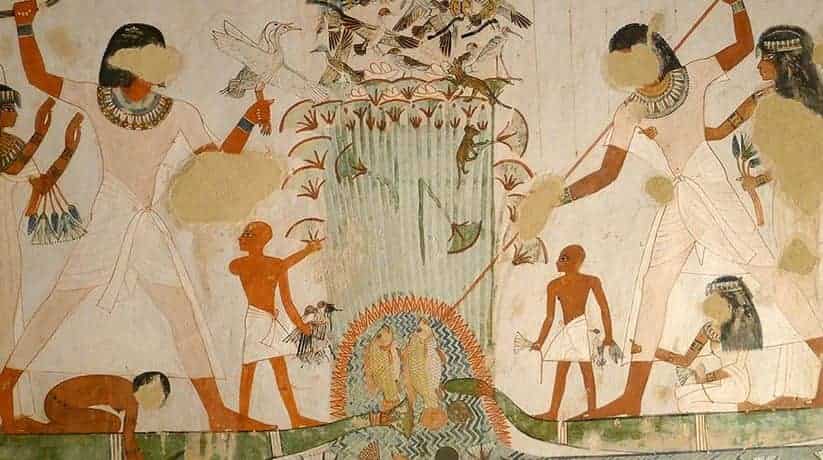
The right front wall of the vestibule has various offering scenes. Entering the Chapel, on the long right wall we first find scenes of bearers of offerings. We will also find the funeral procession. It followed by the deceased judged by Osiris. At the back on the short wall is the niche for statues which of the deceased and his wife. Note the lack of a false door often found in other tombs. The right wall of the chapel is the most interesting within Menna tomb Luxor. The opening scenes of this wall depict a young daughter of Menna. She picks lotus flowers while. Another one carries lotus flowers and the birds that they have caught. The next scene is well known. It shows the natural bounty to found in the marshes among the papyrus and lotus plants. Swarming with life, we find flocks of birds intermingled with butterflies.

Further details about Menna tomb Luxor Egypt:

It is besides the nests with eggs. There is also a cat and rodent who appear to be after the bird’s eggs. The next scene much like one found in Nakht tomb (TT 52). This leads us to believe that the same artist worked in both tombs early in the reign of Amenhotep III. It is a double scene, showing Menna standing on a papyrus fishing boat. His wife and sons are also present. On the right, Menna shown harpooning two fish. On the left, he shown with a throwing stick used for hunting birds. The final scene is in several registers. The top register depicts a pilgrimage to Abydos with a fleet of boats returning to Thebes. In the lower registers we find scenes. They dedicated to the rites carried out before the mummy. It is with the “Opening of the Mouth” ceremony being prominent.

Entrance to the tomb:

Opening times are 8 am to 4 pm. Tickets for Menna tomb Luxor and Nakht tomb cost 60 Egyptian pound. They bought from the ticket office.

Nearby attractions Information, tours and Online Booking

More of Ancient Egypt

More of Egypt attractions
MORE
Merneptah tomb Luxor

Merneptah tomb Luxor

  • Merneptah tomb Luxor
  • Merneptah tomb Luxor
  • Merneptah tomb Luxor
  • Merneptah tomb Luxor
  • Merneptah tomb Luxor
  • Merneptah tomb Luxor

Merneptah tomb Luxor KV 8 Egypt tours, prices, booking, reviews

Merneptah tomb Luxor Egypt (KV 8) located in a small, lateral valley. It is on the right side of the main wadi in Luxor. In fact, Merneptah was a son of Ramses II and Queen Isis-Nofret. Merneptah tomb Luxor discovered by Howard Carter in 1903. Howard Carter was not as famous then. As he would not make his well known discovery of Tutankhamun tomb until 1922. Moreover, the tomb is near his father’s huge tomb (KV 7). When discovered, the tomb was full of debris and stood open since antiquity.

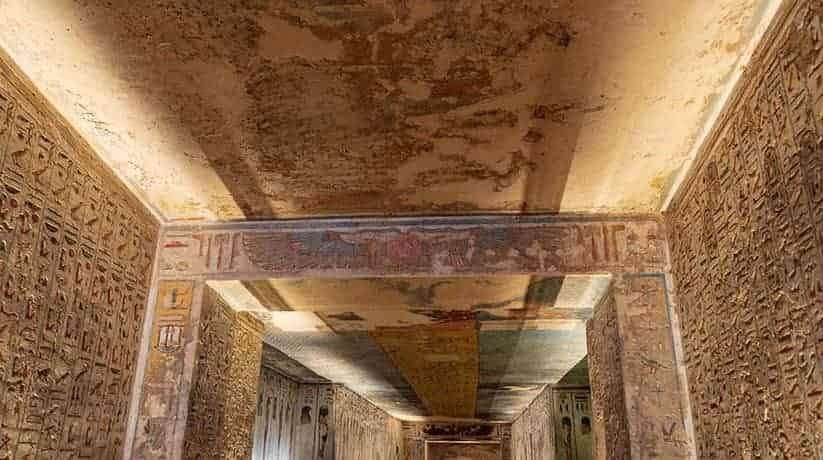
We believe that the tomb was at least accessible to at least the first pillared hall. It is from the Greek and Latin graffiti. Merneptah tomb Luxor indeed is interesting. It is because it marks a distinct transition between the tombs of the 19th and 20th Dynasty kings. There is a material decrease in the number of lateral rooms. There is also a dramatic increase in the height of the corridors and rooms. The entrance of the tomb made wider than earlier tombs. It gives the feeling of a more imposing facade. In fact, the tomb is much more traditional in its decorative themes.

Further details about Merneptah tomb Luxor Egypt:

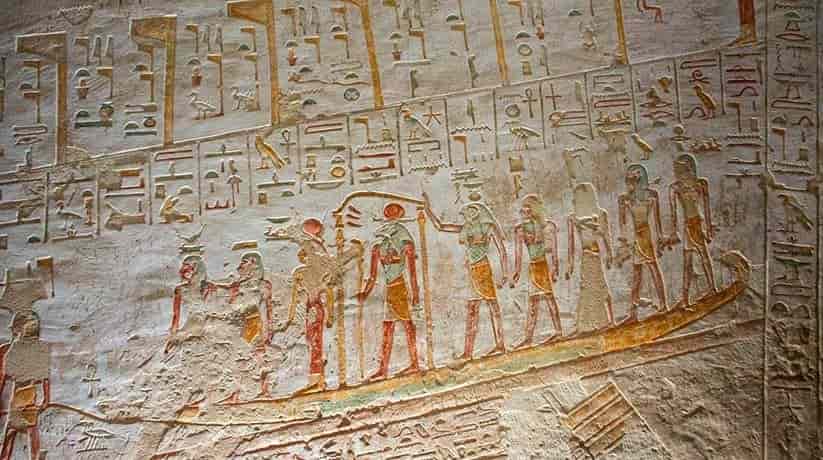
The plan of Merneptah tomb is straightforward. There are three initial corridors that first lead to the ritual shaft. The second of these has a stairway. In the first corridor we find the first decorations. It shows the king in the presence of Re-Harakhty. There are also passages from the “Litanies of Re”. The second and third corridors have texts and images related to the “Book of Amduat”. After the ritual shaft is a pillared hall with a two-pillar annex. This decorated room dedicated to his father, Ramses II. The cover of the king’s sarcophagus located in this annex. In the pillared hall, the decorations are from the “Book of Gates”. After the pillared hall is a fourth corridor. It leads to a vestibule and finally a fifth corridor before the burial chamber. The vestibule decorated with scenes from the “Book of the Dead”.

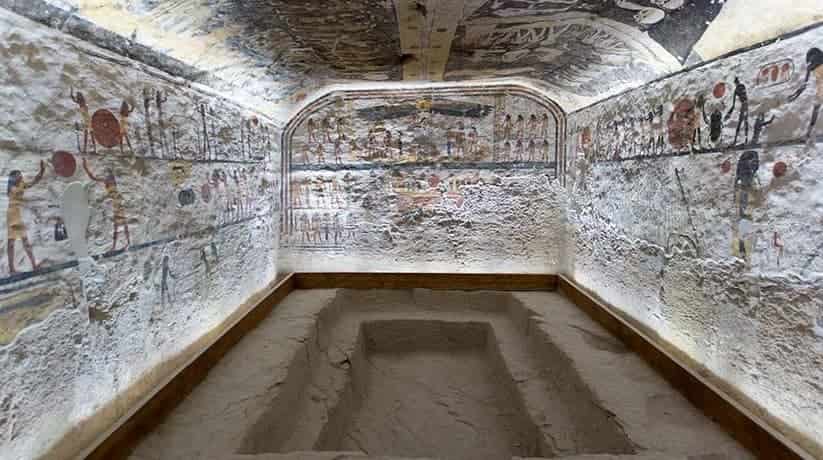
The burial chamber of Merneptah tomb Luxor has four annexes. Two are on the left and two are on the right and a complex of annexes at the back. The astronomical vaulted ceiling of the burial chamber itself supported by eight pillars. They arranged in two rows. Here, the main decorative theme returns to the “Book of Gates”. Though on the right hand wall there are solar oriented scenes from the “Book of Caverns”. The burial chamber is a part of the king’s ornamental cartouche-shaped sarcophagus of pink granite. It is in the center of the burial chamber. There were four stone sarcophagi. They consisted of three outer containers of pink (or red) Aswan granite. The fourth innermost sarcophagus is of creamy white calcite. The outermost sarcophagus was huge, at 4.1 meters (about 13 1/2 feet) long.

More details about Merneptah tomb Luxor Egypt:

It is indeed interesting how Merneptah tomb reflects history itself. In fact, Ramses II lived to an old age. That is why Merneptah did not mount the thrown until late in his own life. Moreover, Merneptah was around 70 when he became ruler of Egypt. He ordered the construction of his tomb and “Millions of Years” temple. He only ruled for about ten years. Furthermore, he faced with attacks by attacks were by Libyans and an uprising in Nubia. That distracted him from his personal monuments.

In fact, we see all this reflected in Merneptah tomb Luxor. Moreover, the tomb is of higher quality and more impressive. It echoes that of his fathers tomb, near the entrance and into the first half of the structure. The deeper one travels within the tomb, the simpler and less sophisticated it becomes. For example, towards the entrance of the tomb the decorations are excellent bas-reliefs. While further into the tomb the decorations are cruder. Thought the techniques used are much faster. Merneptah felt he was running out of time, which we know today to be true.

Entrance to the tomb:

Ticket for the Valley of Kings cost 80 Egyptian pound for three tombs. It includes Merneptah tomb and can bought at the gate. Photography inside the tombs forbidden and can incur heavy fines. There is a little train – Taftaf – that runs from the coach park to the entrance to the monument area. It costs 5 Egyptian pound.

Nearby attractions Information, tours and Online Booking

More of Ancient Egypt

More of Egypt attractions
MORE
Mentuhotep II temple Luxor

Mentuhotep II temple Luxor

  • Mentuhotep II temple Luxor
  • Mentuhotep II temple Luxor
  • Mentuhotep II temple Luxor
  • Mentuhotep II temple Luxor
  • Mentuhotep II temple Luxor
  • Mentuhotep II temple Luxor

Mentuhotep II temple Luxor Egypt tours, prices, booking

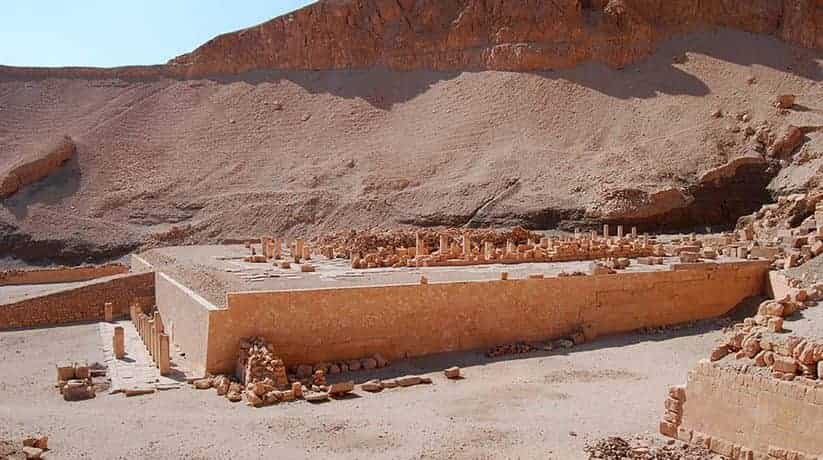
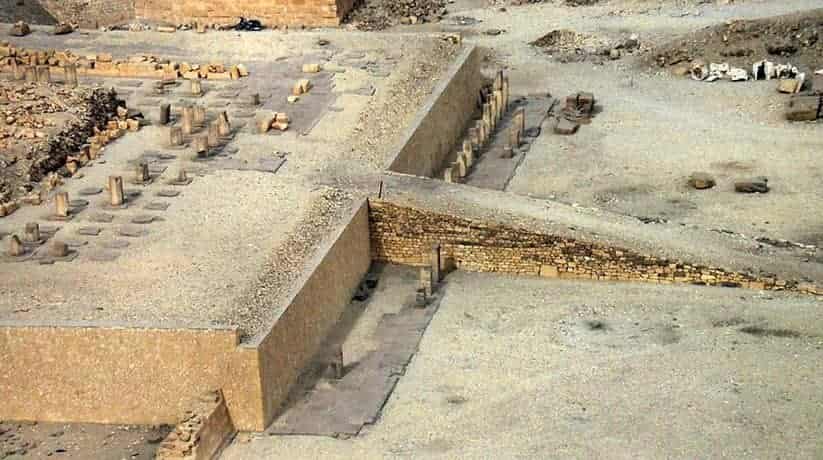
Mentuhotep II temple Luxor Egypt in fact is a mortuary temple. It located in the West Bank of Luxor, just next to Hatshepsut temple. In fact, the temple had important historical overtures. So it is not surprising that various teams have investigated the site. It was the first temple in Western Thebes to house a cult to the goddess Hathor. Moreover, it foreshadowed a new theological concept of the “Temples of Millions of Years”. It is which would gain popularity during the New Kingdom. Lord Dufferin is the one who discovered Mentuhotep II temple. It was in the later half of the 19th century.

Henri Edouard and Henry Hall are the first modern scholars to examine the site between 1903 and 1907. They supported by the Egypt Exploration Fund. Between 1911 and 1931, Mentuhotep II temple Luxor site further investigated by another team. The team was from the Metropolitan Museum of New York. It directed by Herbert Win-lock. Neither of these groups completed their excavations. The site not fully investigated until the German Archaeological Institute in Cairo. It was under the direction of Dieter Arnold. He excavated the temple site between 1968 and 1971.

Further details about Mentuhotep II temple Luxor Egypt:

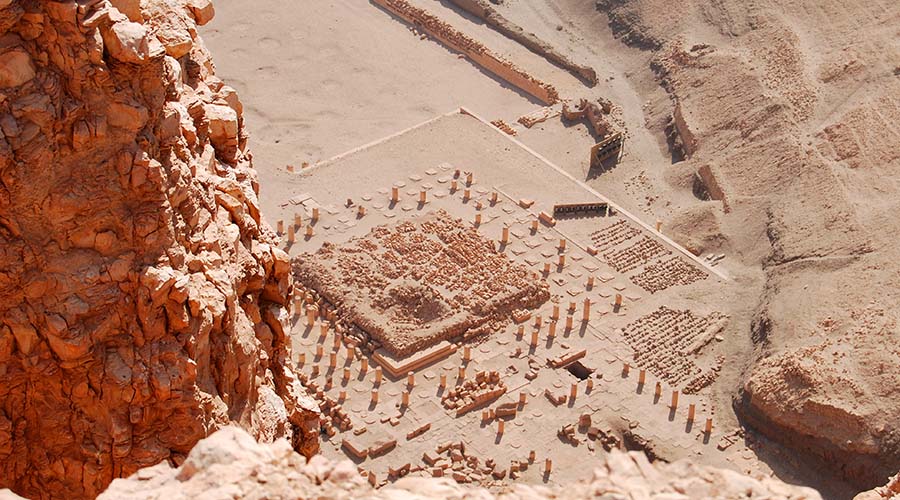
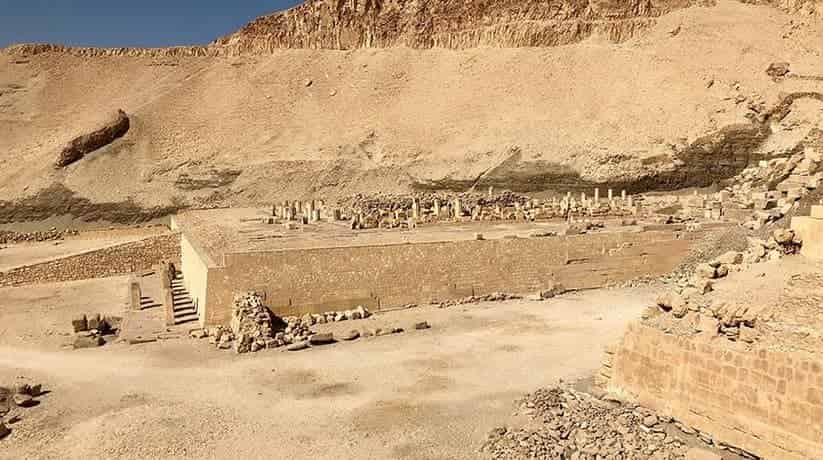
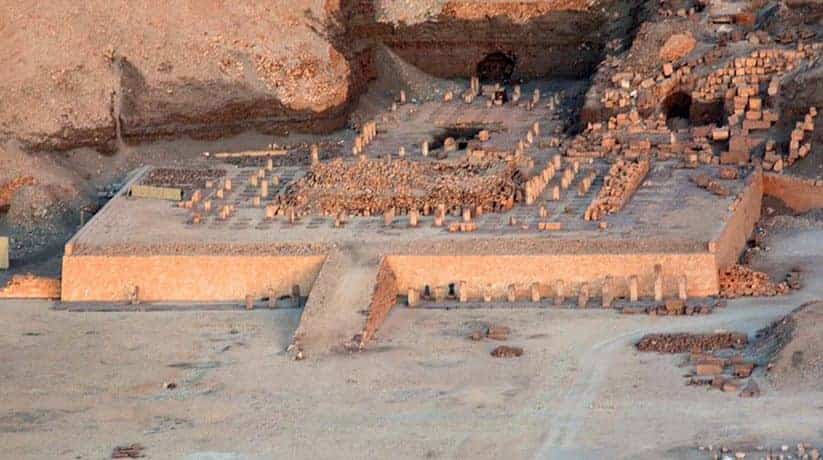
Mentuhotep II selected a site on a rocky hillside at modern Deir El Bahari. It where some of his predecessors of the First Intermediate Period built their saff Tombs. Saff is an Arabic term meaning “row”. These Tombs so named for their row of pillars along their facades. The ground plan of Mentuhotep II temple combined architectural elements. The elements are of both the staff tomb and the pyramid complex. The temple complex consisted of a valley temple and ruins. The ruins are of which lie under the fields at the edge of the Nile Valley . It is also under the ruins of Ramses IV‘s valley temple. Ruins also include a causeway, a stepped, terraced mortuary temple.

That temple that cut into the rock cliff face and a subterranean burial chamber. Mentuhotep II temple went through three construction phases. The complex generally oriented east-west. In fact, it bends to the north. Not much known about the temple or the Valley Temple. The causeway was open. Furthermore, it had Osirian statues of the king. They located along its sides at irregular intervals. It terminated at the main temple complex in a large courtyard surrounded by a limestone wall. At the back of the courtyard (western end) stood the massive, terraced mortuary temple. The facade of the lower, pillared hall consisted of a portico built of limestone blocks. This portico, which had two rows of pillars, divided in half by a ramp leading to the second terrace. The portico walls decorated with scenes of battle.

More details about Mentuhotep II temple Luxor:

The main second level of Mentuhotep II temple Luxor accessed by a broad ramp of limestone blocks. It is with a grove of parallel sycamores and tamarisk planted to either side. This terrace maybe divided into three sections. It consists of an outer pillared portico hall. It surrounds an ambulatory on the north, south and east sides, with a core at the center of the ambulatory. The outer portico section of this level is like the lower level. It consisted of two rows of limestone pillars. It often referred to as the “upper pillared hall”. The front of these pillars decorated with scenes depicting Mentuhotep II. They also depict various gods and inscribed with text in low relief. The rear limestone walls of the pillared hall around the inner ambulatory inclined.

They decorated both inside and out. Suggesting that it once composed the outer facade of the ambulatory. This has led Egyptologists to believe that the pillared hall itself built at a later date. An entrance on the east wing of the pillared portico hall. It located on the main axis of Mentuhotep II temple complex as a whole. It leads to the inner ambulatory. An ambulatory can defined as a partial roof. It ran around the edges of a structure and supported by pillars. Most often we find ambulatories surrounding an open courtyard. But in this case it surrounds an inner core. Within this ambulatory stood 140 octagonal pillars. They arranged in two rows on the west (rear) side, and three rows on each of the other sides.

Further details about Mentuhotep II temple Luxor Egypt:

The ambulatory illuminated by shafts in the exterior wall near the outer portico. Inside of the ambulatory was a central core. It was a symbolic version of the primeval mound. We believe it made of hard clay shaped roughly into a cube. It surrounded with limestone slabs. Furthermore, it may have extended into the upper or top terrace through the ambulatory. It is the object of considerable debate. Henri Edwardo as we mentioned is the first investigator of Mentuhotep II temple Luxor. He believed this core to be a pyramid which built upon the rock subsoil. Many different views contradict his assumption. Arnold rejected Naville’s argument because there was no evidence to support it.

There are no ruins of a pyramid’s inclined walls and no casing. So he sees this structure as a more or less a rectangular flat roof terrace. It is with a stylized representation of the primeval mound. Debate on these issues is influenced by the lack of ruins of this upper terrace structure. It also influenced by conflicting documentary sources. For example, the Abbott papyrus definitely refers to the structure as a pyramid. Arnold also came across two fragments of inscriptions. They contain the structure’s name and seem to elude to it being a pyramid. We also find other similar references to its name elsewhere. Egyptologists believe that the top superstructure did not take the form of a pyramid. In the Abbott papyrus, there are other tombs. They are not Pyramids and also designated as Pyramids.

More details about Mentuhotep II temple Luxor Egypt:

Egyptology men believe that the ruins of the tomb either took on the look of a funeral mound or pyramid. The tradition of monumental royal Tombs so associated with the pyramid at that time. The hieroglyph of a pyramid used to represent all such Tombs. Yet it is important for us to point out that this debate is far from over. Perhaps new archaeological discoveries will someday put it to rest. On the west side of the second level terrace discovered a row of six shaft Tombs cut into the rock. These Tombs integrated into the temple when an expansion project to the west inaugurated. Their subterranean sections built of limestone blocks, with false doors and cult statues. Woman of the royal family buried in these tombs.

All these women died young. The eldest at about twenty two and the youngest at only five. They may have all died at the same time due to some accident or epidemic. Only four of them bore the title of Royal Consort. Arnold believes that others may have been priestesses of the goddess Hathor. Callender contends that they were diplomatic marriages which arranged for Mentuhotep II. It was to stabilize and unify the country. It was after the chaotic years of the First Intermediate Period. Among the consort, two are especially notable. One is a Nubian. Her obvious importance showed by her decorated wooden coffin. She named Aashait (Ashait). The other, Kauit (Kawit), had a large limestone sarcophagus with fine reliefs.

Further details about Mentuhotep II temple Luxor Egypt:

They now located in the Egyptian Museum in Cairo. The expansion to the west made some time. It was after the initial construction of Mentuhotep II temple Luxor. This expansion included an open pillared courtyard and Egypt’s first grand hypo-style hall. It also includes a chapel to various gods, and a rock hewn temple, referred to as a Speos. Sandstone used in the construction of the courtyard of the temple. It surrounded on the south, east and north sides by octagonal pillars. There were also 82 pillars in the hypo-style hall. The hypo-style hall had a limestone floor with walls built of sandstone. The Speos at the far west end of the complex a long and vaulted room. Furthermore, it is with a statue niche in the rear.

Here, the paving is sandstone while the walls made of limestone. There was a low ramp that led to a limestone altar at its rear (western most part). It set in front the niche and the over-sized statue of the king.. This altar seems to have been the center of the entire temple complex, according to Mark Lehner. This room also had a false door. Among other cult objects found in the Speos, a seated statue of the god Amun discovered. A small chapel situated off the eastern corner of the western addition’s courtyard. It served the worship of several important gods. The gods included Amun, Mont, Osiris and Hathor. Hathor statue discovered and now resides in the Egyptian Museum in Cairo.

More details about Mentuhotep II temple Luxor Egypt:

On the axis of the pillared courtyard’s pavement in this western addition is a vaulted. In fact, it is descending corridor. It first clad in limestone that ends with its remaining length. Moreover, it consists of rough bedrock walls. It leads down to what referred to as the king’s burial chamber. Naville investigated the corridor and burial chamber in 1906. Arnold again studied it in 1971. Niches along the corridor walls held some six hundred wooden figurines. They were once part of the models of workshops, bakeries and boats. The burial chamber located about 12 meters down the entrance corridor. It made of granite and had a saddle ceiling.

Actually the room divided into two sections. It is with an alabaster chapel which topped by a single, gigantic and granite slab. It entered by way of a double wooden door, taking up the larger part. Naville concluded that this room was for the symbolic burial of the king’s “ka”, or soul. It is because no sarcophagus found here. But most Egyptologists now disagree with his findings. They now believe that the alabaster chamber held the king’s sarcophagus. Howard Carter is the discoverer of Tutankhamun’s tomb. in 1899, he tumbled onto a new riddle in Mentuhotep II’s complex. While riding across the initial courtyard in front of the complex, his horse stumbled.

Further details about Mentuhotep II temple Luxor Egypt:

He dismounted to see if his horse injured. He discovered the entrance to an underground part of the tomb complex. The entrance started out as an open trench that soon turned into a vaulted corridor. Some seventeen meters deep, Carter discovered a door. It sealed by a four meter thick mud brick wall. Behind this simple barrier, the corridor continued westward before finally turning north. At this point, the excavators found a shaft in the floor. Though it was only two meters deep. Moreover, it found in it the remains of a wooden chest inscribed with the ruler’s name. Further down the corridor a second shaft opened into an actual burial chamber.

Here, Carter’s team discovered the ruins of an empty and not inscribed wooden coffin. The team also discovered ceramics and the bones of sacrificial animals. The most important discovery was the famous poly-chrome statue of Mentuhotep II. It made of sandstone, wrapped in fine linen, and bearing the crown of Lower Egypt on its head. This item too is now in the Egyptian Museum in Cairo.

Nearby attractions Information, tours and Online Booking

More of Ancient Egypt

More of Egypt attractions
MORE
Hot Air Balloon Luxor

Hot Air Balloon Luxor

  • Hot Air Balloon Luxor
  • Hot Air Balloon Luxor
  • Hot Air Balloon Luxor
  • Hot Air Balloon Luxor
  • Hot Air Balloon Luxor
  • Hot Air Balloon Luxor

Hot Air Balloon Luxor Egypt tours, prices, booking, reviews

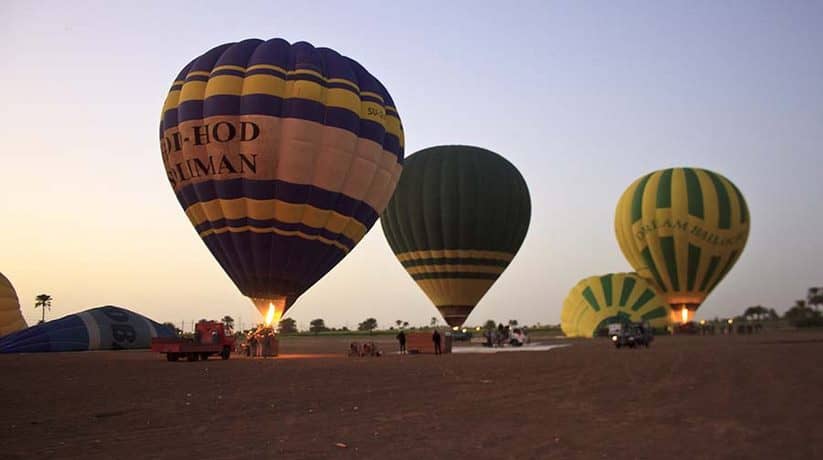
Hot Air Balloon Luxor ride in the early morning indeed is one of the most breathtaking ways to see Luxor. The sunrise view you’ll catch while floating up in the clouds is worth waking up early. Moreover, the way the sun hits the magnificent temples. It lights up the green of the Nile banks is a sight you will never forget. Furthermore, there are many balloon companies you can arrange a trip with. They are subject to rigid security regulations.

You can ask us (Egypt Travel Link) or also your hotel for more details. Moreover, it is also possible to organize these trips with the balloon companies.

A hot air balloon Luxor is an incredible way to see the “world’s largest open air museum”. Moreover, there will be an early pickup at your hotel. And then, we will take you to the balloon. The balloon will carry over Luxor’s ruins and temples in the beautiful morning light. A light breakfast and tea will included.

Hot Air Balloon Luxor includes:

  • Pick up Service from your hotel & return.
  • Transfer by air conditioned bus.
  • Bottled water during your trip Motor boat to transfer to the West Bank.
  • 45 minutes ride in the sky of Luxor.
  • Flight certificate.
  • All service charges and taxes.

Hot Air Balloon Luxor excludes:

  • Any extras not mentioned in the program Tipping

Notes:

The Balloon scheduled to take off at 5:30 am. The ride takes 45 minutes. Departure time may vary depending on sun rise time. The hotel pick-up takes place 45 minutes before take-off scheduled time .

Balloon Itinerary:

Early morning, our representative will pick you up from your hotel in Luxor. And then, transfer you to the West Bank to enjoy air balloon riding. Transfer to marine enjoy Soft drinks before you take the motor boat to the west bank. And then you will transferred to the take off area. It is where you are going to start your balloon ride in the sky of the biggest open-air museum. The “Balloon Ride” trip departs everyday. Confirmation in advance still recommended. The balloon ride takes 45 minutes. It is before your land again, to catch your pick-up and return to your hotel.

Hot Air Balloon Luxor Tour and Prices:

Tour price currency set to American dollars but you can pay in Euro or British pound. The prices quoted per person per tour. It is all inclusive. Prices always updated to ensure you receive the lowest price possible. Once your tour confirmed we guarantee the price will not changed.

Hot Air Balloon Luxor Children Policy:

  • 0 – 05.99 Free of Charge.
  • 6 – 11.99 pay 50% of tour price.
  • 12+ pay full tour price as per adult person

Deposit and Balance of Payment:

A down payment (25%) will required when confirming your booking as requested. It can paid in cash. The balance of payment (75%) will required on arrival / pick up, to paid to your tour director in cash.

Hot Air Balloon Luxor Cancellation Policy:

Egypt Travel Link does not charge any cancellation fee. It is for tours and excursions which canceled for “force majeure”. Reasons are such as volcanoes, earthquakes, or reasons beyond control. If cancellation happens due to personal or business reasons nothing will be refund.

Nearby attractions Information, tours and Online Booking

More of Ancient Egypt

More of Egypt attractions

MORE
Khnum temple Luxor Egypt

Khnum temple Luxor Egypt

  • Khnum temple Luxor Egypt
  • Khnum temple Luxor Egypt
  • Khnum temple Luxor Egypt
  • Khnum temple Luxor Egypt
  • Khnum temple Luxor Egypt
  • Khnum temple Luxor Egypt

Khnum temple Luxor Egypt tours, prices, booking, reviews

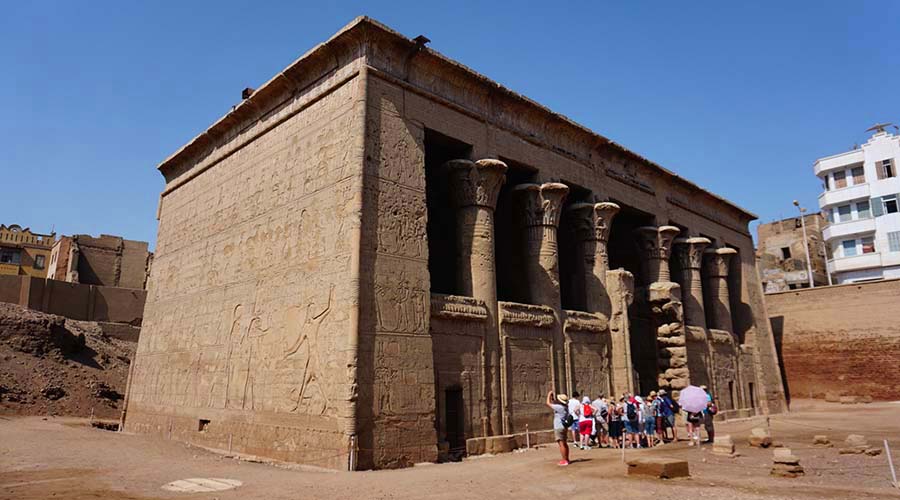
Khnum temple Luxor Egypt located at Esna town, 55 kilometer south of Luxor. That is why it called Esna temple. Nile cruises often make this town their first port of call after leaving Luxor. It is to visit the remains of Ptolemaic temple in the center of the town. In fact, the ancient name for Esna was Iunyn or Ta-Senet, classical Latopolis. Khnum temple Luxor dates back to the Ptolemaic and Roman Period and one of the last temples built in Egypt. Moreover, it stands today in its excavation pit, 9 m below the modern ground level. The temple dedicated to the god Khnum. It also dedicated to several other deities including Neith, Heka, Satet and Menheyet.

Esna temple would once built to a plan like at Edfu temple and Dendera temple. Now, all remains are the hypo-style hall. It built by the Roman Emperor Claudius who extended earlier buildings. The oldest part of the structure seen today is the west wall which. It would have the facade of the original temple. In fact, it depicts reliefs of Ptolemy VI Philometer and Ptolemy VIII Neos Philopator. The earliest king mentioned here is Ptolemy V, who offered a libation by his son Ptolemy VII. The part of the temple we see today is around a quarter of the size of the original building.

Further details about Khnum temple Luxor Egypt:

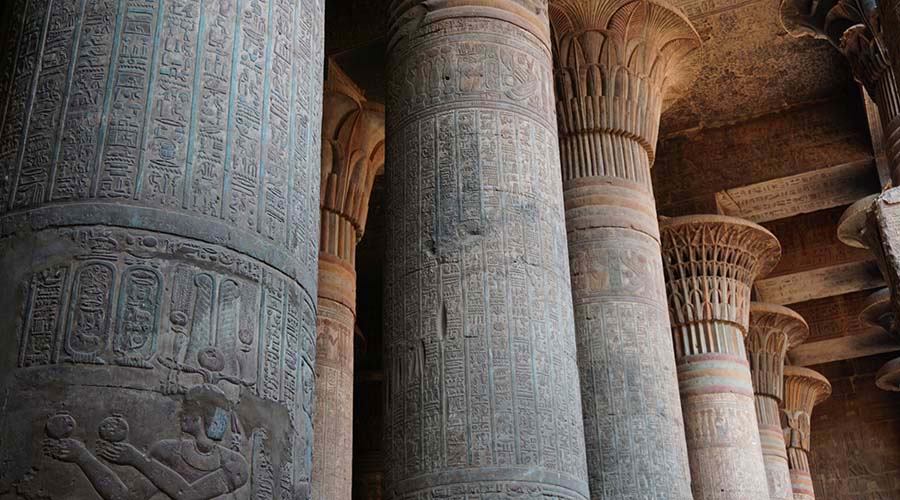
The roof of the hypo-style hall of Khnum temple Luxor is still intact. It supported by 24 columns each with varied floral capitals. Moreover, they decorated with texts describing the religious festivals of the town. They also describe several Roman emperors before the gods. One of the columns shows the Emperor Trajan dancing before the goddess Menheyet. Another nearby temple which also mentioned in the texts and excavated at Kom Mer, south of Esna. The north wall of the hypo-style shows a traditional scene. The scene is of the king netting wildfowl (representing evil spirits). Just at the corner, on the east wall is a puzzling relief. The relief is on the lower part of a calendar.

It said to be a cryptographic hymn to Khnum. It echoed on the opposite corner of the same wall in hieroglyphs of rams. Also, built into the east wall inside the entrance is a small chamber. It may has been a priest’s robing room. It is like a feature which found at Edfu Temple, or a chapel with cartouches of Domitian. Decoration of the south wall carved for Septimus Servus and his sons, Geta and Caracalla. It depicts them before several divinities. There are calendars on the upper parts of the north and south walls. The ceiling of the hypo-style shows Egyptian astronomical figures on the northern half. It also shows Roman signs of the zodiac on the southern half.

More details about Khnum temple Luxor Egypt:

Khnum temple Luxor façade constructed in the style of the period. It is with the usual screen walls inset with columns. The reliefs show the Roman Emperors named by their cartouches. They are before many of the Upper Egyptian deities. There is a frieze of Nile gods along the base of the facade. In the courtyard in front of the temple there is a statue. It is of the goddess Menheyet or Menhyt who was a little known lion-headed goddess. It named as the consort of Khnum at Esna.

Monuments nearby Khnum temple (Esna temple):

Down by the river Nile is an ancient quay with cartouches of Marcus Aurelius. It would have connected to Khnum temple  by a processional way. This is still in use today. The ancient necropolis associated with Esna contains burials. They are from the Old Kingdom to late Ptolemaic date.

How to get to Khnum temple Luxor (Esna temple):

Esna is around 45 minutes journey from Luxor. It is possible to hire a taxi from Luxor. You can also take one of the small mini-bus tours arranged by travel agents. Both a local bus from Luxor and the Cairo to Aswan train stop at Esna and cost little. The railway station is on the east bank. To get to the temple you must cross the bridge over the Nile. And then, you follow the river as far as the bazaar. The temple is at the far end of the bazaar. It is where you can also find many bargains at a much better price than in the main towns. Entrance tickets to Khnum temple Luxor costs 60 Egyptian pound.

Nearby attractions Information, tours and Online Booking

More of Ancient Egypt

More of Egypt attractions
MORE
Luxor Museum Egypt Luxor Museums

Luxor Museum Egypt

  • Luxor Museum Egypt
  • Luxor Museum Egypt
  • Luxor Museum Egypt
  • Luxor Museum Egypt
  • Luxor Museum Egypt
  • Luxor Museum Egypt
  • Luxor Museum Egypt

Luxor Museum Egypt information, tours, prices, booking

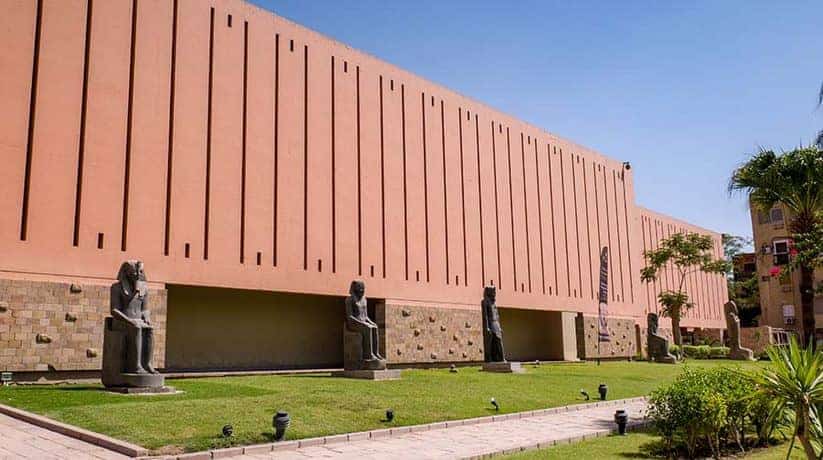
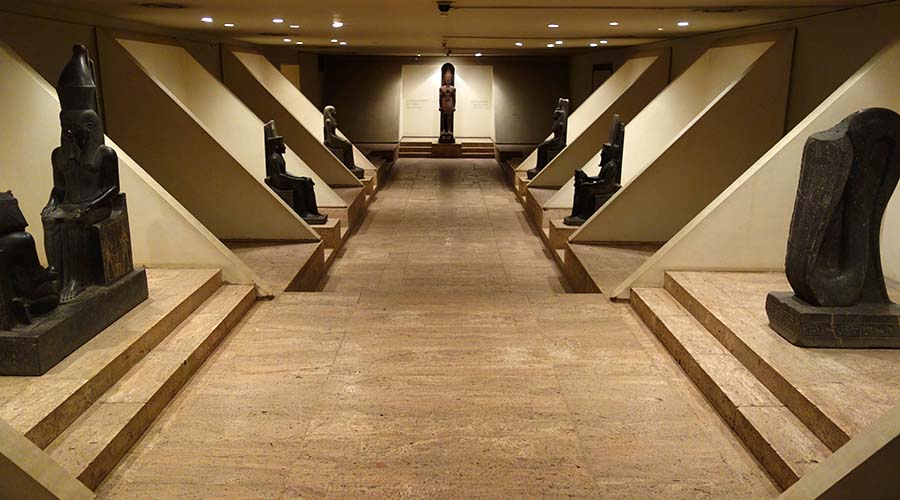
Luxor Museum Egypt opened in 1975 and in Luxor, Egypt. In fact, the Museum of Luxor contains a modest collection of the highest quality artworks. The artworks date back to the Predynastic Period right through to the Islamic era. Moreover, the modern building is spacious with plenty of room to move around. The displayed objects and sculpture in peaceful low lit surroundings at the museum. Luxor Museum Egypt indeed is the perfect place to spend a hot morning in Luxor. Furthermore, Luxor Museum  built in two levels with a ramp leading from the ground floor to the upper floor. It contains artifacts from around the Theban area. There are many of the free standing granite statues at the museum. They depict kings, queens who left their images in the Theban temples. The Tutankhamun well represented by some of the objects from his tomb in Valley of the Kings.

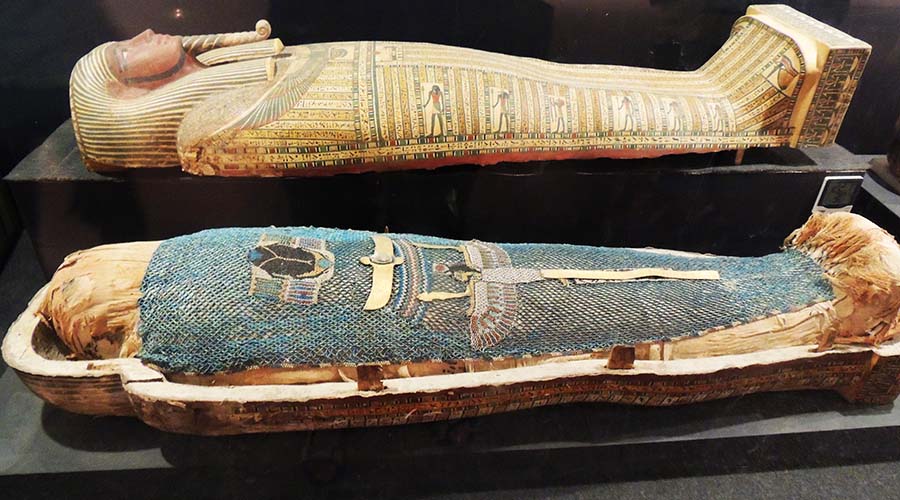
These objects are not currently on display at Egyptian Museum in Cairo. Included among these is the famous majestic head of cow goddess. It is of resin and gilded wood. In fact, it is one of the first items the visitor will see when entering the museum. Furthermore, Luxor Museum Egypt also features exhibits of funerary stelae, offering tables, papyri and tomb furniture. It also features a cartonage mummy case and many small statuettes and shabtis. In glass cases in the center of the upper floor are smaller objects. They are such as jewelry, funerary and ritual items and artifacts from daily life. One of the main features on the upper floor is a reconstructed wall. It is from a temple of Amenhotep IV (Akhenaten).

Further details about Luxor Museum Egypt:

The small decorated sandstone blocks discovered when the ninth pylon at Karnak temple dismantled. It was for reconstruction work, where they had used as infill in the original building of the pylon. Over 40,000 decorated blocks from Amenhotep IV’s early Karnak building works found. Only those from the ninth pylon well preserved. They preserved enough to allow their accurate reconstruction. Next to the talatat is a sandstone head from a colossal Osirid statue of Amenhotep IV from Karnak. It mounted on the wall of Luxor Museum. An extension built a few years ago houses a collection of statues found in the ‘Luxor Cachette’. These beautiful sculptures unearthed when a colonnade at Luxor Temple dismantled. It was for reconstruction in 1989.

They had buried (for reasons unknown) in the floor of the courtyard. It is where they lay forgotten for over 2000 years. Many of these statues today look as though they have just come out of a sculptor’s workshop. Another long-awaited new annex to Luxor Museum Egypt has now completed. It is this spacious addition. It houses many artifacts new to the museum, as well as some of the artworks from the original galleries. The main section of the extension has a military theme. It partly devoted to Egypt’s glorious empire. The long hall has two glass covered niches. They are the new resting places for the mummies of two great warrior kings – Ahmose.

More details about Luxor Museum:

Ahmose is founder of the New Kingdom. The main gallery at Luxor Museum Egypt  also includes weaponry. Moreover, it also includes a hunting chariot of Tutankhamun. The upper level contains some superb statues and several old favorites. They relocated from other areas of the museum. It is besides to many fascinating objects related to technology and the arts. Furthermore, the new facilities include a visitor center, bookshop and cafeteria. The museum set in a lit and temperature controlled environment. It is a dramatic showpiece for ancient Egyptian cultural heritage.

How to get to the Museum:

The museum located on the Nile Corniche in Luxor. Moreover, it is a few hundred meters north of the tourist bazaar and the Etap Hotel. It is open daily from 9 am to 1 pm and 4 pm to 9 pm in winter. Hours may change in summer.

Nearby attractions Information, tours and Online Booking

More of Ancient Egypt

More of Egypt attractions
MORE
Luxor temple Egypt

Luxor temple Egypt

  • Luxor temple Egypt
  • Luxor temple Egypt
  • Luxor temple Egypt
  • Luxor temple Egypt
  • Luxor temple Egypt
  • Luxor temple Egypt
  • Luxor temple Egypt

Luxor temple Egypt tours, prices, booking, reviews

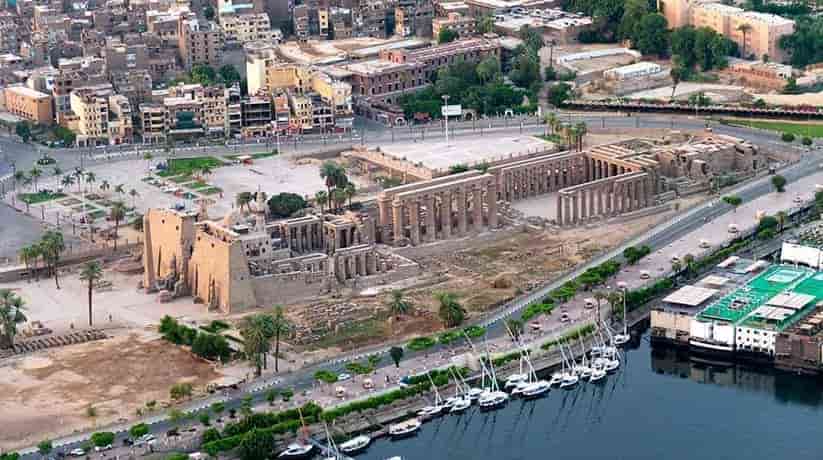
Luxor temple Egypt located in the center of Luxor city. In fact, Luxor temple Egyptknown as “Ipet-resyt” or “the southern Opet”. Moreover, it served as a focal point for the Opet festival. Once a year the divine image of Amun with his consort Mut and their son Khonsu would journey. The journey was in their sacred barques from Karnak Temple to the temple. It was to celebrate the festival which held during the inundation. Opet’s primary function was religious. But the festival was also significant in maintaining the king’s divine role. The earliest remains found at Luxor temple date back to Dynasty XIII. It is possible that there was a shrine or temple on this site. It was during the Middle Kingdom, but it became more prominent in Dynasty XVIII.

Hatshepsut first began the overland processional way which linked Karnak and Luxor temples. It was with barque stations along the route. In fact, Amenhotep III is the one who constructed the colonnade and court in the heart of the temple. They added to by other pharaohs. Reused blocks of Hatshepsut, Thutmose III and Amenhotep II are from earlier destroyed structures. Luxor temple Egypt does not face the river, but its main axis faces Karnak Temple. It is with the remains of an avenue of sphinxes pointing to the processional way. The remaining of avenue of human-headed sphinxes is 200 m. It erected by Necatnebo I to replace the original ram-headed sphinxes of Amenhotep III. In fact, it was when Nectanebo built an enclosure wall around the precinct.

Further details about Luxor temple Egypt:

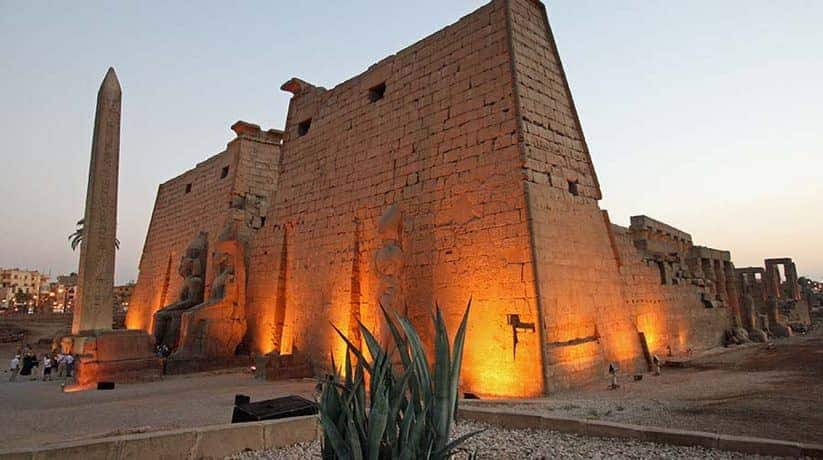
A Roman shrine with a headless statue of Isis can seen in the north-western corner of the forecourt. The modern entrance to the temple is to the west. After descending the new stone steps the visitor faces the massive first pylon. It is 21 m high and was a later addition by Ramses II. Six statues of Ramses stood before the pylon. But only three remain today with one of an original pair of tall obelisks. The northwest obelisk now stands in the Place de la Concorde in Paris. The pylon decorated on its outer face with scenes of the battles of Ramses II and the famous ‘battle poem’. This is best which seen in the early morning sun. The inner face has a dedication text and records of the battle of Kadesh as well as festival scenes.

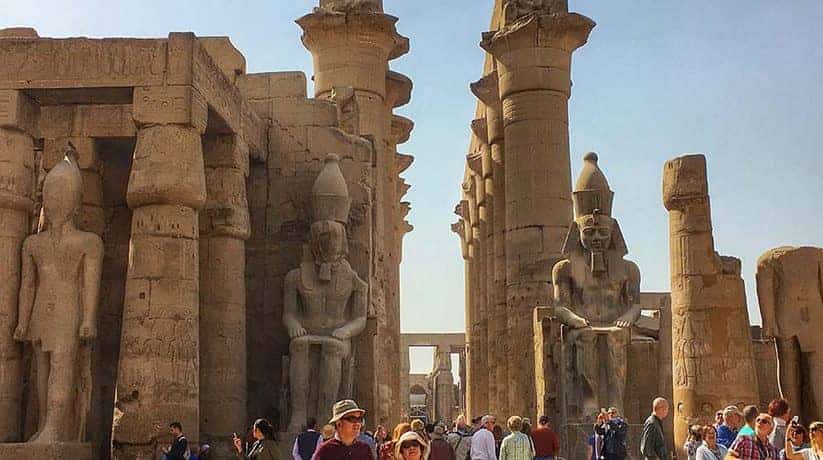
On the south face of the east tower in the first courtyard is a relief. It shows the exterior of the temple when it first built, with flags flying on the flagpoles. Beyond the first pylon is the court of Ramses II. It would have been the original forecourt of Amenhotep III’s building. On the north-western side is a triple barque shrine of Amun, Mut and Khonsu. It constructed in sandstone. It has features belonging to the earlier structure of Hatshepsut retained in the rebuilding. Ramses’ great court features a colonnade around each of its sides. It inter-spaced with colossal statues, many of which the king usurped from Amenhotep III. The colonnade of Amenhotep III has a slight change in the axis of the earlier part of the temple.

More details about Luxor temple in Luxor:

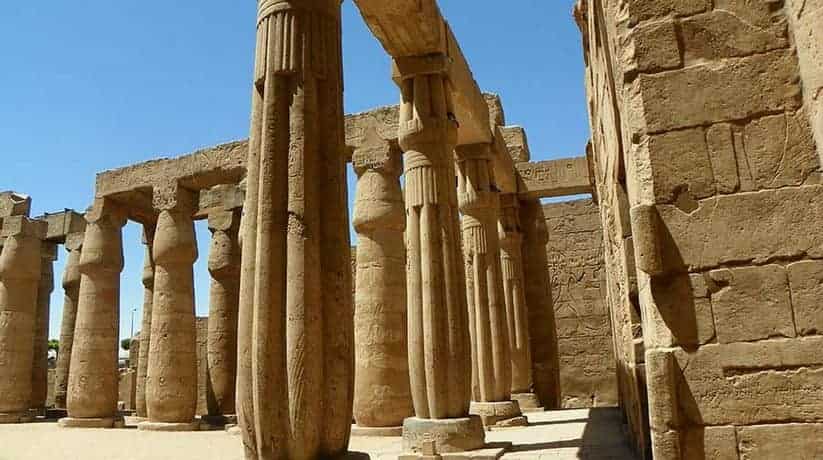
This colonnade has 14 tall papyrus columns. It unfinished at Amenhotep’s death. Its decoration only completed during the reign of Tutankhamen. It finally completed in the reign of Seti I. Here you can see superbly executed reliefs of the Opet procession to and from Karnak. It is on its west and east walls. The Tutankhamen’s name has altered throughout the texts to that of Horemheb. These are best which viewed at night. It is when the temple is floodlit. The lighting at the base of the walls throws the decoration into sharp relief. The colonnade leads into the elegant columned court of Amenhotep III with barque shrines. The shrines are of Mut and Khonsu at its southern end. In 1989 during restoration work a spectacular cache of statues found. They beneath the floor of the eastern side of the court and these can now seen in the Luxor Museum.

Beyond the portico on the south side of the court is a room. It transformed into a cult chapel of the Roman legion based at Luxor during the third century AD. The room plastered over and this has served to preserve the painted reliefs of Amenhotep III. A niche-shaped shrine is now a modern entrance to a small offering hall or vestibule. It is with pharaonic scenes of sacrifices and offerings to the gods. Within the sanctuary, a free-standing shrine built by Alexander the Great. It is in which the Greek king appears as Pharaoh. A doorway to the east leads to the ‘birth-room’. Its scenes illustrating the myth of the divine birth of Amenhotep III on the west wall. You can see scenes of the union of Amun with the king’s mother Mutemwiya.

Further details about Luxor temple Egypt:

Mutemwiya shown giving birth and the newborn king presented to the gods. These interesting scenes claim the legitimacy of the king and his divine right to rule. They also best seen when lit up at night. Behind the sanctuary is a private antechamber. It known as the ‘Opet (harem) suite’. It is a broad hall with 12 columns which opens into many smaller chambers behind. These chambers said to have a special significance. They relate to the creation and solar mythologies of Amun and Re at Luxor. The central chamber at the back of the temple was the original holy of hollies. It still has the remains of the pedestal on which the image of the god rested. It would seem that it was in these rooms that the real mysteries of the temple enacted. The exterior walls are also worth a look.

The western side depict the battles of Ramses II. It includes the Syrian and Libyan wars, with details of named fortresses. During the Roman occupation of Egypt, Luxor temple Egypt surrounded by a vast military encampment. It may have housed as many as 1500 men. By this time, the templewould have ceased to have a religious function. It is likely that many blocks from the outer temple buildings used. It was to supplement the mud bricks of the Roman barracks. Remains of stone pillars and avenues can still seen all around the temple enclosure. A Christian basilica built in the north-eastern corner of the temple. Later a mosque dedicated to the Muslim Abu All Haggag built over the site. This is now a monument in its own right. It also is a dominant feature of the eastern side of the Ramses court.

How to get to Luxor temple Egypt:

The temple located on the Corniche in the central part of the town, opposite the ferry dock. Winter opening hours are 8.00 am to 5.00 pm and tickets cost 80 Egyptian pound. In the evening the temple is floodlit. Many of the reliefs which are indistinct during the day clearly seen.

Nearby attractions Information, tours and Online Booking

More of Ancient Egypt

More of Egypt attractions

MORE
Karnak temple Luxor Egypt

Karnak temple Luxor Egypt

  • Karnak temple Luxor Egypt
  • Karnak temple Luxor Egypt
  • Karnak temple Luxor Egypt
  • Karnak temple Luxor Egypt
  • Karnak temple Luxor Egypt
  • Karnak temple Luxor Egypt
  • Karnak temple Luxor Egypt

Karnak temple Luxor Egypt tours, booking, prices, reviews

Karnak temple Luxor Egypt in East bank of Luxor indeed is one of the greatest temples all over Egypt. Thebes was the capital of New Kingdom Egypt. In fact, the temple grown in importance throughout the Middle Kingdom. The temple was in fact a sanctuary of the god, Montu. Moreover, Karnak temple and Luxor temple together known as Waset. Thebes was the later Greek name for the town. The history of the temple and its gods told in three performances. They are in different languages each evening in a spectacular Sound and Light Show. In fact, the temple in Luxor has the biggest temple complex in the world.

Furthermore, it covers an area of 100 hectares. In fact, there is nowhere more impressive to the first-time visitor. Much of it restored during the last century. In ancient times, the temple known as Ipet-isut, “The most select of places”. Karnak temple and Luxor temple built along two axes (east-west and north-south). They are with the original Middle Kingdom shrines. Furthermore, they built on a mound in the center of which now called the Temple of Amun. On the west side there is the entrance to the temple which used visitors. It was once a quay built by Ramses II to give access via a canal to the river Nile. This is where boats carrying statues of the gods. They would arrive and departed from the temple during festivals. They are such as Opet.

Further details about the temple:

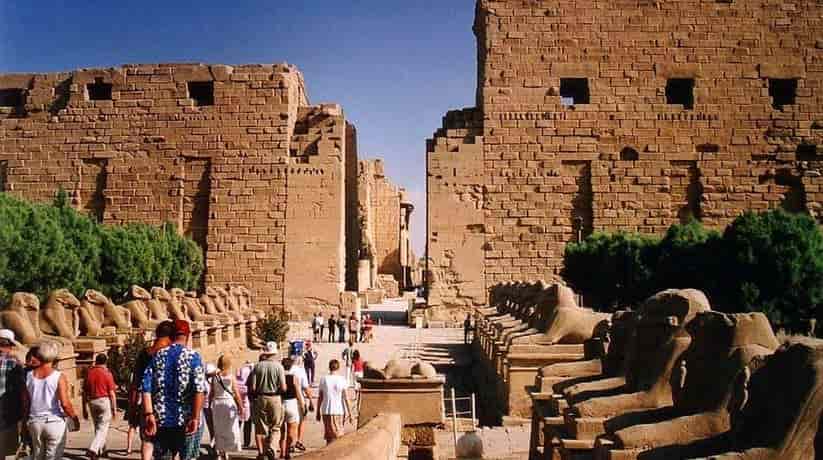
It is from where the cult statue of Amun would leave on its weekly tour of the west bank Temples. The temples are such as Deir El Bahri and Medinet Habu. There are many names of kings on the quay. Each records the levels of inundations during their reigns. On the right of Karnak temple, in front of the first pylon, is a small barque shrine. In fact, it built by Hakor. It used as a resting place during the gods’ processional journey to and from the river. Moreover, an avenue of ram-headed sphinxes leads to the massive front of the first pylon. Each one holds a statue of the king Ramses II in its paws. It later usurped by Pinudjem. The sphinxes of the temple indeed fantastic beasts with the body of a lion. They also have head of a ram and a symbol of the god Amun.

In fact, the first pylon of Karnak temple unfinished. Its height was of 43 m. It is still indeed pretty impressive. There is no certainty about who built it. It maybe constructed by Nectanebo I. Moreover, he is the one who built the temenos walls. The walls are which link to the pylon and surround the temple complex. The remains of a mud brick ramp can still seen on the inner side of the pylon. In fact, it is the only example we have, and which shows how the pylon constructed. The forecourt is now inside the entrance pylon. It was outside the main temple. In the center of the temple, are the remains of the giant Kiosk of the Nubian pharaoh, Taharqo. Moreover, they are with its one complete papyrus column still standing.

More details about Karnak temple Luxor Egypt:

Karnak temple in Luxor built to expand outwards from a central core behind the sanctuary of Amun. The triple barque shrine of Seti II are in the north of the forecourt. They adjoin the first pylon of the temple. The shrine is with three rooms. The rooms built to contain the barques of Mut, Amun and also Khonsu, the gods of the Theban triad. On the south side of the forecourt is the entrance to a temple of Ramses III. In fact, Ramses III not satisfied with the simple way-stations of his ancestors. That is why he built an elaborate barque shrine. It designed as a mini-version of his mortuary temple at Medinet Habu. Its first court lined with Osirid statues of Ramses and its walls show festival scenes and also texts. Next to this is the “Bubastite gate”. In fact, it built by Sheshonq, the biblical king “Shishak”.

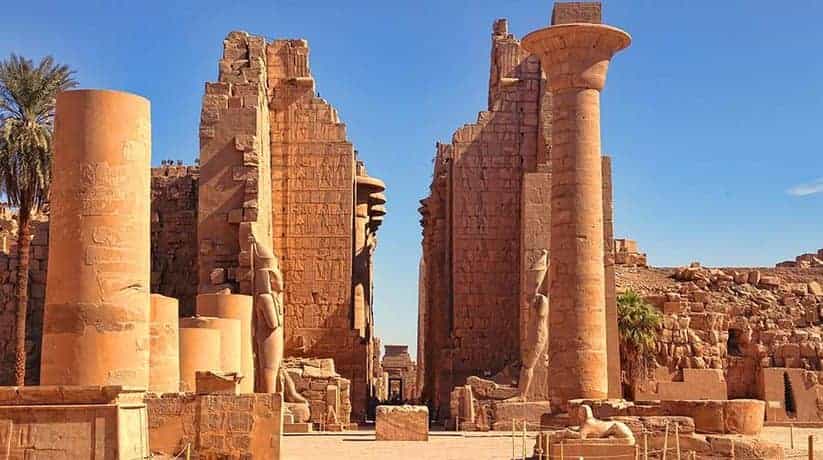
The second pylon of Karnak temple built by Horemheb. It not completed until the reign of Seti First. In fact, Seti’s son Ramses II built two colossal statues of himself which stood in front of the pylon gate. Moreover, a third statue of Ramses II still stands in situ. It also has a tiny statue of his daughter Bent’anta between its feet. In fact, this statue later usurped by Ramses VI and then also by the High Priest Pinudjem First. Inside the walls of this pylon there are many of the sandstone talatat blocks. They are from the Akhenaten temple. Furthermore, they reused as infill in the construction of the walls. The entrance of the second pylon of the temple is the famous hypo-style hall. It stands among its 134 gigantic columns.

Further details about Karnak temple in Luxor Egypt:

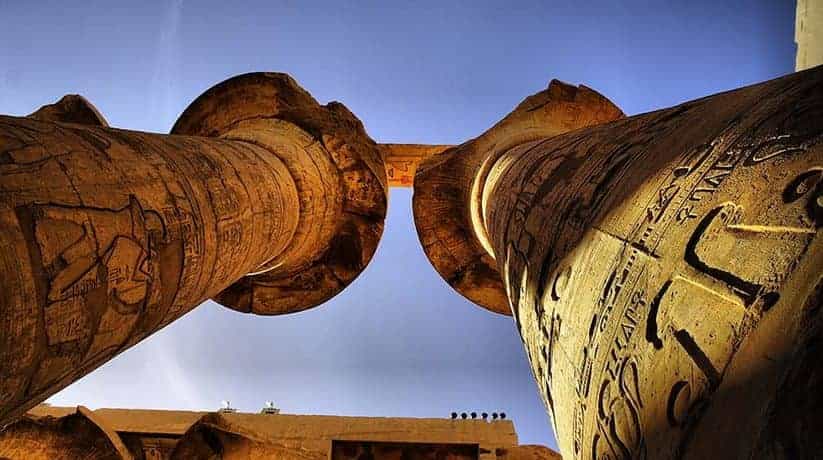
The center 12 columns are larger (21 m tall) and also open papyrus capitals. They maybe intended to symbolize the original “mound of creation”. The other 122 columns are smaller (15 m). They closed capitals. They also perhaps represent the swamp which surrounded the mound. The hypo-style hall begun by Amenhotep III who built the side walls. The side walls are close off the space between the second and third pylons. In fact, it was not completed until the reign of Seti First. Seti I carved his beautiful raised reliefs around the walls of the northern half. Moreover, his son Ramses II completed the decoration of the southern half. In fact, it was of the walls and pillars. He often over carved his father’s reliefs. It features his own crude sunk relief carvings including temple foundation rituals. “Ramses the Great” was not indeed going to forgotten.

Both Seti and Ramses indeed left fine examples of temple ritual. They also did the relationship of the pharaohs with their gods. Accounts of their battle exploits carved around the outer walls. It was Ramses who added a roof of stone slabs to the hall. The pillars are close together and it’s difficult to get an overview of the hypo style hall. When it used the spaces between the columns filled with statues of gods and kings. Looking back at the hypo style hall from beyond the third pylon we can see how high it once was. The third pylon of Karnak temple built by Amenhotep III. Many reused blocks found inside the third pylon from buildings. They now reconstructed in the open air museum.

More details about Karnak temple Luxor Egypt:

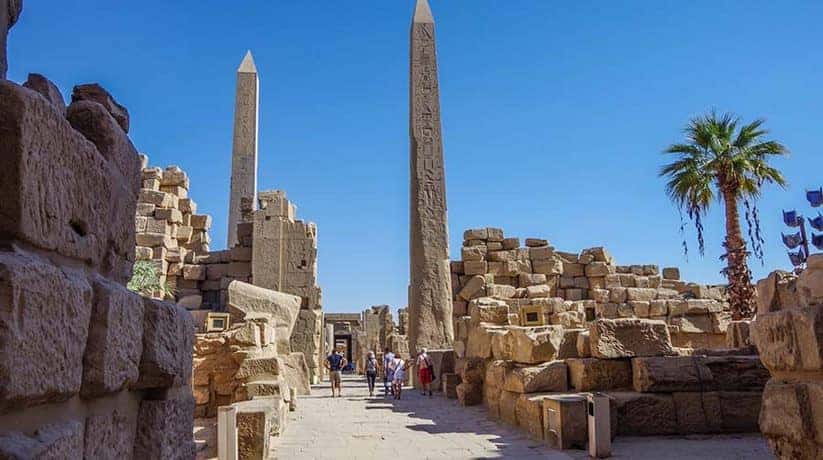
One of a pair of obelisks of Thutmose I is still standing in the area. It is between the third and fourth pylon. The bases of a pair belonging to Thutmose III can also seen. The north south axis of the temple branches off from this court. Each successive pharaoh compelled to build bigger and better than his forebears. The original Temple of Amun, the pylons get smaller and closer together. The fourth and fifth pylons built by Thutmose First. They are much smaller than the third and the area between them is the oldest extant part of the temple. This area was once a pillared hall containing wide papyrus columns. Perhaps the prototype of the hypo style hall and the huge Osirid statues of Thutmose I lining its walls.

It later restored and added to by various pharaohs. It includes his daughter Hatshepsut who built two red granite obelisks here. One of which still remains, and the pyramidion of the other lies on its side near the sacred lake. The texts on Hatshepsut’s obelisk give important details. Details are about the monument building. It is from a single piece of granite and gilded with the finest gold. It dedicated to her father Amun and it attempts to legitimize her claim to the throne. Not much remains of the sixth pylon which built by Hatshepsut’s successor, Thutmose III. Apart from texts giving details of captured prisoners on its lower walls. The area before the sanctuary contains two beautiful pillars. They sometimes called the pillars of the north and south, erected by Thutmose III.

Further details about Karnak temple Luxor Egypt:

The northern pillar shows the emblem of Lower Egypt, the papyrus. The southern one is the lily (or Lotus) of Upper Egypt. The sanctuary now standing is a granite barque shrine. It built by the Greek Philip Arrhidaeus and replaces an earlier shrine of Thutmose III. The rooms surrounding the shrine built by Hatshepsut. She constructed an even earlier shrine here. If we walk around the passage we can see a statue pair representing Amun and Amunet. They dedicated by Tutankhamun and thought to show the face of the boy-king. The open area behind the granite sanctuary is the oldest part of Karnak temple. It is where the earliest sanctuary once stood, right at the heart of the temple.

In the Middle Kingdom a shrine of Senwosret I stood here. But the area robbed for its stone and all that remains are a large alabaster slab. It would have had a shrine built on it. The central court surrounded by various semi-ruined chambers. They contain a wealth of fragmentary but interesting reliefs if you have time to explore them. Along the south side of the central court there is a building known as the Festival Temple of Thutmose III. It called ‘Most splendid of Monuments’. It built as a memorial temple to Thutmose and his ancestral cult. The pillars inside the hall said to imitate the ancient tent poles of a pavilion. They still show good remains of the colored decoration.

More details about temple of Karnak Luxor:

One of the rooms to the southwest of the pillared hall once contained a table of kings. It which the names of 62 kings and is now in the Louvre in Paris. There are several ruined statues to the north of the hall. In fact, they are in an area which used as a church in the Coptic era. Behind the columned hall is a suite of rooms which dedicated to Amun. A larger room to the north sometimes known as the Zoological Garden or Botanical Garden. It called so because it contains superb delicate carvings. They represent plants and animals which Thutmose encountered on his Syrian campaigns. A flight of wooden stairs leads over the wall behind the festival temple.

In the area leading towards Karnak’s east gate is a small “Temple of the Hearing Ear”, built by Ramses II. Here local inhabitants of Thebes would bring their petitions to the gods of Karnak. It is rather to the priests who would intercede. This was a tradition which suggested by earlier niche shrines. They built against the back of the Thutmose complex. Inside the crumbling eastern walls are various remains of later temple structures. They are such as a Colonnade built by Taharqo. The Eastern gate must have been once imposing but is now in quite a ruinous state. The scant remains of Amenhotep IV’s (Akhenaten) Karnak temple buildings discovered. They are Beyond this gate and outside the main temple walls.

Further details about temple of Karnak Luxor:

These excavated in the 1970s. Many of the colossal statues of Akhenaten now in the Luxor Museum and Cairo Museum came from here. Following the walls round to the north, we come to the Temple of Ptah. The original three sanctuaries constructed by Thutmose III. They dedicated to the Memphite god, Ptah. It restored by the Nubian king Shabaqo and later much added to by the Ptolemies and Romans. Ptolemaic screen walls and flowered columns are in front of the original sanctuary area. The north and center sanctuaries dedicated to Ptah and the southern one to Hathor. In the southern shrine, a beautiful restored statue of the lioness goddess Sekhmet.

Beyond the temenos wall to the north is the derelict Precinct of Montu. He was the earlier falcon-headed god of the Theban area before Amun gained prominence. The temple built by Amenhotep III and his cartouches can still seen on some of the blocks in the compound. Several later kings added to the temple. A large pro-pylon gate built by Ptolemy III in the quay area to the north. There were many smaller adjoining chapels and shrines. They dedicated to various deities, as well as an avenue of human-headed sphinxes to the north.

More details about Karnak temple Luxor Egypt:

Moving west, past the shrines of the ‘God’s Wives of Amun’, we come to the Open Air Museum. It houses various blocks and reconstructed shrines found in other parts of Karnak. Most of the fragments here found inside the second and third pylons. They also found in the floor of the court of the seventh pylon. The limestone barque shrine of Senwosret I is an airy structure. It built as a ‘way-station’ for the king’s jubilee. Next to this is a shining white alabaster shrine built by Amenhotep II. It is a much simpler construction, and also a similar shrine which built by Thutmose IV. Also here, archaeologists are reconstructing parts of a Temple of Thutmose IV. They show some fine reliefs.

One of the most recent reconstructions in the open-air museum is the Red Chapel of Hatshepsut. It was the original Sanctuary of Amun at the heart of Karnak. It dismantled by Thutmose III who rebuilt his own sanctuary, reusing Hatshepsut’s door jambs. Later Amenhotep III made use of the red chapel’s blocks as part of the filling of his third pylon. It is why they have survived in such good condition. French archaeologists spent the past few years rebuilding the chapel from the available blocks. It was a difficult task due to the original construction techniques. On the other side of the Temple of Amun, to the south, the visitor comes to the Sacred Lake. The area in the foreground was a fowl yard.

Further details about temple of Karnak in Luxor:

The domesticated birds belonging to Amun driven from here. It is through a stone tunnel into the lake each day. The lake overlooked by seating for the Sound and Light Show today. The underneath here the remains of priests’ houses found. Pylons seven, eight, nine and ten run on a north-south axis to the main temple. They called the transverse axis. A treasure store of 751 stone statues and stelae found. In fact, it was when the court before the seventh pylon excavated, . It is along with over 17,000 bronzes which now form a large part of the Cairo Museum collections. Some of the statues can now seen in the Luxor Museum. They buried in the Ptolemaic Period, but no-one knows exactly why.

The way through the eighth to tenth pylons blocked due to work in progress. The ninth pylon at present taken down and reconstructed. Blocks from local Aten Temples used as infill here. We can see some of these talatat blocks of Akhenaten now in the Luxor Museum. To the east of the ninth pylon is a chapel commemorating Amenhotep II’s jubilee. It restored after the Amarna Period by Seti First. In the south west corner of the Amun precinct we come to the Temple of Khonsu. He is the son of Amun and Mut. It is a well preserved small temple from the late New Kingdom. It built towards the end of the Ramesside Period. The temple has the feeling that it built in miniature. It is with squat pillars and low ceilings, which seems appropriate for Khonsu, the child.

More details about Karnak temple Luxor Egypt:

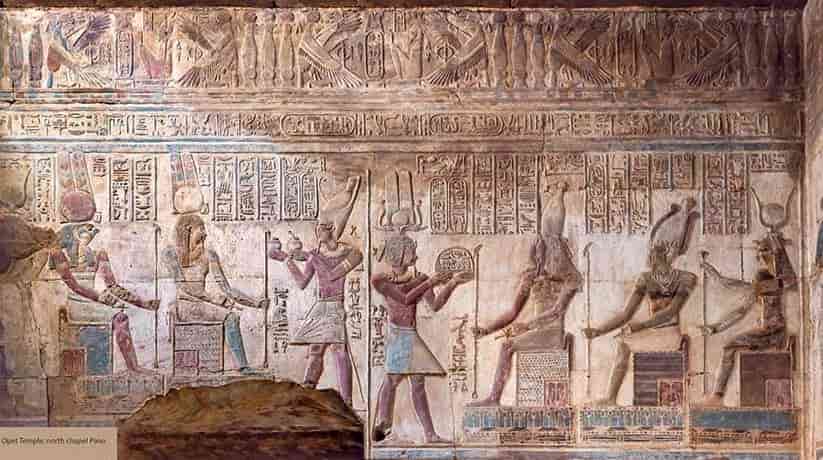
Reliefs in the rooms to the back of the temple still have some good color. The include this unusual depiction of a lion-headed god. A doorway from the Khonsu Temple leads through to a later structure next to it. The temple dedicated to the hippopotamus goddess Apet, or Opet. (not to confused with the festival of Opet). She said to have helped women in childbirth, possibly a later aspect of the goddess Tauret. Reliefs inside the temple depict the funeral rites of Osiris, in the Graeco-Roman tradition. Karnak temple can be a confusing place. Its buildings spanning a long period in Egyptian history. Most visitors on guided tours have little time to see much of the temple. Many visits needed to get even a brief idea of the temple as a whole.

Getting to Karnak Temple in Luxor Egypt:

The temple is on the northern edge of the town of Luxor. It is within walking distance from the Corniche. Visitors may prefer to take a taxi or a caleche (horse-drawn carriage) each way from the center of town. The temple is open from 8.00 am to 4.30 pm in winter and tickets cost 80 Egyptian pound. To visit he open-air museum and extra ticket of 35 Egyptian pound required.

Nearby attractions Information, tours and Online Booking

More of Ancient Egypt

More of Egypt attractions

MORE
Luxor Museum Egypt Luxor Museums

Luxor Museums Egypt

  • Luxor Museums Egypt
  • Luxor Museums Egypt
  • Luxor Museums Egypt
  • Luxor Museums Egypt
  • Luxor Museums Egypt
  • Luxor Museums Egypt
  • Luxor Museums Egypt

Luxor Museums Egypt information, tours, prices, booking

Luxor Museums include Luxor Museum which opened in 1975 and in Luxor, Egypt. In fact, it contains a modest collection of the highest quality artworks. The artworks date back to the Predynastic Period right through to the Islamic era. Moreover, the modern building is spacious with plenty of room to move around. The displayed objects and sculpture in peaceful low lit surroundings at the museum. Luxor Museum Luxor indeed is the perfect place to spend a hot morning in Luxor. Furthermore, the museum built in two levels with a ramp leading from the ground floor to the upper floor. It contains artifacts from around the Theban area. There are many of the free standing granite statues at the museum. They depict kings, queens who left their images in the Theban temples. The Tutankhamun well represented by some of the objects from his tomb in Valley of the Kings.

These objects are not currently on display at Egyptian Museum in Cairo. Included among these is the famous majestic head of cow goddess. In fact, it features resin and gilded wood. In fact, it is one of the first items the visitor will see when entering the museum. Furthermore, the museum also features exhibits of funerary stelae, offering tables, papyri and tomb furniture. It also features a cartonage mummy case and many small statuettes and shabtis. In glass cases in the center of the upper floor are smaller objects. They are such as jewelry, funerary and ritual items and artifacts from daily life. In fact, the upper floor features a reconstructed wall. It is from a temple of Amenhotep IV (Akhenaten).

Further details:

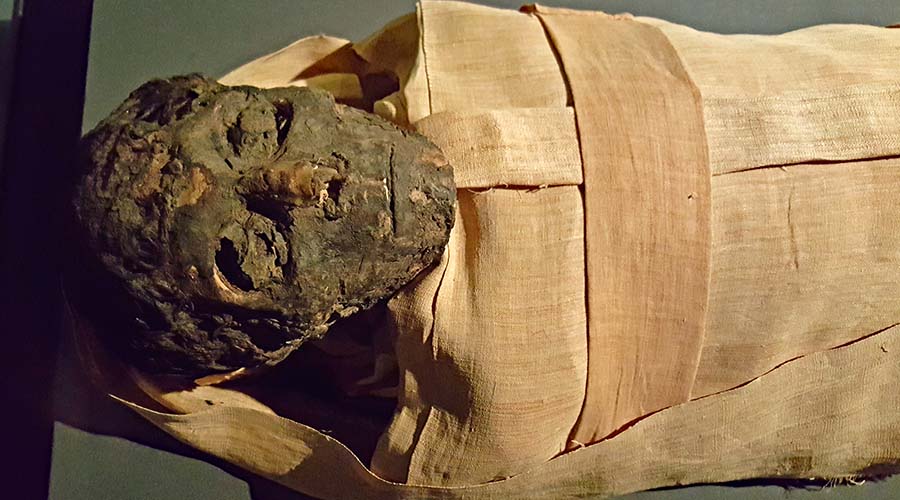
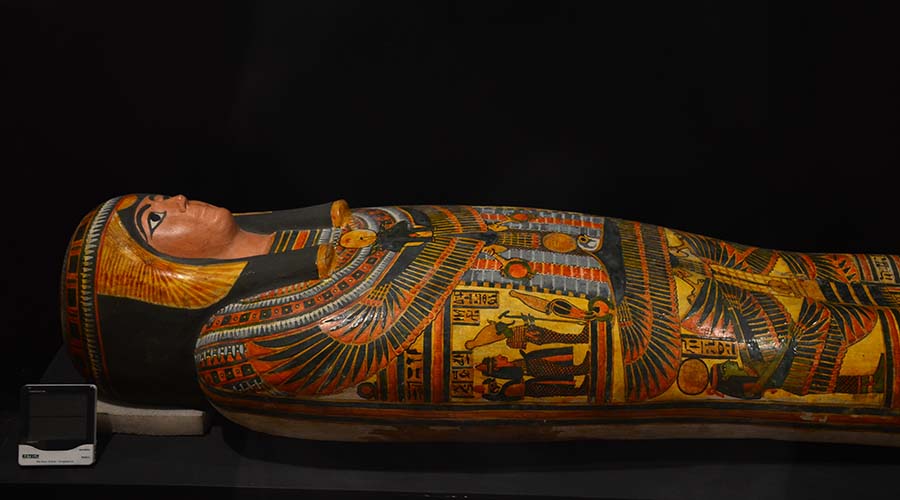
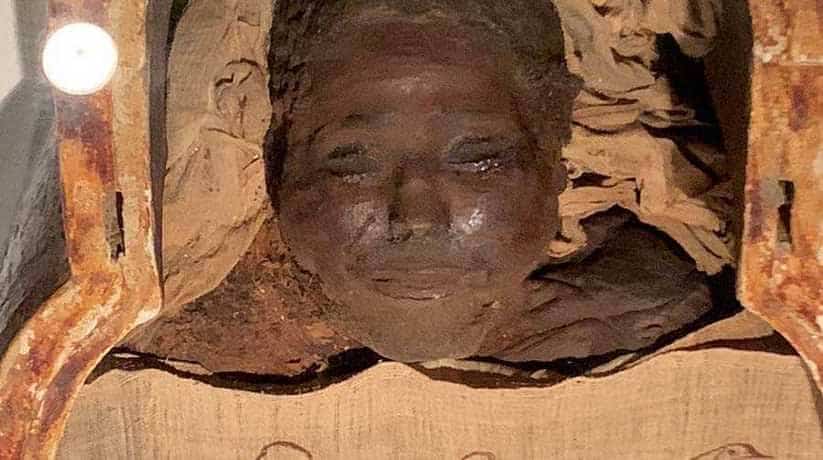
Moreover, Luxor Museums also include the Mummification museum. The museum located on Luxor city in Egypt. In fact, Mummification word comes from the Persian word “mummya” which means bitumen or pitch. The museum indeed is the best place to learn about the most powerful secrets of the pharaohs. It sets in an underground hall on the Nile, next to the national ferry on the east bank. The ancient Egyptians imagined the underground world of the dead. In fact, it where Osiris dwelt. Though this actually changed over time. From early times, they protected the afterlife of the dead by mummification. They offered, wrote the name of the deceased and utterances in their calls.

The survival of body is necessary for survival of the seven different elements of their being. In fact, that was the Ancient Egyptians belief. They include the physical body which mummified and wrapped in linen. It should protected with various amulets in a coffin and deposited within it’s tomb. Ka represented the vital life force. It created at the same time as a man’s body, which it resembled in every respect. Moreover, it was free to move between the burial chamber and the funerary statue. Ba often represented by a human headed. Ba bird with features of the deceased could take any shape. It revisited the world of the living and traveled across the sky in the sun-god’s boat. It always returns to reunite with it’s corpse in the tomb.

Luxor Museums Egypt Highlights:

Mummification Museum Luxor
+View details
Egypt Nile cruises and hotels

MORE
Kheruef tomb Luxor Egypt

Kheruef tomb Luxor Egypt

  • Kheruef tomb Luxor Egypt
  • Kheruef tomb Luxor Egypt
  • Kheruef tomb Luxor Egypt
  • Kheruef tomb Luxor Egypt
  • Kheruef tomb Luxor Egypt
  • Kheruef tomb Luxor Egypt

Kheruef tomb Luxor TT 192 Egypt tours, prices, booking, reviews

Kheruef tomb Luxor Egypt found in the area of Asasif, to the south of Deir el-Bahri in Luxor. Kheruef, also called Senaa, was Steward of the Great Royal Wife, Tiye. It was during the reign of Amenhotep III and Amenhotep IV. In fact, the tomb complex is large as befits a man in his exalted position. Moreover, the tomb unfinished at the time of his death (he never buried in the tomb). Most of the inner rooms of the structure closed off. The tomb entered down a staircase and passage. The passage also leads to a large open court leading to several other later tombs. At the entrance to the passage of Kheruef tomb , there is a double-scene on the lintel. It depicts Amenhotep IV (later Akhenaten) with his mother Tiye offering to deities. Moreover, it includes offering texts with a cartouche of Tiye at the bottom.

In fact, the scenes in the passage damaged but can recognized. They show Amenhotep IV adoring his deified parents (on the left). It is also with Kheruef kneeling below. Representations of Amenhotep IV defaced. It was after the Amarna period, even though work on Kheruef tomb Luxor ceased. It was before he had become Akhenaten. Perhaps Kheruef buried at Amarna. As a steward of Queen Tiye, he maybe later also had part of Akhenaten’s court. But we will never know. In fact, the most important reliefs of the tomb are on the rear wall of the portico. It is on the western side of the court. This fronted by square pillars and the only part of the tomb completely decorated. Furhermore, the space between the pillars filled in with a wall at a later date.

Further details about Kheruef tomb Luxor Egypt:

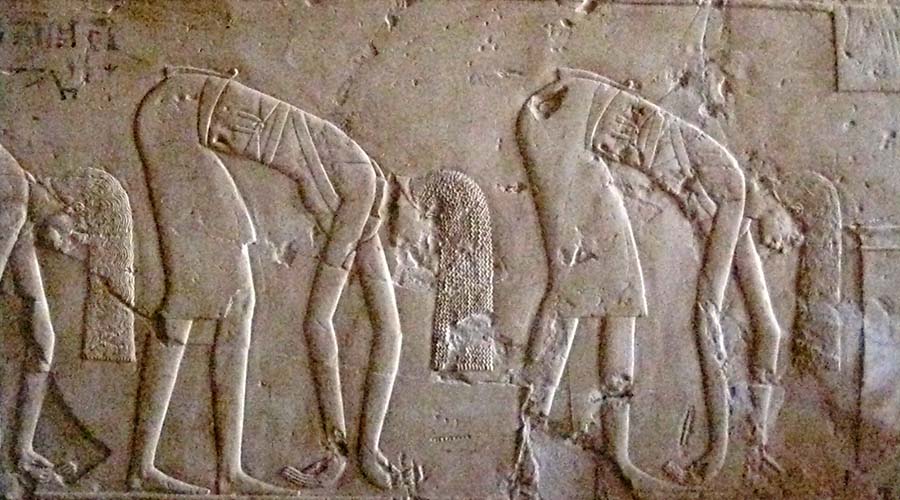
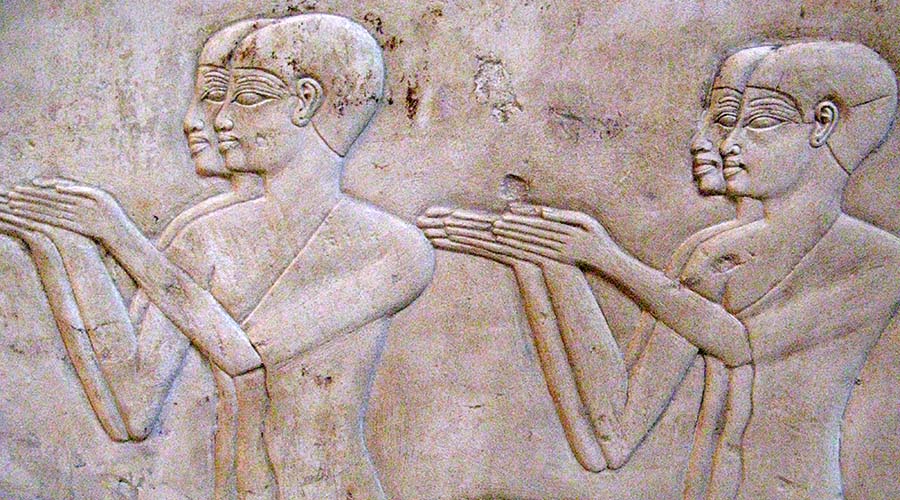
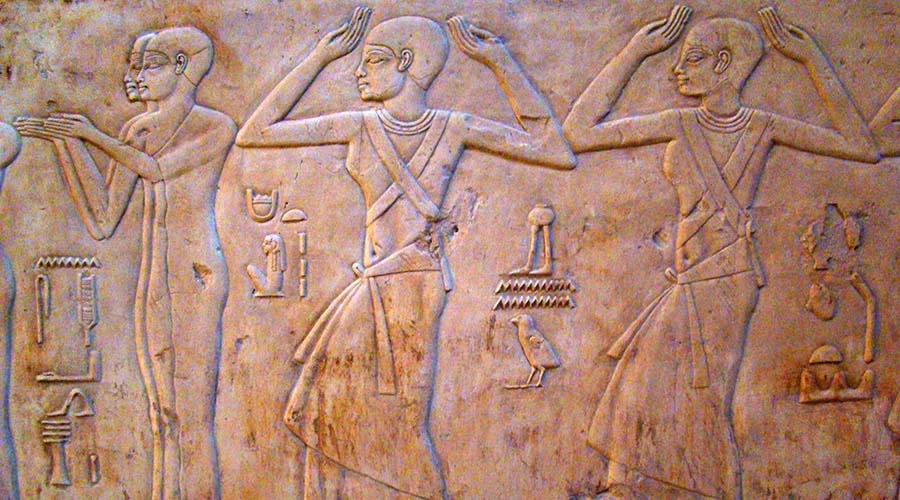
It also turned the portico into what today looks. Moreover, it looks like a corridor. At the southern end of the western wall, there are two registers. They contain scenes of the first heb-sed (jubilee festival) of Amenhotep III. He celebrated in Year 30, Day 27, of the second month of Shemu. In fact, Kheruef must played an important part in the organisation of the festival. It was because he was a royal steward. On the southern end of the wall, there is also a register on the bottom. It shows the celebrations of the heb-sed festival. Moreover, it is with two rows of female dancers and musicians. In the top row the girls are Libyans and they are performing graceful dances. Furthermore, their heads held low and their hair hanging forward over their faces.

In front of the row of the dancers is a frolicking calf, a flying bird and a baboon. The bottom row shows women clapping, singing and playing instruments. Moreover, it is with two male chorus leaders and male dancers at the end of the row. One wears a lion mask.The reliefs indeed are beautiful and elegant. They carved as one would expect during this period. To the right-hand side of the bottom row, there are also four pairs of girls. They depicted carrying jars and. The ext tells us that made from gold and electrum. Moreover, there are similar vessels on offering stands in front of each pair. The inscription also implies that these are daughters of foreign leaders. He maybe brought up in the Egyptian royal court. In fact, this is one of the most beautiful reliefs in Kheruef tomb.

More details about Kheruef tomb Luxor Egypt:

Moreover, the princesses are wearing long elegant gowns. It features broad collars, carved wigs with side locks and a curious square shaped head dress. Their feet are also bare. Between the two rows of dancers and musicians there is an inscribed text of a song to Hathor. Furthermore, beyond the princesses, to the right on the bottom there is a register. It shows a damaged scene. The scene also depicted Kheruef and other officials rewarded with the “Gold of Honor”. In fact, it was as a part of the ceremonies. The gold collars can still seen on a table. He stands before Amenhotep III. Amenhotep III seated in an elaborate kiosk, with Hathor as “Mistress of Dendera”. He holds a protective arm around the king and Queen Tiye behind him.

The scene takes up the whole wall-space. In this scene, the king is wearing the double crown, heb-sed dress, sandals. He carries the crook and flail, the royal insignia. The base of the kiosk decorated with reliefs depicting rekhyt-birds. The birds symbolize the populace of Egypt and perhaps also the rebels the king has subdued. The text in front of the kiosk gives full details of the titles of Amenhotep III. The details like the date of his first sed-festival and names some of the officials who took part. The wall at the northern end of the portico displays scenes from another sed-festival. It is the third of Amenhotep III, this time dates back to Year 37 of his reign. The king’s second heb-sed not recorded here. Beginning at the far end of the wall there are two registers.

Further details about Kheruef tomb Luxor Egypt:

The top register not well-preserved. It depicts a group of eight princesses with sistra, in two rows. Texts stated that these were the daughters of the king. In front of this, in a scene again damaged. It depicts Amenhotep III followed by his queen. He performs a ceremony of ‘Raising the Djed-Pillar’. This is a ritual which usually performed during the feast of Khoiakh. It was to represent the stability of the ruler. Here, it associated with Ptah-Sokar-Osiris and performed on the morning of the sed festival. In the bottom register are three rows depicting celebrations of the festival. The top row shows offering bearers bringing food for the celebrations and men dancing. To the left, male singers and clappers stand before a text of the Hymn to Ptah-Sokar. The row below depicts men boxing and stick-fighting with papyrus stalks.

It also depicts games which were popular in many of the festivals. There are also female dancers but they are not as graceful or well-carved. At the far end, on the bottom row, cattle and donkeys driven round the walls of Memphis. It is a ritual in which the cattle circle the walls of the town four times. To the left, a boat brings provisions to men. The men carry them away and a cow slaughtered. The left-hand side of the wall on the northern end of the portico shows a scene. The scene is similar to that on the southern end. It is with Amenhotep III who seated in a kiosk with his Great Royal Wife, Tiye, behind him. This time the king wears the blue crown and a broad collar with the ‘gold of honor’ around his neck. Tiye’s throne decorated with a female sphinx.

More details about Kheruef tomb Luxor Egypt:

It trampling female enemies and bound female Nubian and Syrian captives. Below the kiosk is a row of bound prisoners. Each with a name-ring representing Egypt’s defeated enemies (known as ‘the nine bows’). The texts in front of the royal couple give their titles. Kheruef and other officials again stand before the kiosk (the scene damaged). He receives a decorative floral vase and a pectoral bearing the cartouche of Queen Tiye. He also receives a pectoral with a scarab beetle and the king’s cartouche. The entrance to the first columned hall is in the center of the portico. It covered by a locked grill, but the visitor can see the remains of cracked and damaged fluted columns.

In this hall the lower part of a seated statue of the deceased found, gave the names of his parents. Fragments of another quartzite statue also found. The chamber beyond is a long pillared hall with a statue niche at the rear. It is a pity that Kheruef tomb unfinished and damaged. The reliefs in the portico are among the finest of any tomb in the Theban necropolis. The style of artwork suggests that they carved by the same craftsmen who worked on Ramose tomb. He was a contemporary of Kheruef.

Entrance to the tomb:

Kheruef tomb Luxor opens from 8 am to 4 pm in winter. Tickets can bought at the ticket office for 60 Egyptian pound.

Nearby attractions Information, tours and Online Booking

More of Ancient Egypt

More of Egypt attractions

MORE
error: Copyright © www.etltravel.com !