Activities in Ancient Luxor

Things to Do

Pabasa tomb Luxor

Pabasa tomb Luxor Egypt

  • Pabasa tomb Luxor
  • Pabasa tomb Luxor
  • Pabasa tomb Luxor
  • Pabasa tomb Luxor
  • Pabasa tomb Luxor

Pabasa tomb Luxor Egypt TT279 tours, prices, booking, reviews

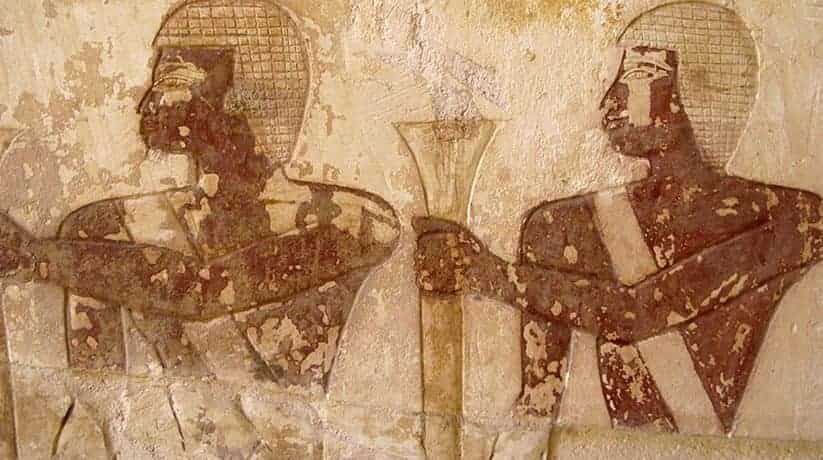
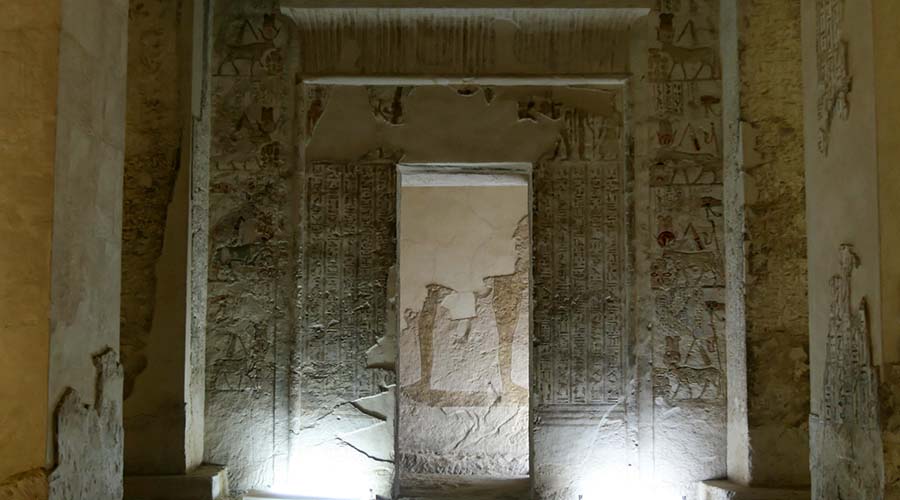
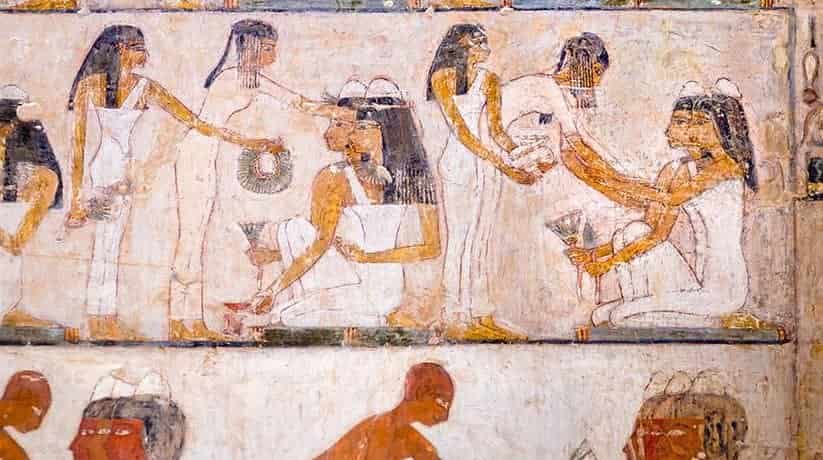
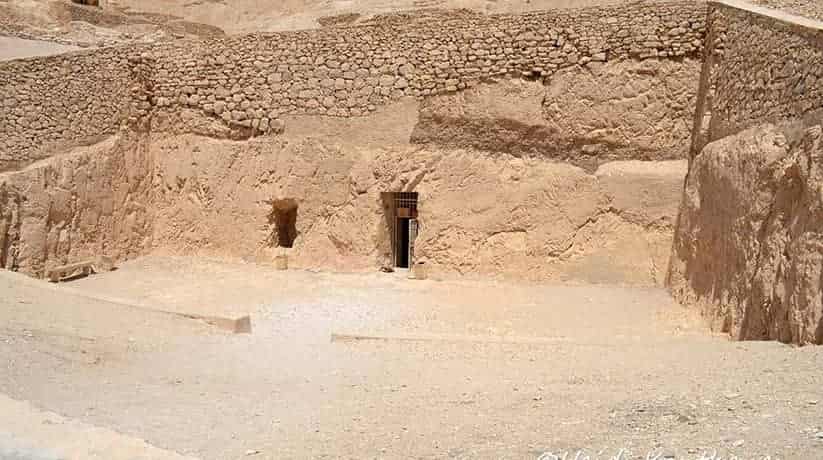
Pabasa tomb Luxor Egypt is a large tomb which located at Asasif in West bank of Luxor. The tomb belongs to Pabasa who also called Pabes. In fact, the tomb is just outside the entrance to Hatshepsut’s Temple at Deir El Bahri. Moreover, Pabasa was the “Chief Steward of the God’s Wife Nitocris” (Neitiqert). It was during the reign of Saite king Psamtek I. Furthermore, Pabasa was like Ankh-hor, who held this important title after him. Furthermore, Pabasa tomb Luxor still has a large mud brick superstructure. It also has a steep flight of stairs. The stairs lead down to the entrance of the subterranean levels. Moreover, on the lintel above the doorway is a fine relief of a barque. The tomb adored by the souls of Pe and Nekhen, by the God’s Wife, Nitocris and by the deceased.

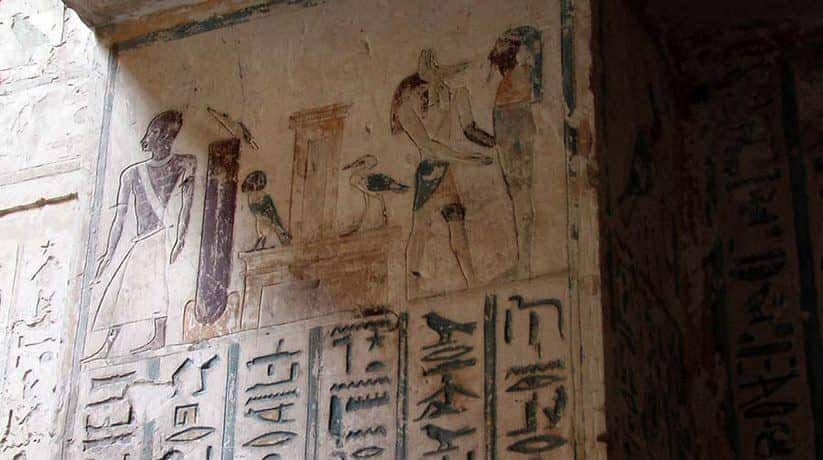
In fact, Pabasa tomb Luxor has a small vestibule. It leads to a larger pillared sun court. The vestibule shows scenes of Pabasa’s funeral procession, including mourners and the “Abydos Pilgrimage”. Moreover, there is a long text of Pabasa and depictions of his son. His son was Thahorpakhepesh, who acted as sem-priest at his father’s funeral. On the inner lintel of the entrance to the court, there is a relief. The relief shows Osiris and Re-Horakhty in the center of a double-scene. It is with Pabasa, Nitocris and cartouches of the king (Psamtek I). Moreover, it also shows his daughter Nitocris on either side. The sun court of the tomb is open to the sky .

Further details about Pabasa tomb Luxor Egypt:

That is why it well lit. It is with three square pillars on each of its eastern and western sides. The most important scenes are on the pillars. These give us a great deal of detail about the daily activities in the estate of the Divine Adoratrice. The pillars include scenes showing a bedroom prepared and men spinning. The scenes also show netting and cleaning fish and catching birds with a throw-stick. In Pabasa tomb Luxor there are also rare scenes of beekeeping as well as viticulture and picking fruit. The reliefs finely carved. Around the walls of the court Pabasa shown in many offering scenes and long texts. It is with beautifully painted hieroglyphs.

Beyond the sun court a hall contains eight pillars, part of which decorated but now damaged. The pillars also decorated with deities and texts on the sides facing the central isle. At the rear of the hall a decorated niche contains Pabasa’s burial shaft. His granite sarcophagus is now in Glasgow Museum. Several other chambers containing burial shafts accessed from the rear of the hall.

Entrance to Pabasa tomb Luxor Egypt:

The tomb is open from 8 am to 4 pm in winter. A ticket costing 80 Egyptian pound can bought at the gate of Hatshepsut’s Temple at Deir El Bahri.

Nearby attractions Information, tours and Online Booking

More of Ancient Egypt

More of Egypt attractions
MORE
Rekhmire tomb Luxor Egypt

Rekhmire tomb Luxor Egypt

  • Rekhmire tomb Luxor Egypt
  • Rekhmire tomb Luxor Egypt
  • Rekhmire tomb Luxor Egypt
  • Rekhmire tomb Luxor Egypt
  • Rekhmire tomb Luxor Egypt
  • Rekhmire tomb Luxor Egypt

Rekhmire tomb Luxor Egypt TT 100 tours, prices, booking

Rekhmire tomb Luxor Egypt located on the south-eastern slope of the upper enclosure. It is at Sheikh ‘Abd el-Qurna, a little below the tomb of Sennefer (TT 96). Rekhmire was “Governor of the Town” (Thebes) and “Vizier”. It was during the reigns of Thutmose III and Amenhotep II of Dynasty XVIII. As the highest civil official of the land, Rekhmire built his tomb as a simple T shaped structure. It is in the traditional style, although on a larger scale. Moreover, Rekhmire tomb Luxor has the unusual features of a long passage with a sloping ceiling.

The passage does not contain a burial shaft. Thus, it leads us to suppose that Rekhmire buried somewhere else in the necropolis. Perhaps in the King’s Valley, although another tomb has never found. Furthermore, The hall and passage decorated with lively and well preserved scenes. Some are conventional and some are unique. They give important details of daily life in the New Kingdom. In fact, the scenes make Rekhmire tomb Luxor the most interesting tomb in the Theban necropolis.

Further details about Rekhmire tomb Luxor Egypt:

The entrance of Rekhmire tomb Luxor decorated with the usual offering texts and prayers. The wall of the hall to the left of the entrance (south-west) shows Rekhmire in the Hall of Judgement. He inspects the produce of Egypt including cattle, grain, gold and delivered to him as taxes. In fact, the text describes the goods brought from the areas of Elephantine down to Asyut. It was the vizier’s responsibility to receive and account for these taxes for the king. The short wall at the left side of the hall also has a long autobiographical text of Rekhmire.

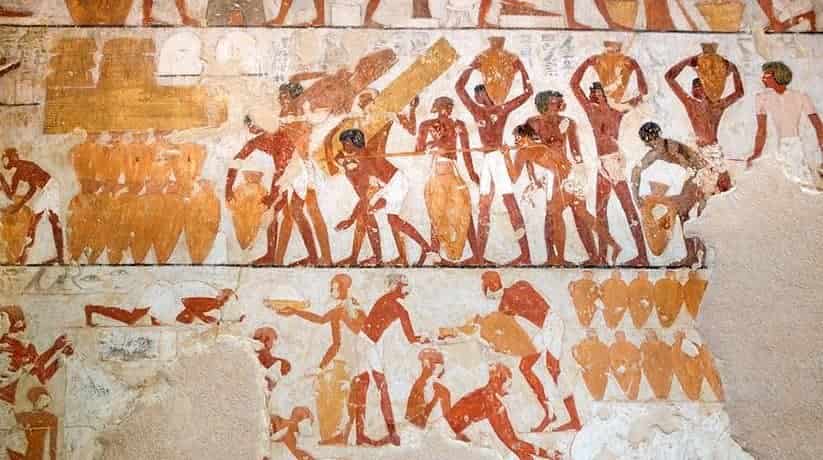
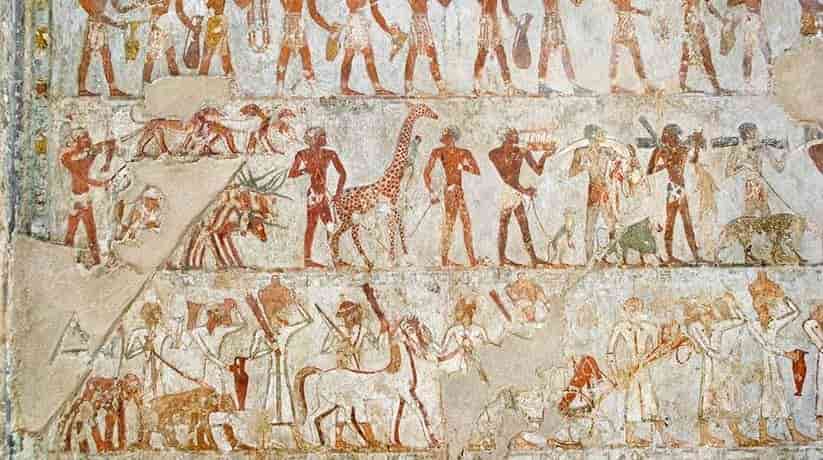
The wall opposite the entrance at the southern end depicts a tribute. In fact, it brought from foreign countries in five registers. In the top register produce from the land of Punt recorded by scribes. It includes incense trees (myrrh), gold and precious stones and ivory. It also includes a baboon, monkeys and animal skins. Below this comes the tribute from Keftju (Crete or the Mediterranean Islands). It also includes decorative vases, silver, lapis lazuli and amphorae. Moreover, it also includes and pots in the shape of animal heads. The men bringing the tribute painted wearing Mycenean rather than Minoan kilts. They also show that Mycenean trade began during the reign of Thutmose III.

More details about Rekhmire tomb Luxor Egypt:

In the next register Nubian or Kushites bring various animals. They bring giraffe, leopard, baboons, monkeys and cattle. They also bring dogs as well as ostrich eggs and feathers. Below, Syrians (from the land of Retjenu) dressed in long white robes and pointed beards. They bring their tribute in the form of wagons and horses, a bear and an elephant. Furthermore, they also bring weapons and metal vessels, copper ingots and pottery. In the bottom register, there is a diverse group of foreigners. It also includes women and children brought by military escort as captives or hostages. At the end of the wall is a damaged scene. It once depicted Rekhmire before Thutmose III seated on his throne.

Rekhmire tomb Luxor wall to the right of the entrance also shows scenes of tax collection. It is from the northern regions. Rekhmire supervised the work of artisans in the temple workshops and royal statues. He also did sphinxes made for the Temple of Amun. Other objects in the top register include necklaces, weapons, various vessels and furniture. They maybe intended as burial equipment. Below, men bring provisions, with scenes of baking and brewing. At the end of this wall there are agricultural scenes. They also show the recording of cattle, measuring the crop and the usual ploughing.

Further details about tomb of Rekhmire in Luxor Egypt:

The short wall at the right hand end of the hall contained many members of Rekhmire’s family. In fact, it is not now in good condition. Furthermore, Rekhmire and his wife Meryt can no longer seen. Their sons Menkheperresoneb and Amenhotep named with their wives in the inscriptions. It is along with the tomb-owner’s grandparents and other relatives. Rekhmire’s grandfather Ametju and uncle User were both viziers before him.

The wall opposite the entrance to the right in Rekhmire tomb Luxor also depicts Rekhmire. He inspects the produce of the ‘Road to Horus’, ibex, oryx and also wild bulls. It also depicts hyenas brought with a hunting dog. Below this, there is a scene of treading grapes to produce wine and preparing fish and fowl for cooking. Though, these are not as well portrayed as in Nakht tomb or Menna tomb. Further along the wall are remaining scenes of hunting in the desert. It is with slain animals heaped up waiting to record by the scribes. There are also ostriches, wild bulls, lions, gazelles and hyena in a fenced stockade.

Further details about the tomb of Rekhmire Luxor Egypt:

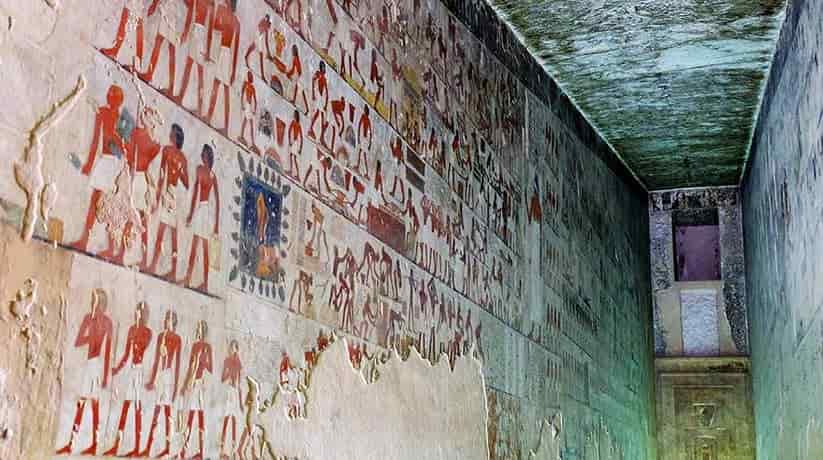
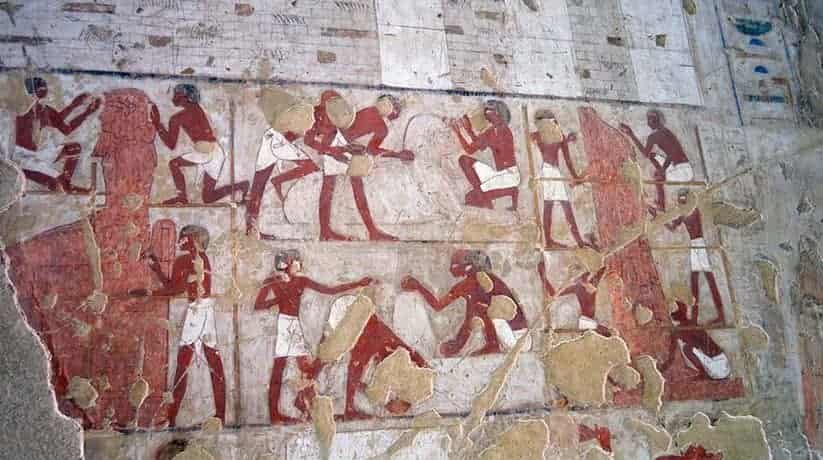
In fact, the paintings in the long passage in Remkhmire tomb better preserved. They are also superb in their detail. Some of those at the far end , are high up on the wall and difficult to photograph. Beginning on the left-hand wall are six registers. It is where Rekhmire supervises the preparation and storage. He also supervises distribution of provisions for the temple. Next is a series of scenes in eight registers. They includes the industries of Amun temple. They also include the weighing and recording of gold collected as taxes. The paintings show the artisans at work on their craft. It is with leather-workers, rope-makers, carpenters, metal-workers, brick-makers and builders. Sculptors haul stone to used in the manufacture of two royal colossal statues. In fact, these are important scenes in Rekhmire tomb Luxor. They show the methods of production of the crafts of ancient Egypt.

Towards the end of the left-hand wall there are ten registers in the tomb. They depict the funeral procession moving towards the garden of Osiris. It is where the Goddess of the West waits with Anubis and Osiris to receive the deceased. Moreover, pictures include the setting up of two obelisks and a “teknu” and the “Pilgrimage to Abydos”. The funeral rites end with Rekhmire and his wife Meryt. They seated before an offering table. It is while their sons offer to their parents too. The hieroglyphic text transcribes the offering-list. The end wall of Rekhmire tomb Luxor had a niche at the top. It bordered by texts on either side and a false door with the remains of another below. In fact, it is now in the Louvre museum.

More details about Rekhmire tomb Luxor Egypt:

On the right-hand wall of the tomb, there are also more scenes. They are of offering and purification. It is where Rekhmire shown holding the sekhem-sceptre of his office. It is with his wife Meryt behind him with their sons Menkheperresoneb, Amenhotep and Senwosret. In ten registers the funeral rites carried out before statues of the deceased. Rekhmire tomb Luxor indeed has a magnificent walled garden. It surrounded by trees contains a pool with a boat on it. It is in which the deceased’s statue is standing, also part of the funeral rites. The funeral banquet comes next and arranged in eight registers.

They show Rekhmire’s daughters and sons offering to the deceased and his wife. With the guests who waited on by servants there are male and female singers. There are also musicians playing lutes, tambourines, harps and clappers. In one scene a small servant girl stands behind Rekhmire’s mother. She shown in a back-view – the only known instance of this aspect in ancient Egyptian art. In the last scenes on this wall in Rekhmire tomb Luxor, Rekhmire takes a journey by boat. He returns from “Het-sekhem” (north of Thebes). It is where he received and confirmed in his office presumably. It is by the new ruler, Amenhotep II, a cause for great rejoicing.

Entrance to the tomb:

The tomb is open from 8 am to 4 pm in winter. A ticket for Sennefer tomb and Rekhmire tomb can bought at the ticket office.

Nearby attractions Information, tours and Online Booking

More of Ancient Egypt

More of Egypt attractions

MORE
Queen Nefertari tomb Luxor

Queen Nefertari tomb Luxor

  • Queen Nefertari tomb Luxor
  • Queen Nefertari tomb Luxor
  • Queen Nefertari tomb Luxor
  • Queen Nefertari tomb Luxor
  • Queen Nefertari tomb Luxor
  • Queen Nefertari tomb Luxor
  • Queen Nefertari tomb Luxor

Queen Nefertari tomb Luxor Egypt tours, prices, booking

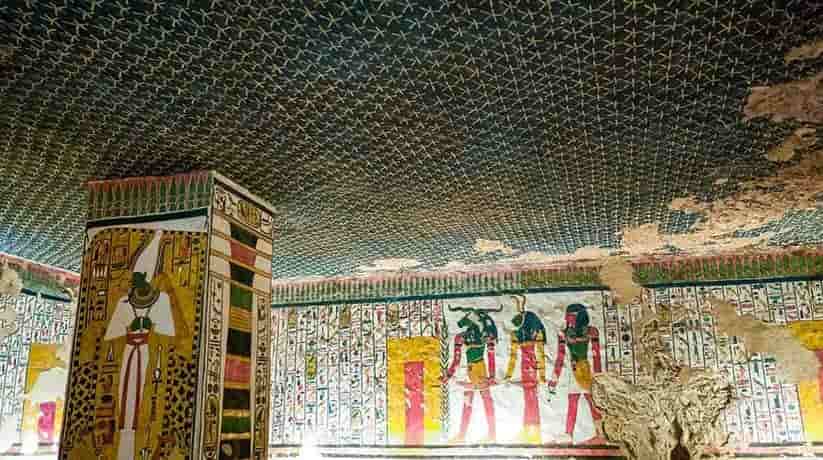
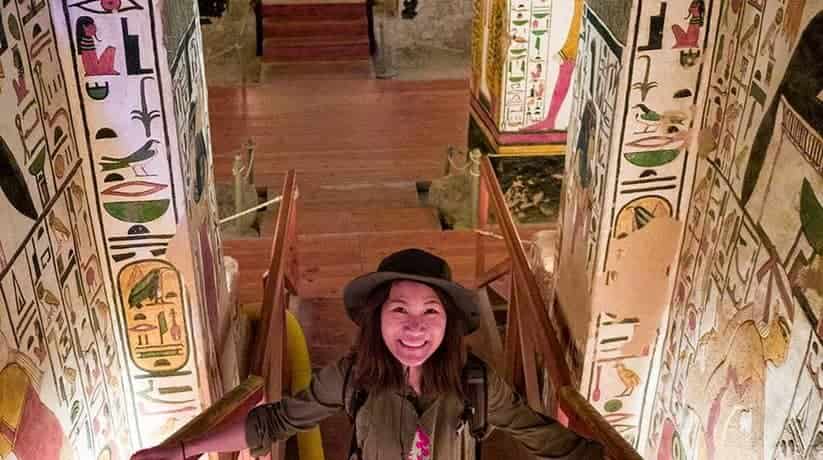
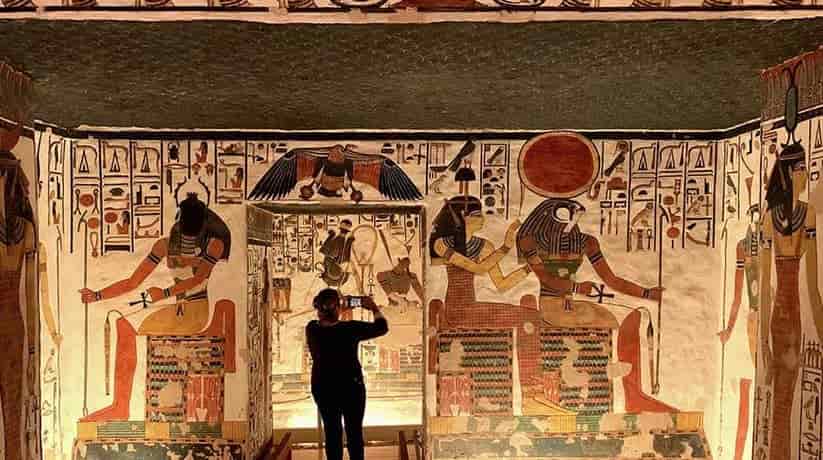
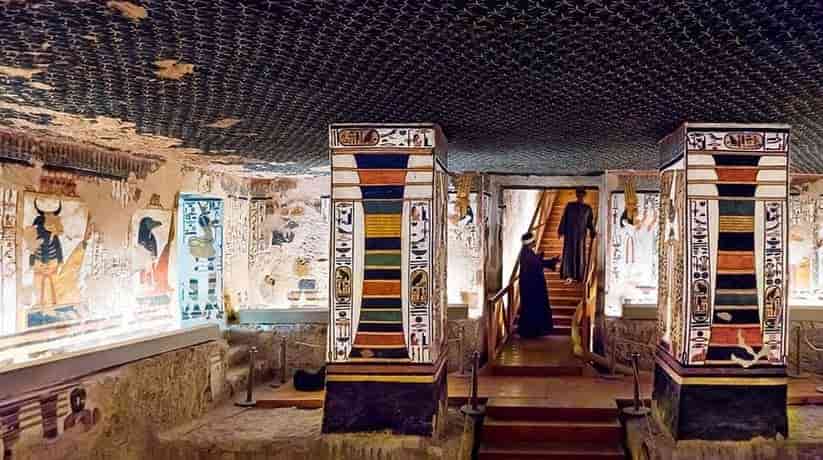
Queen Nefertari tomb Luxor Egypt QV 66 discovered in the Queen’s Valley in 1904. In fact, the tomb hewn out in the Valley of the Queens. Moreover, it called by the ancients “The Place of Beauty”. The tomb indeed is the most beautiful in the Valley of the Queens. It is on the whole worthy of her position in history. Queen Nefertari tomb Luxor features decorative motifs on walls and ceilings which indeed are mythological. In fact, they concerned with life in the netherworld and meetings with gods. Furthermore, they concerned with deities, genii and monsters.

In these scenes, Queen Nefertari represented always wearing long and transparent white garments. Moreover, it is with two long feathers over the vulture-like headdress of gold. In fact, Queen Nefertari wears rich jewels, besides to bracelets and a wide golden collar. The tomb has an outer doorway from entrance staircase into outer hall. The two lambs inscribed with the name of Nefertari. Moreover, the lintel over the doorway decorated with a sun-disk. It sets in the horizon flanked on both sides by Wadjet-Eye. The scene also included a depiction of Isis and Nephthys in falcon form. Left and right thickness of the door decorated with the goddesses Nekhbet and Wadjet.

Further details about Queen Nefertari tomb Luxor Egypt:

Outer Hall of Queen Nefertari tomb Luxor has an almost square format of 5.20 m by 5.30 m. Moreover, a rock cut bench has niches below it. Furthermore, it supports part of the funerary equipment, projects from the western and northern walls. The long inscription above the bench a rather garbled version of 17th Chapter of the Book of the Dead. The upper register filled with various scenes. They serving as illustrative register of the southern wall containing different scenes. On the left, Queen Nefretrai shown on a throne. In her right hand she holds a kind of wand, with the other she reaches for a game. The scene placed in a kiosk made of reeds. Here the queen plays with her soul. The next scene shows a bird with the queen’s head. It is the Egyptian representation of the individual soul.

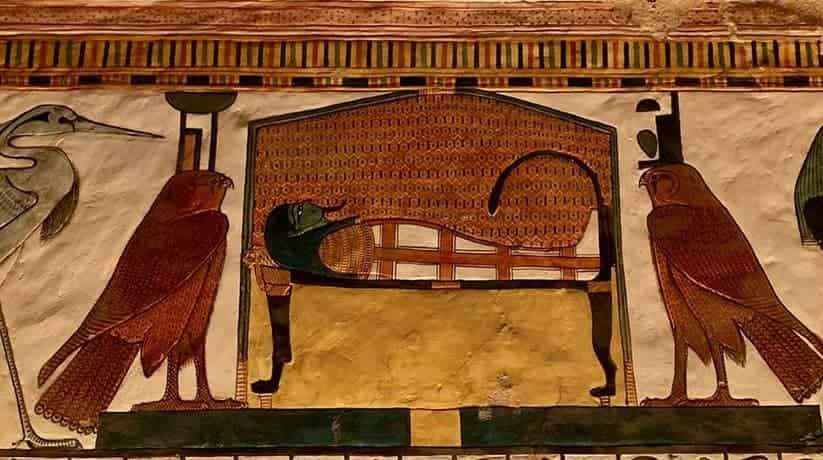
The ba-bird stands on a scale and takes a shape of Queen Nefertari tomb Luxor. In fact, the ba was a psychic force. The word employed as a synonym of the manifestation of a god. Then the queen Nefertari herself kneels in front of her soul. It is with hands uplifted in adoration of two juxtaposed lions, between them the sun’s disk. In fact, these scenes of the two lions mean “yesterday and tomorrow” or “the past and the future”. Then, the graceful bird “benu” is the representation of the phoenix. It is the sacred bird of Heliopolis. The phoenix regarded as the soul (ba) of Ra’, but was also a manifestation of Osiris. The bird Benu followed by many scenes . In fact, the scenes consist of a shrine with a bier on which a prepared mummy of the queen placed.

More details about Queen Nefertari tomb Luxor Egypt:

This shrine flanked on either side by representations of both goddesses Isis and Nephthys. The next scenes consist of two figures, one squatted bearded deity who holds a palm branch. The other standing before him holding his two outstretched arms over two squares. Furthermore, next is the seated figure of a falcon headed deity before a large scale “Sacred Eye”. The decoration continues with the registers. They begin at the left with the scene of a cow resting on a support. The next illustration is a composite scene. Its center is a coffin with a jackal placed inside. It surrounded on both sides by two mummiform figures. The right part of the upper register contains the four “Sons of Horus”.

They accompanied by a fifth Horus himself. To the right is the Jackal- headed Anubis, the god responsible for embalming. On the north side of the passage Osiris shown in his shrine. In the recess the thickness of the passage decorated on both sides. It is with the representation of a goddess Selket (Scorpion). West inner face of the recess, the decoration consists of a Djad pillar. It is the symbolic representation of Osiris. North face of the recess, the scene shows the goddess Isis leading Queen Nefertari to the right. It is in the realm of god Khepri. South face of recess decorated with a depiction of Harsiese (Horus son of Isis). He holds Queen Nefertari by her hand and introducing her to Harakhty and the West (Hathor).

Further details about Queen Nefertari tomb Luxor Egypt:

The scenes decorating the west wall of the side room show the queen bringing linen offering to Ptah. Moreover, behind the shrine of Ptah is a large Djad pillar, the symbol of Osiris. The scene on the north wall shows Queen Nefertari paying her respects to the god Thoth. Furthermore, the left part of the wall covered with a text of eight columns. It is a copy of Chapter 94 of the Book of the Dead. The east wall of side room filled with two scenes separated in the center by an up-right standing fan. In the left scene the god Osiris shown enthroned in the mummiform body. Moreover, before him are the four “Sons of Horus”. Queen Nefertari shown stretching her arm. The parallel right scene depicts the queen’s offerings to god Atum. South wall of this side room divided into three registers.

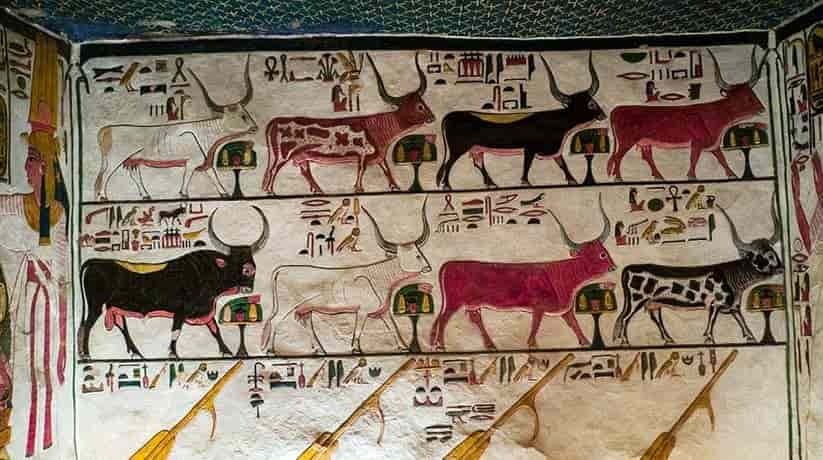
In fact, the two upper filled with seven cows and one bull. Moreover, the bottom register shows four steering oars. On the following wall, Nefertari with her raised arms in adoration is part of the adjoining last scene. The other panel on this west wall represents Ra’ and Osiris. They united in the form of a ram-headed figure between Isis and Mephthys. From the Outer hall there is a corridor. It descends 18 steps and continues the funerary designation of Queen Nefertari tomb Luxor. The descent to the underworld decorated. North thickness of upper part of West and East wall of corridor, the space decorated. It is with the Djad-pillar with two arms holding a scepters. Southern thickness of upper part of West and East wall decorated. It with the goddesses Neith and Selket.

More details about Queen Nefertari tomb Luxor Egypt:

On the left hand Nefertari offers two bowls of milk to goddess Isis behind whom sits Nephthys with Maat. Moreover, on the right hand, Nefertari makes a similar offering to Hathor behind whom sits Selket. It is with Maat as before in the background. Lower down there is a winged Uraeus, guarding two carts of the queen. The underneath, beginning about the kneeling figure of Maat, is another scene. It features Jackal Anubis stretched out on a tomb welcoming the queen. The bottom part of the east wall decorated by the figure of Nephthys. It is while the parallel part of the west wall decorated with Isis. The doorway lambs of the burial chamber inscribed with the name and titles of Nefertari. It is while the sofas decorated with a winged Maat.

This corridor leads to that part of the Queen Nefertari tomb Luxor. It is where the funeral ceremony terminated. The burial chamber is a large rectangular room (10.40 x 8.50 m). It is with four square pillars supporting the ceiling. Two side rooms and a small inner room are accessible from it. The entry walls to the burial chamber adorned by four goddesses. It is while the walls decorated with scenes from the Book of the Dead. Queen Nefertari represented passing through nine gates from the domain of Osiris. They guarded by dreadful demons. On the northern wall of the chamber she shown before Osiris, Hathor, and Anubis. The four pillars form a kind of shrine to contain her sarcophagus, now lost. The pillars decorated with the Djad pillar and various deities. The two side rooms flanking the burial chamber on the west and east preserved.

Entrance to Queen Nefertari tomb Luxor:

In fact, the opening of the tomb was in 1995. Since then, many restrictions took place on entry to the tomb. In January 2003, the tomb completely closed to visitors. It is for an indefinite period investigate the condition of the painted walls. Please contact us for update.

Nearby attractions Information, tours and Online Booking

More of Ancient Egypt

More of Egypt attractions
MORE
Ramses VII tomb Luxor

Ramses VII tomb Luxor

  • Ramses VII tomb Luxor
  • Ramses VII tomb Luxor
  • Ramses VII tomb Luxor
  • Ramses VII tomb Luxor
  • Ramses VII tomb Luxor
  • Ramses VII tomb Luxor

Ramses VII tomb Luxor KV 1 Egypt tours, prices, booking

Ramses VII tomb Luxor Egypt KV 1 is open since antiquity, at least since Greek and Roman times. It mentioned in more recent times by Wilkinson, Lane and Hay. The tomb also mentioned in other 19th century travelers. Later still, Davis may have done some work in the tomb between 1905 and 1906. There is no information on its actual clearing earlier in the 20th century. The tomb seen some clearing activity by the Egyptian Antiquities department after 1952. Since 1984, Edwin Brock has worked the tomb, at first clearing the pit in the burial chamber floor. Ramses VII tomb Luxor underwent some restoration and cleaning by the SCA in 1994. It was when a new path put in place. They cleaned the tomb’s walls and filled cracks in the walls and ceiling with plaster.

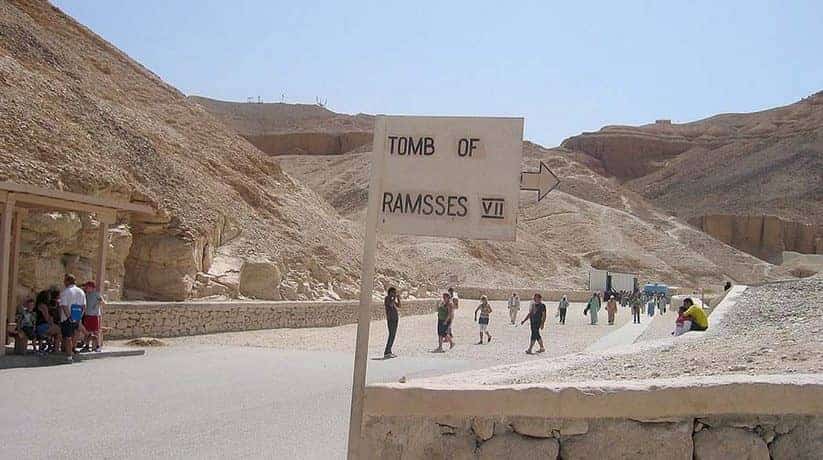
They covered up some ancient graffiti in the process. At that time, Brock cleared the area in front of the entrance down to the bedrock. It was in an unsuccessful bid to find foundation deposits. In fact, the tomb appears to be open to the public. But the walls and ceilings of the first corridor suffer from some cracks. Though the plaster seems to be intact and not damaged from cracks, vandalism or later graffiti. Ramses VII tomb indeed is a small tomb of typical late Ramesside plan. Moreover, it found at the entrance to the Valley of the Kings West Bank at Luxor. It is a little way back from the road. A manuscript produced by Lane indicated that there terraced walls around the tomb. Thomas believes they might have served as an ancient attempt to control flood waters.

Further details about Ramses VII tomb Luxor Egypt:

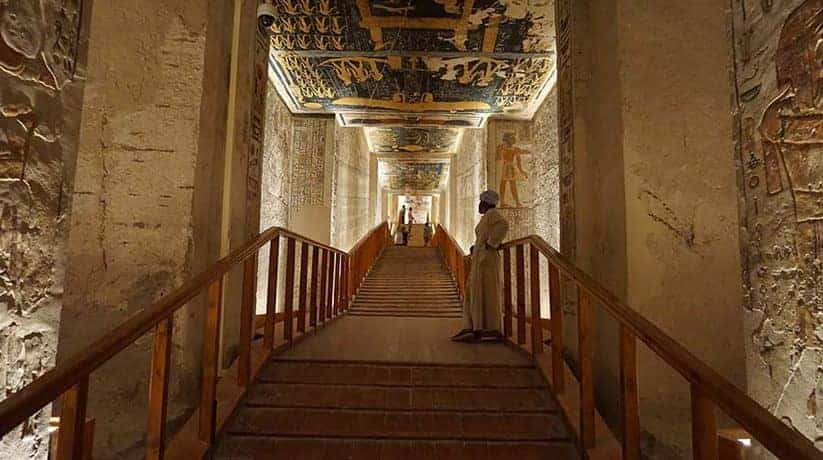
In fact, the tomb is a much smaller tomb than those of the king’s recent ancestors. Moreover, it consists of only one corridor and a burial chamber. It is with the addition of a possible unfinished room and niche beyond the burial chamber. The finish of the masonry and the fine quality of the relief work show planned and executed small scale tomb. Dug with realization that Ramses VII would have little time to complete the structure. The decoration in Ramses VII tomb Luxor are like those of Ramesses VI tomb (KV 9). But there are some significant variations. Here, we find an almost atavistic emphasis on Osiris with this gods iconography presence. Perhaps more emphasized than in any other Ramesside tomb. Though some of the blue pigments have fallen away.

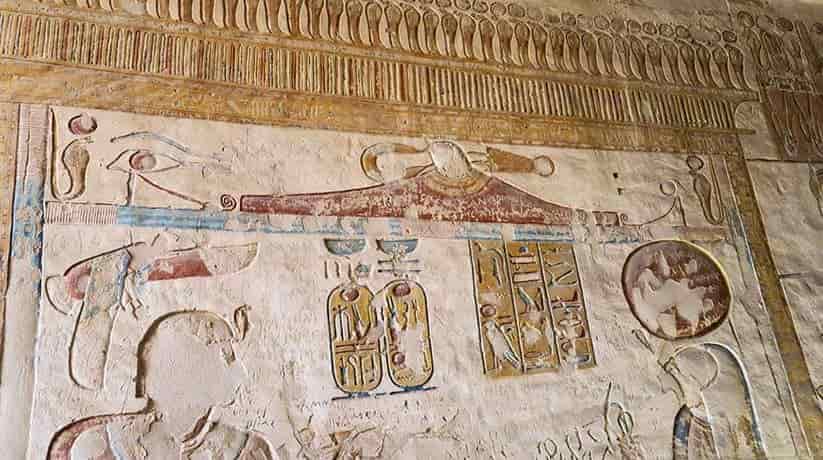
In fact, the initial outer lintel decorated with the traditional sun disc. Moreover, it contains the scarab and flanked by Isis and Nephthys below the king’s names. In the wide corridor, the fine quality relief decoration is unusual. It is with the Litany of Re which replaced by two scenes. On the left-hand side, the king seen before an altar. He offers to the falcon-headed solar god Re-Horakhty-Atum-Khepri. On the right he stand before Ptah-Sokar-Osiris and there is a hymn to the gods of the Underworld. Further along, we find the initial scene and first division from the ‘Book of Gates’. On the left, with the first scenes from the ‘Book of Caverns’. On either side the king depicted as Osiris, purified by the Iun-Mutef priest. The ceiling of the corridor decorated with vultures and the king’s cartouches.

More details about Ramses VII tomb Luxor Egypt:

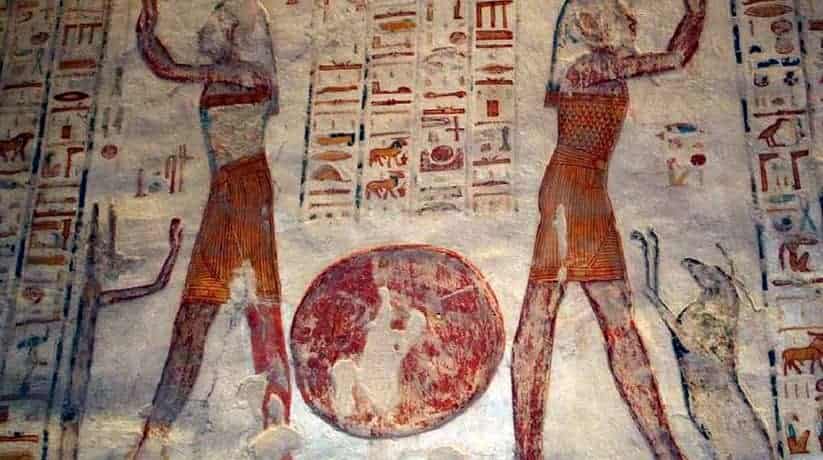
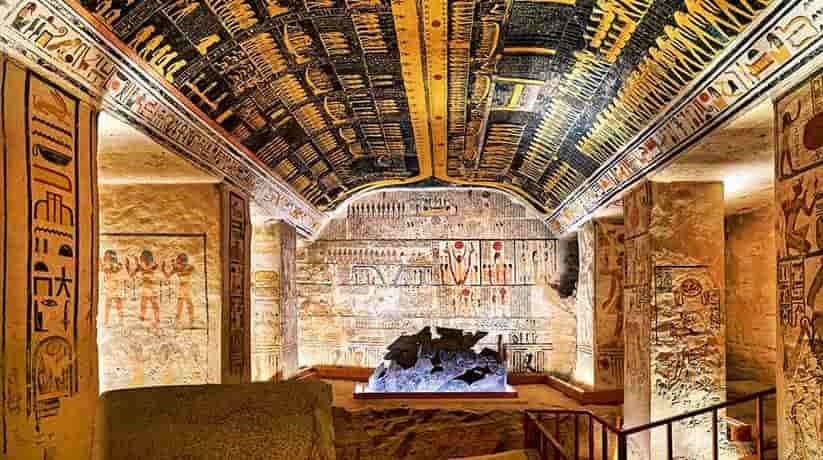
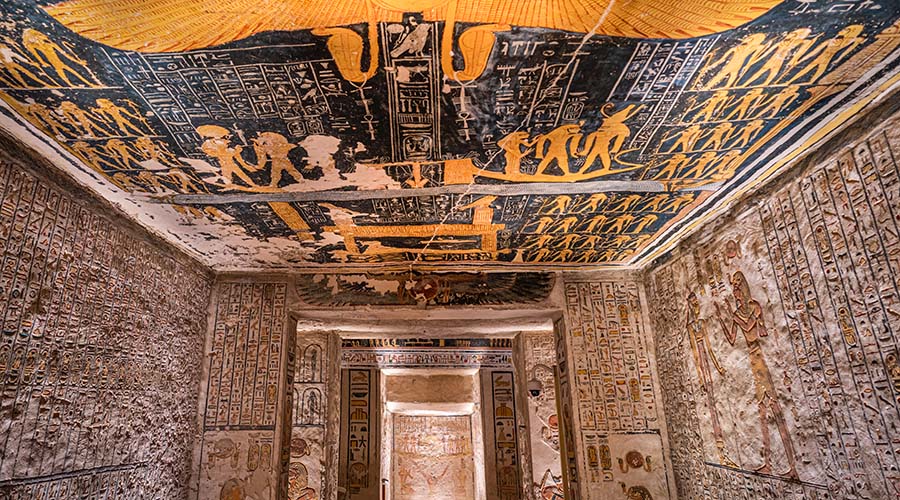
The corridor leads straight into a sarcophagus hall without a well-room or antechamber. On the outer lintel of this chamber is the usual winged disc. The entrance wall illustrates two goddesses. On the right depicted a composite goddess Sekhmet-Bubastis-Wert-Hekau. Moreover, on the left we find Wert-Hekau “Great of Magic” each facing the doorway. On the walls of the sarcophagus hall are scenes from the ‘Book of Aker’ and the ‘Book of the Earth’. The selection of text is like that found in the tomb of Ramesses VI. The north wall depicts Osiris as ‘Chief of the Westerners’. An astronomical ceiling features a double scene of the goddess Nut. It stretches across the heavens and constellations. Beyond the burial chamber in Ramses VII tomb Luxor is a small chamber with a niche. It’s outer walls show the king facing the doorway on each side.

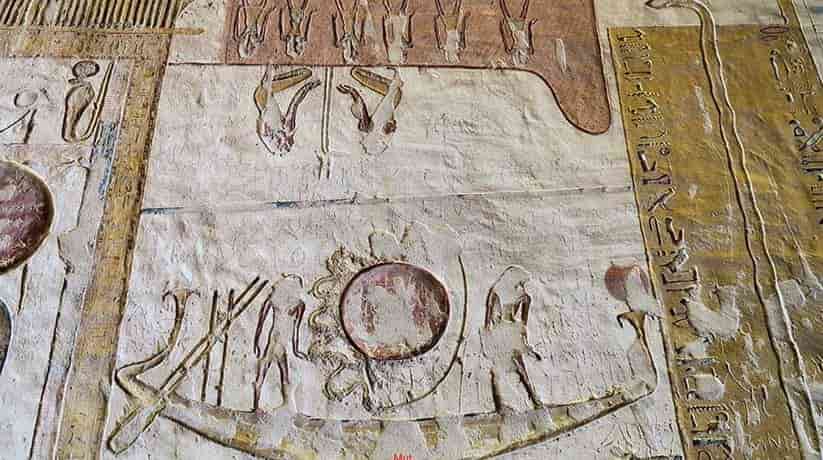
He makes offering to aspects of Osiris on the inner walls. The wall above the niche illustrates the barque of the sun. It contains baboons from the ‘Book of Gates’ supported by djed-pillars on the sides of the niche. The sarcophagus cut into the floor of Ramses VII tomb Luxor. Over this hollow placed a massive stone covering. It roughly shaped like a cartouche. It decorated with the usual incised figures of Isis, Nephthys, Selkis and the Four Sons of Horus. They are in green paint. This is still in place, with an opening at its foot where the body of the king removed. Two circular pits cut into each of the long sides at floor level. They maybe intended for canopic jars. Otherwise, little else has found in the tomb. In fact, several funerary statuettes made of wood, calcite and faience discovered.

Further details about Ramses VII tomb Luxor Egypt:

They discovered in the burial pit of the tomb. Other items include some 20th Dynasty amphora pottery fragments also discovered. Ostraca including sketches of the Ramses VII tomb Luxor decoration discovered by Brock. Brock also recovered similar material as that found in the burial pit. They were near the tomb entrance. They included basket fragments, a floral garland and fragments of an amphora. It was with a five line hieratic text on one side. The other side had a caricature of a serving scene. There were also potsherds which discovered from a period. It was when the tomb reused by Coptic Christians. The mummy of Ramses VII has not yet found. Four faience cups bearing the king’s name found near the DB 320 mummy cache.

Entrance to the tomb:

The tomb is currently open to visitors. Ticket for the Valley of the Kings cost 120 Egyptian pound for three tombs including Ramses VII tomb. It can bought at the gate. Photography inside the tombs forbidden and can incur heavy fines. There is a little train – Taftaf – that runs from the coach park to the entrance to the monument area. It costs 5 Egyptian pound.

Nearby attractions Information, tours and Online Booking

More of Ancient Egypt

More of Egypt attractions
MORE
Ramses V tomb Luxor

Ramses V tomb Luxor

  • Ramses V tomb Luxor
  • Ramses V tomb Luxor
  • Ramses V tomb Luxor
  • Ramses V tomb Luxor
  • Ramses V tomb Luxor
  • Ramses V tomb Luxor

Ramses V tomb Luxor KV 9 Egypt tours, prices, booking

Ramses V tomb Luxor Egypt situated just behind Tutankhamun tomb in the Valley of Kings. In fact, the tomb also has Ramses VI tomb. The decoration from the entrance as far as the well-room done for Ramses V. It not known for certain whether the pharaoh, who ruled for only four years, ever buried in the tomb. In fact, Ramses V tomb Luxor completed by his successor Ramses VI. His sarcophagus fragments found in the burial chamber. The great amount of graffiti in the tomb shows that it has been open since antiquity.

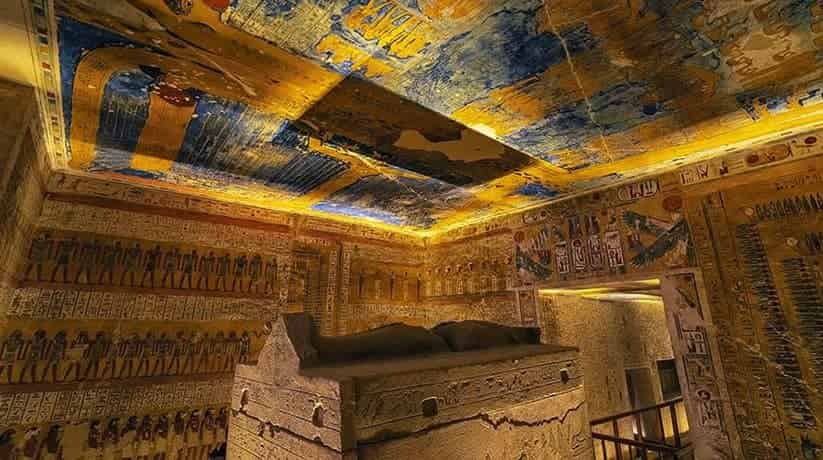
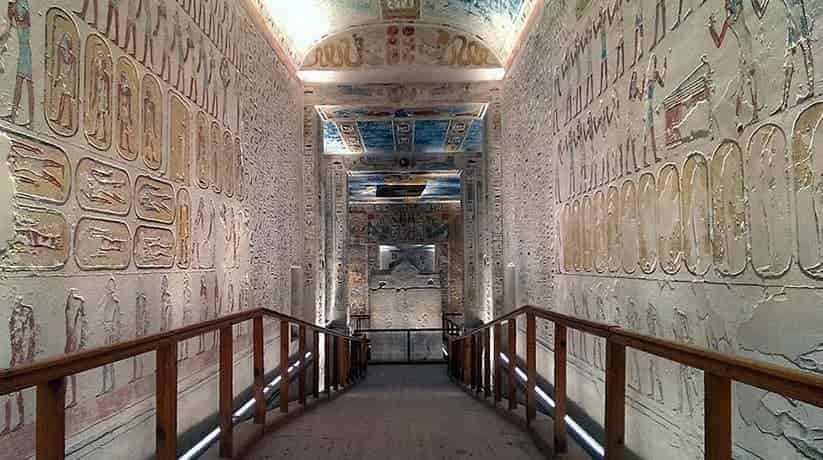
In fact, the tomb has a staircase leads down to the entrance. It is where the lintel decorated with the traditional scene of Isis and Nephthys. They kneeling at either side of the sun-disc. The decoration throughout Ramses V tomb Luxor in sunk relief. Moreover, it indeed is with well-preserved painted scenes on a creamy background. Moreover, the corridors are wide and sloping, without the stairs and ramps of earlier Tombs. The left-hand side of the first corridor shows the figure of Ramses V Usermaatre. In fact, he usurped by his brother Ramses VI. It was before Re-Horakhty and Osiris, and scenes from the “Book of Gates”. Furthermore, on the right-hand side is a similar portrait of the king and scenes from the ‘Book of Caverns’. An astronomical ceiling contains scenes from the “Book of Night” and the “Book of Day”.

Further details about Ramses V tomb Luxor Egypt:

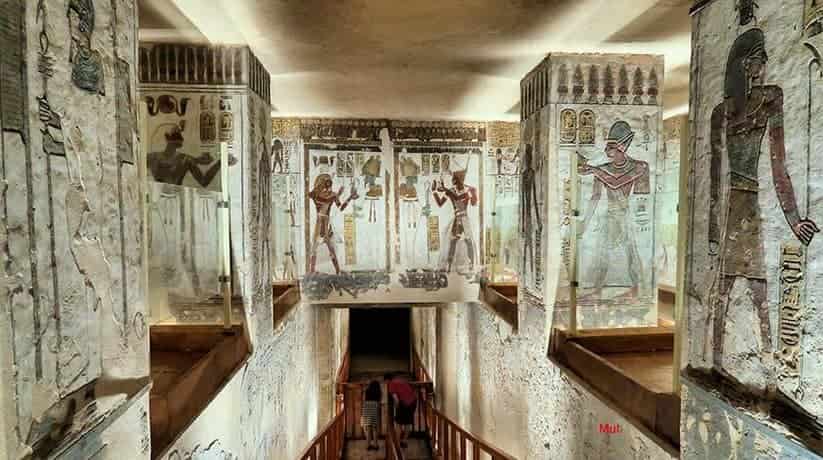
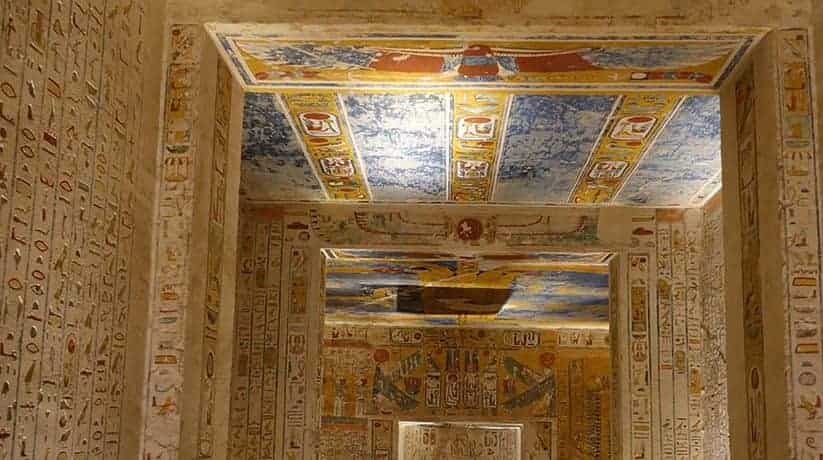
The second and third corridors painted with the “Book of Gates” and “Book of Caverns”. Moreover, it is with the addition of the “Book of the Divine Cow” (part of the “Books of the Heavens”). It is on the left wall in the third corridor. In fact, Ramses V tomb Luxor has a well-room leads to a pillared hall. Perhaps intended as a ‘false burial chamber’. This cut and decorated by Ramses VI Nebmaatre Meryamun. Moreover, the four pillars show scenes of the king offering to various deities. Furthermore, on the left-hand wall there are scenes from the ‘Book of Gates’. Moreover, on the right, there are scenes from the ‘Book of Caverns’. It is with Ramses VI before Osiris in a double scene on the lintel over the descending passage. The astronomical ceiling continues from the well-room with constellations.

A steeper descent leads to the fourth corridor. It has depictions of Nekhbet and Meretseger as serpent goddesses. It also has scenes from the ‘Amduat’ on the walls. The “Amduat” also featured in the next corridor. Ramses V tomb Luxor builders had to drop the level of the floor. It was to avoid cutting in to KV 12 above it. Moreover, it resulted in the unique feature of having a sloping floor. It combined with a horizontal ceiling. The tomb has an antechamber leads to the burial chamber of Ramses VI. On the outer lintel a mountain supports the sky and sun-disk. The walls of the antechamber illustrate scenes from the ‘Book of the Dead’. The ceiling describes the resurrection of Osiris with the king in the barques of Day and Night.

More details about Ramses V tomb Luxor Egypt:

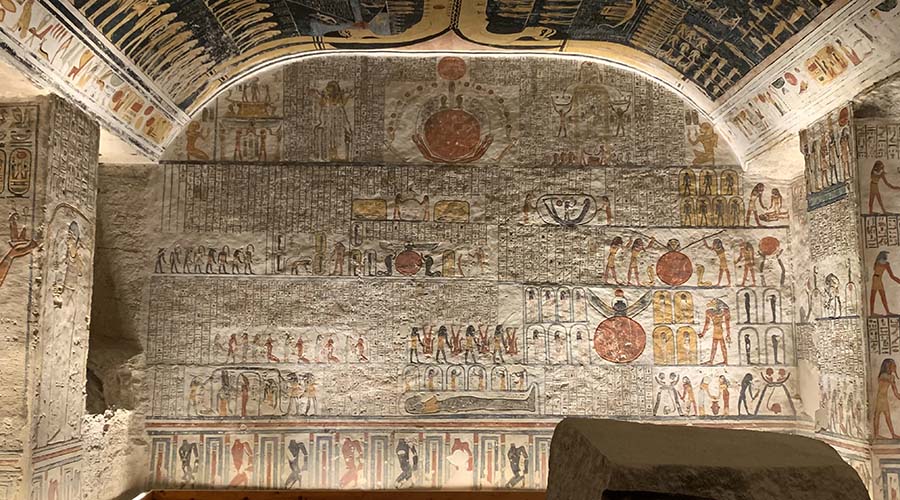
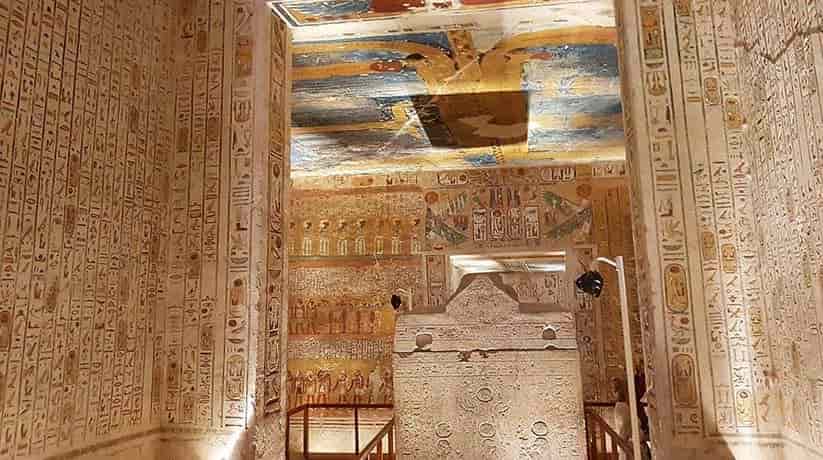
The walls of the burial chamber show various scenes from the “Book of Gates” and the “Book of Aker”. It deals with creation and the journey of the solar disc. The first appearance of ‘Book of the Earth’ in a royal burial chamber. The king offers to the gods on each of the sides of the two pillars. A vaulted astronomical ceiling illustrated by a double image. The images are of Nut with the ‘Book of Night’ and the ‘Book of Day’ (‘Books of the Heavens’). They show the mystery of the daily regeneration of the solar disc. Moreover, Ramses V tomb Luxor features a chamber to the rear of the burial hall. It shows the “Book of Gates” with the barque of Re held aloft by Nun. Furthermore, it also shows the king with deities on the side walls.

The broken remains of a large granite outer sarcophagus of Ramses VI can seen in the burial chamber. Fragments of an inner anthropoid sarcophagus found in the tomb can seen in the British Museum. The mummies of both Ramses V and VI found with other royal mummies in the KV 35 cache in 1898.

Entrance to Ramses V tomb Luxor Egypt:

The tomb is currently open to visitors. Ticket for the Valley of Kings cost 120 Egyptian pound for three tombs. It can bought at the gate, but the tomb of Ramses VI costs an extra 50 Egyptian pound. In fact, photography inside the tombs forbidden. Moreover, it can incur heavy fines. There is a little train – Taftaf – that runs from the coach park to the entrance to the monument area. It costs 5 Egyptian pound.

Nearby attractions Information, tours and Online Booking

More of Ancient Egypt

More of Egypt attractions
MORE
Ramses III tomb Luxor

Ramses III tomb Luxor

  • Ramses III tomb Luxor
  • Ramses III tomb Luxor
  • Ramses III tomb Luxor
  • Ramses III tomb Luxor
  • Ramses III tomb Luxor
  • Ramses III tomb Luxor
  • Ramses III tomb Luxor

Ramses III tomb Luxor Egypt KV 11 tours, prices, booking

Ramses III tomb Luxor Egypt (KV 11) is a complex system. It known since antiquity. In fact, Ramses III tomb Luxor explored during modern times by James Bruce in 1768. Later, William Browne gained access to the burial chamber in 1792. Belzoni removed the sarcophagus and lid, which are now in the Louvre Museum. In fact, he named it the “Tomb of the Harpists”. It is due to a bas relief representation of two blind harpists. European travelers often referred to the tomb as “Bruce’s Tomb”. In fact, the tomb decorated with grand colors that remain vivid.

Ramses III tomb Luxor is 125 meters long. Moreover, it follows typical plans of the Nineteenth Dynasty’s tombs. Though it has an unusual number of annexes. From the entrance, a stairway leads to the first corridor which has an annex on either side. Furthermore, this corridor leads two a second corridor that has four small annexes on either side. The second corridor leads to a dead end room, but with a third corridor leading off from the right side. This change in axis was because workmen came across Amenemesses’ tomb. They required to make adjustments to avoid it. Up to the point of this change in axis, the tomb built for Setnakht. He abandoned the work at this point. Ramses III offset the tomb, and continued the work as his own.

Further details about Ramses III tomb Luxor Egypt:

The third corridor at the tomb leads to the ritual shaft. And then a four pillared hall with one large annex off to its right. After the pillared hall, a fourth corridor leads to two room vestibule. And then finally to the burial chamber. The burial chamber has one annex leading off from each of its corners, plus a fifth annex at the rear. At the entrance to Ramses III tomb Luxor are indeed unique, twin Hathor-headed columns. Between them is the standard solar disc with goddesses. The first several corridors decorated for Sethnakhte. It is with remnants of his name still present. Passages from the Litany of Re adorn their walls. The side chambers added by Ramses III and decorated with unique secular scenes.

They include paintings of the royal armory and representations of boats. Moreover, they also include the famous blind harpists. Ramses III tomb has also scenes of the king’s treasury. They show luxury items, some of which imported from Aegean. After the offset, the decorative program becomes that of Ramses III’s work. Scenes from the Amduat found in the corridor leading from the offset. It is while standard divine scenes decorate the ritual shaft. The four pillared hall decorated with scenes from the Book of Gates. They are with Ramses III and various deities on the pillars themselves. The final corridor inscribed with material from the Opening of the Mouth ceremony. In the antechambers, there are decorations depicting various deities.

More details about the tomb of Ramses III in Luxor Egypt:

Within the burial chamber itself are to found decorations form the Book of Gates and the Book of the Earth. There are no ceiling decorations, but the side rooms decorated with. There was little in the way of funerary equipment which found in Ramses III tomb Luxor. Five shabtis figures cast in solid bronze found in the tomb. The eight-pillared burial chamber has suffered from severe flood damage. It decorated with scenes from the “Book of Gates” and the “Book of the Earth”. There is no astronomical ceiling. Side-chambers contain extracts from, “Book of the Divine Cow” and “Book of Aker”. At the end of the burial chamber is an extension of several further annexes.

Furthermore, the red granite sarcophagus of Ramses III sold to the King of France and is now in the Louvre. It’s lid, which found by Belzoni sold to the Fitzwilliam Museum in Cambridge. The mummy of the king found in the Deir el-Bahri cache (DB 320). It is now in Egyptian Museum in Cairo.

Entrance to Ramses III tomb Luxor KV 11:

The tomb is currently open to visitors. Ticket for Valley of Kings costs 120 Egyptian pound for three tombs. It includes Ramses III tomb. In fact, photography inside the tombs forbidden. Moreover, it can incur heavy fines. There is a little train – Taftaf – that runs from the coach park to the entrance to the monument area. It costs 5 Egyptian pound.

Nearby attractions Information, tours and Online Booking

More of Ancient Egypt

More of Egypt attractions
MORE
Ramses I tomb Luxor

Ramses I tomb Luxor

  • Ramses I tomb Luxor
  • Ramses I tomb Luxor
  • Ramses I tomb Luxor
  • Ramses I tomb Luxor
  • Ramses I tomb Luxor

Ramses I tomb Luxor Egypt KV 16 tours, prices, booking, reviews

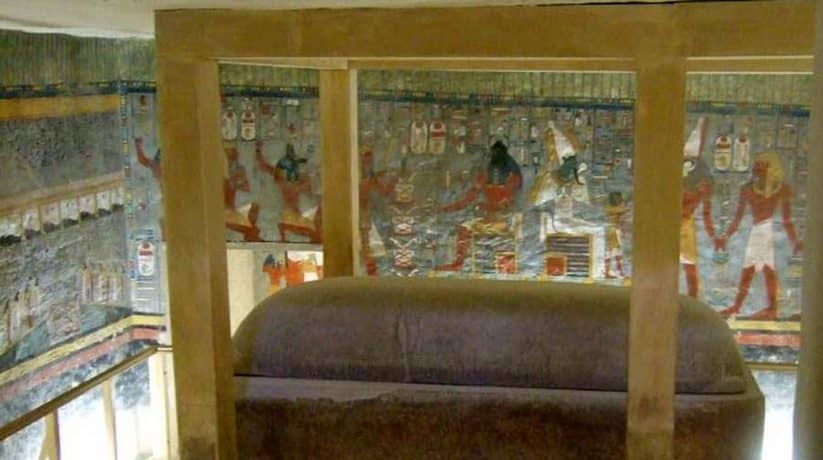
Ramses I tomb Luxor Egypt KV 16 is one of the smallest tombs in the Valley of the Kings. The Valley of the Kings located in the West bank of Luxor. In fact, Ramses I is the founder of the great lineage of Ramessid rulers. Moreover, he was a soldier. He chosen by Horemheb. In fact, Horemheb also began his career as a soldier, to be his successor. Ramses I regarded as the first ruler of Egypt’s 19th Dynasty. But only ruled for less than two years. In fact, Ramses I tomb Luxor (KV 16) discovered on or before October 11, 1817 by Giovanni Battista Belzoni. It was just before his discovery of the much more significant Seti I tomb. The tomb located in a small lateral valley perpendicular to the main Valley of the Kings Wadi. While small, the tomb has wall paintings of excellent workmanship.

In fact, the tomb has thirty two feet long and eight feed wide a passage. It also has a staircase of twenty eight feet. It reached a large and well painted room seventeen feet long, and twenty one wide. The ceiling of Ramses I tomb Luxor was in good preservation, but not in the best style. It found a sarcophagus of granite with two mummies in it. In a corner a statue standing erect and six feet six inches high. It cut out of sycamore wood. Moreover, it is perfect except the nose. It also found many of little images of wood, well carved, representing symbolical figures. Some had a lion’s head, others a fox’s, others a monkey’s. One had a land tortoise instead of a head. We found a calf with the head of a hippopotamus.

Further details about Ramses I tomb Luxor Egypt:

At each side of this chamber is a smaller one, eight feed wide and seven feet long. At the end of it another chamber, ten feet long by seven wide. In the chamber on our right hand we found another statue like the first, but not perfect. No doubt they placed one on each side of the sarcophagus. They hold a lamp or some offering in their hands. One hand stretched out in the proper posture for this and the other hanging down. The sarcophagus covered with hieroglyphics painted or outlined. It faced south east by east.

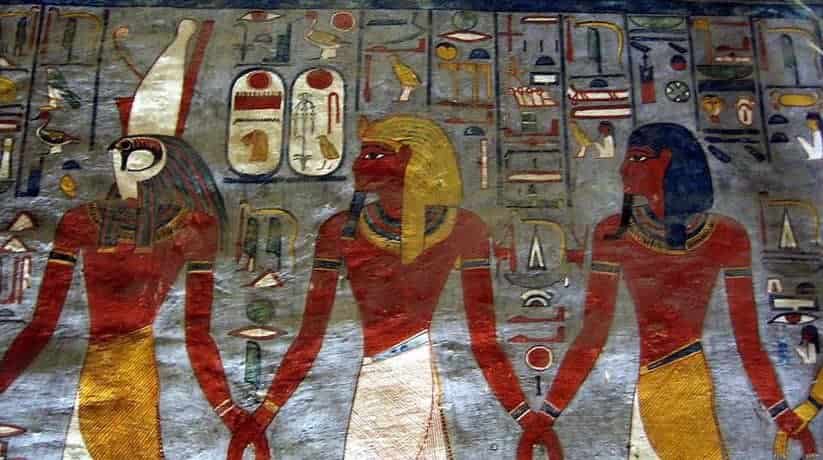
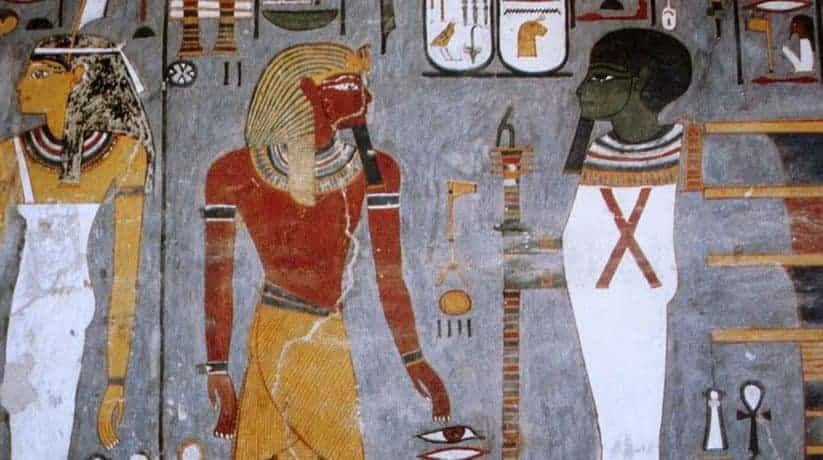
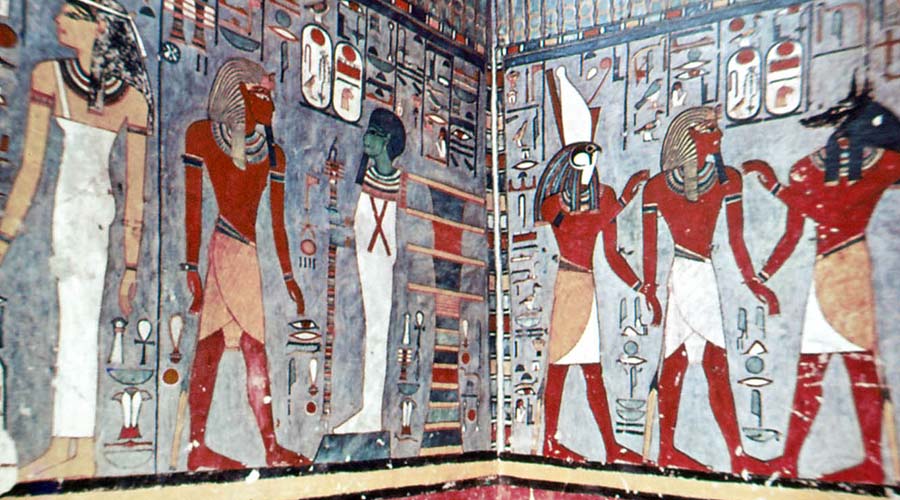
Ramses I tomb Luxor is rectilinear in structure with only a single. It is not most the rest of the royal tombs in the Valley of the Kings. The corridor located between two descending sets of stairways. It is the shortest of any royal tomb in the valley. The second set of stars opens into the burial chamber. A large, granite sarcophagus dominates the burial chamber. In fact, the paintings on the sarcophagus not finished and done. Moreover, the decorations of Ramses I tomb are like those of Horemheb tomb. They related to the Book of Gates, and all have blue backgrounds. While the decorations well done, their are no reliefs. In the burial chamber, Ramses I presents offerings to Atum-Re-Khepri. He led into the presence of Osiris by Horus, Atum and Neith.

More details about Ramses I tomb Luxor Egypt:

There is also an unusual depiction of the Pharaoh in a ceremony of jubilation. In fact, it is between a hawk and jackal headed figure. It represents the spirits of the cities of Nekhen and Pe. The burial chamber and left annex are the only rooms in the tomb that decorated. It is likely that the same craftsman who worked on Horemheb tomb also worked on this one. There are two annexes on either side of the burial chamber. It is along with a third annex at its rear.

Entrance to Ramses I tomb Luxor KV 16:

The tomb is currently open to visitors. Ticket for Valley of the Kings cost 80 Egyptian pound for three tombs including Ramses I tomb. It can bought at the gate. Photography inside the tombs forbidden. Moreover, it can incur heavy fines. There is a little train – Taftaf – runs from the coach park to the entrance to the monument area. It costs 5 Egyptian pound.

Nearby attractions Information, tours and Online Booking

More of Ancient Egypt

More of Egypt attractions
MORE
Ramses IV tomb Luxor

Ramses IV tomb Luxor

  • Ramses IV tomb Luxor
  • Ramses IV tomb Luxor
  • Ramses IV tomb Luxor
  • Ramses IV tomb Luxor
  • Ramses IV tomb Luxor
  • Ramses IV tomb Luxor
  • Ramses IV tomb Luxor

Ramses IV tomb Luxor KV 2 Egypt tours, prices, booking

Ramses IV tomb Luxor KV 2 situated in a large modern courtyard. The courtyard is near the entrance to the Valley of Kings in Luxor, Egypt. Coptic graffiti suggests that it reused as a Christian church or dwelling. It was during the 5th century AC. An ancient plan of Ramses IV drawn on papyrus is now in the Turin Egyptian Museum. In fact, the original plan was for a larger tomb which amended at the death of the king. The abbreviation means that there is no traditional pillared hall before the burial chamber.

The architecture of Ramses IV is indeed typical of royal Ramesside style. In fact, it is with a staircase and ramp descending to the main entrance portal. Moreover, on the outer lintel to the first corridor is the familiar disc. It also contains a scarab and Ram headed god Amun and flanked by Isis and Nephthys. It is with a similar depiction on the southern wall of the first sloping corridor. On the opposite wall of Ramses IV are texts from the “Litany of Re”. The king”s names appear between the first and second corridors. It is besides on the ceiling which painted with winged scarabs and vultures.

Further details about Ramses IV tomb Luxor KV 2:

Furthermore, the second corridor illustrates many scenes with demons or underworld spirits. It is from the “Litany of Re” on it’s cream colored walls. The ceiling also shows the same text. The king’s names and a winged disc appear in the entrance to the third corridor. The walls show, for the fist time, scenes (of the 1st and 2nd division) from the “Book of Caverns”. There are two niches at the far end of the walls. The star painted ceiling of the third corridor vaulted. It also displays the king’s Cartouches.

A more sloping ramp leads to an antechamber (well room) before the burial chamber. The outer lintel of the antechamber decorated with winged uraei. A winged disc and the walls of the chamber depict passages. It is from the “Book of the Dead” (on the left) and the “Negative Confession” (on the right). The sarcophagus chamber t Ramses IV tomb Luxor intended to be a pillared hall. It would have preceded the actual burial chamber. Because the plan abbreviated, no pillars cut and a sarcophagus “pit” sunk into the floor. A massive red granite outer sarcophagus found in Ramses IV.

More details about Ramses IV tomb Luxor KV 2:

It broken in antiquity, but has restored and can seen in the burial chamber. The walls of the burial chamber illustrate the first four divisions of the “Book of Gates”. The selections of texts from the “Amduat“. The vaulted ceiling displays astronomical scenes from the “Books of the Heavens”. It replaces the more traditional texts of earlier tombs. On the southern half, the sky goddess Nut supported by Shu, god of the air and light. Nut also stretches over the northern side of the ceiling with other astronomical figures.

A further corridor is beyond the burial chamber at Ramses IV tomb Luxor. It has the initial texts from the “Book of Caverns” on its walls, but this is crudely painted. This chamber opens into three annexes. The walls in the rooms to the south and north have mummiform depictions of the king. The room at the end of the corridor shows other funerary objects (couch, chests and Canopic jars). The body of Ramses IV found among those royal mummies in KV35.

Ramses IV tomb Luxor Entrance:

The tomb is currently open to visitors. Tickets for the Valley of Kings cost 80 Egyptian pound for three tombs and can bought at the gate. Photography inside Ramses IV tomb and all tombs strictly forbidden. It can incur heavy fines. There is a little train which called Taftaf. It runs from the coach park to the entrance to the monument area and costs 8 Egyptian pound.

Nearby attractions Information, tours and Online Booking

More of Ancient Egypt

More of Egypt attractions
MORE
error: Copyright © www.etltravel.com !